9 signos de baja testosterona en hombres
Revisado por pares por Dr Colin Tidy, MRCGPAuthored by Heather AinsworthPublicado originalmente 24 Nov 2025
Cumple con las directrices editoriales
- DescargarDescargar
- Compartir
- Language
- Discusión
- Versión en audio
- Add to preferred sources on Google
Si te has sentido inusualmente cansado, irritable o has perdido interés en cosas que solías disfrutar, el bajo nivel de testosterona podría ser la razón, y es más común de lo que piensas.
En este artículo:
Video picks for Salud general de los hombres
Continúa leyendo abajo
Why is testosterone important?
Testosterone is a key hormone that plays a major role in men’s health. It helps support muscle growth, strength, sex drive, mood, and overall energy levels1. Think of it as one of the body’s main 'performance regulators.'
As men age, testosterone levels naturally decline - but stress, lifestyle, and certain health conditions can cause levels to drop faster than expected.
Recognising the signs of low testosterone early is important as a lack of it can affect both your physical and mental health.
Signs of low testosterone in men
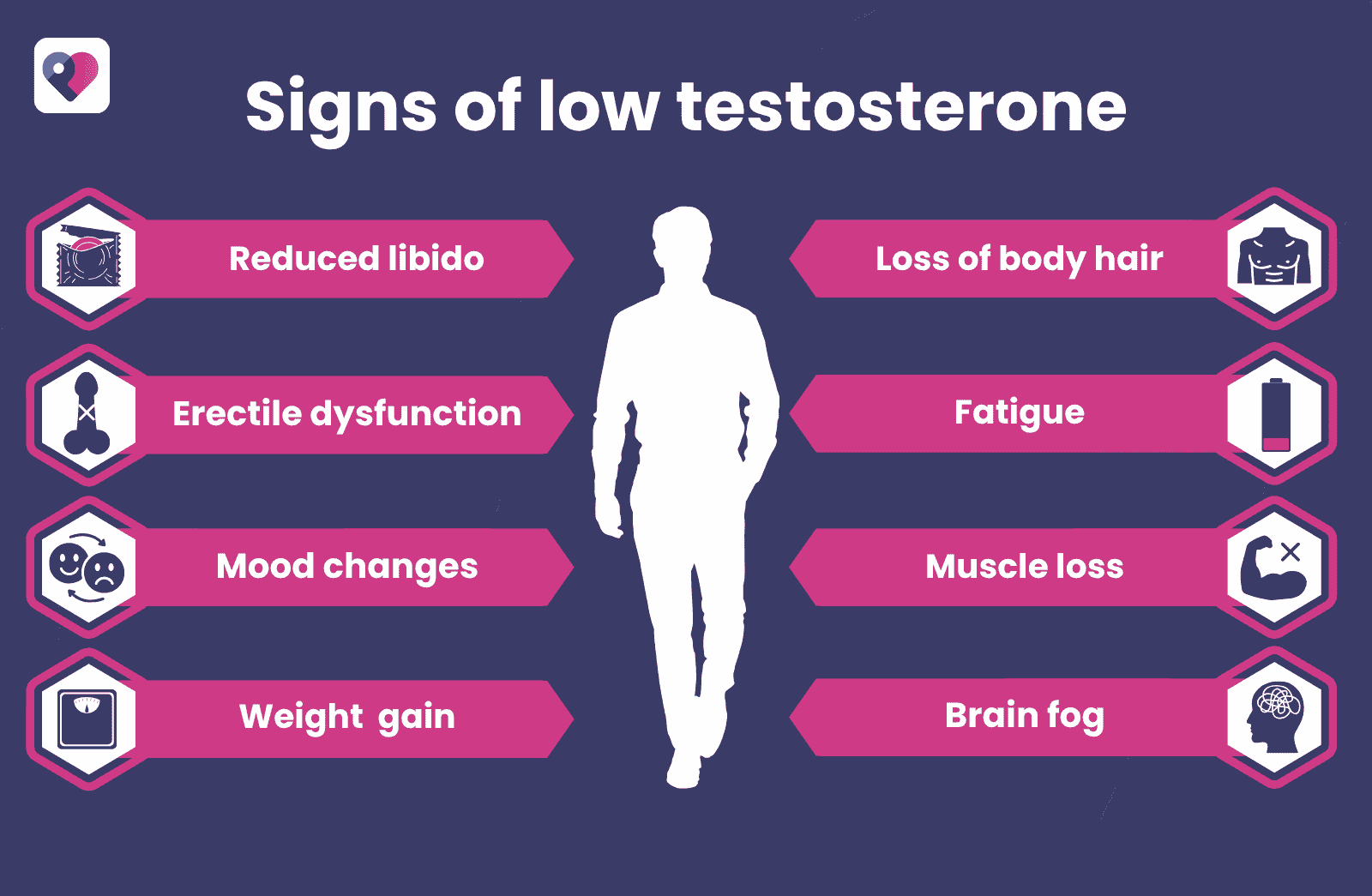
Graphic: Heather Ainsworth
What are the signs of low testosterone?
Volver al contenido1. Reduced libido
Low testosterone can directly affect your sex drive (libido)2. Men with reduced hormone levels often notice a decreased interest in sexual activity or intimacy, which can impact relationships and overall quality of life.
2. Loss of body hair
Testosterone helps regulate hair growth3. A drop in levels can lead to thinning or loss of hair on the face, chest, or body over time.
3. Fatigue
Feeling unusually tired (fatigue), even after enough sleep, is a common symptom of low testosterone4. It can reduce energy levels and make everyday tasks feel more exhausting than usual.
4. Depressed mood
Hormonal changes can influence brain chemistry. Men with low testosterone may experience irritability, sadness, or even depresión5, sometimes without realising the hormonal link.
5. Loss of muscle mass and strength
Testosterone plays a key role in building and maintaining muscle1. Lower levels can make it harder to gain or retain muscle, and strength may decline over time.
6. Increase in body fat
A drop in testosterone can contribute to an increase in body fat, especially around the stomach6. This can also increase the chance of metabolic issues such as insulin resistance.
7. Difficulty concentrating or brain fog
Low testosterone may affect cognitive function, making it harder to focus, remember details, or stay mentally sharp during the day7.
8. Increase in breast tissue
Low testosterone levels can lead to the development of excess breast tissue (gynecomastia) in men8. This is often a gradual change but can be noticeable and sometimes uncomfortable.
9. Erectile dysfunction
Testosterone helps regulate sexual function, including erections. Low levels may make it harder to achieve or maintain an erection9, though other health factors can also contribute.
Continúa leyendo abajo
How to test for low testosterone
Volver al contenidoIf you think you may have low testosterone, the first step is to speak with a doctor or healthcare professional.
Testing isn’t something you can accurately do at home - your doctor will order a simple blood test that measures your testosterone levels, usually taken in the morning when levels are highest.
Depending on the results, they may repeat the test or check other hormones to get a clearer picture of what’s going on.
From there, your doctor can discuss your options, which may include lifestyle changes, further testing, or potential treatment.
How much testosterone should you have?
Volver al contenidoTestosterone levels can vary from person to person but for adult men, total testosterone levels typically fall between 300 and 1,000 ng/dL (nanograms per decilitre)2.
However, what matters most is not just the number, but how you feel. Some men may experience symptoms even if their levels are technically within the normal range.
That’s why it’s important to look at both your test results and your day-to-day symptoms if something feels off.
Continúa leyendo abajo
Resumen
Volver al contenidoLow testosterone is a common hormonal imbalance that can impact energy, mood, muscle strength, and overall wellbeing - especially in men over 30.
Symptoms to watch for include fatigue, reduced libido, loss of muscle mass, increased body fat (particularly around the stomach), mood changes such as irritability or depression, loss of body hair, low motivation, and trouble concentrating.
If these signs sound familiar, it may be time to speak with your doctor about testing and treatment options.
Lectura adicional
Volver al contenido1. Rojas-Zambrano et al: Benefits of Testosterone Hormone in the Human Body
2. Sizar et al: Male Hypogonadism
3. Inui S, Itami S: Androgen actions on the human hair follicle
5. Shores et al: Low testosterone levels predict incident depressive illness in older men
6. Kelly et al: Testosterone and obesity
8. Robeva et al: Causes and Metabolic Consequences of Gynecomastia in Adult Patients
9. Martínez-Jabaloyas et al: Testosterone levels in men with erectile dysfunction
Patient picks for Salud general de los hombres

Salud masculina
Cómo es tener cáncer de mama cuando eres un hombre
Aunque el cáncer de mama a menudo se percibe como una enfermedad de mujeres, los hombres también pueden ser diagnosticados. Hablamos con Tony Herbert, quien fue diagnosticado con cáncer de mama en 2011.
por Abi Millar

Salud masculina
¿Cuál es la altura promedio para los hombres?
¿Cómo te comparas con la altura promedio de los hombres en tu país? La altura se ha relacionado con la esperanza de vida, enfermedades e incluso el éxito académico y financiero. Aquí exploramos qué pueden revelar tu altura y cintura sobre tu salud.
por Amberley Davis
Continúa leyendo abajo
Historial del artículo
La información en esta página es revisada por pares por clínicos calificados.
Next review due: 24 Nov 2028
24 Nov 2025 | Publicado originalmente
Escrito por:
Heather AinsworthRevisado por pares por
Dr Colin Tidy, MRCGP

Pregunta, comparte, conecta.
Navega por discusiones, haz preguntas y comparte experiencias en cientos de temas de salud.

¿Te sientes mal?
Evalúa tus síntomas en línea de forma gratuita
Suscríbete al boletín de Patient
Tu dosis semanal de consejos de salud claros y confiables, escritos para ayudarte a sentirte informado, seguro y en control.
By subscribing you accept our Política de Privacidad. Puedes darte de baja en cualquier momento. Nunca vendemos tus datos.