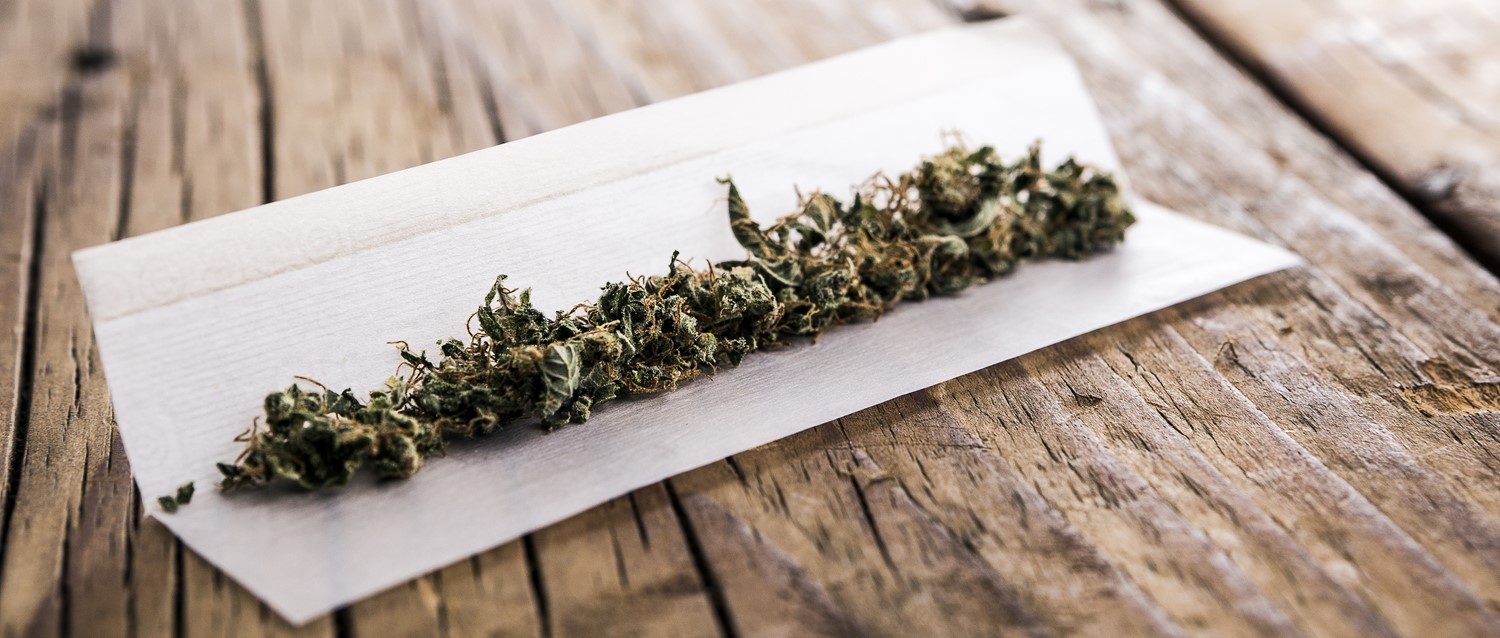
The health problems cannabis could treat in the future
Peer reviewed by Dr Sarah JarvisAuthored by Abi MillarOriginally published 11 Nov 2019
Meets Patient’s editorial guidelines
- DownloadDownload
- Share
- Language
- Discussion
- Audio Version
- Add to preferred sources on Google
Medical cannabis is a contentious subject. Advocates claim it has a wide range of potential benefits, and may be used to treat everything from chronic pain to nausea. Some users go further, saying it's the only thing that alleviates their symptoms. But what does the evidence suggest?
Sponsored
Could medical cannabis be an option for you?
If you have a diagnosed condition and standard treatments haven’t worked, you may be eligible for specialist-prescribed medical cannabis in the UK. Check your eligibility
In 2016, an independent review on the subject concurred that the drug had legitimate medical uses. Recommending that the government 'moves to introduce a system that allows lawful access to medicinal cannabis', the authors, from the All Party Parliamentary Group (APPG) for Drug Policy Reform, concluded that the status quo is out of step with the evidence.
"We came to the overall conclusions that the risks were minimal, the benefits were potentially great and there's no doubt that the government should legalise medical cannabis," says Professor Mike Barnes, a neurologist and rehabilitation physician who compiled evidence for the report.
In November 2019, two cannabis-based medicines were approved for use in England: Epidyolex® and Sativex®.
Cannabis and the law
In October 2018, former UK home secretary Sajid Javid announced that medical products derived from cannabis would be available on prescription. However, cannabis medicine could only be prescribed by specialist doctors and to patients who have exceptional clinical needs.
Outside of medicine, cannabis is controlled as a class B drug, punishable with up to five years in prison for possession.
This hardline stance leaves many people unable to access a substance they regard as a medicine. For obvious reasons, it's difficult to estimate how many people in the UK are self-medicating with herbal cannabis, but the report places the figure somewhere in between 30,000 and 1 million. It also creates obstacles for researchers who want to conduct clinical trials into the drug's medicinal uses.
Frank Warburton, a consultant and research officer who contributed heavily to the report, has strong words to say on the subject.
"The law on medicinal cannabis in the UK is complicated, illogical and nonsensical," he says. "You've got a situation where the two main constituents of the plant taken separately are considered to have medicinal value, but cannabis as a whole doesn't have medicinal value, even though there's no explanation as to how."
He is referring to tetrahydrocannabinol (THC) and cannabidiol (CBD), two compounds that are present in the cannabis plant in varying quantities. In the UK, doctors are allowed to prescribe nabilone (a synthetic analogue of THC) off licence for pain management. Meanwhile, CBD is easily accessible for UK consumers, and is even sold at Holland & Barrett.
Following new guidelines from the drugs advisory body, NICE, both Epidyolex® and Sativex® will now be available on prescription for two types of severe epilepsy (Lennox Gastaut syndrome and Dravet syndrome) and for multiple sclerosis-related muscle stiffness and spasms, known as spasticity. Doctors will not, however, be allowed to prescribe either for pain. This change is being treated as a win by campaigners, although they would like to see more medications made more widely available in the near future.
The Alfie Dingley case
The fight for cannabis-based medicines made national news with the Alfie Dingley case. A 6-year-old boy with a rare genetic form of epilepsy, Alfie could suffer up to 30 violent seizures a day. While his condition could be managed with steroids, these drugs are toxic to the body and will likely cause organ failure or psychosis over time.
In 2017, Alfie and his family travelled to the Netherlands, where he was treated with cannabis oil. His seizures all but vanished. However, after returning to the UK, he was forced to return to his regime of intravenous steroids. His mother campaigned for the UK government to 'make an exception for Alfie and grant his doctor licence to prescribe medical cannabis'.
Following an online petition and extensive campaigning for the law change, Alfie was the first to receive an NHS prescription for cannabis-based medicines. However, many others still struggle to access prescriptions, especially to drugs other than Sativex® and Epidyolex® as they have not undergone randomised controlled trials.
The evidence base
So what does the evidence actually say about the benefits of medical cannabis? And conversely, what do we know about the risks?
Barnes, who sifted through around 20,000 studies for the report, says the evidence for some indications is more clear-cut than for others.
"We were asked to review the literature for the efficacy of cannabis and the associated side effects, and I was quite surprised at the depth of evidence, given that it's illegal and difficult to do drug trials on it," he says. "There was good evidence that cannabis helps muscle spasticity, chronic pain, nausea and vomiting in chemotherapy, and anxiety. There was slightly less, but nevertheless reasonable, evidence that it helps fibromyalgia, PTSD and epilepsy. If we'd written the report now we'd have put epilepsy in the good evidence category."
He says that CBD, the cannabis-derived compound you can buy in shops, appears to have some of the same benefits.
"CBD does a few things in its own right - it treats anxiety, has an analgesic (painkilling) effect and has a very positive effect on epilepsy," he says. "However, the evidence is that the cannabis plant in total is much better than CBD for indications like pain, because all the different chemicals in the plant act in synergy. Some of the children we're hearing about with epilepsy do improve on CBD, but they improve more on cannabis extract."
Side effects and risks
In terms of the harms, the report found that the short-term side effects of cannabis were generally mild and well tolerated - they included drowsiness, a dry mouth and some dizziness. However, around 8.5% of medicinal users reported significant side effects, and 9% of users developed a dependency.
Regarding the much-discussed connection between cannabis use and schizophrenia, Barnes says there is probably a small link, at least among those who start using cannabis young and have a genetic predisposition. Since teenagers' brains are still maturing, it is thought that cannabis use could disrupt that development.
There is currently a large-scale study underway in the USA, tracing how different substances and lifestyle factors can affect the adolescent brain - marijuana use included. Further clarity on this subject is sorely needed, given that an astonishing one in three American high-schoolers regularly smoke cannabis.
In the short term, cannabis use can impede concentration, with a number of studies drawing links between cannabis consumption and a higher incidence of fatal car crashes. On top of that, heavy use may be associated with an increased risk of depression, and some studies have suggested long-term effects on cognition, memory and concentration. The Royal College of Psychiatrists has a leaflet that further explores the mental health impacts.
However, it's important to remember that medical and recreational cannabis are two separate issues. Many of the risks discussed are predominantly associated with 'skunk', a form of cannabis with a high THC content that wouldn't be prescribed medically. If medical cannabis were legalised, doctors would be able to prescribe the safest variety for each indication, in the right dosage. And it is likely that certain factors (such as being young or having a family history of schizophrenia) would be classed as a contra-indication.
"I'm not going to say medical cannabis is totally without risks, but personally I think the risks are relatively mild and minimal compared to the benefits, and I would put that ratio very strongly in favour of legalising cannabis medically," says Professor Barnes.
Research struggles
Despite all research conducted to date, there are plenty of gaps in our knowledge. For instance, we don't yet know which forms of cannabis are best for which kinds of pain, and there's a lot more that needs to be understood about the long-term effects on the mind and body. Unfortunately, setting up clinical studies can be a minefield.
"First you have to get a licence from the Home Office, and then you have to get a further licence to get hold of a good grade of cannabis," says Warburton. "Researchers have described a kind of Kafkaesque situation where they would get a Home Office licence but that would run out before they got their cannabis licence, so they'd have to start again. Ironically, opiates like heroin, which is a class A substance and generally considered much more harmful than cannabis, are easier to get hold of for research purposes."
New momentum
Luckily for the research community, it does seem that change is in the air. According to numerous polls, the majority of people in the UK think medical cannabis should be legalised, which is likely to create a degree of political momentum. Many countries across the world have already taken the jump.
With two cannabis-based medicines now available on prescription, there is now a visible path to further revolutionary treatments for a variety of conditions. But whatever the future of cannabis-based medicines, it is clear that this issue will continue to make headlines, with both the benefits and harms perpetually under scrutiny.
Patient picks for Healthcare

General health and lifestyle
How can technology help us manage health conditions?
As more and more of us use technology to manage and simplify everyday tasks, our lives are becoming increasingly digital. And when it comes to our well-being, there are a myriad of different online options to help us stay on top of our health.
by Milly Evans
General health and lifestyle
Study of homeopathy clinical trials reveals poor research practice
The body of evidence for homeopathy as a treatment for health conditions has long been contested by scientists. Now, a new study of homeopathy clinical trials concludes that the true impact of homeopathic remedies is likely to be overestimated and misleading.
by Amberley Davis
Frequently asked questions
Why is the law on medicinal cannabis considered complicated and illogical in the UK?
The law is viewed as complicated because two main compounds of the cannabis plant, THC and CBD, are separately recognised for their medicinal value. However, the entire cannabis plant is not acknowledged for its medical benefits, even though there's no clear explanation for this distinction. This creates a confusing legal framework.
Are there challenges for researchers in the UK who want to study medicinal cannabis?
Yes, researchers face significant obstacles. Obtaining the necessary licences from the Home Office for research, and then a separate licence to acquire good-grade cannabis, is a difficult and time-consuming process. This bureaucratic hurdle makes it harder to conduct clinical trials on the drug's medicinal uses.
What is the difference between Epidyolex®/Sativex® and other cannabis-based medicines in terms of accessibility?
Epidyolex® and Sativex® are specifically approved for prescription for particular conditions (two types of severe epilepsy and MS-related spasticity) because they have undergone randomised controlled trials. Other cannabis-based medicines, which have not had these trials, are much harder for patients to access, even through specialist doctors.
How do the benefits of CBD alone compare to the benefits of the whole cannabis plant for medical conditions?
While CBD alone can help with anxiety, pain, and epilepsy, the evidence suggests that the entire cannabis plant is more effective for conditions like pain. This is believed to be because the various chemicals within the plant work together in synergy, rather than just one compound acting in isolation.
Why is it thought that medical cannabis generally poses fewer risks than recreational cannabis?
Many of the risks associated with cannabis, such as significant mental health impacts, are primarily linked to 'skunk', a form of cannabis with a high THC content. If medical cannabis were legalised and prescribed by doctors, they could select the safest variety with appropriate dosage for each specific condition, potentially contraindicating it for individuals with certain risk factors like a family history of schizophrenia.
What is the current public opinion on legalising medical cannabis in the UK?
According to numerous polls, the majority of people in the UK believe that medical cannabis should be legalised. This public support is likely to generate political momentum for further changes in legislation.
About the authorView full bio
Authored by

Abi Millar
Freelance Journalist
BA (Hons), MA
Abi is a freelance journalist with a special interest in health and medicine writing.
About the reviewerView full bio

Dr Sarah Jarvis
Clinical Consultant
MA (Cantab), BM, BCh (Oxon), DRCOG, FRCGP, MBE
After training in medicine at Cambridge and Oxford, Dr Sarah Jarvis MBE became a GP.
Article history
Article also available in English, German, Spanish, French, Italian, Portuguese, Hindi, Hebrew, Arabic, and Swedish.
11 Nov 2019 | Originally published
Authored by:
Abi MillarPeer reviewed by
Dr Sarah Jarvis
Join the conversation
Share your thoughts or experiences with others in our patient communities.

Ask, share, connect.
Browse discussions, ask questions, and share experiences across hundreds of health topics.

Feeling unwell?
Assess your symptoms online for free
Sign up to the Patient newsletter
Your weekly dose of clear, trustworthy health advice - written to help you feel informed, confident and in control.
By subscribing you accept our Privacy Policy. You can unsubscribe at any time. We never sell your data.