¿Pueden las vitaminas realmente prevenir la caída del cabello?
Revisado por pares por Dr Colin Tidy, MRCGPÚltima actualización por Lynn StephenÚltima actualización 13 May 2026
Cumple con las directrices editoriales
- DescargarDescargar
- Compartir
- Language
- Discusión
- Versión en audio
- Agregar a fuentes preferidas en Google
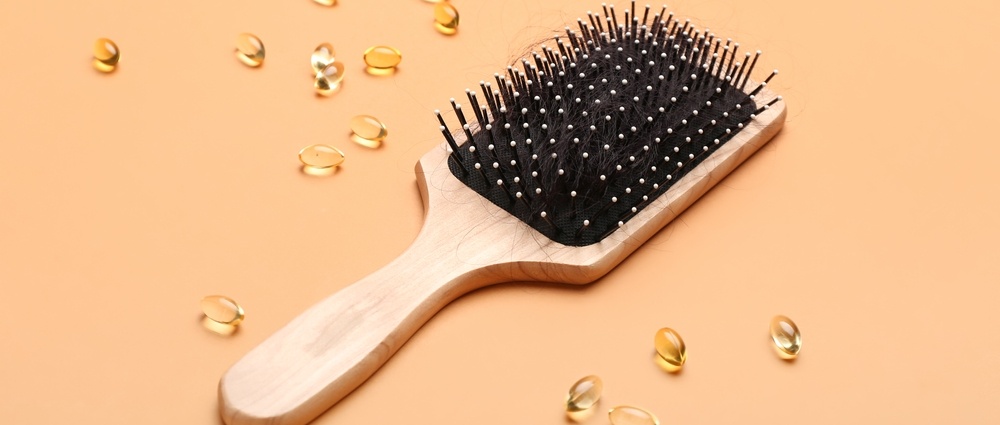
En la industria de la salud y la belleza, los suplementos vitamínicos para prevenir la caída del cabello y promover su crecimiento son populares. ¿Pueden las vitaminas ser una buena opción de tratamiento? ¿Qué vitaminas cuentan con más evidencia?
Patrocinado
Patient recomienda... HEIGHTS
An all-in-one multivitamin with everything you need and nothing you don't.
20 vital nutrients, backed by 330+ scientific studies
Delayed-release capsules to maximise nutrient absorption
Supports mental performance, immune system, energy and more

¿Qué causa la pérdida de cabello?
For most of us, hair does much more than protect us from the sun and regulate our temperature. As hair plays a significant part in our physical appearance, it can help to give us confidence and make us feel good about ourselves. As a result, hair loss may be a big source of estrés and despair.
These changes can be temporary or permanent. It all depends on the type of hair loss you're experiencing. There are many types of hair loss.
The two most common forms of hair loss are:
1. Permanent hair loss (androgenetic alopecia):
Male pattern baldness is the most common form of permanent hair loss, affecting around one third of men aged 30 years, half of men aged 50 years, and nearly all men in their 60s. With age, male hormone changes affect the size and ability of hair follicles - tiny pouches under your scalp - to grow hairs.
Women can also experience androgenetic alopecia (AGA), although this may result in a general thinning of hair rather than a pattern. Hormonal changes are also to blame, most often as a result of the menopausia.
2. Temporary hair loss (alopecia areata):
This type of hair loss is an autoimmune disease - a fault in your immune system means that it attacks your own hair follicles causing bald patches.
Alopecia areata (AA) can lead to bald patches or total baldness in some cases. The good news is it is usually temporary, although in some cases the hair loss is permanent.
Telegen effluvium (TE) is a form of temporary alopecia that can be caused by stress. This interrupts the growth of some hairs which causes more than usual to fall out.
The health of your hair follicles is crucial in both forms of hair loss. This is where micronutrients such as vitamins and minerals come into the picture.
Dermatologist Julie Van Onselen explains that vitamins and minerals have a role in normal hair follicle development.
"Deficiency of these nutrients may be associated with alopecia, which may be permanent or temporary hair loss," she says.
¿Qué deficiencia de vitamina causa la caída del cabello?
Your scalp contains around 100,000 hair follicles.1 Of these, 90% require vitamins, minerals, and other essential micronutrients in order to produce healthy hair.
This is why experts believe that vitamin deficiency may lead to hair loss. According to Van Onselen, there is strong evidence linking two specific vitamin deficiencies with hair loss.
"Current evidence indicates that when a person is deficiencia de vitamina D, supplementing vitamin D may help with AGA hair loss," she says.
"Deficiencia de hierro may also be a cause of this type of hair loss in women. Vitamin C is important for hair loss associated with iron deficiency, so supplementation of this vitamin may be helpful," she adds.
¿Puede la suplementación con vitaminas salvar tu cabello?
Before you splash the cash on the huge range of hair growth supplements now widely available, Van Onselen cautions that there is limited medical evidence on the role of vitamins for preventing hair loss that's not directly caused by a vitamin deficiency.
Además, aunque puedes comprar muchas vitaminas y suplementos diferentes para la pérdida de cabello, es importante saber que hay evidencia de que algunas vitaminas funcionan mejor para la pérdida de cabello que otras.
Van Onselen says that the strongest evidence is for vitamins D and E, and for the mineral iron.
She explains: "There is currently limited evidence for the supplementation of other vitamins to prevent hair loss."
Vitamina D para la pérdida de cabello
Papel en el cabello: vitamin D is important for keratinocytes - skin cells that produce keratin, a protein found in hair, skin, and nails. When you don't have enough vitamin D, keratinocytes in hair follicles can't regulate hair growth properly. This is why low vitamin D levels have been linked with temporary hair loss.2
Suplementos para la pérdida de cabello: experts recommend taking vitamin D supplements alongside a healthy, balanced diet for AGA, AA, and TE hair loss. This may improve your symptoms and slow hair loss down, although studies of hair regrowth remain limited.
Vitamina C y hierro para la pérdida de cabello
Papel en el cabello: tu cuerpo necesita vitamina C para absorber el hierro, un mineral que desempeña un papel clave en los glóbulos rojos que transportan oxígeno por todo tu cuerpo. Cuando no tienes suficiente hierro, se puede usar menos oxígeno para el crecimiento y reparación de las células que estimulan el crecimiento del cabello.
Suplementos para la pérdida de cabello: si tienes deficiencia de hierro, Van Onselen sugiere que tanto los suplementos de vitamina C como de hierro pueden ser útiles para revertir la pérdida temporal de cabello.
Vitamina A para la pérdida de cabello
Papel en el cabello: esta vitamina es necesaria para el crecimiento saludable de las células, incluidas las células del cabello. También apoya la producción de sebo, una sustancia que mantiene el cabello hidratado y previene la rotura del cabello.
Suplementos para la pérdida de cabello: most people should be able to get enough vitamin A from their diet without supplementation. This is important to remember, as Van Onselen cautions that taking too much vitamin A through supplements can in fact result in hair loss. Therefore, you should be mindful of how much vitamin A supplement products contain. Encuentra los límites diarios recomendados aquí.
Vitamina B7 (biotina) para la pérdida de cabello
Papel en el cabello: la biotina ayuda a activar las proteínas que contribuyen al crecimiento saludable del cabello. Esta vitamina también puede estimular la producción de queratina.3
Suplementos para la pérdida de cabello: suplementos de biotina para la pérdida de cabello are only proven to benefit those with biotin deficiency, and a normal diet is thought to provide you with enough biotin. There are no high-quality studies to show that supplementation can benefit people with healthy biotin levels, or that it can effectively treat ADA, AA, or TE hair loss.
Vitamina B12 para la pérdida de cabello
Papel en el cabello: la vitamina B12 ayuda en la producción de glóbulos rojos, que transportan el oxígeno tan importante a los folículos pilosos.1
Suplementos para la pérdida de cabello: there is limited evidence that taking this vitamin can prevent or restore hair loss and more studies are needed. Scientists have tried to determine whether there is a relationship between vitamin B12 deficiency and temporary hair loss, but many studies have found no significant correlation.
Vitamina E para la pérdida de cabello
Papel en el cabello: this vitamin supports your scalp health, preserving your skin barrier (lipid layer), keeping a healthy balance of oxidants and antioxidants, and helping to protect against free-radical damage - unstable atoms that can damage skin and hair cells. A healthy scalp means your hair has a strong base to grow from.
Suplementos para la pérdida de cabello: la evidencia sobre el papel de la vitamina E en la pérdida de cabello es inconsistente y actualmente no hay evidencia de que los suplementos de vitamina E puedan tratar la pérdida de cabello permanente o temporal.
Otros remedios para la pérdida de cabello
Si has notado que tu cabello se está retirando de las sienes, volviéndose más fino o formando patrones de calvicie, puede ser tentador gastar dinero en vitaminas que afirman tratar la pérdida de cabello.
Antes de hacerlo, primero debes revisar tu dieta, que es tu fuente principal y más importante de vitaminas. Es importante preguntarte si estás comiendo lo suficiente de las cosas adecuadas. Los suplementos vitamínicos solo deben tomarse como complemento, no como sustituto, de una dieta rica en nutrientes.
There is a trend for using aceite de romero to boost your hair, but there is little evidence this actually works.
Remember, your hair loss may not be linked to a vitamin deficiency at all. In many cases, it's a natural part of ageing. In others, there are other culprits you need to address, such as stress or medicine that's triggering an adverse reaction.
Cualquier tratamiento medicinal que desees probar dependerá del tipo de pérdida de cabello que estés experimentando. Si no estás seguro de qué probar, un médico podrá aconsejarte.
Los tratamientos comunes incluyen:
Cremas, geles e inyecciones de esteroides.
Inmunoterapia tópica: donde se aplica en la piel una sustancia que desencadena una reacción alérgica, como la difenciprona, en concentraciones crecientes. La reacción cutánea resultante parece interrumpir el proceso de AA, permitiendo que el cabello vuelva a crecer.
Medicamentos para el crecimiento del cabello - finasterida y minoxidil.
Cirugía del cuero cabelludo.
Tratar o no tratar
Depending on the type of hair loss, or if you have any other symptoms, you may want to find out the cause of your hair loss. In itself, hair loss alone is not a health concern, and the choice to try and treat it is entirely your own.
Many people choose not to treat male pattern baldness or female permanent hair loss. While it can be upsetting, this type of hair loss is natural and need not affect your wellbeing.
Si se trata de una pérdida de cabello temporal, el cabello puede tardar varios meses en volver a crecer. Puede que desees esperar y ver si se recupera por sí solo antes de considerar suplementos vitamínicos u otro método de tratamiento.
Selecciones del paciente para Cabello y cuero cabelludo

Salud de la piel, uñas y cabello
¿El aceite de romero realmente ayuda al crecimiento del cabello?
Siempre estamos en busca del último producto milagroso para la salud, especialmente si es económico y fácil de encontrar en la calle principal. Y TikTok está lleno de afirmaciones de que el aceite de romero es un remedio para el rápido crecimiento del cabello. Pero, ¿hay alguna evidencia de que funcione?
por Victoria Raw
Salud de la piel, uñas y cabello
¿Es bueno el aceite de coco para tu cabello?
El aceite de coco puede ofrecer una variedad de beneficios para tu cabello. Probablemente hayas oído hablar de su uso en la piel, pero muchas personas lo utilizan para ayudar con el crecimiento del cabello o para desenredarlo. Exploramos los posibles beneficios y la mejor manera de incluir el aceite de coco en tu rutina de cuidado capilar.
por Victoria Raw
Preguntas frecuentes
Si estoy experimentando pérdida de cabello, ¿debería comenzar inmediatamente a tomar suplementos vitamínicos?
No necesariamente. Aunque las deficiencias de vitaminas pueden contribuir a la pérdida de cabello, es crucial primero observar tu dieta como tu fuente principal de vitaminas. Los suplementos vitamínicos deben tomarse solo como complemento de una dieta rica en nutrientes, no como un reemplazo. Además, tu pérdida de cabello podría no estar relacionada con una deficiencia de vitaminas en absoluto, sino más bien con otros factores como el envejecimiento, el estrés o reacciones adversas a medicamentos. Un médico puede ayudarte a aconsejarte sobre la causa específica y el tratamiento.
¿Puede el estrés causar pérdida de cabello temporal?
Sí, el estrés puede causar un tipo de pérdida de cabello temporal llamada efluvio telógeno (TE). Esto ocurre porque el estrés interrumpe el ciclo normal de crecimiento de algunos cabellos, lo que lleva a que se caigan más cabellos de lo habitual.
¿Qué son los queratinocitos y cómo se relacionan con el crecimiento del cabello?
Los queratinocitos son células de la piel responsables de producir queratina, una proteína vital que se encuentra en el cabello, la piel y las uñas. En los folículos pilosos, los queratinocitos ayudan a regular el crecimiento del cabello. Si tienes niveles bajos de vitamina D, estas células pueden no funcionar correctamente, lo que puede estar relacionado con la pérdida temporal de cabello.
¿Es posible tomar demasiadas vitaminas para la pérdida de cabello?
Sí, es posible. Por ejemplo, tomar demasiada vitamina A a través de suplementos puede en realidad provocar la caída del cabello, en lugar de prevenirla. Es importante tener en cuenta los límites diarios recomendados para la ingesta de vitaminas.
¿Existen otros remedios no vitamínicos que puedan ayudar con la pérdida de cabello?
Aunque hay una tendencia a usar aceite de romero para fortalecer el cabello, hay poca evidencia médica que respalde su efectividad. Si estás experimentando pérdida de cabello, es mejor consultar a un médico para entender la causa subyacente y discutir tratamientos apropiados según el tipo de pérdida de cabello que tengas.
Lecturas adicionales y referencias
- Almohanna HM, Ahmed AA, Tsatalis JP, et al; The Role of Vitamins and Minerals in Hair Loss: A Review. Dermatol Ther (Heidelb). 2019 Mar;9(1):51-70. doi: 10.1007/s13555-018-0278-6. Epub 2018 Dec 13.
- Saini K, Mysore V; Role of vitamin D in hair loss: A short review. J Cosmet Dermatol. 2021 Nov;20(11):3407-3414. doi: 10.1111/jocd.14421. Epub 2021 Sep 22.
- Soleymani T, Lo Sicco K, Shapiro J; The Infatuation With Biotin Supplementation: Is There Truth Behind Its Rising Popularity? A Comparative Analysis of Clinical Efficacy versus Social Popularity. J Drugs Dermatol. 2017 May 1;16(5):496-500.
Sobre el autorVer biografía completa

Amberley Davis
Escritora senior
BA (Hons), CPD
Amberley es una escritora senior en Patient y ha escrito extensamente sobre una variedad de temas de salud y bienestar.
Acerca del revisorVer biografía completa

Dr Colin Tidy, MRCGP
Médico General, Autor Médico
MBBS, MRCGP, MRCP (Paediatrics), DCH
El Dr. Colin Tidy es un médico del NHS, con sede en Oxfordshire.
Historial del artículo
La información en esta página es revisada por pares por clínicos calificados.
Artículo también disponible en Inglés, Alemán, Español, Francés, Italiano, Portugués, Hindi, Hebreo, Árabe, y Sueco.
Next review due: 13 May 2029
13 May 2026 | Última versión
26 Jun 2022 | Publicado originalmente
Escrito por:
Amberley Davis

Pregunta, comparte, conecta.
Navega por discusiones, haz preguntas y comparte experiencias en cientos de temas de salud.

¿Te sientes mal?
Evalúa tus síntomas en línea de forma gratuita
Suscríbete al boletín de Patient
Tu dosis semanal de consejos de salud claros y confiables, escritos para ayudarte a sentirte informado, seguro y en control.
Al suscribirte aceptas nuestros Política de Privacidad. Puedes darte de baja en cualquier momento. Nunca vendemos tus datos.
Más sobre la salud de la piel, uñas y cabello
- Peelings químicos: beneficios, costos, riesgos y recuperación
- Causas comunes de picazón en el cuero cabelludo
- Quejas comunes de la piel: entendiendo la tiña versicolor
- ¿Necesitas probar una mascarilla facial de aguacate?
- ¿Funciona Bio-Oil en las estrías?
- ¿El humectante con SPF te ofrece suficiente protección solar?
- ¿La menopausia causa pérdida de cabello?
- Todo lo que necesitas saber sobre el eccema en bebés
- Cómo tratar una picadura de avispa
- ¿Es bueno el aceite de coco para tu cabello?
- ¿Tu rutina de ejercicio te está causando acné?
- Aumento de casos de sarna en todo el Reino Unido
- Las mejores formas de deshacerse de los piojos
- Ingredientes de la crema para cicatrices a tener en cuenta
- Comprendiendo la pérdida de cabello en mujeres
- Opciones de tratamiento para verrugas y papilomas
- ¿Qué es la dermatitis vulvar?
- Qué hacer si la psoriasis te está afectando
- Qué hacer si te pica un erizo de mar
- ¿Ayudará una dieta sin gluten al eczema de mi hijo?