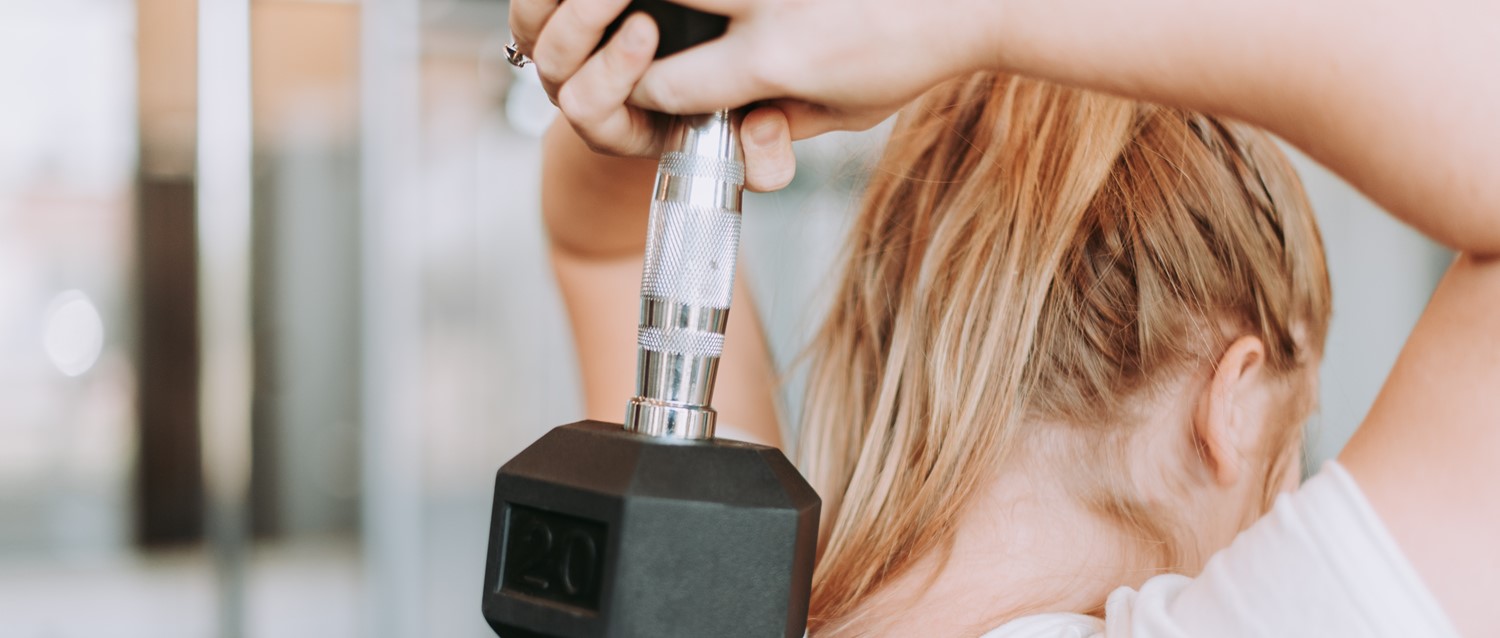
Is your exercise routine giving you acne?
Peer reviewed by Dr Sarah JarvisLast updated by Andrea DowneyLast updated 21 Oct 2019
Meets Patient’s editorial guidelines
- DownloadDownload
- Share
- Language
- Discussion
- Audio Version
- Add to preferred sources on Google
We all expect a sore muscle or two after a heavy workout session, but there's one side effect of exercise you probably didn't know about - acne. Yes, that's right, exercise can cause acne and it can occur all over your body. Dermatologist Dr Anjali Mahto explains why your workout could be causing breakouts.

Have you ever noticed you're getting spots more often than usual when you exercise? Perhaps those spots are in places you wouldn't expect, like your back, bra line and bum.
It's quite possible it's caused by exercise. Specifically, the clothes you wear when working out.
"Acne due to physical activity can be related to repetitive pressure from tight clothing when exercising," says Dr Mahto, of the British Association of Dermatologists.
"This type of acne can occur anywhere on the body, although it is most common on areas that are more frequently subjected to rubbing, such as the back, shoulders, buttocks and, if a tight hat or hairband is being worn, the forehead.
"Tight fabrics, sweat and heat can block hair follicles and create a warm, moist environment for bacteria to multiply in. This combination of blocked hair follicles and multiplying bacteria can lead to acne forming."
Spot of bother ... should I quit exercise?
As tempting as it might be to sit back on the couch in front of the telly as soon as you notice a breakout, we all know exercise is part of a healthy lifestyle so giving up on it isn't the answer.
You just need to take steps to manage what might be causing the spots. Unfortunately, that might mean re-evaluating your workout wardrobe.
"To reduce the chances of acne forming due to exercise, try to avoid exposing your skin to prolonged periods of friction and wearing tight-fitting items of clothing and accessories," Dr Mahto says.
"If you are doing an activity where you are likely to sweat, wear loose, breathable fabrics. Where possible, change out of exercise wear and shower soon after you finish working out."
It's also a good idea to exfoliate your skin regularly, especially in areas that get rubbed by tight clothing. This will prevent a build-up of dead skin cells which can also block your pores and hair follicles, leading to spots.
What is acne?
To understand why you're getting breakouts, it's important to understand what actually causes acne, whether it's made worse by exercise or not.
Many people mistake acne with uncleanliness, when actually the condition has nothing to do with how often a person washes and everything to do with hormones.
"Acne starts in hair follicles, which are made up of a follicle shaft, a hair and an oil-producing gland, known as the sebaceous gland," Dr Mahto explained.
"The sebaceous glands of people who get acne are sensitive to normal blood levels of certain hormones. These cause the glands to produce an excess of oil.
"At the same time, the dead skin cells lining the pores are not shed properly and clog up the follicles. These two effects result in a build-up of oil, producing blackheads and whiteheads."
Help is available
Luckily, there is a myriad of treatments available for acne, ranging from over-the-counter washes and creams to prescription retinoids.
If you have breakouts you've probably already Googled natural acne treatments, but there is no proven natural remedy that works. In fact, they're likely to cause further skin irritation so it's best to steer clear of those altogether.
"Over-the-counter treatments include benzoyl peroxide, salicylic acid, azelaic acid, nicotinamide and some retinols. Some of these can be irritating to the skin, so it may be advised that the treatment is initially used on a small area of affected skin for a few applications before being applied to the entire affected area," Dr Mahto says.
"It may then be recommended to gradually increase the use of the treatment - for example, using it once or twice weekly - gradually building to regular daily use."
Speak with a pharmacist if you're unsure which treatment is best for you. And remember, you won't see results overnight - it takes at least eight weeks before you will start to see a difference, depending on how severe your acne is.
If you've tried over-the-counter treatments and nothing is working, then you can speak with your pharmacist, who may be able to offer medications usually only available on prescription. If all else fails, a GP or dermatologist may be able to offer other prescription treatments.
Patient picks for Acne
Skin, nail and hair health
Do any natural remedies really work for acne?
Natural skin treatments you can find in your own home are becoming more and more popular, but is there any evidence to suggest they can cure acne? The answer for most people is no, according to Dr Anjali Mahto of the British Association of Dermatologists, who says natural treatments could even cause further skin irritation.
by Andrea Downey

Skin, nail and hair health
Could your face mask be causing your acne?
Have you noticed you're breaking out more often than usual and in areas where your face mask sits? You're not alone. 'Maskne' is one of the unexpected consequences of the coronavirus pandemic. So why do we get it, and how can we get rid of it?
by Andrea Downey
About the author

Andrea Downey
About the reviewerView full bio

Dr Sarah Jarvis
Clinical Consultant
MA (Cantab), BM, BCh (Oxon), DRCOG, FRCGP, MBE
After training in medicine at Cambridge and Oxford, Dr Sarah Jarvis MBE became a GP.
Article history
The information on this page is peer reviewed by qualified clinicians.
Article also available in English, German, Spanish, French, Italian, Portuguese, Hindi, Hebrew, Arabic, and Swedish.
21 Oct 2019 | Latest version
Join the conversation
Share your thoughts or experiences with others in our patient communities.

Ask, share, connect.
Browse discussions, ask questions, and share experiences across hundreds of health topics.

Feeling unwell?
Assess your symptoms online for free
Sign up to the Patient newsletter
Your weekly dose of clear, trustworthy health advice - written to help you feel informed, confident and in control.
By subscribing you accept our Privacy Policy. You can unsubscribe at any time. We never sell your data.
More in skin, nail and hair health
- 4 common winter hair problems - and how to treat them
- Can hair transplants improve mental health?
- UpdatedCommon rosacea triggers and how to avoid them
- Eczema in children: how to soothe your child
- How the seasons affect your eczema
- How to avoid tick bites and Lyme disease
- How to keep your feet healthy this summer
- How to manage skin issues at menopause
- How to prevent and soothe skin cysts: a simple guide
- Is there a link between diet and acne?
- Micellar water: skincare benefits and uses
- Rosacea treatments: which is right for you?
- Tick bites: how to recognise and treat
- What are the benefits of collagen, and can it prevent skin ageing?
- What causes male pattern baldness?
- What does aftersun do and do you really need it?
- What is vulvar dermatitis?
- When should I worry about an insect bite?
- Why is my facial eczema worse in summer?
- Why it's so important to know your skin type this summer