Tratamiento de infecciones por hongos recurrentes
Revisado por pares por Dr Philippa Vincent, MRCGPÚltima actualización por Dr Hayley Willacy, FRCGP Last updated 31 Jul 2024
Cumple con las directrices editoriales
- DescargarDescargar
- Compartir
- Language
- Discusión
- Versión en audio
- Add to preferred sources on Google
En esta serie:Flujo vaginalCandidiasis vaginalVaginosis bacterianaPreventing and treating bacterial vaginosis
Una infección por hongos recurrente (candidiasis vaginal) se define como un episodio de candidiasis cuatro o más veces en un año. En algunos casos, existe una razón médica por la cual eres más propensa a infecciones por hongos. Algunos tratamientos hormonales también pueden afectar tu riesgo de episodios repetidos.
At a glance
Recurrent thrush is 4 or more vaginal yeast infections within a year.
It is often not known why some women get recurring thrush.
Poorly controlled diabetes can increase the risk of recurrent thrush.
Treatment for recurrent thrush often involves antifungal medicine, sometimes taken long-term.
Your doctor may do tests before treatment to rule out other causes.
Lifestyle measures can help reduce your risk of thrush returning.
See a doctor if treatment does not improve your symptoms.
En este artículo:
Video picks for Problemas vaginales y vulvares
A vaginal yeast infection (candidiasis vaginal) is an extremely common cause of flujo vaginal - up to 3 in 4 women will have at least one episode during their lives. In most cases, thrush in women settles with simple treatment, either topical (applied to the vagina in the form of pessaries or antifungal creams) or oral (a tablet or tablets). However, some women either have repeated new infections, or find that they still have symptoms because the initial thrush treatment has not been effective.
Continúa leyendo abajo
What causes recurring yeast infections?
Speculum examination showing vaginal thrush
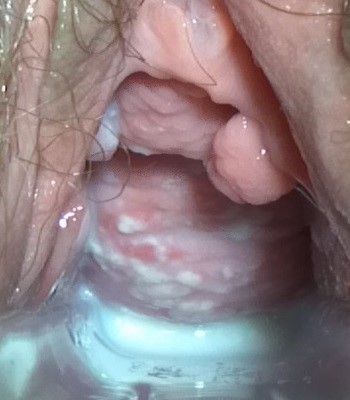
© Mikael Häggström, CC0, via Wikimedia Commons
Of women who develop a first bout of vaginal thrush, about 5 in 100 of them will get problems with recurring thrush. In most cases, the reason why this occurs is not known. Some women just seem more prone than usual to develop thrush. However women with high blood sugar (due to poorly controlled diabetes) and women with weakened immune systems may be more likely to develop recurrent thrush.
There is some debate as to whether women taking terapia de reemplazo hormonal (TRH) or birth control pills such as the píldora anticonceptiva oral combinada (COC) are more likely to develop a recurring yeast infection - the evidence is not yet clear.
How do I get rid of a recurring yeast infection?
Volver al contenidoIf you have repeated bouts of thrush then one option is simply to treat each bout as and when it occurs. See the separate leaflet Vaginal thrush (Yeast infection) for treatments for thrush.
Recurrent thrush is defined as 4 or more symptomatic episodes per year. If you have four or more episodes of vaginal thrush a year, with at least 2 episodes confirmed by a swab test, your doctor may suggest a different approach.
Before they do this, they may want to exclude another cause for your symptoms. This could include:
Taking a vaginal swab and sending it the laboratory to check for evidence of thrush or other infection.
Checking the pH (acidity level) in your vagina using a simple test strip. A lower pH (4.5 or below) makes it more likely that thrush is the cause. A higher pH (above 4.5) makes vaginosis bacteriana (BV) or trichomonas infection (a sexually transmitted infection) more likely.
Other swabs or tests as appropriate.
Treatment for recurrent thrush
Using one of the usual treatments for vaginal thrush (topical treatments or tablets) - but for longer than usual. Your doctor will advise exactly how long to use the treatment for. Vaginal thrush can be treated with over the counter medicines, but as you need a longer course of treatment, your GP will give you a prescription for treatment if you need it.
How the recurring yeast infection is treated will also depend on your preferences and other factors such as whether you can tolerate the treatment, or have ever reacted badly to it, your age and whether you're pregnant (in which case vaginal pessaries will usually be advised). If you're 12-15 years old, or it's not clear whether your symptoms are due to recurrent vaginal thrush, your doctor may recommend a hospital specialist referral.
The first-line recommended 'induction treatment' is three doses of fluconazole 150 mg tablets (to be taken every 72 hours).
This is followed by regular 'maintenance treatment' to stop the thrush coming back, with once weekly tablets of fluconazole 150 mg for six months.
If you can't take fluconazole tablets for whatever reason, topical therapy (such as clotrimazole 500 mg vaginal pessary) can be used as induction treatment for 7-14 days, depending on how your symptoms respond. Maintenance treatment would then be a clotrimazole 500 mg vaginal pessary inserted once a week for six months or itraconazole tablets 50-100 mg once daily for six months.
Most women remain clear of thrush during maintenance treatment. If you and your doctor decide maintenance treatment is best for you, this will usually last for six months.
After treatment is stopped, many women remain free of thrush, or only develop the occasional bout again. However, some women return to developing recurring yeast infections. If this happens, the treatment plan can be repeated, and maintenance treatment continued for longer.
Regardless of the treatment you and your doctor agree, it's important to use lifestyle measures to reduce your risk of recurring yeast infections (you can find out more below). In addition, you should speak to your doctor if:
Your symptoms don't improve with treatment.
You develop thrush whilst on maintenance treatment. This may indicate that you have a resistant strain of Candida spp. which may require an alternative treatment.
You become pregnant or are breastfeeding.
You develop side-effects from the medication.
You develop new symptoms, such as smelly discharge, ulcers or blisters, abnormal vaginal bleeding or a bloodstained discharge.
You feel unwell in yourself.
Continúa leyendo abajo
Can I prevent recurring yeast infections?
Volver al contenidoThe yeast that causes yeast infections, called Candida spp. such as Candida albicans, thrives in warm, moist, airless environments. General lifestyle changes that help prevent single episodes of vaginal thrush can also help reduce the risk of recurrent thrush.
If you have diabetes, your risk of recurring yeast infections is higher if your blood sugar is consistently high. Working with your diabetes team to bring your blood sugar under control can cut the risk of recurrent bouts of thrush.
If you experience recurring yeast infections, your doctor or nurse may also discuss your current method of contraception with you and suggest a change. There has been talk in the past about the píldora anticonceptiva oral combinada (COC) (the birth control pills that contain both oestrogen and progesterone hormones) possibly making recurrent vaginal thrush more likely. However, the evidence around this is a little unclear.
Patient picks for Problemas vaginales y vulvares

Salud de la mujer
Quiste y absceso de Bartholin
Las glándulas de Bartholin son pequeñas glándulas que están justo al lado de la parte inferior de la entrada de la vagina, una a cada lado. Cada glándula tiene aproximadamente el tamaño de un guisante. A menos que estén hinchadas o infectadas, normalmente no se pueden ver ni sentir estas glándulas. Están dentro de los tejidos blandos (labios) junto a la abertura vaginal. Cada glándula produce una pequeña cantidad de líquido similar al moco. El líquido de cada glándula se drena por un tubo corto (conducto) llamado conducto de la glándula de Bartholin. Cada conducto mide aproximadamente 2 cm de largo y sale hacia la parte inferior de la abertura de la vagina. El líquido ayuda a mantener húmeda la entrada de la vagina.
por la Dra. Rachel Hudson, MRCGP
Salud de la mujer
Candidiasis vaginal
La candidiasis vaginal (también conocida como infección por hongos vaginal o candidiasis vulvovaginal) es una infección de la vagina y/o vulva causada por un hongo llamado cándida. En este folleto cubriremos los síntomas de la candidiasis vaginal así como los posibles tratamientos para la candidiasis.
by Dr Hayley Willacy, FRCGP
Preguntas frecuentes
What is considered a recurring yeast infection?
A recurring yeast infection, also known as recurrent thrush, is defined as having four or more symptomatic episodes in one year. For a doctor to consider different treatment approaches, at least two of these episodes should be confirmed by a vaginal swab test.
What is 'induction treatment' and 'maintenance treatment' for recurring thrush?
Induction treatment is the initial treatment to clear up an active thrush infection, usually involving three doses of fluconazole tablets taken every 72 hours. Maintenance treatment follows this and aims to prevent the thrush from returning, typically with once-weekly fluconazole tablets for six months. If fluconazole tablets cannot be used, topical treatments can be used for both induction and maintenance.
If I'm using the maintenance treatment, what should I do if the thrush comes back?
If you develop thrush while on maintenance treatment, you should speak to your doctor. This could suggest that you have a resistant strain of Candida (the yeast that causes thrush) which might mean you need a different type of treatment.
What lifestyle changes can help prevent recurring yeast infections?
The yeast that causes infections thrives in warm, moist, airless environments. General lifestyle changes that help prevent single episodes of thrush can also help reduce the risk of it returning. If you have diabetes, managing your blood sugar levels effectively can also significantly lower your risk of recurrent thrush.
Could my contraception be contributing to recurring yeast infections?
There has been discussion about whether the combined oral contraceptive (COC) pill might make recurrent vaginal thrush more likely, but the evidence on this is not yet clear. If you experience recurring yeast infections, your doctor or nurse might discuss your current contraception method with you and suggest a change.
When should I contact my doctor about my recurring thrush symptoms?
You should contact your doctor if your symptoms don't improve with treatment, if you develop thrush while on maintenance treatment, if you become pregnant or are breastfeeding, if you experience side-effects from the medication, if you develop new symptoms like smelly discharge, ulcers, blisters, or abnormal vaginal bleeding, or if you generally feel unwell.
Lecturas adicionales y referencias
- Candida - female genital: recurrent infection; NICE CKS, octubre 2023 (solo acceso en el Reino Unido)
- Candida - female genital; NICE CKS, octubre 2023 (solo acceso en el Reino Unido)
- Vaginosis bacteriana; NICE CKS, julio 2023 (acceso solo en el Reino Unido)
- Flujo vaginal; NICE CKS, febrero 2024 (acceso solo en el Reino Unido)
Continúa leyendo abajo
About the authorView full bio

Dr Hayley Willacy, FRCGP
Médico General, Autor Médico
MBChB (1992), DRCOG, DFFP, MRCOG (Part 1) MRCGP (2007), DFSRH (2013), MSc - medical education (2020)
Dr Hayley Willacy was an NHS GP working in northwest England, who retired from clinical practice in 2022 after 30 years.
About the reviewerView full bio

Dra. Philippa Vincent, MRCGP
Médico General, Autor Médico
MB BS, Bsc, MRCGP (2000), DCH, DFSRH, DRCOG
Dra Philippa Vincent is an NHS GP working in North London.
Historial del artículo
La información en esta página está escrita y revisada por pares por clínicos calificados.
Próxima revisión: 30 de julio de 2027
31 Jul 2024 | Última versión

Pregunta, comparte, conecta.
Navega por discusiones, haz preguntas y comparte experiencias en cientos de temas de salud.

¿Te sientes mal?
Evalúa tus síntomas en línea de forma gratuita
Suscríbete al boletín de Patient
Tu dosis semanal de consejos de salud claros y confiables, escritos para ayudarte a sentirte informado, seguro y en control.
By subscribing you accept our Política de Privacidad. Puedes darte de baja en cualquier momento. Nunca vendemos tus datos.