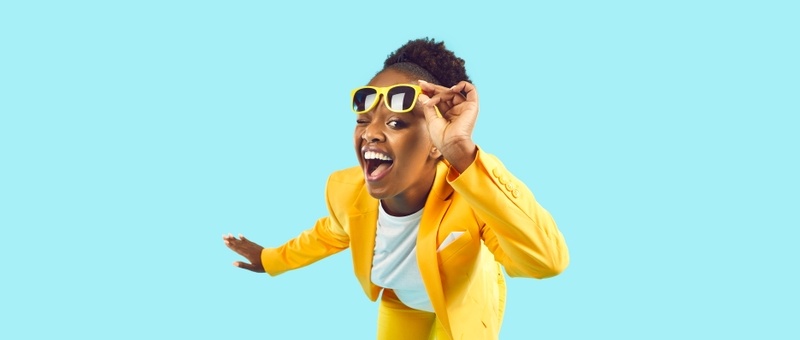
Más que un simple error de moda: los peligros ocultos de las gafas de sol falsas
Revisado por pares por Dr Colin Tidy, MRCGPEscrito por Victoria RawPublicado originalmente 4 de mayo de 2026
Cumple con las directrices editoriales
- DescargarDescargar
- Compartir
- Language
- Discusión
- Versión en audio
- Agregar a fuentes preferidas en Google
The days are getting sunnier, and let’s be honest - while many of us reach for sunglasses to shield our eyes from the sun’s glare, we’re also drawn to them for their style. All too often, we sacrifice eye health in favour of a designer logo - hoping someone will spot the brand name on the frame.
If the real thing is out of reach, it’s tempting to opt for knockoffs. But as Mr Alex Day warns, wearing fake designer sunglasses could lead to permanent, lasting harm to your sight.
When you buy a counterfeit designer bag, piece of clothing, watch, or pair of shoes, the worst outcome is usually minor - perhaps a sole comes loose, or a watch hand falls off. These faults are frustrating, but they don’t pose a health hazard in the way counterfeit sunglasses can.
Mr Alex Day, a leading Consultant Ophthalmologist at Moorfields Private Eye Hospital, cautions that buying fake sunglasses is effectively gambling with your sight - an act that could lead to irreversible, long-term damage to your vision.
"Counterfeit eyewear is uniquely dangerous because it usually features dark-tinted lenses with absolutely zero UV protection,” he says. “From a medical perspective, wearing them is actually significantly worse than wearing no sunglasses at all."
Mr Alex Day

Why is UV protection so important?
While getting a healthy amount of sunlight can be good for you, it’s important to protect yourself when spending time outdoors. Beyond the well-known dangers of sunburn, your eyes are also highly vulnerable to sun exposure. Sunlight contains ultraviolet (UV) radiation, which can damage both your eyes and the delicate skin surrounding them.
Wearing sunglasses with proper UV protection helps shield your eyes from this harm. When choosing a pair, always check that they meet recognised UV safety standards.
The connection between fake sunglasses and ‘dilation danger’
It’s not always true that higher-priced sunglasses guarantee superior UV protection. However, established brands are more likely to meet safety regulations and clearly display appropriate certification.
According to Day, buying imitation designer sunglasses can expose you to a physiological risk known as ‘dilation danger’.
"When you step into bright sunlight, your pupils naturally constrict to reduce the amount of light entering the eye,” he explains. “When you put on dark sunglasses, your brain is tricked into thinking you are in a dark room, causing your pupils to dilate and open up.
"If those sunglasses are counterfeit and lack UV filters, you are effectively opening the floodgates, allowing a massive, unfiltered dose of harmful UVA and UVB radiation to penetrate straight through to the lens and retina."
Day adds that, over time, this intense UV exposure causes cumulative cellular damage.
Long-term exposure to unfiltered sunlight can increase your chance of developing:
Cataratas - where the usually clear lens of your eye becomes cloudy.
Pterygium - growths of tissue over the clear cornea of your eye.
Eyelid cancers.
Retinal issues - such as age-related macular degeneration.
Choosing the right sunglasses
The most reliable way to choose a safe pair of sunglasses this summer - whether designer or not - is to carry out a simple 'safety check' before you buy.
Day offers some quick tips to making a safe choice:
Look for the certifications - if you’re buying sunglasses in the UK, they need to meet proper safety standards. Make sure they block 100% of both UVA and UVB rays. You’ll usually see this marked as CE, UV400, or the newer UKCA label.
Do a quick price sense-check - if you spot £200 designer frames going for £25 on a beach, a market stall, or an unverified online marketplace, they are almost certainly fake and lack proper UV protection.
Polarisation is not protection - do not confuse polarised lenses with UV protection. Polarised lenses reduce glare from reflective surfaces such water or wet roads, which makes things easier to look at, but they don't automatically block UV rays. Ideally, your sunglasses should offer both.
"Ultimately, your sunglasses should be seen as safety equipment first and a fashion accessory second," concludes Day. "A £15 pair of pharmacy sunglasses with the correct safety marks will protect your eyes infinitely better than a £30 fake 'designer' pair."
Selecciones del paciente para Salud ocular
Salud ocular
Protege tu vista para el futuro: por qué tus ojos merecen un plan a largo plazo
Es un hecho de la vida que, a medida que envejecemos, ciertas funciones corporales cambian naturalmente, y la vista es una de ellas. Aunque muchos factores afectan la salud ocular y no todos están bajo nuestro control, simples hábitos saludables pueden ayudar a mantener tu visión fuerte por más tiempo. Cuidar tus ojos a medida que envejeces puede marcar una gran diferencia para mantenerte activo, independiente y capaz de hacer lo que amas.
por Victoria Raw
Salud ocular
¿Cuándo deberías preocuparte por tus ojos?
Se recomienda que te hagas un examen de la vista cada dos años, incluso si tu visión parece estar bien. Tu examen verificará tu visión y salud ocular, y detectará cualquier problema emergente. Aquí hablamos sobre qué cambios y problemas en tu visión debes observar y cuándo deberías ver a un especialista.
por Lynn Stephen
Preguntas frecuentes
¿Cuál es la diferencia entre los rayos UVA y UVB?
El artículo menciona que las gafas de sol deben bloquear el 100% de los rayos UVA y UVB para una protección adecuada. Aunque no detalla las diferencias, destaca que ambos tipos son perjudiciales y deben ser filtrados.
¿Qué significa la marca 'CE' en las gafas de sol en el Reino Unido?
En el Reino Unido, las gafas de sol deben cumplir con los estándares de seguridad adecuados. La marca 'CE' es una de las certificaciones a buscar, junto con 'UV400' o 'UKCA', indicando que las gafas de sol bloquean el 100% de los rayos UVA y UVB.
¿Puedo confiar en las gafas de sol vendidas en farmacias?
Sí, el artículo sugiere que incluso un par de gafas de sol de farmacia de £15 con las marcas de seguridad correctas protegerán tus ojos mucho mejor que los costosos pares de diseñador falsos. Las farmacias son a menudo una fuente confiable de gafas que cumplen con los estándares de seguridad.
Sobre el autorVer biografía completa

Victoria Raw
Redactora de artículos
Licenciatura en Artes (Hons), Literatura Inglesa
Victoria es una redactora de contenido en Patient, cuyos intereses especiales se centran en el bienestar mental, las tendencias sociales y el impacto de la tecnología en nuestra salud.
Acerca del revisorVer biografía completa

Dr Colin Tidy, MRCGP
Médico General, Autor Médico
MBBS, MRCGP, MRCP (Paediatrics), DCH
El Dr. Colin Tidy es un médico del NHS, con sede en Oxfordshire.
Historial del artículo
La información en esta página es revisada por pares por clínicos calificados.
Artículo también disponible en Inglés, Alemán, Español, Francés, Italiano, Portugués, Hindi, Hebreo, Árabe, y Sueco.
Next review due: 4 May 2029
4 de mayo de 2026 | Publicado originalmente
Escrito por:
Victoria RawRevisado por pares por
Dr Colin Tidy, MRCGP

Pregunta, comparte, conecta.
Navega por discusiones, haz preguntas y comparte experiencias en cientos de temas de salud.

¿Te sientes mal?
Evalúa tus síntomas en línea de forma gratuita
Suscríbete al boletín de Patient
Tu dosis semanal de consejos de salud claros y confiables, escritos para ayudarte a sentirte informado, seguro y en control.
Al suscribirte aceptas nuestros Política de Privacidad. Puedes darte de baja en cualquier momento. Nunca vendemos tus datos.
Más sobre la salud ocular
- Anatomía del ojo
- Protege tu vista para el futuro: por qué tus ojos merecen un plan a largo plazo
- Cómo vivir con moscas volantes severas en los ojos
- Cómo cuidar tus ojos mientras trabajas desde casa
- Cómo prevenir los ojos secos durante el invierno
- Cómo reducir la fatiga ocular al ver televisión
- Cómo aliviar los ojos irritados en el verano
- Cómo usar gotas para los ojos
- Cómo usar el ungüento para los ojos
- Cómo cambian tus ojos a medida que envejeces
- ¿Tu oficina está dañando tus ojos?
- Fumar podría llevar a la pérdida de la vista, advierten los optometristas
- Los 10 mejores consejos para aliviar los ojos secos
- ¿Qué es AMD y por qué deberías prestarle atención?
- ¿Qué es el astigmatismo?
- ¿Cuál es la relación entre el dolor de espalda, cuello y ojos?
- Qué comer para tener ojos saludables
- ¿Cuándo deberías preocuparte por tus ojos?
- ¿Por qué lloramos?
- ¿Por qué mi visión es peor al conducir de noche?