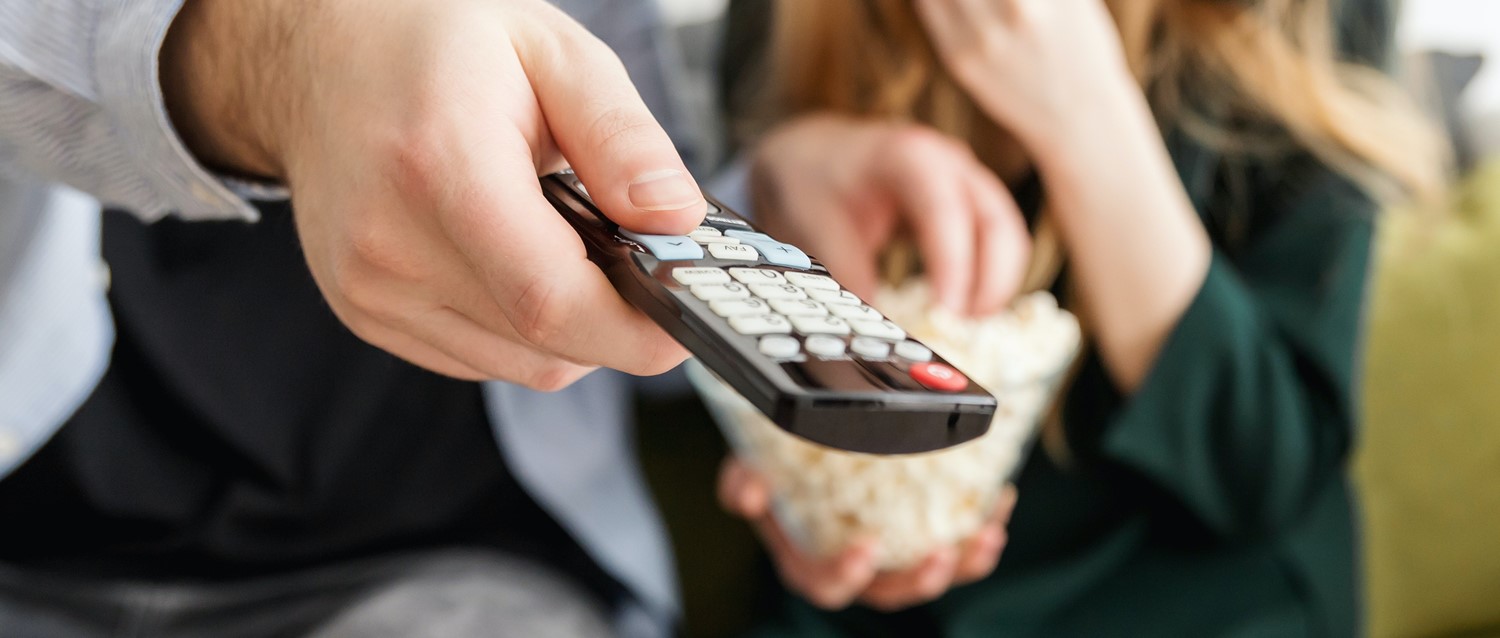
How to reduce eye strain while watching TV
Peer reviewed by Dr Sarah JarvisLast updated by Amberley DavisLast updated 14 May 2022
Meets Patient’s editorial guidelines
- DownloadDownload
- Share
- Language
- Discussion
- Audio Version
- Add to preferred sources on Google
If you've ever experienced irritated eyes, blurred vision, or headaches while watching TV, you may be one of the many people who encounter eye strain. This common but temporary eye complaint can be soothed or avoided if you adopt some healthy TV viewing habits.
How does watching TV affect your eyes?
Settling down on the sofa in front of your favourite TV show can be a great way to unwind, switch off from work, or spend time with your household. In the UK, we are a nation that loves watching TV. In fact, the average adult spends over three hours in front of the television every day.
When it comes to TV time, the mantra "everything in moderation" certainly applies. Watching TV involves sitting still, so it's important to move about regularly and get plenty of daily physical activity and exercise.
As we watch television, our body is at rest but our eyes are often working too hard. This doesn't cause permanent eyesight damage, but it can irritate your eyes and cause uncomfortable eye strain.
Can watching TV cause eye strain?
Eye strain is a temporary and very common eye problem that causes discomfort. It can happen when your eyes become tired from over-straining to see things clearly.
If you have eye strain, you may experience:
Sore or achy eyes.
Burning or itchy eyes.
Dry or watery eyes.
Blurred or double vision.
Increased sensitivity to light.
Feeling that you cannot keep your eyes open.
"Binge-watching television shows does, unfortunately, influence eye health. The light that emits from a television screen, and our constant staring, are the two main reasons for this," says Sujata Paul, optician and professional services clinical lead at Lenstore.
Squinting the TV is a small object that emits a lot of light. As it covers a small percentage of your overall view, your pupils (the black part of your eye) don't close as much as they should. You may find yourself squinting to counteract the screen glare and improve your focus. This makes your eye muscles work harder which contributes to eye strain.
Blinking: when you watch TV for prolonged periods, you blink less. Blinking spreads a moisturising film of tears over your eyes, blinking less can result in irritated, dry eyes.
Whether it's spending long periods in front of the television, a computer, or an iPad, there are many screens in our daily lives that give off an intense light. Eye strain caused by digital media screens is often called digital eye strain or computer vision syndrome. We often sit closer to digital screens, which makes eye strain even more likely.
Does watching TV too close damage your eyes?
Eye strain, although a source of discomfort, is not the same as eye damage. Sitting too close to your TV makes eye strain more likely, but there is no proof that this will cause long-term vision problems.
However, your viewing distance may be causing you to squint more. According to Paul, the distance you should be from your TV screen relates to both the TV quality and screen size. "The general rule is to be five times the distance from the screen as the screen is wide. Closer viewing distances are recommended for higher-quality televisions."
Is watching too much TV bad for children’s eyes?
Although children tend to be less prone than adults to eye strain, long periods of TV screen time can cause symptoms. TV can't cause eye conditions but may aid diagnosis. If your child always sits close to the TV screen and other screens - and holds books close to their face - it may be worth booking a check-up with your optician.
It's important for children to take regular breaks from watching TV. Excess TV viewing in young people has been linked with obesity, behavioural issues, and sleep problems.
Is it eye strain or an eye condition?
Eye strain is common, but it should go away easily and shouldn’t impact your life: "If you’re regularly experiencing symptoms such as blurred vision, itchy eyes, headache, and eye fatigue during or immediately after watching your favourite shows, it's best to check with an optician just to rule out an eye condition," advises Paul.
Why some TV shows are worse for your eyes
It's not just the light from TV that causes eye strain. Certain colours on the far ends of the colour spectrum - like some reds, violet, and blue - are harder on your eyes because they have shorter wavelengths and are high energy. LED blue is also given off by computer screens and regularly flickers, causing your eyes to adapt constantly.
Colours in the middle of the spectrum - like orange, yellow, and greens - are easier for the eye to interpret. This said, bright yellows can also cause eye strain after long periods as they reflect more light.
Which TV shows cause the most eye strain?
Online contact lens retailer Lenstore analysed the colour palettes of popular TV series in the UK in 2022. Shows with lots of contrasting colours make your eye muscles constantly adapt and can easily cause eye strain.
Results ranked from the most eye-friendly (scored closer to 600) to the least (closer to 0) are as follows:
Bridgerton - 475/600
Low-light cinematography and a soft, neutral colour palette: pale blues, light orange, cream, and green tones.
Sex Education - 415/600
A 70s'-inspired middle-of-the-spectrum colour palette of earthy greens, soft pink, and berry reds.
The Blue Planet - 370/600
Complementary close-together colours of deep blues, teals, aquamarine, and turquoise.
The Simpsons - 330/600
A vibrant colour palette of bright yellow, blue, violet, and orange, clash with each other but most sit in the middle of the spectrum.
Squid Game - 315/600
A colour palette of pink, blue, green, and yellow is, for the most part, easy on the eyes.
RuPaul's Drag Race - 285/600
A loud, clashing colour palette of bright pinks, reds, violets, and yellows.
American Horror Story - 280/600
Contrasts deep reds with mustard yellow, creams, and light browns.
How to prevent eye strain while watching TV
In reality, a clashing colour palette - although irritating to your eyes - is unlikely to deter you from watching your favourite TV series. Instead, Paul advises the following:
"To keep eye health in check, rather than binge-watching your favourite series, spread it out over several days, particularly if you're watching something with vibrant colours such as those highlighted in our study."
Paul also has general healthy TV viewing tips to allow you to look after your eyes
Have regular breaks - remember the 20-20-20 rule: every 20 minutes, look away for at least 20 seconds, at something a minimum of 20 feet away.
Keep a safe viewing distance - for TV screens with a display resolution of 4,000 pixels (4k resolution), I recommend a distance of at least 90 centimetres from a 43-inch screen and 1 metre from a 55-inch screen. For high-definition TV screens, I recommend keeping a minimum distance of 1.7 metres from a 43-inch and 1.9 metres from a 55-inch TV.
Add lighting - a dark room can make your pupils expand more and let in more bright light which leads to eye strain.
Place your TV at eye level - this will help you to avoid the need to look up constantly, which means your eyelids are covering less of your eyes. Since you blink less when watching television, the exposed surface of the eye can become dry and irritated.
Use TV glasses instead of lenses - if you use contact lenses, glasses may be more comfortable when watching TV for long periods. An antireflection layer could reduce eye strain.
Remember, good general eye health always starts with drinking plenty of water (for hydration), following a healthy diet (for nutrients), and getting plenty of sleep (to rest your eyes and allow them to recover).
Patient picks for Eye health
Eye health
When should you worry about your eyes?
It is recommended that you get your eyes tested every two years - even if your vision seems fine. Your test will check for your vision and eye health, and check for any emerging issues. Here we talk about what changes and issues in your vision you should look out for and when you should see a specialist.
by Lynn Stephen

Eye health
Screens, school, and short-sightedness: 5 ways to protect young eyes
With children already spending plenty of time on screens outside school, the return to classroom devices could put even more strain on their eyes. We spoke to an ophthalmologist about the growing issue of short-sightedness and what you can do to help protect your child’s vision.
by Victoria Raw
About the authorView full bio

Amberley Davis
Senior writer
BA (Hons), CPD
Amberley is a senior writer with Patient and has written extensively on a range of health and wellbeing topics.
About the reviewerView full bio

Dr Sarah Jarvis
Clinical Consultant
MA (Cantab), BM, BCh (Oxon), DRCOG, FRCGP, MBE
After training in medicine at Cambridge and Oxford, Dr Sarah Jarvis MBE became a GP.
Article history
The information on this page is peer reviewed by qualified clinicians.
Article also available in English, German, Spanish, French, Italian, Portuguese, Hindi, Hebrew, Arabic, and Swedish.
14 May 2022 | Latest version
14 May 2022 | Originally published
Join the conversation
Share your thoughts or experiences with others in our patient communities.

Ask, share, connect.
Browse discussions, ask questions, and share experiences across hundreds of health topics.

Feeling unwell?
Assess your symptoms online for free
Sign up to the Patient newsletter
Your weekly dose of clear, trustworthy health advice - written to help you feel informed, confident and in control.
By subscribing you accept our Privacy Policy. You can unsubscribe at any time. We never sell your data.
More in eye health
- Anatomy of the eye
- Future-proof your sight: why your eyes deserve a long-term plan
- How to live with severe eye floaters
- How to look after your eyes while working from home
- How to prevent dry eyes during winter
- How to relieve itchy eyes in the summer
- How to use eye drops
- How to use eye ointment
- How your eyes change as you age
- Is your office hurting your eyes?
- Smoking could lead to sight loss, warn optometrists
- Top 10 tips for dry eye relief
- What is AMD and why should you pay attention?
- What is astigmatism
- What is the connection between back, neck, and eye pain?
- What to eat for healthy eyes
- When should you worry about your eyes?
- Why do we cry?
- Why is my vision worse when driving at night?