Hemorragia subaracnoidea
Revisado por pares por Dr Krishna Vakharia, MRCGPÚltima actualización por Dr Colin Tidy, MRCGPÚltima actualización 13 de diciembre de 2022
Cumple con las directrices editoriales
- DescargarDescargar
- Compartir
- Language
- Discusión
- Versión en audio
- Agregar a fuentes preferidas en Google
A subarachnoid haemorrhage (SAH) is a form of stroke in which bleeding occurs into the fluid-filled space surrounding the brain (called the subarachnoid space). It is usually caused by the rupture of a small berry-like swelling (called a berry aneurysm) on one of the arteries in the brain.
SAH is a medical emergency. The risk of a further bleed is greatest during the first 24 hours from when the symptoms started.
De un vistazo
Una hemorragia subaracnoidea es un sangrado alrededor del cerebro, generalmente debido a un aneurisma roto.
El síntoma más característico es un dolor de cabeza repentino, explosivo y muy intenso.
Otros síntomas pueden incluir vómitos, convulsiones o alteración de la conciencia.
Si tienes un dolor de cabeza inusualmente severo y repentino con vómitos, busca consejo médico.
Fumar, el consumo elevado de alcohol y la presión arterial alta aumentan el riesgo.
El tratamiento tiene como objetivo detener el sangrado adicional y prevenir lesiones cerebrales.
What is a subarachnoid haemorrhage?
A subarachnoid haemorrhage (SAH) occurs when there is bleeding around the brain into the subarachnoid space. This is a space between two of the protective layers which surround the brain. These are the pia mater, which covers the brain directly, and the arachnoid mater, which is separated from the pia mater by a space filled with fluid. This fluid, the cerebrospinal fluid, is there to cushion and protect the brain from injury.
The bleeding usually comes from a burst (ruptured) berry aneurysm, most commonly at the back of the brain. Berry aneurysms are small berry-shaped swellings on the arteries which supply the brain, usually at a junction where an artery divides into two. These are relatively common in the general population, particularly in older patients, although most never rupture.
Cerebro y meninges
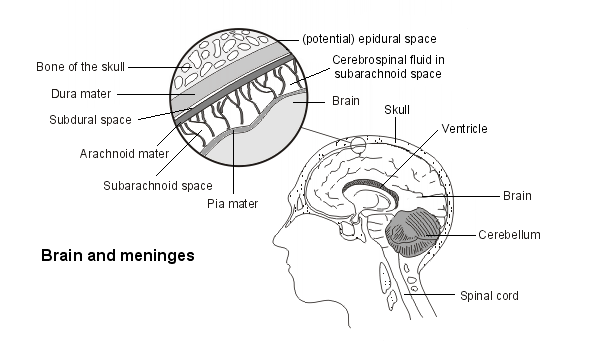
How serious is a subarachnoid haemorrhage?
Subarachnoid haemorrhage (SAH) is very serious. More than 1 in 4 people with a subarachnoid haemorrhage will die within the first six months after the subarachnoid haemorrhage. Of the survivors, about 1 in 3 are unable to live independently.
Who is affected by subarachnoid haemorrhage?
SAH usually affects adults under the age of 60 years, with the average age of affected patients around 50 years. Children are not usually affected.
Women are affected slightly more often than men.
Patients of African descent are slightly more commonly affected than patients of white descent.
The condition is also more common in Finland and Japan, where the rates are around three times those in Europe.
Patients who smoke, use excessive alcohol or have high blood pressure are at greater risk.
First-degree relatives of people who have had an SAH are at greater risk.
How common is subarachnoid haemorrhage?
Around 8 people out of every 100,000 per year will have an SAH.
SAH causes around 6 out of 100 of all strokes.
How does subarachnoid haemorrhage occur?
More than 8 out of 10 cases of SAH are caused by the bursting (rupture) of berry aneurysms. About 1 in every 25 adults will have one or more berry aneurysms. However, an SAH rupturing is a relatively rare event.
Larger berry aneurysms (bigger than 7 mm) are more likely to rupture (smaller ones can grow larger over time). Rupture is more likely to occur if the elastic tissue in the walls of the berry aneurysm is weakened or strained by:
Uncontrolled high blood pressure.
High alcohol use.
Fumar.
Consumo de cocaína.
Certain inherited conditions which cause weakening of the blood vessels. These include autosomal dominant polycystic kidney disease (ADPKD). These conditions cause only 1-2 in every 100 cases of SAH.
Other causes of SAH, accounting for fewer than 2 out of every 10 cases, include:
Head and neck trauma, when bleeding from injury to the brain or the structures around it can track into the subarachnoid space.
Abnormal blood vessels such as those that may be present in a brain tumour.
Brain infection such as encefalitis.
Vasculitis, when blood vessels inside the brain become swollen and inflamed. This can occur either due to infection or to conditions affecting the immune system.
Subarachnoid haemorrhage symptoms
Dolor de cabeza
The most characteristic feature is a sudden explosive headache.
The headache is severe, often described as the most severe headache ever experienced. It is sometimes referred to as a thunderclap headache. However, the term thunderclap headache is more commonly used for some other types of sudden headache, including primary sexual headache.
Usually the headache lasts for a week or two. It is usually a dull, all-over headache. It may occasionally last only a few seconds or even less. The person may even look round and accuse someone of hitting him or her on the back of the head.
About 1 in 10 sudden explosive headaches are found to be due to SAH.
If you have an episode of sudden severe headache - coming on in minutes or less and being worse than headaches you have normally experienced - seek medical advice at once.
Estar enfermo (vómitos)
Vomiting is very common in SAH. Vomiting also occurs with migraine and with other severe headaches. However, if you have an unusually severe sudden headache with vomiting you should seek medical advice.
Seizures and altered consciousness
A few people with SAH have a seizure due to irritation of the brain by the bleeding. Confusion or altered consciousness may also develop. If someone is unconscious they cannot tell you they have a headache. If someone complains of a severe headache then becomes unexpectedly drowsy, make sure that medical attendants are aware that the headache came first, as this suggests SAH.
Are there warning symptoms for subarachnoid haemorrhage?
Some people with SAH will have had some warning signs in the days or hours before the SAH occurs. The most common are:
Brief sudden headaches (the most common symptom).
Mareo.
Eye pain.
Double vision or lost vision.
Loss of sensation or movement.
These symptoms may be caused by early small leaks of blood from the aneurysm as it starts to burst (rupture). However, they may not last long, and of course they may not be recognised as possibly serious by doctors or patients.
Subarachnoid haemorrhage CT scan
If a subarachnoid haemorrhage is suspected then a tomografía computarizada (TC) should be performed as soon as possible. This will nearly always confirm the diagnosis.
Other investigations may include cerebral angiography. A lumbar puncture (spinal tap) may be needed if the CT scan is normal but a subarachnoid haemorrhage is still suspected.
Subarachnoid haemorrhage treatment
Treatment of SAH
Initial treatment is aimed at:
Stabilising the person.
Preventing further bleeding
Preventing further brain injury.
Medicines are used - for example, to:
Improve blood supply to damaged parts of the brain.
Prevent seizures which can worsen brain damage.
Surgery is used in some patients:
People with SAH are usually referred to a specialist neurosurgical unit.
Treatment usually consists of blocking off the aneurysm, either:
Through blocking it from the inside by using a special platinum coil (endovascular coiling); o
Through clipping it closed (neurosurgical clipping).
Patients need to be monitored for some time to avoid complications. These are fluid on the brain (hydrocephalus), further shortage of oxygen to the brain and low blood pressure.
Long-term management of SAH
This is aimed at:
Reducing risk of recurrence - treating high blood pressure, reducing alcohol intake and, if the person smokes, stopping smoking.
Specialist rehabilitation service for disabilities.
What is the outlook for patients with subarachnoid haemorrhage?
About 1 in 4 people die within the first six months after a subarachnoid haemorrhage. About 1 in 8 people die before reaching hospital. However more than 8 out of every 10 people admitted to a neurosurgical unit with a confirmed subarachnoid haemorrhage will survive.
Improvement will continue for about 18 months after the SAH.
Most affected people will have some impairment but some do well.
The things which increase the chance of doing better are:
A smaller bleed.
A younger age.
Remaining conscious at the time of the SAH.
About 1 in 2 people report changes with memory, mood or speech one year after a subarachnoid haemorrhage.
Can subarachnoid haemorrhage be prevented?
It is not known why some people with berry aneurysms in the brain go on to develop SAH. However, it is known that certain avoidable risk factors make it more likely:
Presión arterial alta
Fumar
Excessive alcohol intake
Cocaine use
Avoiding these risk factors is the first way to reduce the risk of SAH.
The factors that affect the health of the walls of your brain's (cerebral) blood vessels are the same factors that affect your risk of heart disease (cardiovascular risk). Therefore, lifestyle measures which generally reduce cardiovascular risk will help prevent SAH. These include:
Healthy diet, following a five-a-day healthy eating plan.
Keeping a healthy índice de masa corporal (IMC), which will help prevent SAH.
What should I do if I know I have an aneurysm?
Berry aneurysms are common. They are present in around 4 in every 100 adults, being more common with greater age. They are probably the result of wear and tear on the cerebral arteries at their point of greatest weakness - the point where they divide into two.
Aneurysms less than 7 mm in diameter tend not to burst (rupture). If you have an aneurysm which is less than 7 mm in size, you may be advised that, as long as you keep your blood pressure well controlled and maintain a healthy lifestyle, your risk of SAH is no greater than that of the general population. The decision is more difficult if your aneurysm is larger than 7 mm, or you have several aneurysms. You might be offered repeat scanning, at intervals, to see if your aneurysm is growing, and to review the decision.
The alternative is to clip or block the aneurysm, even whilst it is small. The risks of surgery are significant, particularly if you are older. The risk of rupture also increases with age. These are not easy decisions.
Incidentally found aneurysms
Because they are common, berry aneurysms are often found incidentally. That is, you are found to have a berry aneurysm when having a CT scan for another reason. If this happens you will need specialist advice as to whether you need to consider operative treatment for your aneurysm. Many factors will be taken into account when advising you, including:
Your age.
The number of aneurysms you have.
Where the aneurysms are.
How large they are.
Any underlying conditions that might put you at greater risk.
People who have had an SAH and who have unruptured aneurysms
Those who have already had an SAH are usually offered treatment for other aneurysms, which is again an option between blocking the aneurysm from the inside using a platinum coil (endovascular coiling) or clipping it closed (neurosurgical clipping).
Screening for aneurysms
Routine testing to check for aneurysms in relatives has not been shown to be of any benefit. Any testing is based on an assessment of each relative's own risk and is usually limited to people with at least two first-degree relatives (father, mother, sister or brother) who have had a subarachnoid haemorrhage.
La Dra. Mary Lowth es una autora o la autora original de este folleto.
Selecciones del paciente para Lesión en la cabeza

Cerebro y nervios
Hematoma subdural
A subdural haematoma is a collection of clotting blood that forms in the subdural space. This is the space between two of the meninges, which form the protective lining that covers the brain. It usually occurs because of a head injury. It is a serious condition and emergency treatment may be needed. A CT scan can show a subdural haematoma. An operation to remove the haematoma may be needed. Many people with a small subdural haematoma can make a quick and full recovery.
por el Dr. Gurvinder Rull, MBBS

Cerebro y nervios
Lesiones en la cabeza
Este folleto ofrece consejos para evaluar a una persona que ha sufrido una lesión en la cabeza, y para las personas que han sido evaluadas por un profesional médico tras una lesión en la cabeza (y para sus cuidadores) pero que han sido dadas de alta. Siempre busque consejo médico si le preocupa una lesión en la cabeza.
por la Dra. Philippa Vincent, MRCGP
Preguntas frecuentes
¿Cuál es la diferencia entre una HSA y otros tipos de accidente cerebrovascular?
Una hemorragia subaracnoidea (HSA) es un tipo específico de sangrado alrededor del cerebro. Aunque se clasifica como un accidente cerebrovascular, difiere de los accidentes cerebrovasculares isquémicos más comunes (que son causados por un bloqueo del suministro de sangre al cerebro). La HSA representa aproximadamente 6 de cada 100 accidentes cerebrovasculares.
Si experimento un 'dolor de cabeza en trueno', ¿significa siempre que tengo una hemorragia subaracnoidea?
No, no siempre. Aunque una hemorragia subaracnoidea es una causa común de un dolor de cabeza en trueno – un dolor de cabeza repentino, explosivo y severo – este término también se utiliza para otros tipos de dolores de cabeza repentinos. Sin embargo, si experimentas un dolor de cabeza en trueno, debes buscar consejo médico de inmediato.
¿Por qué los aneurismas en baya tienden a romperse en la parte posterior del cerebro?
El artículo afirma que los aneurismas en baya se rompen más comúnmente en la parte posterior del cerebro. Esto suele ocurrir en una unión donde una arteria se divide en dos, que son puntos de debilidad en los vasos sanguíneos.
¿Cuáles son las probabilidades de tratar con éxito una HSA si llego al hospital?
Más de 8 de cada 10 personas admitidas en una unidad neuroquirúrgica con una hemorragia subaracnoidea confirmada sobrevivirán. El enfoque inicial del tratamiento es estabilizar a la persona, prevenir más sangrado y evitar más lesiones cerebrales.
¿Puedo prevenir la formación de aneurismas cerebrales?
No se sabe por qué algunas personas desarrollan aneurismas en baya. Se cree que son el resultado del 'desgaste' en las arterias cerebrales, particularmente donde se dividen. Sin embargo, puedes tomar medidas para reducir el riesgo de que un aneurisma en baya se rompa (causando una HSA) evitando factores de riesgo como la presión arterial alta, el tabaquismo, el consumo excesivo de alcohol y el uso de cocaína. Un estilo de vida saludable, que incluya ejercicio regular y una buena dieta, también ayuda.
Después de una HSA, ¿cuánto tiempo dura el proceso de recuperación y qué tipo de efectos a largo plazo podría esperar?
La mejora después de una HSA puede continuar durante aproximadamente 18 meses. Mientras que algunas personas se recuperan muy bien, la mayoría de los individuos afectados experimentarán alguna discapacidad. Aproximadamente la mitad de todas las personas informan cambios en la memoria, el estado de ánimo o el habla un año después de una HSA.
Lecturas adicionales y referencias
- Ziu E, Mesfin FB; Subarachnoid Hemorrhage. StatPearls, 2022.
- Etminan N, Chang HS, Hackenberg K, et al; Worldwide Incidence of Aneurysmal Subarachnoid Hemorrhage According to Region, Time Period, Blood Pressure, and Smoking Prevalence in the Population: A Systematic Review and Meta-analysis. JAMA Neurol. 2019 May 1;76(5):588-597. doi: 10.1001/jamaneurol.2019.0006.
- Stroke and TIA; NICE CKS, agosto de 2020 (solo acceso en Reino Unido)
- Dolor de cabeza - evaluación; NICE CKS, marzo 2022 (acceso solo en el Reino Unido)
- Subarachnoid haemorrhage caused by a ruptured aneurysm: diagnosis and management; NICE guideline (November 2022)
Sobre el autorVer biografía completa

Dr Mary Elisabeth Lowth, FRCGP
MA (Cantab), MB, BChir, DFFP, DRCOG, PG Cert, Med Ed, FRCGP, MA (London)
La Dra. Mary Lowth fue médica general en Suffolk durante 20 años, especializándose en pediatría y protección infantil, y más tarde en documentación de torturas.
Acerca del revisorVer biografía completa

Dr Krishna Vakharia, MRCGP
Director Médico de Salud, Optum UK
MBChB, MRCGP(2013), BMedSci (hons), DFSRH, DRCOG, PGDipDerm (Distn)
La Dra. Krishna Vakharia es una médica general del NHS. También es examinadora habitual del Diploma de Posgrado en Dermatología Práctica en la Universidad de Cardiff, además de ser la Directora Médica de salud en Optum UK.
Historial del artículo
La información en esta página está escrita y revisada por pares por clínicos calificados.
Artículo también disponible en Inglés, Alemán, Español, Francés, Italiano, Portugués, Hindi, Hebreo, Árabe, y Sueco.
Siguiente revisión prevista: 12 de diciembre de 2027
13 de diciembre de 2022 | Última versión
14 Jan 2015 | Publicado originalmente
Escrito por:
Dr Mary Elisabeth Lowth, FRCGP

Pregunta, comparte, conecta.
Navega por discusiones, haz preguntas y comparte experiencias en cientos de temas de salud.

¿Te sientes mal?
Evalúa tus síntomas en línea de forma gratuita
Suscríbete al boletín de Patient
Tu dosis semanal de consejos de salud claros y confiables, escritos para ayudarte a sentirte informado, seguro y en control.
Al suscribirte aceptas nuestros Política de Privacidad. Puedes darte de baja en cualquier momento. Nunca vendemos tus datos.