
How do I know if my child is struggling with their mental health, or if it’s just part of growing up?
Peer reviewed by Dr Colin Tidy, MRCGPAuthored by Babalwa Madikazi, Head of Children and Young People Psychological Therapies at OnebrightOriginally published 6 Feb 2026
Meets Patient’s editorial guidelines
- DownloadDownload
- Share
- Language
- Discussion
- Audio Version
- Add to preferred sources on Google
Childhood and adolescence are critical stages of life for mental health. This is a time of rapid growth and brain development. Young people are rapidly learning social and emotional skills that shape their future ability to learn, grow, and adapt to different situations in life.
Mental health support for adults and children
Online CBT and psychological therapy for adults and children aged 8–17. Onebright’s accredited clinicians support people experiencing anxiety, depression and other emotional challenges.
Understanding mental health in children and young people
Like adults, at times children and young people experience overwhelming emotions such as low mood, anxiety, irritability, anger, etc., as well as challenging behaviours.
Some may find it occasionally challenging to sit still, pay attention, or interact with others. In most cases, these are just typical developmental phases.
However, distinguishing between challenging behaviours and emotions that are a part of normal development and those that may be a cause for concern can be hard. As a result, many children who could be helped by treatment don't get the help they need.
The importance of early intervention
Research has found that experiencing mental health symptoms before the age of 14 and even as young as five, were predictive of mental health issues well into adulthood.
Early recognition and early intervention can significantly improve outcomes for children experiencing mental health issues, leading to better long-term prognosis and a happier life.
Identifying and addressing mental health concerns during the formative years can help provide some much-needed skills and strategies to carry with them throughout their lives and mitigate the likelihood of more severe issues emerging later in life.
Consider seeking help if your child’s behaviour or emotions last for weeks or longer, cause distress for your child or your family, or interfere with your child’s functioning at school, at home, or with friends. Seek crisis help if your child engages in unsafe behaviour or talk about wanting to hurt themselves or someone else.
Common mental health issues in children
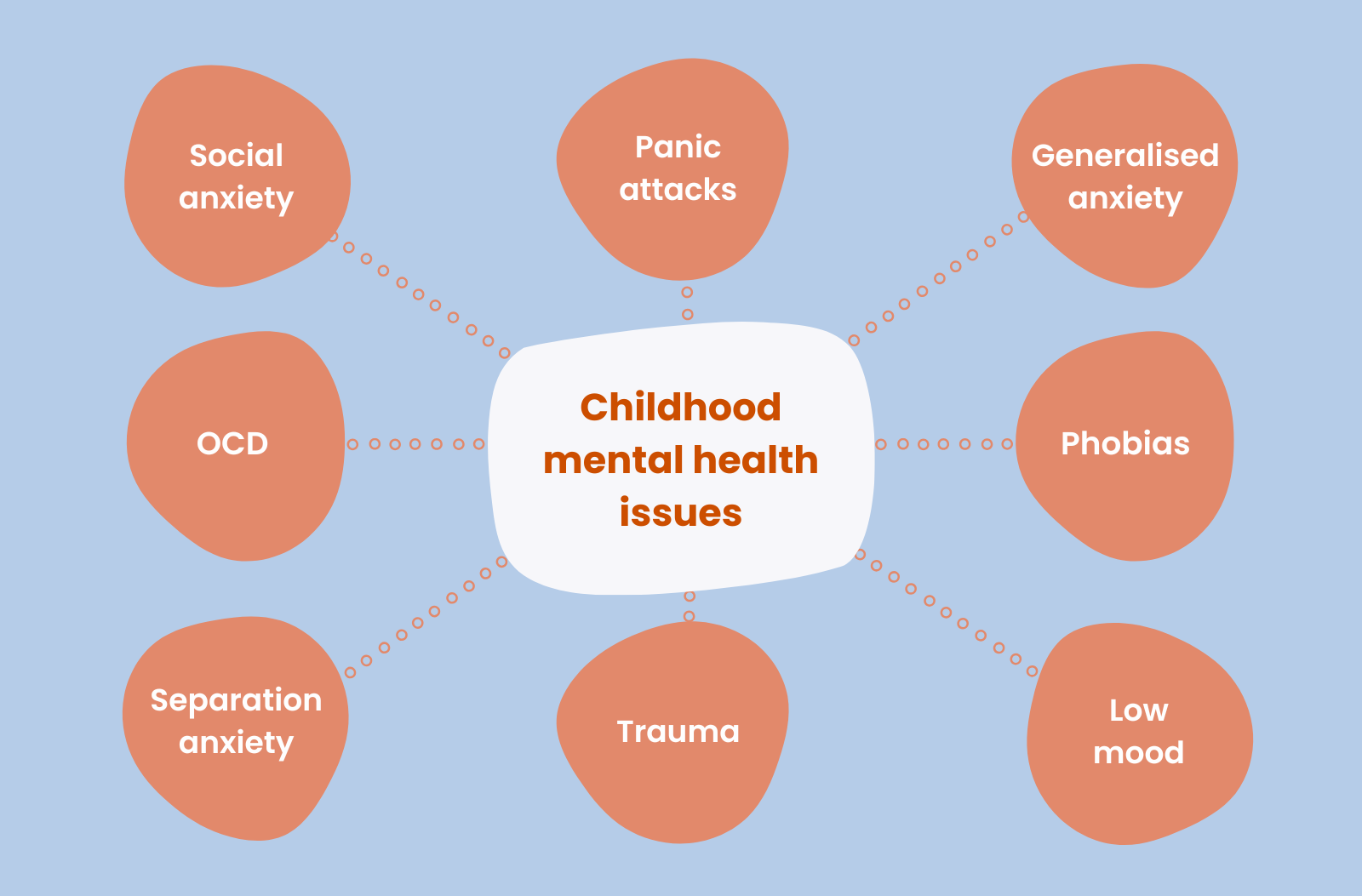
Common childhood mental issues deeper than normal developmental changes include:
Social anxiety: A fear of being judged or embarrassed in social situations, which can cause children to avoid places such as school and worry about saying or doing something wrong.
Separation anxiety: An intense fear of being away from a caregiver, leading children to avoid separation and worry about harm, getting lost, or being unable to cope without their parent.
Generalised anxiety: Excessive worry about many everyday things, often with physical symptoms - such as headaches or stomach aches - sleep issues, and frequent reassurance-seeking when feeling uncertain.
Panic attacks: A sudden feeling of intense fear and physical symptoms. Typically affects adolescence and early adulthood. Adolescents with panic disorder are at greater chance of a concurring depression.
OCD: Involves unwanted, repetitive thoughts (obsessions) and repetitive behaviours or mental rituals (compulsions) that a person feels driven to do to reduce anxiety or feel “just right.”
Trauma: Exposure to a very frightening or harmful event, which in children may show through play, drawings, nightmares, impulsive behaviour, and changes in emotions or development.
Low mood: Low mood in children and adolescents can show as irritability, loss of interest in activities, difficulty concentrating, and a drop in school performance or trouble completing work.
Phobias: Intense, ongoing fears of specific things or situations - for example, heights, animals, injections - that are much stronger than usual for a child’s age and interfere with daily life.
In a YoungMinds survey, 75 per cent of parents said that their child’s mental health had deteriorated while waiting for support from Child and Adolescent Mental Health Services (CAMHS).
How to support your child
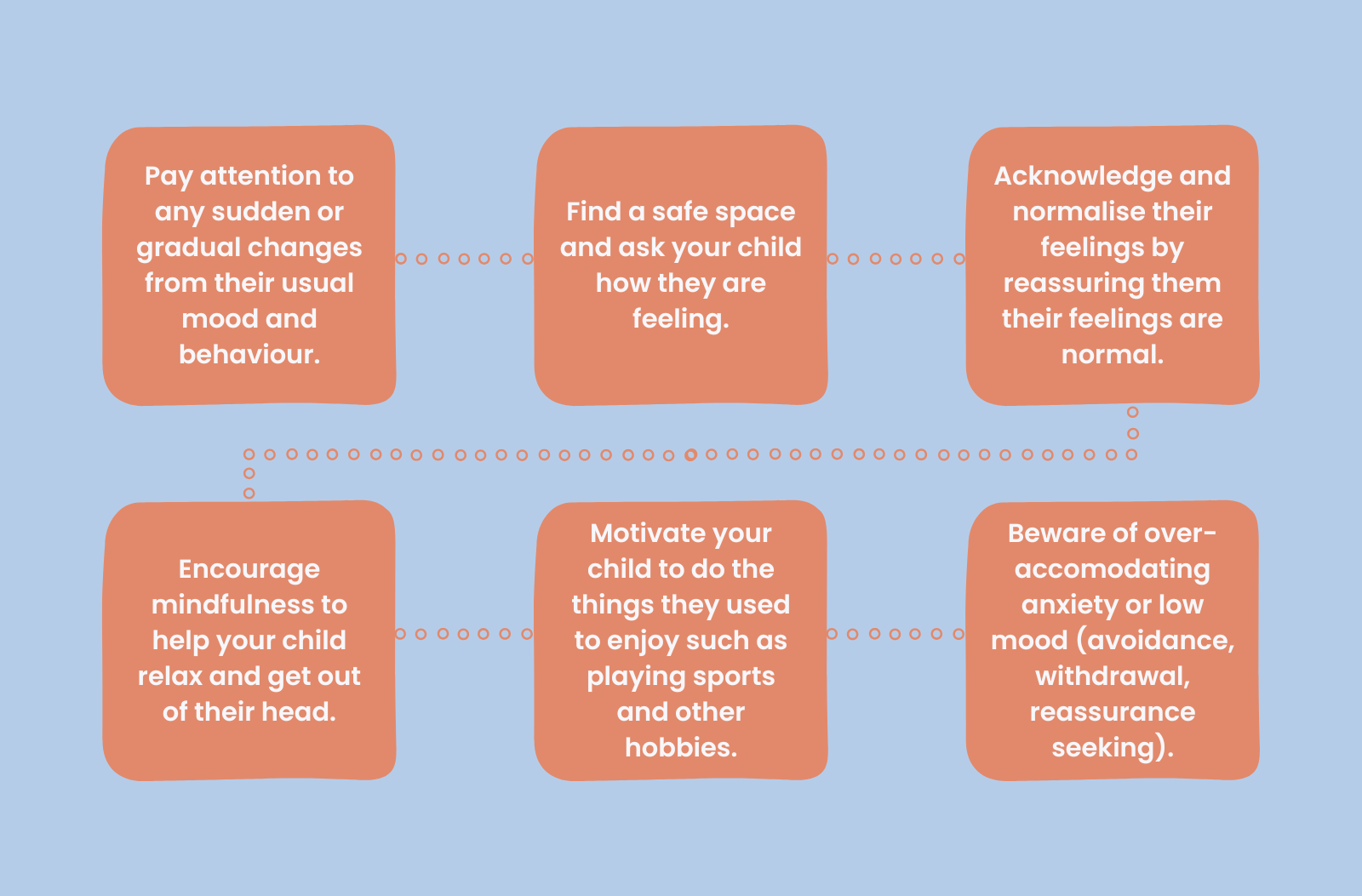
Encourage your child to engage in positive activities to prevent isolating themselves
Positive activities such as exercise, hobbies, connecting with others, often provide a sense of pleasure and achievement.
Activities give a child something to look forward to, can help to distract them from their worries, and more importantly, support their recovery and build their confidence.
Importance of structure and routine
Resetting your child’s biological clock - sleeping and waking up time, going to school and engaging in day-to-day activities is key to improving their overall wellbeing.
Seek professional support
Right evidence-based interventions at the right time are essential for quick recovery and return to normal life. Some children and young people will need professional or specialised help at some point in their lives, and this typically includes seeing a therapist or psychiatrist.
If you are concerned about your child’s mental health, it is crucial to seek professional guidance promptly. Speaking to your GP is the first step to accessing mental health services and for general advice regarding treatment options.
However, unprecedented demand for mental health services in recent years has resulted in a huge strain on the healthcare system, making prevention and early intervention more difficult. The cycle of poor mental health creates a significant burden for children and young people and their families.
Children and young people who receive effective evidence-based care at the right time to tackle the issue head-on before it gets worse are more likely to recover and return to full functioning (Early Intervention Foundation, 2023).
The benefits of Cognitive Behaviour Therapy (CBT) in managing mental health
CBT is an evidence-based talking therapy recommended by the National Institute for Clinical Excellence (NICE) as first line treatment for the treatment of childhood mental health issues including anxiety disorders, depression, and trauma.
CBT helps identify the connection between thoughts, feelings, and behaviours that keep the issue going. It helps your child to identify triggers for their anxiety or low mood and teach them strategies to face anxiety provoking situations.
For children and young people, this means a child receives effective and targeted treatment to enhance their natural growth and development, improve quality of life, and enjoy greater resilience as adults.
Addressing mental health concerns early in their journey to better mental health, enables children and young people to build resilience into adulthood.
Patient picks for Mental health and behaviour

Children's health
How to help your child cope with exam stress
The exam period is a stressful time. For young people sitting their SATs, GCSEs, A-levels or university exams, it’s common to feel overwhelmed and anxious. And watching your child experiencing stress as they sit exams can be very hard too. However, there are steps you can take to help them cope.
by Lydia Smith

Children's health
Student mental health: how to tell if your child is depressed at university
University can be an exciting time in a young person's life - for many it marks the first step into independent living, and a time to explore new opportunities. However, this exciting life change can also come with challenges, both physical and emotional.
by Lynn Stephen
Frequently asked questions
What is the difference between normal childhood fears and phobias?
Normal childhood fears are typical developmental phases. Phobias, however, are intense, ongoing fears of specific things or situations, such as heights or animals, that are much stronger than usual for a child’s age and interfere with daily life.
How can I tell if my child's low mood is more serious than just feeling a bit down?
Low mood in children and adolescents that is a cause for concern can manifest as irritability, a loss of interest in activities they once enjoyed, difficulty concentrating, a noticeable drop in school performance, or trouble completing schoolwork. These symptoms last for weeks or longer and cause distress.
What is the role of a healthy routine in supporting my child's mental well-being?
Establishing a healthy routine is crucial for improving your child's overall well-being. This includes resetting their biological clock by ensuring consistent sleeping and waking times, and encouraging engagement in daily activities like going to school. Such structure can significantly support their mental health.
What does it mean if my child is experiencing trauma?
Trauma in children refers to their exposure to a very frightening or harmful event. This can manifest in various ways, such as through their play, drawings, nightmares, impulsive behaviour, and changes in their emotions or development. It is a mental health issue that goes deeper than normal developmental changes.
How does Cognitive Behaviour Therapy (CBT) help children with mental health issues?
CBT is a talking therapy that helps children identify the connection between their thoughts, feelings, and behaviours that may be perpetuating their mental health issues. It helps them recognise triggers for anxiety or low mood and teaches them strategies to cope with anxiety-provoking situations. This targeted treatment aims to enhance their natural growth, improve quality of life, and build resilience.
When should I be concerned enough to seek professional help for my child’s mental health?
You should consider seeking professional help if your child’s behaviour or emotions persist for weeks or longer, cause significant distress for your child or your family, or start to interfere with their functioning at school, at home, or in their friendships. Crisis help should be sought if your child exhibits unsafe behaviour or talks about harming themselves or someone else.
About the authorView full bio
Authored by

Babalwa Madikazi, Head of Children and Young People Psychological Therapies at Onebright
About the reviewerView full bio

Dr Colin Tidy, MRCGP
General Practitioner, Medical Author
MBBS, MRCGP, MRCP (Paediatrics), DCH
Dr Colin Tidy is an NHS Doctor, based in Oxfordshire.
Article history
Article also available in English, German, Spanish, French, Italian, Portuguese, Hindi, Hebrew, Arabic, and Swedish.
Next review due: 3 Feb 2029
6 Feb 2026 | Originally published
Authored by:
Babalwa Madikazi, Head of Children and Young People Psychological Therapies at OnebrightPeer reviewed by
Dr Colin Tidy, MRCGP
Join the conversation
Share your thoughts or experiences with others in our patient communities.

Ask, share, connect.
Browse discussions, ask questions, and share experiences across hundreds of health topics.

Feeling unwell?
Assess your symptoms online for free
Sign up to the Patient newsletter
Your weekly dose of clear, trustworthy health advice - written to help you feel informed, confident and in control.
By subscribing you accept our Privacy Policy. You can unsubscribe at any time. We never sell your data.