5 formas naturales de reducir la inflamación
Revisado por pares por Dr Krishna Vakharia, MRCGPEscrito por Victoria RawPublicado originalmente 12 Nov 2024
Cumple con las directrices editoriales
- DescargarDescargar
- Compartir
- Language
- Discusión
- Versión en audio
- Agregar a fuentes preferidas en Google
La inflamación es la forma en que tu cuerpo se protege contra lesiones o infecciones, causando hinchazón, enrojecimiento y calor. La inflamación a corto plazo (aguda) es vital para la curación, pero la inflamación a largo plazo (crónica) puede llevar a problemas de salud graves. Analizamos las causas subyacentes de la inflamación a largo plazo y las formas de prevenirla.
What is inflammation?
Inflammation is your body's natural defence mechanism and is crucial for a healthy immune system. It helps safeguard against harmful germs (pathogens), boosts tissue repair, and clears away damaged cells.
Sebnem Unluisler, genetic engineer and Chief Longevity Officer, London Regenerative Institute says this protective response is kick-started when your immune cells recognise harmful stimuli. This triggers the release of molecules like cytokines - chemical messengers which promote blood flow - to recruit more immune cells to the affected site.
"While this response is essential for short-term healing, unresolved inflammation can lead to health issues," she says. "Long-term inflammation occurs when this immune response doesn’t turn off."
Over time, this can lead to conditions such as:
Algunos tipos de cáncer.
Neurodegenerative diseases.
She adds that long-term inflammation is also associated with ageing. This is because it harms your cells, and weakens your muscle function.
Symptoms of inflammation
Short-term and long-term inflammation come with different symptoms.
Short-term inflammation - pain, redness, heat, swelling, occasional loss of function depending on the body part affected.
Long-term inflammation - fatigue, digestive issues, joint pain, mental fog.
Unluisler says: "Recognising these signs early can help address potential underlying causes."
5 formas naturales de reducir la inflamación
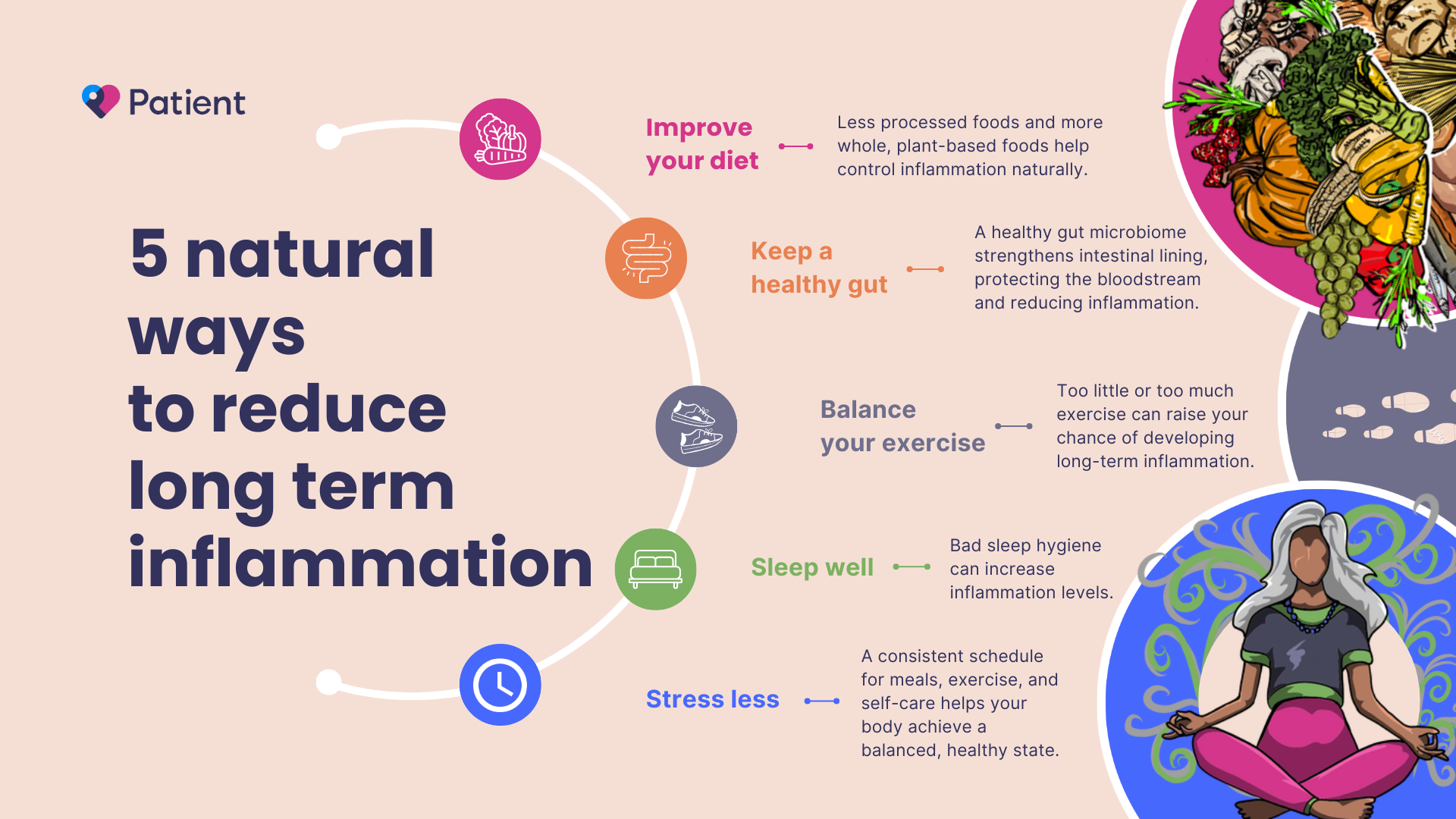
Gráfico: Ben Hudson
How to reduce inflammation
Although inflammation can be caused by infections, autoimmune reactions or injuries, it may also be triggered by other factors.
According to Unluisler, these can include lifestyle choices, such as poor diet, stress, lack of sleep and environmental exposures to pollution, chemicals or allergens.
"High-sugar and processed foods, sedentary lifestyles, long-term stress, and environmental toxins can all contribute to ongoing low-grade inflammation," she explains. "This can disrupt your immune function and metabolic health."
1. Improve your diet
Cut back on processed foods - especially those high in red meat and simple carbohydrate sugars - and add more whole, plant-based foods to your diet to help control inflammation naturally.
Dr Steven Shamah, gastroenterologist and metabolic health expert, New York, USA suggests following the dieta mediterránea, as it's packed with inflammation-fighting nutrients.
"This primarily plant-based eating pattern emphasises fruits, vegetables, whole grains, beans, nuts, and olive oil," he says. "It includes moderate amounts of fish, poultry, and dairy while limiting processed foods, added sugars, and saturated fats."
He adds that studies show a colourful diet, filled with natural fruits and vegetables, can help decrease gut inflammation and reduce your chance of health conditions such as heart disease, stroke, obesity, diabetes, high cholesterol, and high blood pressure.
Dr Resham Uttamchandani, a double board-certified integrative medicine physician, based in California USA recommends the following foods as helpful for lowering inflammation.
Cúrcuma - with curcumin as its active ingredient, turmeric is one of the most powerful anti-inflammatory agents.
Jengibre - known for its digestive and warming properties, ginger can reduce inflammation, particularly in the gut.
Verduras de hoja verde - spinach, kale, and other dark greens provide essential vitamins and minerals, supporting detoxification.
Bayas - blueberries, raspberries, and blackberries are high in antioxidants that neutralise free radicals contributing to inflammation.
Grasas saludables - Omega-3-rich foods like flaxseeds, chia seeds, and walnuts offer essential fatty acids to counter inflammation.
Amla (Indian gooseberry) - this fruit is high in vitamin C, known for reducing oxidative stress and supporting immunity.
Curcumin with black pepper - this is a highly potent anti-inflammatory, that helps achieve therapeutic effects.
Ácidos grasos Omega-3 - flaxseed oil, or fish oil, offer anti-inflammatory benefits, especially for heart and joint health.
"Staying hydrated with water infused with mint, cucumber, or lemon also helps detoxify your body," she adds.
2. Keep a healthy gut
Teniendo un healthy gut microbiome strengthens your intestinal lining. This prevents harmful substances from leaking out into your bloodstream and causing inflammation.
Shamah says: "The gut is a crucial organ, connected to your brain, heart, and lungs. It’s the gateway for nutrition and a significant defence against toxins. Your diet plays a huge role in maintaining gut health."
He recommends incorporating probiotics - fermented foods filled with good bacteria - into your diet to help restore your gut microbiome.
Natural sources of probiotics include:
Sauerkraut.
"Look for products that have been well-researched, like Lactobacillus acidophilus, Lactobacillus rhamnosus GG, Saccharomyces boulardii, and Bifidobacterium longum," he advises. "If a product doesn’t have high amounts of these strains, it’s probably best to skip it."
3. Balance your exercise
A lack of exercise can raise your chance of developing long-term inflammation. This also applies to people who exercise too much.
Thomas Olsen, Director and Physiotherapist, EmbdyHealth, Greater Sydney, Australia recommends finding a happy medium between these two extremes. He suggests engaging in low-impact yoga, Pilates, or aerobics, which have been shown to help reduce inflammation.
"This will increase the activity of your immune system which, in turn, reduces inflammation," he says.
Another way these types of exercise can lower systemic inflammation is by minimising body fat.
Olsen explains: "The fat supplies we carry contain inflammation-promoting substances. Therefore, if you have excess body fat, you have an increased likelihood of developing chronic inflammation."
Uttamchandani adds that regular movement helps with natural detoxification and hormonal balance - both essential for reducing inflammation.
She says: "Exercise activates the lymphatic system, aiding in toxin removal, and balances cortisol and insulin levels, which directly influences inflammation."
4. Sleep well
Not getting enough sleep can negatively impact your health in various ways. One side effect of bad sleep hygiene is that it can increase inflammation levels in your body.
Olsen says that sleep problems and long-term pain are two things that often go hand in hand.
"People who have sleep problems are more likely to develop long-term pain, and vice versa," he explains. "However, improving your sleep quality, by falling asleep faster, sleeping for longer periods, and getting consistent restful sleep can help reduce systemic inflammation - along with long-term pain."
5. Stress less
Having a consistent schedule with set times for meals, exercise, and self-care helps your body achieve a balanced, healthy state.
Uttamchandani recommends mindful practices, meditation and breathwork - such as pranayama.
She says: "These practices help lower cortisol, reduce blood pressure, and activate the parasympathetic nervous system (PNS), bringing about calm and reducing inflammation."
Shamah explains that stress can harm gut health, and poor gut health can increase stress levels. He advises managing stress through relaxation techniques to support a healthier gut microbiome and reduce inflammation.
Olsen explains that the best relaxation techniques are the ones that you enjoy and will stick to.
"For example, meditation before bed is a great way to relax," he says. "This can also help you get better sleep."
Unluisler concludes by saying that if you have long-term health conditions - or are taking medicine - you should always talk to a healthcare professional before making any big changes to your diet or lifestyle. If your symptoms persist or worsen, speak to your doctor to rule out other underlying conditions.
5 formas naturales de reducir la inflamación a largo plazo
Selecciones del paciente para Prevención de enfermedades

Salud general y estilo de vida
¿Estás lavándote las manos correctamente?
La mayoría de nosotros sabemos lo importante que es practicar una buena higiene de manos. Pero solo porque te laves las manos con frecuencia, no significa que las estés lavando bien. Descubrimos la mejor manera de lavarse las manos y explicamos por qué es tan crucial para nuestra salud.
por Milly Evans

Salud general y estilo de vida
Ser 'demasiado limpio' no es malo para tu salud, confirman los expertos
Durante décadas ha existido una división en la opinión pública sobre la higiene: ¿deberías limpiar meticulosamente para eliminar las bacterias o dejar un poco de suciedad para fortalecer tu sistema inmunológico y protegerte de las alergias? Pero un nuevo estudio de la Royal Society for Public Health confirma que ser 'demasiado limpio' no es perjudicial para tu salud.
por Milly Evans
Sobre el autorVer biografía completa

Victoria Raw
Redactora de artículos
Licenciatura en Artes (Hons), Literatura Inglesa
Victoria es una redactora de contenido en Patient, cuyos intereses especiales se centran en el bienestar mental, las tendencias sociales y el impacto de la tecnología en nuestra salud.
Acerca del revisorVer biografía completa

Dr Krishna Vakharia, MRCGP
Director Médico de Salud, Optum UK
MBChB, MRCGP(2013), BMedSci (hons), DFSRH, DRCOG, PGDipDerm (Distn)
La Dra. Krishna Vakharia es una médica general del NHS. También es examinadora habitual del Diploma de Posgrado en Dermatología Práctica en la Universidad de Cardiff, además de ser la Directora Médica de salud en Optum UK.
Historial del artículo
La información en esta página es revisada por pares por clínicos calificados.
Artículo también disponible en Inglés, Alemán, Español, Francés, Italiano, Portugués, Hindi, Hebreo, Árabe, y Sueco.
Next review due: 12 Nov 2017
12 Nov 2024 | Publicado originalmente
Escrito por:
Victoria RawRevisado por pares por
Dr Krishna Vakharia, MRCGP

Pregunta, comparte, conecta.
Navega por discusiones, haz preguntas y comparte experiencias en cientos de temas de salud.

¿Te sientes mal?
Evalúa tus síntomas en línea de forma gratuita
Suscríbete al boletín de Patient
Tu dosis semanal de consejos de salud claros y confiables, escritos para ayudarte a sentirte informado, seguro y en control.
Al suscribirte aceptas nuestros Política de Privacidad. Puedes darte de baja en cualquier momento. Nunca vendemos tus datos.
Más sobre salud general y estilo de vida
- 9 intercambios de alimentos para una cena de Navidad deliciosa y saludable
- 9 consejos para disfrutar y ahorrar bien en esta Navidad
- Esenciales de salud para festivales
- Cómo aumentar tus niveles de energía y sentirte menos cansado en invierno
- Cómo ayudar a tu bebé a dormir seguro en clima caluroso
- Cómo ayudar a tus hijos a comer saludablemente durante la Navidad
- Cómo afecta tu altura a tu salud
- Microplásticos en el agua potable no son un riesgo urgente para la salud
- La primavera está en el aire, pero los virus del invierno aún están presentes
- Calidad del agua en el Reino Unido parte 2 – contaminación del agua
- Comprendiendo su 'Derecho a Elegir'
- ¿Cuáles son las principales causas de ingresos hospitalarios durante la Navidad?
- ¿Qué es una nota de aptitud y cuándo necesitas una?
- Qué comer en Navidad si tienes diabetes tipo 2
- ¿Cuál es la relación entre los alisadores de cabello y los fibromas?
- Cuándo tomar un día de salud mental en el trabajo y cómo hablar con tu jefe
- Por qué una película navideña puede hacernos sentir bien
- ¿Por qué mi eccema facial empeora en verano?
- Por qué no deberías omitir tu chequeo de salud gratuito del NHS
- ¿Afectará el Brexit a mi seguro de viaje?