What are the benefits of baby-led weaning?
Peer reviewed by Dr Colin Tidy, MRCGPLast updated by Lawrence HigginsLast updated 17 Jun 2026
Meets Patient’s editorial guidelines
- DownloadDownload
- Share
- Language
- Discussion
- Audio Version
- Add to preferred sources on Google
Weaning a baby can be both fun and stressful. One minute, you’re watching them master the art of picking up a spoon and the next, you’re scraping Weetabix off the floor. There are a few different methods when it comes to moving your baby onto solid foods, including baby-led weaning. But what is it and what are the pros and cons?
What is baby-led weaning?
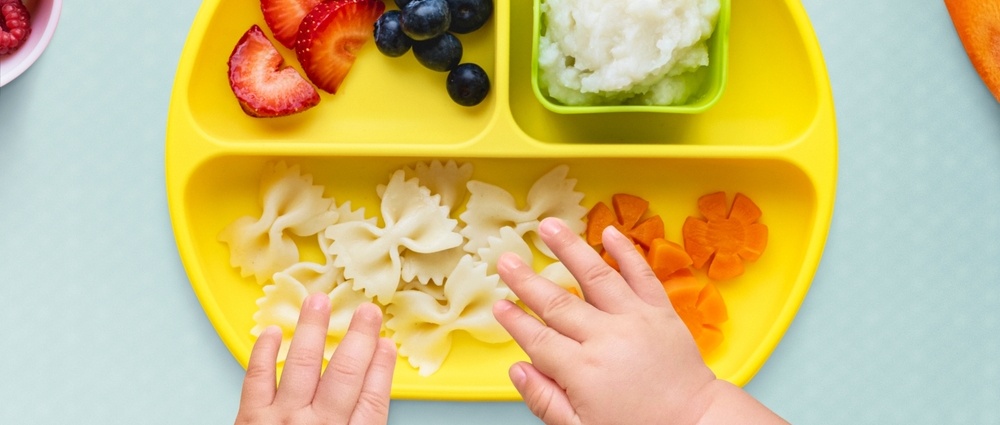
Baby-led weaning means offering your baby only finger foods and letting them feed themselves from the start, rather than spoon-feeding them pureed or mashed foods. This kind of weaning puts your baby in control as they pick up the food and put it in their mouth.
Soft, finger-sized foods are necessary for baby-led weaning. These might include cooked vegetables, fruit or foods like avocado and banana, which are easier for babies to break down with their gums. Foods that increase the risk of choking include those that are small, round, firm or slippery - such as grapes.
If you're not sure about what size to cut up the food, the Solid Starts app is a handy, informative tool which tells you a safe size and shape based on your child's age and size.
Baby-led weaning isn’t for every parent and baby. Some parents prefer spoon-feeding and others combine both. The main thing is that your baby eats a wide variety of foods so they get used to different tastes and textures. Your baby will also still be getting the nutrients they need from breastmilk or formula while they wean.
How to minimise the risk of choking
Cut up small, round fruits or vegetables such as cherry tomatoes or grapes into small pieces.
Cut foods into sticks or batons instead of circles.
Remove pips or stones from fruit.
Avoid giving your baby hard foods, such as raw carrot.
When can you start baby-led weaning?
The recommended age to start baby-led weaning is from six months onwards. This is the same for spoon-feeding or combination feeding. To try baby-led weaning, your baby will need to be able to hold pieces of food and bring them to their mouth while sitting up.
When you start weaning, make sure your baby is sitting upright in a highchair. They need to be able to sit up without support to minimise the risk of choking. All babies need supervision when eating.
What are the benefits of baby-led weaning?
Baby-led weaning allows your child to explore food for themselves as they choose what to eat, which can help them gain independence. This also helps them develop the skills needed to take food into their mouth, move it around and swallow safely.
Using their hands and fingers to pick up food also helps babies develop their hand-eye coordination and motor skills, as they learn to control and move certain muscles. Baby-led weaning also helps your baby develop the pincer grasp, using the tips of the fingers and thumbs to grab and hold items.
Finger foods also help babies get used to different food textures and tastes. Pureed infant foods or good-quality, ready-made baby meals are often formulated without salt, sugar, or additives and can be helpful if you’re busy or stuck for recipe ideas.
However, they are often made up of several foods blended together and it can be difficult for your baby to taste the individual ingredients. Baby-led weaning helps your baby distinguish different flavours and textures of foods.
Another benefit is that your baby can be offered food that you are eating, as long as it is suitable and not high in salt or sugar.
What are the negatives of baby-led weaning?
One of the main issues with baby-led weaning is that it can be messy, as your baby will undoubtedly drop and throw food as well as eating it. However, whether you are baby-led weaning or spoon-feeding, or both, mess is unavoidable. Bibs and overalls can help prevent clothes from being stained. You can also get mats to put on the floor underneath their highchair to make cleaning up easier.
Another concern is whether baby-led weaning provides a varied enough diet, but research shows that babies do take in enough calories when feeding. Breastmilk or formula will still be your baby’s main source of nutrients too, as solids are a way of exploring tastes and textures.
Many parents worry about their baby choking if they’re doing baby-led weaning. However, research suggests baby-led weaning is no riskier than spoon-feeding when it comes to choking.
There are also many ways to minimise the risk of choking when introducing solids to your baby. You should watch your baby while they eat, use a proper highchair, ensure the food is the right size, shape and texture, and avoid letting your baby play with toys while they eat, as it can be a distraction for them.
Baby-led weaning isn't for everyone and many parents choose to do a combination of self-feeding and spoon-feeding. It's important to do what works best for you and your baby. If you're worried about feeding, your health visitor or doctor can provide advice and support.
Patient picks for Baby feeding

Children's health
A guide to comfortable breastfeeding in public
Breastfeeding is legal in public spaces across the whole of the UK. However, many mums still have difficulty breastfeeding comfortably outside the home.
by Lawrence Higgins
Children's health
What to eat when breastfeeding
When you're pregnant, chances are you'll be provided with bags of information about what to eat, which foods to avoid, and the supplements to take. But often, that guidance dries up once you've given birth. So what are the best foods new mums should stock up on?
by Lawrence Higgins
About the authorView full bio
Updated by

Lawrence Higgins
Managing editor
BSc, Post Graduate Diploma
Lawrence has worked as both Managing Editor of Patient.info and a contributing author. He is also a member of the Guild of Health Writers.
Authored by

Lydia Smith
Feature writer
BA, MA, MSc
Lydia Smith is an award-winning journalist and feature writer who has written extensively on women's health and mental health. She is currently studying for an MSc in psychology.
About the reviewerView full bio

Dr Colin Tidy, MRCGP
General Practitioner, Medical Author
MBBS, MRCGP, MRCP (Paediatrics), DCH
Dr Colin Tidy is an NHS Doctor, based in Oxfordshire.
Article history
Article also available in English, German, Spanish, French, Italian, Portuguese, Hindi, Hebrew, Arabic, and Swedish.
Next review due: 18 Jun 2029
17 Jun 2026 | Latest version
4 May 2023 | Originally published
Authored by:
Lydia Smith
Join the conversation
Share your thoughts or experiences with others in our patient communities.

Ask, share, connect.
Browse discussions, ask questions, and share experiences across hundreds of health topics.

Feeling unwell?
Assess your symptoms online for free
Sign up to the Patient newsletter
Your weekly dose of clear, trustworthy health advice - written to help you feel informed, confident and in control.
By subscribing you accept our Privacy Policy. You can unsubscribe at any time. We never sell your data.