Diarrea por ácidos biliares
Revisado por pares por Dr Toni Hazell, FRCGPÚltima actualización por Dr Philippa Vincent, MRCGPÚltima actualización 28 Jul 2023
Cumple con las directrices editoriales
- DescargarDescargar
- Compartir
- Language
- Discusión
- Versión en audio
- Agregar a fuentes preferidas en Google
En esta serie:Síndrome del intestino irritableViento atrapado, gases e hinchazónAntiespasmódicosProbióticos y prebióticos
Bile acid diarrhoea is common, especially in people who are thought to have irritable bowel syndrome. Bile acid diarrhoea may be caused by a problem with the bowel. Much more often there is no medical problem causing the diarrhoea.
Bile acid diarrhoea responds very well to treatment with a medicine called a bile acid binder. The outcome is usually very good if there is no other problem with the bowel.
De un vistazo
La diarrea por ácidos biliares ocurre cuando los ácidos biliares no se reabsorben, causando diarrea acuosa.
Puede ser causado por enfermedades intestinales, extirpación de la vesícula biliar, enfermedad celíaca o algunos medicamentos.
A menudo, no se encuentra una causa obvia, lo que se denomina diarrea por ácidos biliares idiopática.
Los síntomas incluyen diarrea acuosa continua o intermitente, sin sangre.
El diagnóstico puede implicar una prueba de tratamiento con medicamentos efectivos.
Los tratamientos principales incluyen una dieta baja en grasas y medicamentos llamados secuestradores de ácidos biliares.
La mayoría de las personas con diarrea por ácidos biliares idiopática responden bien al tratamiento.
What is bile acid diarrhoea?
If the bile acids are not reabsorbed into the bloodstream then they enter the large bowel (colon). Bile acids in the large bowel cause abnormally high levels of water and salts to get into the large bowel from the bloodstream.
The increased amount of water and salts in the large bowel then causes watery diarrhoea. Bile acid diarrhoea is sometimes called bile acid malabsorption because the diarrhoea is caused by the body being unable to stop losing water and salts into the bowel.
What causes bile acid diarrhoea?
Bile acid diarrhoea may be caused by a number of diseases affecting the gut, especially the last part of the small bowel (terminal ileum), which then leads to the large bowel (colon). For example, bowel acid diarrhoea may be caused if the terminal ileum has to be removed or in a condition called Crohn's disease.
Other conditions that may lead to bile acid diarrhoea include having the gallbladder removed (cholecystectomy), enfermedad celíaca, diseases affecting the pancreas, and after radioterapia. Bile acid diarrhoea may also be caused by some medications, including metformina, which is used to treat diabetes tipo 2.
However, many people who have bile acid diarrhoea do not have any obvious cause. This is called idiopathic bile acid diarrhoea, which means the cause is not known.
How common is bile acid diarrhoea?
It is estimated that bile acid diarrhoea affects about 1 in every 100 people. Bile acid diarrhoea is thought to affect about 1 in 3 people who are diagnosed as having irritable bowel syndrome. Bile acid diarrhoea in which the cause is unknown (idiopathic bile acid diarrhoea) most often occurs in men and women aged between 30 and 70 years.
What are the symptoms of bile acid diarrhoea?
There is often a long history of diarrhoea. See also the separate leaflet called Diarrhoea.
The diarrhoea is usually watery without any blood. The diarrhoea may occur all of the time (continuous) or come and go (intermittent). There may be no other symptoms but this will depend on the cause of the bile acid diarrhoea.
How is bile acid diarrhoea diagnosed?
Bile acid diarrhoea if often diagnosed just by a having trial of a medicine used for treatment (see below). The medicines are usually very effective and so an improvement of diarrhoea when taking the medicine indicates a likely diagnosis of bile acid diarrhoea.
Sin embargo, análisis de sangre and a stool (faeces) sample test will often be advised to see if there are any other causes for the diarrhoea.
There are also some specific tests for bile acid diarrhoea. These tests are not widely available but include:
A test called 75selenio ácido homocólico taurina (75SeHCAT), measuring the amount of bile acids in the stool; o
A blood test for 7a-hydroxy-4-cholesten-3-one (C4). Increased levels indicate bile acid diarrhoea.
The National Institute for Health and Care Excellence (NICE) issued guidance in 2021 on the use of SeHCAT to diagnose bile acid diarrhoea. It recommended that this test should not be used routinely because of a lack of evidence of its accuracy.
What are the treatments for bile acid diarrhoea?
The main treatments for bile acid diarrhoea are a low-fat diet and taking a medicine called a bile acid binder. A low-fat diet helps to reduce the symptoms of bile acid diarrhoea. Medicines that bind to bile acids in the gut (bowel) are usually very effective.
Examples of bile acid binder medicines are colestiramina, colestipol o colesevelam. Colestyramine is the medicine most often used and is usually very effective. Colesevelam has been shown to be effective if treatment with cholestyramine is not successful.
Other medicines that are used to treat any cause of diarrhoea can also be used to treat bile acid diarrhoea. See the separate leaflet called Diarrhoea Medicine for more details.
¿Cuál es el resultado?
Most people with bile acid diarrhoea in which cause is unknown (idiopathic bile acid diarrhoea) respond very well to treatment with a bile acid binder medicine. However, the medicine may need to be taken for a long time (years) in order to stop the diarrhoea.
Bile acid diarrhoea may be caused by an underlying condition affecting the bowel. The outcome (prognosis) will then depend on the underlying bowel condition.
Comprender la vesícula biliar y la bilis
Función hepática
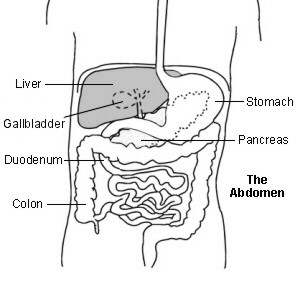
Bile is a fluid made in the liver. Bile contains various substances including bile pigments, bile acids, bile salts, cholesterol and lecithin. Bile is passed into tiny tubes called bile ducts. The bile ducts join together (like the branches of a tree) to form the main bile duct. Bile constantly drips down the bile ducts, into the main bile duct and then into the gut.
The gallbladder lies under the liver on the right side of the upper tummy (abdomen). It is like a pouch which comes off the main bile duct and fills with bile. It is a 'reservoir' which stores bile. The gallbladder squeezes (contracts) when we eat. This empties the stored bile back into the main bile duct. The bile passes along the remainder of the bile duct into the duodenum, which is the first part of the small bowel (gut) after the stomach.
The bile then moves with the rest of the bowel contents along the small bowel. The last part of the small bowel is called the terminal ileum, which then leads on to the large bowel (colon). Normally most of the bile acids pass from the terminal ileum back into the bloodstream, ie they are reabsorbed into the bloodstream.
Selecciones del paciente para Diarrea

Preguntas frecuentes
¿Cuál es la apariencia típica de la diarrea por ácidos biliares?
La diarrea por ácidos biliares generalmente se presenta como heces acuosas y usualmente no contiene sangre.
¿Puede fluctuar la diarrea por ácidos biliares, apareciendo y desapareciendo?
Sí, la diarrea asociada con la malabsorción de ácidos biliares puede ocurrir de manera continua, o puede aparecer y desaparecer de forma intermitente.
¿Cuánto tiempo podría necesitar una persona tomar medicación para la diarrea por ácidos biliares idiopática?
Si tienes diarrea por ácidos biliares idiopática (donde la causa es desconocida) y respondes bien al tratamiento, es posible que necesites tomar el medicamento aglutinante de ácidos biliares durante mucho tiempo, potencialmente durante muchos años, para mantener la diarrea bajo control.
¿Cómo funcionan los secuestradores de ácidos biliares para tratar la diarrea por ácidos biliares?
Los secuestradores de ácidos biliares son medicamentos que se adhieren a los ácidos biliares en el intestino, evitando que causen irritación y exceso de agua en el intestino grueso. Esto ayuda a reducir la diarrea acuosa.
Además de la medicación, ¿hay algo más que pueda hacer para ayudar a controlar los síntomas de la diarrea por ácidos biliares?
Adoptar una dieta baja en grasas puede ayudar a reducir los síntomas de la diarrea por ácidos biliares, especialmente cuando se combina con un medicamento aglutinante de ácidos biliares.
¿Qué papel desempeña el íleon en la digestión de la bilis?
El íleon terminal, que es la última parte del intestino delgado, es donde la mayoría de los ácidos biliares son normalmente reabsorbidos de nuevo en el torrente sanguíneo. Si este proceso se interrumpe, los ácidos biliares pueden entrar en el intestino grueso y causar diarrea.
¿Existen recomendaciones dietéticas específicas sobre las grasas para personas con diarrea por ácidos biliares?
Sí, se recomienda una dieta baja en grasas ya que puede ayudar a reducir los síntomas de la diarrea por ácidos biliares.
¿Se puede curar la diarrea por ácidos biliares?
Si la diarrea por ácidos biliares se debe a una condición subyacente, el resultado dependerá de esa condición. Sin embargo, para muchas personas, especialmente aquellas con diarrea idiopática por ácidos biliares, el tratamiento con secuestradores de ácidos biliares es muy efectivo para controlar los síntomas, aunque puede ser necesario tomarlo a largo plazo para prevenir la recurrencia.
Lecturas adicionales y referencias
- Camilleri M; Diarrea por ácidos biliares: prevalencia, patogénesis y terapia. Gut Liver. 23 de mayo de 2015;9(3):332-9. doi: 10.5009/gnl14397.
- Camilleri M; Avances en la comprensión de la diarrea por ácidos biliares. Expert Rev Gastroenterol Hepatol. 2014 Ene;8(1):49-61. doi: 10.1586/17474124.2014.851599. Publicado electrónicamente el 25 de noviembre de 2013.
- Barkun AN, Love J, Gould M, et al; Bile acid malabsorption in chronic diarrhea: pathophysiology and treatment. Can J Gastroenterol. 2013 Nov;27(11):653-9.
- Wilcox C, Turner J, Green J; Revisión sistemática: el manejo de la diarrea crónica debido a la malabsorción de ácidos biliares. Aliment Pharmacol Ther. 2014 May;39(9):923-39. doi: 10.1111/apt.12684. Epub 2014 Mar 6.
- Watson L, Lalji A, Bodla S, et al; Manejo de la malabsorción de ácidos biliares mediante intervenciones dietéticas bajas en grasa: ¿una estrategia útil aplicable a algunos pacientes con síndrome del intestino irritable predominante con diarrea? Clin Med (Lond). 2015 Dic;15(6):536-40. doi: 10.7861/clinmedicine.15-6-536.
- SeHCAT (ácido tauroselcólico [75 selenio]) para el diagnóstico de diarrea por ácidos biliares.; Guía de Diagnósticos NICE, noviembre 2021
Sobre el autorVer biografía completa

Dra. Philippa Vincent, MRCGP
Médico General, Autor Médico
MB BS, Bsc, MRCGP (2000), DCH, DFSRH, DRCOG
Dra Philippa Vincent es un médico de cabecera del NHS que trabaja en el norte de Londres.
Acerca del revisorVer biografía completa

Dr Toni Hazell, FRCGP
MBBS, BSc, FRCGP, DFSRH, Dip GU med, DRCOG, DCH (London, UK, 2000)
La Dra. Toni Hazell se graduó de la Escuela de Medicina del Hospital St. Mary y realizó su VTS en el Hospital Northwick Park.
Historial del artículo
La información en esta página está escrita y revisada por pares por clínicos calificados.
Artículo también disponible en Inglés, Alemán, Español, Francés, Italiano, Portugués, Hindi, Hebreo, Árabe, y Sueco.
Próxima revisión: 26 Jul 2028
28 Jul 2023 | Última versión

Pregunta, comparte, conecta.
Navega por discusiones, haz preguntas y comparte experiencias en cientos de temas de salud.

¿Te sientes mal?
Evalúa tus síntomas en línea de forma gratuita
Suscríbete al boletín de Patient
Tu dosis semanal de consejos de salud claros y confiables, escritos para ayudarte a sentirte informado, seguro y en control.
Al suscribirte aceptas nuestros Política de Privacidad. Puedes darte de baja en cualquier momento. Nunca vendemos tus datos.