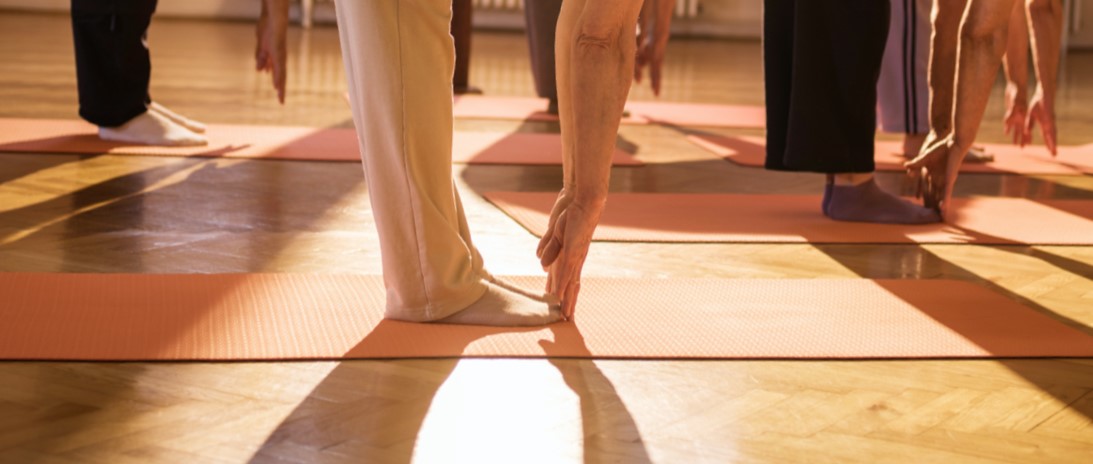
How to become more flexible
Revisado por pares por Dr Sarah Jarvis MBE, FRCGPÚltima actualización por Gillian HarveyÚltima actualización 25 Sept 2020
Cumple con las directrices editoriales
- DescargarDescargar
- Compartir
- Language
- Discusión
- Versión en audio
The word flexibility conjures up an image of an advanced yogi becoming tied up in knots. But the truth is, flexibility is something we all need to think about. However fit you are, if you neglect your flexibility, you leave yourself more prone to injury or find yourself unable to perform daily tasks as you age.
En este artículo:
Videos seleccionados para Ejercicio y actividad física
Continúa leyendo abajo
Why do we lose flexibility?
We're born with pretty flexible tendons and joints - as anyone who's seen a baby happily nibbling on their toes can testify. But a few years down the line, most of us have already lost an amount of flexibility simply because we're not using our full range of motion. "We start losing flexibility as soon as we go to school and start sitting down more," explains physiotherapist Nell Mead. "If you don't use the filaments (stretchy material within your muscle) then they become shorter."
In addition, as we age our bodies naturally become less flexible. "As we age, our tendons, ligaments and muscles lose elasticity and stretch-ability," explains Karen Laing, instructor from Fit School.
Why is flexibility important?
Volver al contenidoIn years gone by, it was believed that the more flexible you are, the better it is for your health. However, we now know it's possible to be too flexible. Flexibility is important as it allows us to do the things we need to do with our bodies - from tying our shoelaces to fastening our clothing. But too much flexibility, including in conditions such as síndrome de Ehlers-Danlos, may mean less control over the movement of our joints. "People who are hyperflexible might be more prone to artritis because they have less control over the bones in their joints. People with too little are more prone to strains and sprains."
Continúa leyendo abajo
So how flexible do I need to be?
Volver al contenidoThe amount of flexibility required varies from person to person. If you're hoping to take on some mountain climbing, you'll need a little more range than if you get your exercise through walking. Exercise aside, we all need to have the range of motion required to complete the daily tasks required of us.
If you've lost flexibility, whether through age, injury or insufficient stretching, you may find that you are unable to do a task that was previously in your range of movement. For example, struggling to fasten your bra, or clip your toenails.
One way of ensuring flexibility is maintained is through daily movement and stretching. "Try taking your body through its full range of motion every day. That could be just having a stretch; it could be doing a session of yoga, dance if that's what works for you. The full range every day because then you won't lose it," advises Mead.
Becoming more flexible
Volver al contenidoAs well as maintaining your existing flexibility, you may wish to develop more flexibility as part of a new exercise regime, to prevent injury and ensure ease of movement.
If you're starting something new, or finding movement a struggle, it's time to take action. The good news is that if you've lost filament through underuse you can rebuild it and increase your flexibility through stretching. You may find stretching exercises, such as the suggestions at the end of this piece useful. Or you may need to visit a doctor or physiotherapist for support.
"The differential here is pain," explains Mead. "If when you try to stretch into a position your arms or back feel sore, it's worth getting checked out as you may have an injury."
If you don't need medical treatment, there are many ways to increase your flexibility - through being mindful of your body and carrying out stretching exercises. The important thing here is ensuring you carry out any exercise in a careful and controlled manner in order to benefit fully.
Continúa leyendo abajo
Flexibility as part of your workout
Volver al contenidoIf you simply want to improve or maintain your range of movement, the types of exercise you may want to turn to will differ depending on how you want to use your body. Laing recommends ensuring balance in the different exercises and movements we carry out as part of our fitness regime.
"It's about balance. Do you have the following as part of your regular activity programme?" she asks. Her list includes:
Something to get your heart rate up regularly.
Something that gets impact into your joints, like running or resistance training.
Something that helps with your coordination like a specific class for older adults.
A movement-based class like Pilates or yoga.
It's easy to neglect flexibility, but crucial to build it in to our everyday movement.
Exercises to help with flexibility
Volver al contenidoIn order to improve flexibility, Karen Laing of Fit School recommends we try the following moves:
Side bends/reaches (lateral flexion)
Stand with your back against a wall. Reach your hand down the side of your leg as far as you can and return to standing. Repeat on the other side. You could also do this seated on a hard-backed chair.
Twists
You can do this movement standing or on a chair. Reach one arm behind you allowing your body to twist. To increase the range, look towards your arm as it reaches. If you have shoulder mobility issues then fold your arms across your chest and perform the twist this way.
Front and back bends (forward flexion)
A cat stretch is the easiest way to do this movement. From your hands and knees stretch your back up to the ceiling like an angry cat. Then reverse the move so your back drops to the floor. If your knees don't like this move, try a shoulder bridge instead. Lie on the floor with your feet under your knees and slowly roll your spine off the floor until you are in a bridge position, then return to the floor.
Selecciones del paciente para Ejercicio y actividad física

Vida saludable
¿Qué es el ejercicio somático? Explorando la conexión mente-cuerpo
Introducido en la década de 1970 por el filósofo Thomas Hanna, la somática se refiere a una disciplina que explora la relación entre tu mente y cuerpo a través del movimiento. El ejercicio somático es una práctica sensorial que promueve movimientos conscientes para mejorar tu conciencia de las sensaciones internas de tu cuerpo.
por Victoria Raw

Vida saludable
Will future towns and cities focus on fitness?
In a 2017 speech, Baroness Tanni Grey-Thompson accused UK town planning laws of favouring the opening of fast food outlets over new gyms and fitness hubs. The Paralympian is undoubtedly on to something, but it will take more than the shuttering of fried chicken shops to tackle the growing public health crisis in our towns and cities.
por Ross Davies
Continúa leyendo abajo
Historial del artículo
La información en esta página es revisada por pares por clínicos calificados.
25 Sept 2020 | Última versión

Pregunta, comparte, conecta.
Navega por discusiones, haz preguntas y comparte experiencias en cientos de temas de salud.

¿Te sientes mal?
Evalúa tus síntomas en línea de forma gratuita
Suscríbete al boletín de Patient
Tu dosis semanal de consejos de salud claros y confiables, escritos para ayudarte a sentirte informado, seguro y en control.
Al suscribirte aceptas nuestros Política de Privacidad. Puedes darte de baja en cualquier momento. Nunca vendemos tus datos.