Alcohol and sensible drinking - safe limits of alcohol
Revisado por pares por Dr Hayley Willacy, FRCGP Última actualización por Dr Doug McKechnie, MRCGPÚltima actualización 18 Feb 2023
Cumple con las directrices editoriales
- DescargarDescargar
- Compartir
- Language
- Discusión
- Versión en audio
En esta serie:Liver disease and alcoholAlcoholism and problem drinkingAlcohol withdrawal and alcohol detoxification Enfermedad del hígado graso no alcohólico
In the UK, almost half of adults drink alcohol once a week or more. About a quarter of all adults report drinking more than the recommended weekly limit of alcohol.
En este artículo:
Videos seleccionados para Consejos sobre alcohol
See your doctor or practice nurse if you are drinking above the safe limits and are finding it difficult to cut down.
Continúa leyendo abajo
What are the recommended safe limits of alcohol?
The UK's national guidance is that men and women should drink no more than 14 units of alcohol per week, spread across three days or more, and have at least two alcohol-free days a week.
There is no completely safe level of drinking, but it's thought that sticking to these limits reduces the risk of health problems.
Mujeres embarazadas
There is no known 'safe level' of alcohol use in pregnancy. It's safest for pregnant women, and women who are trying to conceive, not to drink alcohol at all. Alcohol can reach the baby at any stage of pregnancy.
Some women drink in early pregnancy before they know they are pregnant. There are a very small number of studies that suggest the risk of this to the fetus is low, but there's not enough data to be sure.
Your liver processes alcohol. It can only cope with so much at a time. Drinking more alcohol than the liver can cope with can damage liver cells and produce toxic by-product chemicals.
The more you drink and especially above the recommended limits, the greater the risk of developing serious problems. And remember, binge drinking can be harmful even though the weekly total may not seem too high. For example, if you only drink once or twice a week but when you do you drink 4-5 pints of beer each time, or a bottle of wine each time, this is a risk to your health. Also, even one or two units can be dangerous if you drive, you operate machinery, or you take some types of medication.
What is a unit of alcohol?
Volver al contenidoOne unit of alcohol is 10 ml (1 cl) by volume, or 8 g by weight, of pure alcohol. For example:
One unit of alcohol is about equal to:
Half a pint of ordinary strength beer, lager, or cider (3-4% alcohol by volume); o
Una medida pequeña de pub (25 ml) de licores (40% de alcohol por volumen); o
Una medida estándar de pub (50 ml) de vino fortificado como jerez o oporto (20% de alcohol por volumen).
Hay una unidad y media de alcohol en:
A small glass (125 ml) of ordinary strength wine (12% alcohol by volume); o
Una medida estándar de pub (35 ml) de licores (40% de alcohol por volumen).
But remember, many wines and beers are stronger than the more traditional ordinary strengths. A more accurate way of calculating units is as follows. The percentage alcohol by volume (% abv) of a drink equals the number of units in one litre of that drink. For example:
Strong beer at 6% abv has six units in one litre. If you drink half a litre (500 ml) - just under a pint - then you have had three units.
Wine at 14% abv has 14 units in one litre. If you drink a quarter of a litre (250 ml) - two small glasses - then you have had three and a half units.
A 750 ml bottle of 12% wine contains nine units. If you drink two bottles of 12% wine over a week, that is 18 units. This is above the upper safe limit for both men and women.
Puedes usar nuestro calculadora de unidades de alcohol para calcular cuántas unidades hay en tus bebidas.
Continúa leyendo abajo
Isn't alcohol good for you?
Volver al contenidoThis is controversial. Several studies have found that people who have 'moderate' alcohol consumption (around 1-2 units of alcohol a day) have a lower risk of heart disease, diabetes, and obesity, compared to people who don't drink any alcohol, and to people who drink a lot. It's therefore been suggested that a small amount of alcohol might be good for you.
This might not be the right conclusion, though. It's been suggested that the 'moderate' drinkers in those studies are already healthier than the comparison groups in different ways. For example, they tend to have higher levels of education, to smoke less, to be wealthier, and are less likely to be obese or overweight.
The comparison with 'never drinkers' is also flawed if they are unhealthy in other ways; 'never drinkers' might have other problems that stop them from drinking, and also increase their risk of future health problems, such as other long-term illnesses, poverty, or previous alcohol addiction.
So, the link between moderate alcohol use and good health is questionable. Some, more recent, studies have suggested there is no, or very little, health benefit from moderate alcohol use, but that there are also harms, such as an increased risk of cancer.
This has led the World Health Organization to state that there is no safe level of alcohol consumption at all.
Do you know how much you are drinking?
Volver al contenidoWhen asked "How much do you drink?" many people give a much lower figure than the true amount. It is not that people usually lie about this but it is easy not to realise your true alcohol intake.
To give an honest answer to this question, try recording your drinks for a few weeks. An app can be helpful; see the TryDry app in Further Reading for one example. See our feature on 5 best dry January apps for more helpful examples. Remember, it is a pub measure of spirits that equals one unit. A home measure is often a double.
The safest amount of alcohol for health is probably none at all. However, many of us don't want to give up alcohol completely, so the next best option is to stick within the recommended limits.
See the Alcoholism and Problem Drinking leaflet for ideas on how to cut down your alcohol intake.
Selecciones del paciente para Consejos sobre alcohol
Vida saludable
Alcohol withdrawal and alcohol detoxification
Many people who regularly drink excessive quantities of alcohol become alcohol-dependent. This can cause the body serious harm. There is a great deal of help for people who are alcohol-dependent and want to stop drinking.
por la Dra. Hayley Willacy, FRCGP
Vida saludable
Liver disease and alcohol
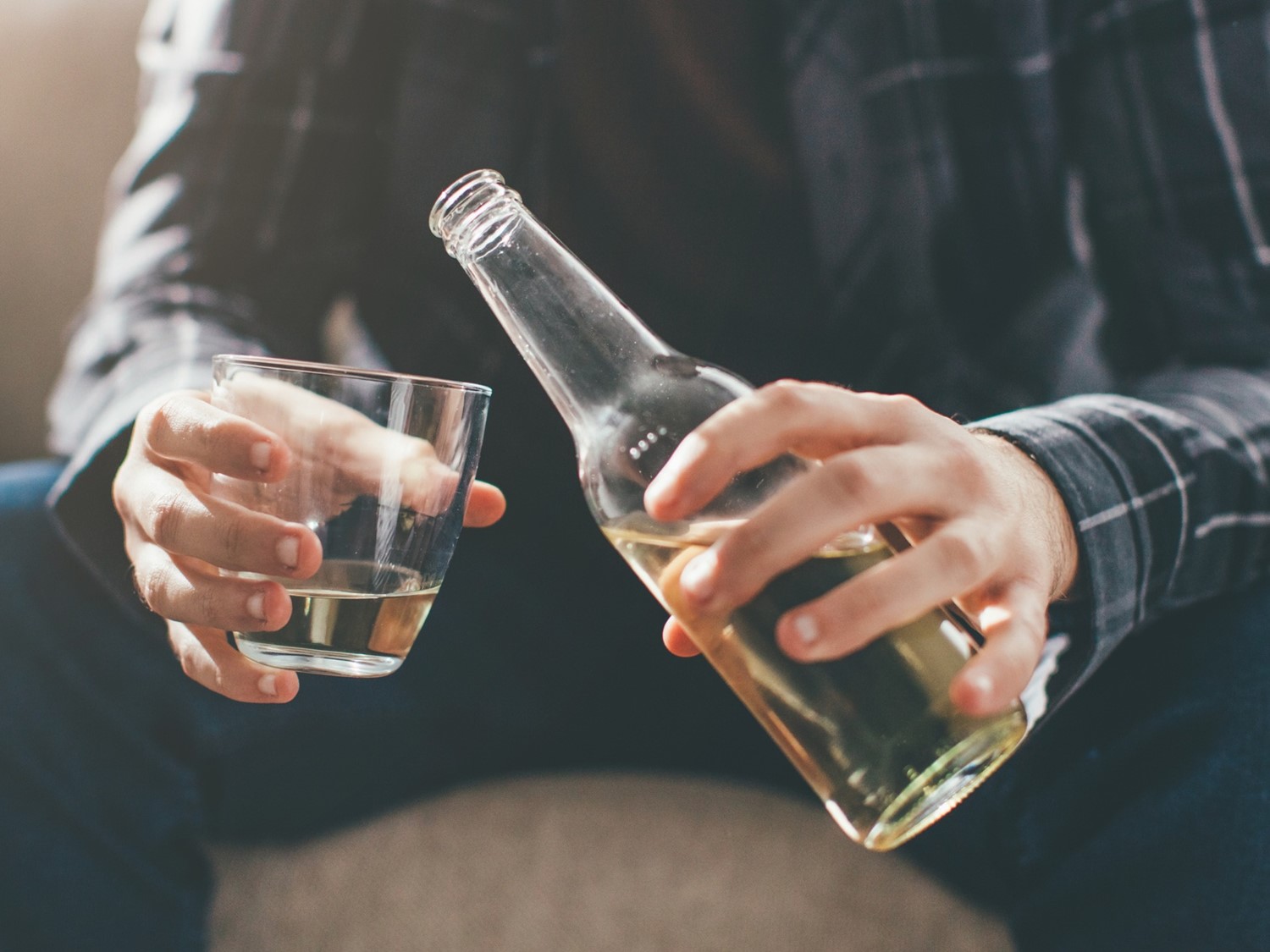
Alcohol abuse can lead to three main types of liver diseases: fatty liver, hepatitis and 'scarring' of the liver (cirrhosis). It can also lead to other health problems. This leaflet also includes information about non-alcoholic fatty liver disease.
por el Dr. Doug McKechnie, MRCGP
Lecturas adicionales y referencias
- Alcohol-use disorders: diagnosis, assessment and management of harmful drinking and alcohol dependence; NICE Clinical Guideline (February 2011 -last updated October 2014)
- Cuidado prenatal; Guía NICE (agosto 2021)
- Hoek AG, van Oort S, Mukamal KJ, et al; Consumo de Alcohol y Riesgo de Enfermedades Cardiovasculares: Colocando Nuevos Datos en Contexto. Curr Atheroscler Rep. 2022 Ene;24(1):51-59. doi: 10.1007/s11883-022-00992-1. Epub 2022 Feb 7.
- Guidelines on alcohol consumption; House of Commons Library, UK Parliament, June 2016
- Try Dry: the app to track your progress during Dry Jan and beyond; Alcohol Change UK
- No level of alcohol consumption is safe for our health; World Health Organization, 2023
Continúa leyendo abajo
Historial del artículo
La información en esta página está escrita y revisada por pares por clínicos calificados.
Próxima revisión: 5 Ene 2028
18 Feb 2023 | Última versión

Pregunta, comparte, conecta.
Navega por discusiones, haz preguntas y comparte experiencias en cientos de temas de salud.

¿Te sientes mal?
Evalúa tus síntomas en línea de forma gratuita
Suscríbete al boletín de Patient
Tu dosis semanal de consejos de salud claros y confiables, escritos para ayudarte a sentirte informado, seguro y en control.
Al suscribirte aceptas nuestros Política de Privacidad. Puedes darte de baja en cualquier momento. Nunca vendemos tus datos.