
¿Cómo se muere uno de la gripe?
Revisado por pares por Dra. Sarah JarvisÚltima actualización por Julian TurnerÚltima actualización 15 Jan 2019
Cumple con las directrices editoriales
- DescargarDescargar
- Compartir
- Language
- Discusión
- Versión en audio
- Agregar a fuentes preferidas en Google
For certain high-risk groups, people over 65 years of age and those with underlying health conditions among them, a dose of flu can have serious ramifications. We talk to the head of flu at Public Health England about effective prevention and treatment.
Many people still perceive flu, the homely acronym for influenza, to be innocuous, an unpleasant inconvenience - one that is eminently avoidable by vaccine - rather than an existential threat.
Yet each year in advanced Western nations whose citizens have access to the best healthcare services, flu is responsible for thousands of deaths, particularly among high-risk groups.
How flu can kill
"For most people flu is generally mild, but in certain groups - people who are elderly and those with underlying health problems such as weakened immune systems, for example - it can be more serious, resulting in hospitalisation, and in extreme cases can be fatal," says Dr Richard Pebody, head of flu at Public Health England (PHE).
"Flu can cause serious conditions such as neumonía y encefalitis, increasing the risk of secondary bacterial infections and also triggering problems with underlying clinical conditions such as heart and lung disease."
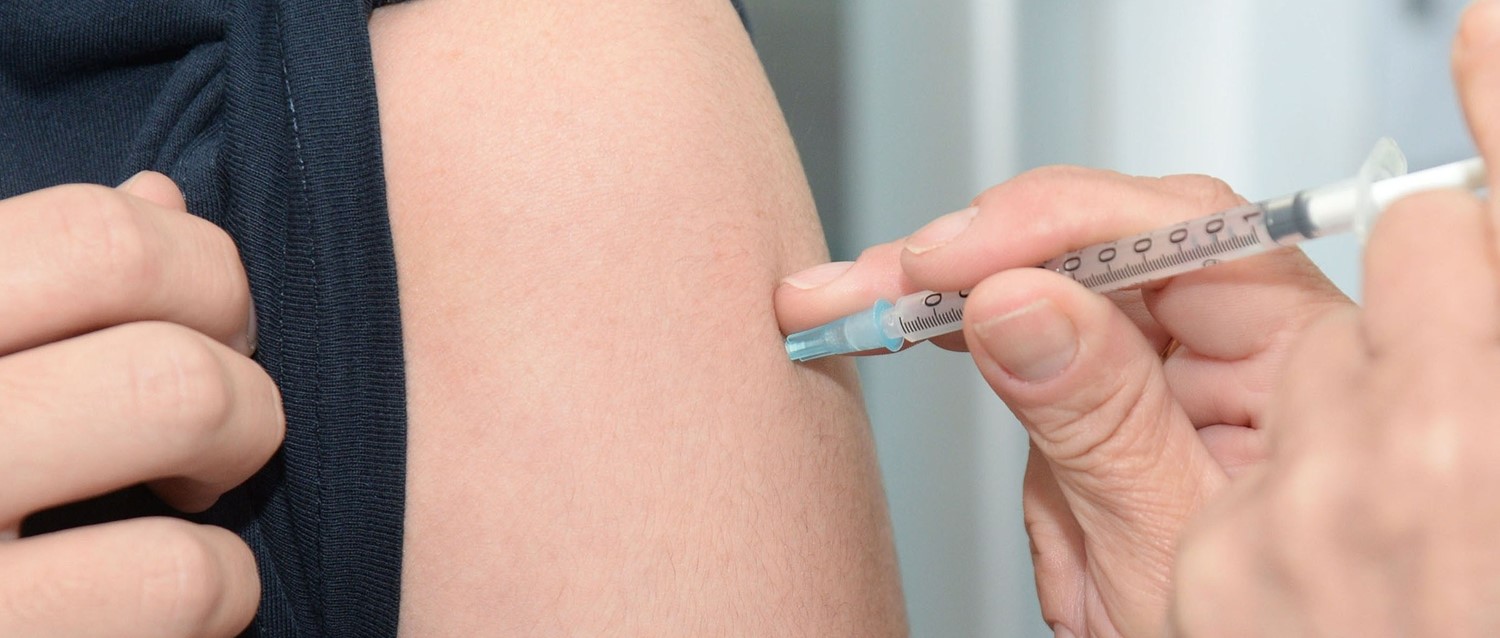
"The vacuna is the best defence we have against the spread of flu and for those who are eligible it isn't too late to get vaccinated."
Who is most at risk?
In addition to those aged 65 years, who tend to have weakened immune systems, and children and adults with a weakened immune system, pregnant women are also at increased risk from flu.
Pregnancy naturally weakens the body's natural defences, meaning the virus can cause serious complications for the woman and her newborn baby.
Children and adults with underlying health conditions that damage the immune system are also less able to fight off flu. According to PHE, those with chronic liver disease are approximately 48 times more likely to die if they develop flu than individuals who have no other underlying health condition.
Those with chronic renal disease are approximately 19 times more likely to die, patients with chronic heart disease 11 times more likely, and chronic respiratory disease sufferers seven times more likely.
Healthy children are also more susceptible to complications of flu - children under 5 years of age have the highest rates of hospital admission for flu, which can be reduced by up to 93% by introducing immunisation for all healthy children in an area.
Was the 2017/18 flu season exceptional?
Last year's flu season was the worst for seven years, with 15,000 deaths from the virus, around twice the average figure. Overall, an estimated 50,100 excess winter deaths occurred in England and Wales, the highest number in more than 40 years.
Three strains of flu circulated last winter: A(H3N2) - an infection that can especially impact older adults, resulting in more deaths, care home outbreaks and hospital admissions amongst older age groups, influenza B and A(H1N1)pdm09.
Pebody says there is evidence that virus A(H3N2) mutated during the manufacturing phase of the vaccine, meaning the resulting jab didn't give as good protection as hoped.
"In addition, the vaccine most adults received last winter only partially matched the flu B strain that was circulating," he adds.
The new vaccine
This year, PHE is offering adults below the age of 65 eligible for jabs - those with common health problems such as asthma and diabetes - a quadrivalent vaccine that protects against four key strains of flu (the previous version targeted three), while pensioners are being offered a boosted, or adjuvanted, jab.
"This year we recommend that all adults aged 18-64 receive the quadrivalent vaccine, and adults aged 65 and over will receive an adjuvanted flu vaccine," confirms Pebody. "The adjuvanted vaccine is intended to give a stronger and broader immune response."
The flu vaccine for healthy children, offered as a nasal spray rather than an injection, also protects against four strains of flu.
Prevention and treatment
GPs don't recommend antibiotics for flu since they don't relieve symptoms or speed up recovery, unless there is evidence of a secondary bacterial infection.
Antiviral medication may be prescribed to people in at-risk groups who present with a flu-like illness, in order to shorten the length of the illness, supported by a 2017 review of evidence by the European Centre for Disease Prevention and Control (ECDC).
"PHE recommends the use of oseltamivir (Tamiflu) or zanamivir (Relenza) to minimise the impact of flu on those in at-risk groups, who are at elevated risk of developing complications from flu infection," says Pebody.
"Antivirals are most effective when started as early as possible after influenza-like symptoms start - at least within the first 36-48 hours."
Self-help tips
Simple hygiene can also help you avoid catching flu and prevent its spread. Carry tissues and use them to catch coughs or sneezes; bin the used tissues as soon as possible, and then wash your hands and kill the germs.
You can treat flu symptoms yourself by resting up, keeping warm, drinking plenty of water, and taking simple painkillers.
But - in the UK - contact your GP or NHS 111 if:
Symptoms don't improve after seven days.
You're worried about your child's symptoms.
You're 65 or over.
Estás embarazada.
You have a serious health condition - for example, diabetes or a heart, lung, kidney or neurological disease.
You have a weakened immune system - for example, because of chemotherapy or HIV.
Selecciones del paciente para Gripe y vacunación

Infecciones
La vacuna contra la gripe durante el embarazo no causa problemas de salud en los niños
Un nuevo estudio no ha encontrado relación entre recibir la vacuna contra la gripe durante el embarazo y problemas de salud posteriores en los niños.
por Milly Evans
Infecciones
¿Estarán disponibles las vacunas contra la gripe después del Brexit?
Salir de la UE sin un acuerdo el 31 de octubre 'probablemente' interrumpirá la entrega de vacunas contra la gripe justo cuando el Reino Unido enfrenta una cepa virulenta, advierten los médicos.
por Ashwin Bhandari
Sobre el autorVer biografía completa

Julian Turner
Freelance Journalist
Julian Turner es un periodista freelance y editor de Compelo Energy.
Acerca del revisorVer biografía completa

Dra. Sarah Jarvis
Consultora Clínica
MA (Cantab), BM, BCh (Oxon), DRCOG, FRCGP, MBE
Después de formarse en medicina en Cambridge y Oxford, la Dra. Sarah Jarvis MBE se convirtió en médica general.
Historial del artículo
La información en esta página es revisada por pares por clínicos calificados.
Artículo también disponible en Inglés, Alemán, Español, Francés, Italiano, Portugués, Hindi, Hebreo, Árabe, y Sueco.
15 Jan 2019 | Última versión

Pregunta, comparte, conecta.
Navega por discusiones, haz preguntas y comparte experiencias en cientos de temas de salud.

¿Te sientes mal?
Evalúa tus síntomas en línea de forma gratuita
Suscríbete al boletín de Patient
Tu dosis semanal de consejos de salud claros y confiables, escritos para ayudarte a sentirte informado, seguro y en control.
Al suscribirte aceptas nuestros Política de Privacidad. Puedes darte de baja en cualquier momento. Nunca vendemos tus datos.
Más en infecciones
- Exigen mejorar el acceso a los servicios de salud sexual ante el aumento de las ITS
- Desmintiendo mitos comunes sobre el VIH y el SIDA
- ¿Cuánto tiempo antes de viajar deberías vacunarte?
- ¿Qué tan rápido se propagan las diferentes ITS?
- Cómo evitar los piojos al volver a la escuela
- Cómo evitar las picaduras de garrapatas y la enfermedad de Lyme
- Cómo afrontar un diagnóstico de herpes genital
- Cómo distinguir las diferencias entre los virus invernales en niños
- ¿Es la gripe o solo un resfriado?
- ¿Reírse hasta hacerse pis? Cómo el stand-up comedy puede abordar la incontinencia
- Formas sencillas de ayudar a prevenir la candidiasis vaginal
- Videos sobre ITS
- Informar a tus parejas actuales y pasadas sobre tu ITS
- La mejor manera de tratar un brote de herpes
- Los casos de enfermedad de Lyme en el Reino Unido podrían ser tres veces más altos de lo estimado
- ¿Qué es el Hantavirus? Todo lo que necesitas saber sobre este virus raro pero serio
- Lo que necesitas saber sobre la neumonía
- Lo que tu orina dice sobre tu salud
- Cuándo buscar tratamiento médico para la gripe
- ¿Por qué todavía existe estigma en torno al VPH?