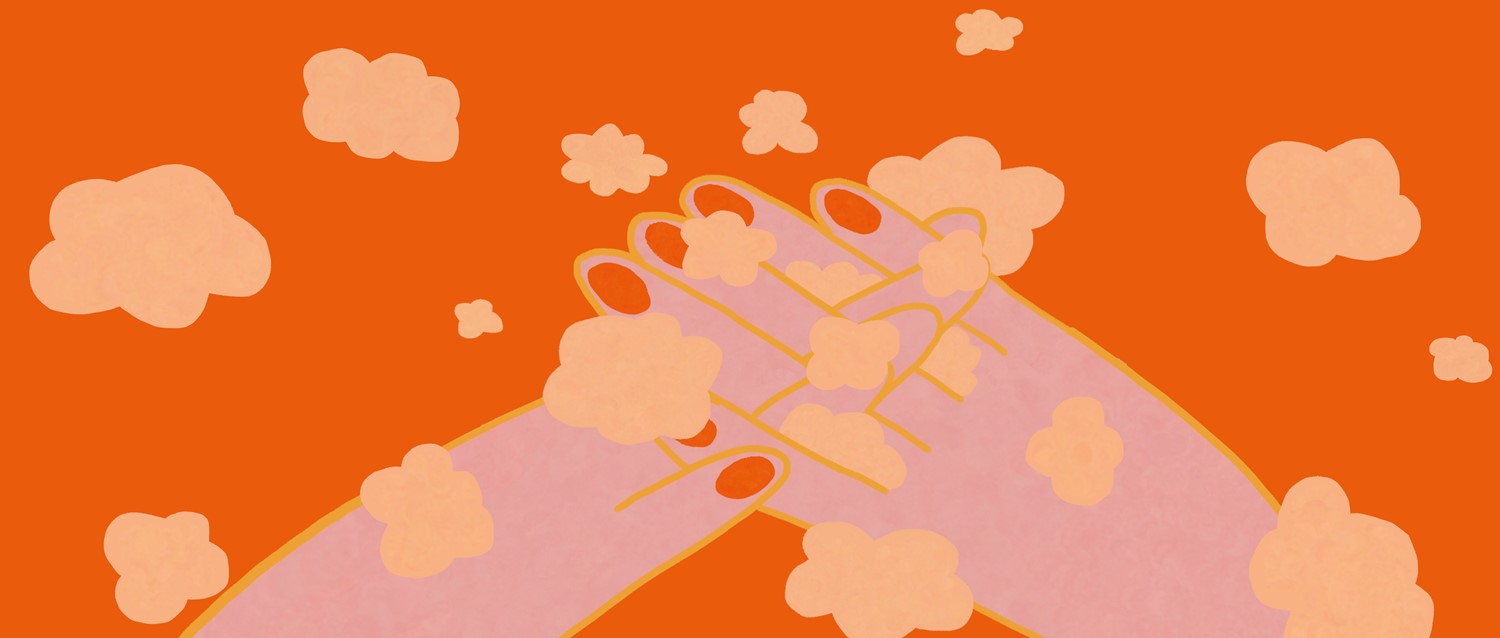
Are you washing your hands properly?
Peer reviewed by Dr Sarah JarvisLast updated by Milly EvansLast updated 4 Jul 2019
Meets Patient’s editorial guidelines
- DownloadDownload
- Share
- Language
- Discussion
- Audio Version
- Add to preferred sources on Google
Most of us know how important it is to practise good hand hygiene. But just because you're washing your hands often, doesn't mean that you're washing them well. We find out the best way to wash your hands and we explain why it's so crucial to our health.
Why should you wash your hands?
Washing your hands is one of the best ways to protect yourself from germs and stop yourself catching illnesses like colds and food poisoning. It's so important, the UN have named 15thOctober of every year 'Global Handwashing Day' to raise awareness.
Research from Queen Mary University of London found that many of the objects we use and share on a day-to-day basis - like money and credit cards - have levels of bacteria equivalent to that of a dirty toilet bowl. Worryingly, 11% of hands also showed the same gross contamination. The study's authors stress the importance of handwashing in health promotion, highlighting that washing hands with soap can reduce diarrhoeal infections by up to 42%.
Another study estimates that 8.2% of the overall worldwide decline in child mortality between 1990 and 2015 can be attributed to improved handwashing. This largely accounts for the global push for more safe and accessible water resources.
Washing your hands is not only about protecting yourself from infection - plenty of illnesses are easily spread through hands and can be especially dangerous to those with poor immune systems as well as children and older people. If you are a parent, it is crucial that you teach your child about proper handwashing and explain to them why it is important, particularly as illness spreads quickly in closed environments like schools.
Handwashing plays a key role in enabling people across the world to get on with their daily lives, according to Om Prasad Gautam, Senior WASH Manager at WaterAid. "Handwashing with soap keeps people clean and can prevent diseases, so children can go to school, adults can go to work, mothers can give birth safely, and young women can have their periods with dignity. Lack of handwashing by health workers in healthcare facilities during critical moments (such as before and after touching patients) increases the risk of hospital acquired infections."
How to wash your hands
Handwashing is far more than running your hands under water for a few seconds - to get the full benefit you should follow the World Health Organization (WHO) guidelines. Washing your hands properly should take around 20 seconds or, as the WHO suggests, enough time to sing 'Happy Birthday' twice. Their guidance says to:
Wet hands with water.
Apply enough soap to cover all hand surfaces.
Rub hands palm to palm.
Rub right palm over the back of your left hand with interlaced fingers. Repeat with your other hand.
Rub palm to palm with fingers interlaced.
Rub the backs of your fingers to the palms of the opposite hand.
Rub in rotation the thumb of one hand with the clasped palm of the other. Repeat with the other hand.
Rub the tips of your fingers in the palm of the other hand, going back and forth and in circles to clean under your nails. Repeat with the other hand.
Rinse hands with water.
Dry hands thoroughly, ideally with a disposable towel.
Use a disposable towel or clean tissue/toilet tissue to turn off the tap (and the bathroom lightswitch) to avoid recontamination.
When using soap, there is no need to use versions that are branded 'antibacterial' - they are no more effective at killing germs than regular soaps. In fact, they could actually be worsening our health by making bacteria resistant to the agents used to kill them which makes it harder to kill them in the future.
Washing hands with soap and water is always preferable to using hand sanitiser where possible. However, using hand sanitiser for emergencies or where handwashing facilities are not available is a good alternative.
When should you wash your hands?
Dr Lisa Ackerly, an environmental health practitioner also known as The Hygiene Doctor, encourages people to consider when they are washing their hands rather than how often.
"Hand washing is the simplest and most cost-effective way for people to protect themselves and others from infection. But it's very important that we understand when to wash your hands. People say "wash hands regularly" but that's not adequate in my opinion - you could miss the critical times. It's all about stopping the chain of infection or journey of the germ," she explains.
According to Ackerly you should always wash your hands:
Before eating with your fingers.
After using the toilet.
After caring for pets.
After handling raw meat, poultry or soiled vegetables.
On coming home or arriving at the office.
Before rubbing your eyes or putting in contact lenses.
You should also make sure your hands are washed:
After handling money or receipts.
After blowing your nose or coughing, especially if you are ill.
After sex or intimate activity.
Before treating a burn or wound or caring for someone who is sick or injured (including if you are visiting someone in hospital).
Handwashing needs to be part of a global push for better hygiene and disease prevention, says Gautam. "Hygiene behaviour change is one of the most cost-effective public health interventions and handwashing with soap can cut the risk of diarrhoeal disease - the fourth biggest killer of children under five - almost by half (up to 48%). Despite hygiene's vital role in preventing disease, the global compliance rate on handwashing is very low, and it is often undervalued and underfunded in many countries," he reveals.
Patient picks for Preventing disease
General health and lifestyle
5 natural ways to reduce inflammation
Inflammation is your body's way of protecting itself against injury or infection - causing swelling, redness, and heat. Short-term inflammation is vital for healing, but long-term inflammation can lead to serious health issues. We look into the underlying causes of long-term inflammation and ways to prevent it.
by Victoria Raw
General health and lifestyle
Being 'too clean' isn't bad for your health, experts confirm
For decades there has been a divide in public opinion to hygiene - should you clean meticulously to eliminate bacteria or leave a bit of grime to build up your immune system and protect you from allergies? But a new study from the Royal Society for Public Health confirms that being 'too clean' is not bad for your health.
by Milly Evans
About the authorView full bio

Milly Evans
Editor
Milly writes on a range of health topics, with a particular interest in health inequality and sexual health.
About the reviewerView full bio

Dr Sarah Jarvis
Clinical Consultant
MA (Cantab), BM, BCh (Oxon), DRCOG, FRCGP, MBE
After training in medicine at Cambridge and Oxford, Dr Sarah Jarvis MBE became a GP.
Article history
The information on this page is peer reviewed by qualified clinicians.
Article also available in English, German, Spanish, French, Italian, Portuguese, Hindi, Hebrew, Arabic, and Swedish.
4 Jul 2019 | Latest version
Join the conversation
Share your thoughts or experiences with others in our patient communities.

Ask, share, connect.
Browse discussions, ask questions, and share experiences across hundreds of health topics.

Feeling unwell?
Assess your symptoms online for free
Sign up to the Patient newsletter
Your weekly dose of clear, trustworthy health advice - written to help you feel informed, confident and in control.
By subscribing you accept our Privacy Policy. You can unsubscribe at any time. We never sell your data.
More in general health and lifestyle
- 4 common winter hair problems - and how to treat them
- 5 ways to look after your mental health this Christmas
- 9 tips to enjoy yourself and budget well this Christmas
- Could the energy crisis fuel a mental health emergency?
- Drinking in the sun: a dangerous cocktail
- How air pollution affects your health
- How to avoid stress over Christmas and the New Year
- How to boost your energy levels and feel less tired in winter
- How to cope with a nut allergy at Christmas
- How to get vitamin-ready for autumn and winter
- How to manage your mental health if you've been made redundant
- How your environment affects skin conditions
- Mental health carer checklist
- Microplastics in drinking water not an urgent health risk
- Should HIV prevention pills be available on the NHS?
- Signs you might need physiotherapy
- Study of homeopathy clinical trials reveals poor research practice
- Sun protection mistakes you're probably making
- Tips to prevent common foot injuries
- Why you shouldn't skip your free NHS health check