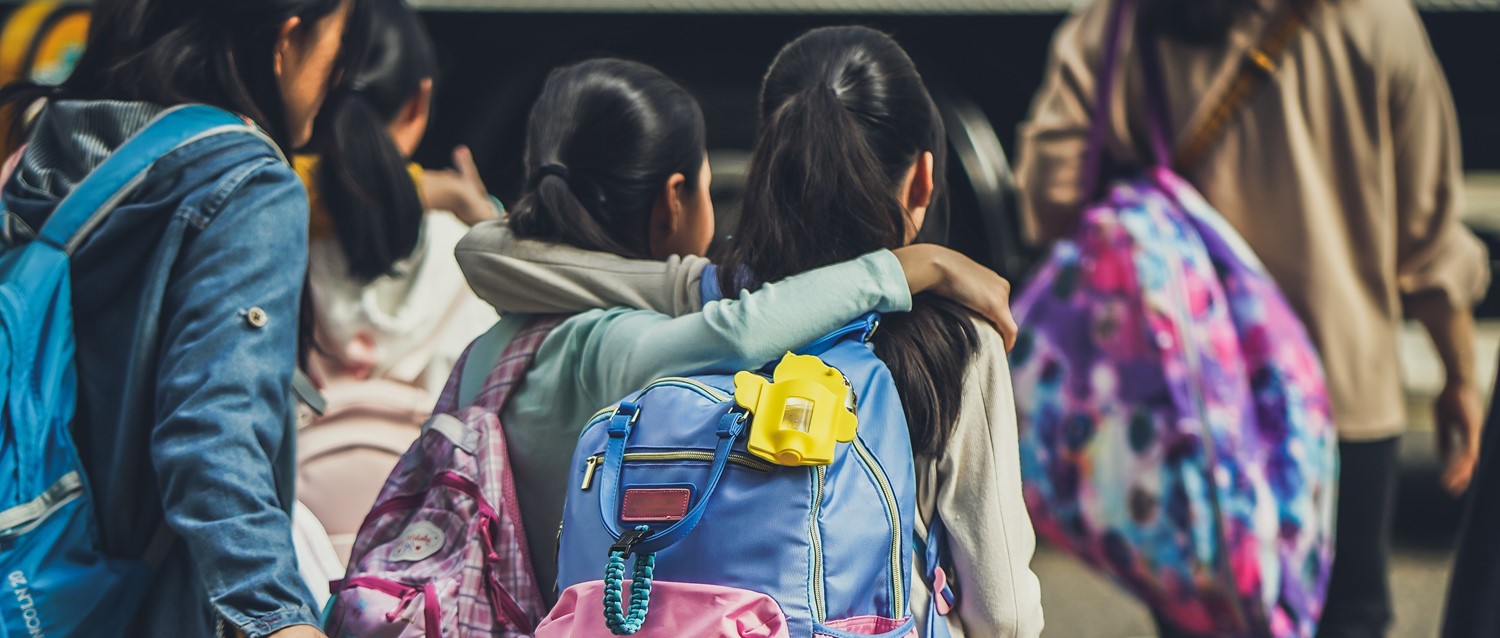
COVID-19: is it safe to send your kids back to school?
Peer reviewed by Dr Sarah JarvisAuthored by Gillian HarveyOriginally published 18 Jun 2020
Meets Patient’s editorial guidelines
- DownloadDownload
- Share
- Language
- Discussion
- Audio Version
- Add to preferred sources on Google
The UK Government has scrapped its plan to get all children back to primary schools in England before the summer holidays. But as more parents return to work over the coming weeks as some shops and businesses open up, they are left with a difficult decision - is it safe for children to go back to school? We look at the science behind the headlines.
Use Patient's coronavirus checker tool if you have any symptoms of fever, a new cough or loss of smell or taste. Until you have used the tool and been advised what action to take, please stay at home and avoid contact with other people.
When lockdown was implemented at the end of March, schools remained open to vulnerable children and the children of essential workers. This was designed to ensure that those working in healthcare, retail or other essential areas, could continue to do their jobs without worrying about childcare.
Since then government guidance has changed. Other areas of the English school system have been opened more widely, including nurseries, some year groups in primary schools and, from 15th June, years 10 and 12 in secondary schools.
On 9th June, the government reversed its recommendation that all English primary school children should have at least a month at school before the summer holidays. As of 10th June, the government's business minister, Nadhim Zahawi, speaking on BBC Radio 4's Today programme, claimed that it is still the government's ambition to have English schools open for a month before September, when the beginning of the school year would normally commence.
Four nations divided
England has opened its schools earlier than Scotland, Wales and Northern Ireland, who all have different arrangements:
In Scotland, there are no plans for schools to reopen before August.
In Wales, schools will reopen for all children from 29th June. However, only a third of pupils will be in school at any one time, and each year group will therefore spend significantly less time in school. The summer term and autumn half-term holiday will both be extended by a week.
In Northern Ireland, some children will return in August, with a phased return planned for other pupils from September.
So what's behind this debate? Is it really safe to send your kids back to school?
Coronavirus risk
The reassuring news is that for children who are in good health, coronavirus poses very little threat. "Do children get coronavirus?" asks Dr William Bird, GP from the Royal Berkshire Hospital in Reading. "Yes, but it is usually not severe. In fact, according to current figures, seasonal flu kills more children each year than coronavirus."
Official figures from the Office for National Statistics (ONS) reveal that of the 38,156 deaths from coronavirus that occurred in March and April in the UK, only 2 (0.005%) were children aged 14 or less, and 8 were recorded in the 15-19 year age range (0.02%).
Despite this reassurance, it can be hard to shake the feeling that sending children back to school might put them in danger. "We have to remember that we cannot completely eliminate danger in our lives," Bird advises. "For example, 143 children die on average each year from accidents in the home." So while the home environment seems safe we have to remember that no aspect of life is without risk.
Spreading the virus
Children are often seen as super-spreaders. And we're used to children bringing colds or stomach viruses home from school. However, the current science suggests that when it comes to coronavirus, children are not likely to spread the disease as widely as some other illnesses.
However, a recent statement by the Royal College of Paediatrics and Child Health (RCPCH) acknowledges that the risk to the general population and infection rate of children returning to school is not yet clear: "The evidence is very clear that children, especially young children, are protected from the worst effects of COVID-related illness. The evidence is much less clear about the extent to which children may transmit COVID-19 back into households and communities. We won't have a clear answer to this question for some time."
However, as the report also states: "There are very encouraging signs from other European countries that have begun to open schools."
Managing risk
Of course, the risk of coronavirus to your child and other members of your household will vary. If your child is classed as higher risk because of an underlying health issue or a member of your family is shielding, the decision is not straightforward.
Recent advice from the RCPCH has stated that "not all those children and young people who are currently advised to shield need to continue to do so." As our knowledge of COVID-19 risks increases, their advice has evolved: "The majority of children with conditions including asthma, diabetes, epilepsy, and kidney disease do not need to continue to shield and can, for example, return to school as it reopens."
However, if your child or another member of your household suffers from a long-term health condition, or you live with someone over 70, it's sensible to seek advice from your GP to help you decide whether sending your child back at this point is the right thing for you and your family.
Risk of staying home
Keeping children at home may seem the safe thing to do, but it's important to realise that there are risks attached to this scenario.
"Coronavirus is potentially going to be around for another year or eighteen months," explains Bird. "The child may be suffering from not being educated, not having social interaction, not getting outdoors. That presents a guaranteed problem for your child." According to Bird, we need to weigh up this 'guaranteed risk' against the potential risk of coronavirus.
The RCPCH also acknowledges that, when focusing solely on the risks to children, the better option is that schools are opened: "Children and young people are the part of the population least affected by COVID-19 and their risks of contracting serious illness from COVID-19 are very low. Keeping children away from school brings significant risks to their health and well-being."
However, whilst ensuring the health and safety of children is paramount, it is important to acknowledge that a decision on whether children should return to school cannot be made in isolation. With the effect on the wider community unknown and social distancing not always easy to implement in corridors and classrooms, experts are divided as to what the next steps should be.
Special circumstances
As well as taking into account a child's physical health, it is important to recognise that your decision may have a bearing on their mental health too.
While many children may take the prospect of going back to school in their stride, there will be others for whom it causes great anxiety. "Children are quite resilient on the whole, but there are some children that we know might find it difficult going back to school," says Polly Waite, Senior Clinical Research Psychologist currently carrying out research for Oxford University's Co-Space Survey, looking at how families are coping during the pandemic. "It might be because these children have pre-existing mental health difficulties, or special educational needs which make changes challenging for them."
In addition, those with certain mental health struggles may have found lockdown gave them a break from some of their fears. "Some children - especially those with social anxiety - have had an easier time in lockdown. Going back to school may cause their anxiety to flare up," explains Waite.
For children with pre-existing mental health issues or Special Educational Needs, extra support may be required. "There may need to be extra measures for some children or extra reassurance and support," agrees Bird.
If you have specific concerns about your child's ability to cope with the stress of returning to school, contact the school who should be able to advise you further.
Building confidence
After a long and unusual break from the classroom, most children will feel some level of anxiety or nervousness about their return to school. Some of this anxiety may come from knowing that many things will have changed. To help them deal with these normal feelings, Waite suggests taking steps that help our children feel more confident. "It helps to identify what they can control," she explains. "Will they have the same teacher, the same classroom? Who will they be with?"
It will also help your child to explain a little about the risk of coronavirus. It may raise their confidence to know that the risks to them personally (and to you, unless you're at increased risk) are extremely small. This may cause them to question why they've been kept at home for so long - make it clear that they've done an important thing to help keep people who are poorly safe.
How we behave around our children also has a significant impact. "Children will take their lead from parents," says Waite. "So it's important to appear confident. Give them the message that it is a bit weird and stressful, but actually they can cope.
"Think about the things in school they're looking forward to, and make sure their uniform is prepared. Practical measures like this help children to feel more in control."
A personal decision
If you are in a position to decide whether or not to send your child back to school, it's important to acknowledge that as well as taking into account scientific and political advice, the decision remains, for the time being, a very personal one. "When you undo lockdown, every single person is different," agrees Bird. "There are so many factors."
Even the RCPCH recognises the difficulties faced by parents and the wider community when it comes to a decision around opening schools: "Whilst the strength of feeling is understandable, it should not be a fight. The concerns and voices of all concerned, including those of children and young people, should be heard respectfully."
"At the end of the day, it's not long till the summer holidays," adds Waite. "Parents should do what's best for the family and their child, and not worry that their child is going to be disadvantaged by choosing one option over another."
Patient picks for Pandemic articles
COVID-19
19th July: staying safe as COVID-19 restrictions ease
Despite restrictions easing on 19th July, we are not out of the woods yet. With coronavirus case numbers spiking, we all need to do our bit to keep ourselves and others safe from COVID-19.
by Milly Evans
COVID-19
Tips for restarting your exercise routine after lockdown
Lockdown has affected us all in different ways. When it comes to fitness, some of us have stepped things up - going running for the first time, or taking long walks. Others will have experienced illness, had to care for others or simply found it all too much. As lockdown eases, what's the best way to restore our fitness, or even get fit for the first time?
by Gillian Harvey
About the authorView full bio
Gillian Harvey
Freelance Writer
BA (Hons) English
Gillian is a freelance writer and columnist for a variety of national newspapers and magazines.
About the reviewerView full bio

Dr Sarah Jarvis
Clinical Consultant
MA (Cantab), BM, BCh (Oxon), DRCOG, FRCGP, MBE
After training in medicine at Cambridge and Oxford, Dr Sarah Jarvis MBE became a GP.
Article history
Article also available in English, German, Spanish, French, Italian, Portuguese, Hindi, Hebrew, Arabic, and Swedish.
18 Jun 2020 | Originally published
Authored by:
Gillian HarveyPeer reviewed by
Dr Sarah Jarvis
Join the conversation
Share your thoughts or experiences with others in our patient communities.

Ask, share, connect.
Browse discussions, ask questions, and share experiences across hundreds of health topics.

Feeling unwell?
Assess your symptoms online for free
Sign up to the Patient newsletter
Your weekly dose of clear, trustworthy health advice - written to help you feel informed, confident and in control.
By subscribing you accept our Privacy Policy. You can unsubscribe at any time. We never sell your data.
More in cOVID-19
- Can I have routine vaccinations under lockdown?
- COVID-19 - coping with loneliness this Christmas
- COVID-19: Should vulnerable people shield because of Omicron?
- How does the new 90-minute COVID-19 test work?
- How to contribute to COVID-19 research
- How to reduce your risk of DIY injuries during coronavirus lockdown
- Is there a rise in alcohol deaths during COVID-19 pandemic?
- May lockdown easing: what are the new restrictions?
- Should you worry about your lockdown drinking habits?
- What are the differences between colds, flu and COVID-19?
- What is the COVID-19 antibody blood test and should I get one?
- What to do if you have a dental emergency during the lockdown