Señales de tinnitus a tener en cuenta en los niños
Revisado por pares por Dr Sarah Jarvis MBE, FRCGPÚltima actualización por Natalie HealeyÚltima actualización 6 Feb 2018
Cumple con las directrices editoriales
- DescargarDescargar
- Compartir
- Language
- Discusión
- Versión en audio
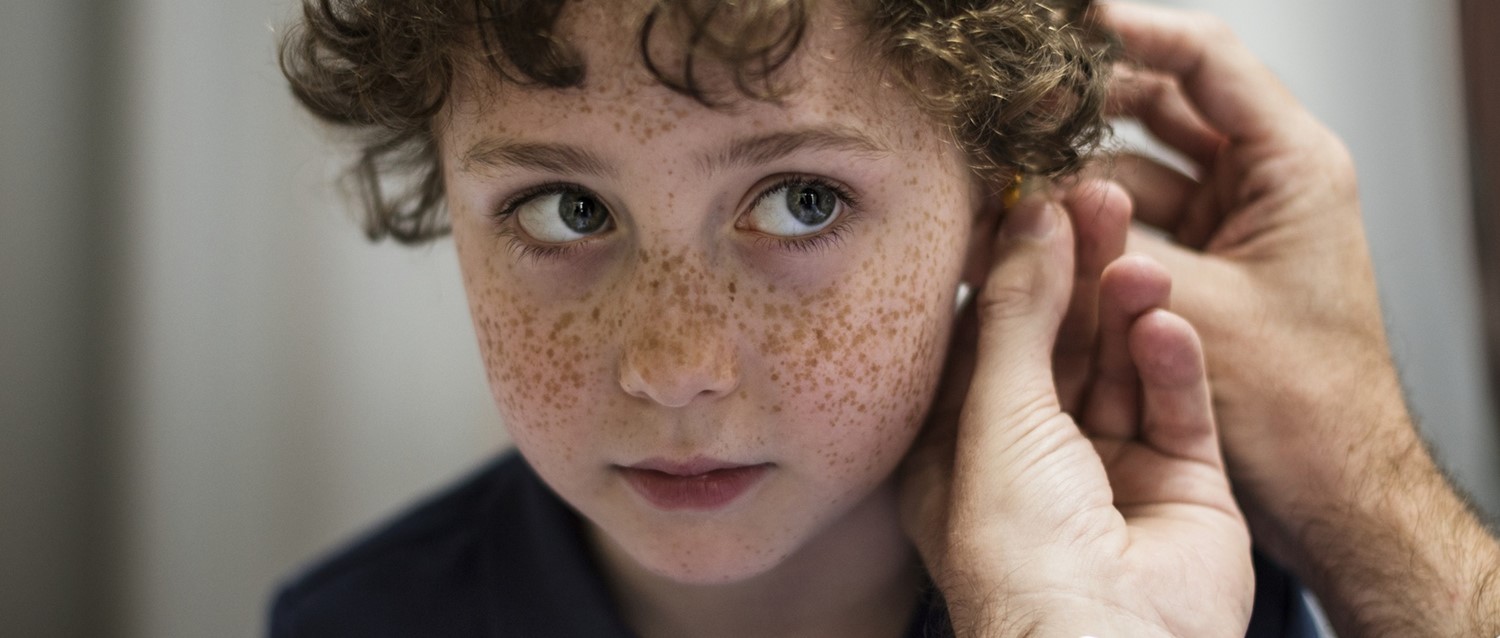
Think of tinnitus and it's likely you'll associate the hearing condition with the older generation - perhaps those who have attended a few too many rock concerts. But think again. Tinnitus affects young people too, with one child in every classroom across the UK estimated to have it.
En este artículo:
Videos seleccionados para Otros signos y síntomas
Continúa leyendo abajo
¿Qué es el tinnitus?
Tinnitus is a ringing, humming, pulsing or hissing sound in your ear. The sounds, which vary from person to person, are created by your own hearing system. It's the feeling of hearing noises when no sound is actually present.
The condition is not just for adults. But often kids think that hearing these sounds is normal, so might not tell their parents. Tinnitus may seem to get worse when they're anxious and could lead to difficulty sleeping.
But many parents are unaware that children can suffer from tinnitus in the first place. In fact, research published in 2018 from the British Tinnitus Association (BTA) showed worrying statistics around parents' knowledge of the condition. Just under a third (32%) of UK parents are aware that children under the age of 10 can have tinnitus, and just 37% think it can affect children aged 10 to 16 years old.
Signs of tinnitus in children
Volver al contenidoChildren with tinnitus are often unable to vocalise what it is the're hearing or experiencing, and so often display other more subtle signs of the condition.
"While unsurprisingly, most parents would associate their child reporting sounds in their ears or head with tinnitus - the problem is that children are often unable to explain what it is they're experiencing so unless they are directly asked the question by a parent, teacher or medical professional, it can often be overlooked," says David Stockdale, chief executive of the BTA.
"They may be struggling alone and so may often display more subtle signs, such as appearing distracted or becoming anxious which can also have a real impact on their general quality of life, including their behaviour and learning at school."
Continúa leyendo abajo
What causes tinnitus in children?
Volver al contenidoAs with adults, there are many reasons why children may experience tinnitus.
Veronica Kennedy, consultant audiovestibular physician at Bolton NHS Foundation Trust, and former chair of the BTA's Professional Advisers’ Committee, explains: "For most children there is no significant underlying condition (pathology). Some children can be aware of tinnitus where their ears are blocked due to wax or glue ear. Some may have a hearing loss for other reasons."
A temporary hearing loss associated with tinnitus might occur after noise exposure. For instance, the child may have attended a loud concert. But with repeated exposure, this hearing problem can become permanent.
"A very small number of children have tinnitus in association with a medical condition so all children with troublesome tinnitus should be referred to their local paediatric audiology service or ENT clinic," Kennedy stresses.
What parents should do
Volver al contenidoIf you're concerned that your child may have tinnitus, it's best to visit your GP. Kennedy reveals that in most cases of tinnitus in children, the outcome is positive. But it can also be a source of worry for a child if it's not addressed.
"For most children and teens with tinnitus, an explanation of the condition and reassurance is all that is needed. Some benefit from strategies to help cope with the tinnitus and some need strategies to cope with stress and feelings of anxiety. A small number of children need psychological support."
In one study of tinnitus and anxiety/depression in children, 32% had significant anxiety and 14.5% depression. Those with depression experienced tinnitus for 24 months compared to those without depression (17 months).
"But another feature that indicates a good prognosis is that few adults troubled with tinnitus recall having it as children," Kennedy concludes.
You can contact the BTA for advice and to access resources for children with tinnitus.
Selecciones del paciente para Otros signos y síntomas

Signos y síntomas
5 hidden health traitors secretly betraying you
If you've been watching the hit TV series The Traitors, you will know the tension of seeing contestants try to work out who is secretly plotting against them. With Claudia Winkleman hosting in a Scottish castle, the drama comes from one simple question - who can you trust?
por Thomas Andrew Porteus, MBCS

Signos y síntomas
When to worry about night sweats
If you have have woken up in the middle of the night to find your clothes and sheets soaked with sweat - we look at what can cause these night sweats and what to do if you have them.
por Victoria Raw
Continúa leyendo abajo
Historial del artículo
La información en esta página es revisada por pares por clínicos calificados.
6 Feb 2018 | Última versión

Pregunta, comparte, conecta.
Navega por discusiones, haz preguntas y comparte experiencias en cientos de temas de salud.

¿Te sientes mal?
Evalúa tus síntomas en línea de forma gratuita
Suscríbete al boletín de Patient
Tu dosis semanal de consejos de salud claros y confiables, escritos para ayudarte a sentirte informado, seguro y en control.
Al suscribirte aceptas nuestros Política de Privacidad. Puedes darte de baja en cualquier momento. Nunca vendemos tus datos.