Pruebas de ITS en casa: cómo funcionan y qué esperar
Revisado por pares por Dr Krishna Vakharia, MRCGPÚltima actualización por Amberley DavisÚltima actualización 15 Jun 2023
Cumple con las directrices editoriales
- DescargarDescargar
- Compartir
- Language
- Discusión
- Versión en audio
- Agregar a fuentes preferidas en Google
Sexually transmitted infections (STI) diagnoses reached record levels in 2022 in the UK. So it's never been more important to get tested - and home STI tests are a simple, quick, and accurate way look after your health. Here's what you need to know about home STI tests, their reliability, and how easy they are to use.
How often should I get STI tested?
Sexual contact between two people can sometimes result in the spread of infections. These are known as sexually transmitted infections, or STIs, and getting an early diagnosis can be the difference between full recovery and serious, long-term health issues.
There are many types of STIs, incluyendo clamidia, gonorrhoea, el VIH (human immunodeficiency virus), and sífilis. These are usually spread through vaginal, anal and oral sex.
Record levels of gonorrhoea and syphilis
Data published in June 2023 revealed that UK diagnoses of gonorrhoea and syphilis in 2022 reached the highest numbers in decades1.
82,592 gonorrhoea diagnoses - an increase of 50.3% from 2021 and the highest annual number since records began in 1918.
8,692 infectious syphilis diagnoses - an increase of 15.2% from 2021 and the highest annual number since 1948.
Young people aged 15 a 24 years were el la mayoría likely a get diagnosticados con un STI. In light of these findings, the UK Health Security Agency (UKHSA) is urging everyone having sex with new or casual partners to get tested regularly and use a condom - even if you don't have symptoms.
Here are some key times to get yourself tested:
If you have a symptom that you think is due to an STI - but remember many STIs can be symptomless.
After a high-risk encounter - such as unprotected sex with a new sexual partner, or with someone you don't know is STI-free. Remember, condoms protect against STIs as well as pregnancy.
Ideally, it's best to get tested before you have sex with someone for the first time.
If you regularly have sex with different people, then healthcare experts recommend getting tested once every one to three months.
Can you get an STI test at home?
You can be tested for STIs at your local sexual health clinic - a GUM (genitourinary medicine) clinic specialises in this. However, you may feel more comfortable ordering a home STI test.
Benefits of home testing include:
The comfort and convenience of testing in your own home.
Privacy and by-passing difficult conversations - some people may prefer not to discuss this directly with a professional.
Are STI home tests accurate?
The National Institute for Health and Care Research (NIHR) has analysed a range of studies and concluded that taking a home STI test or having one carried out by a clinician should make no difference to the accuracy of your results2.
No STI test is 100% reliable, whether completed by yourself or a healthcare professional. Most tests are considered clinically reliable if they have a 90% accuracy rating2.
Here are some tips for improving the reliability of your home STI test:
Test after your incubation period - this refers to the time period that you can have an STI before your body produces virus-fighting antibodies, and it's these that indicate a positive test result. The incubation period depends on the type of STI you have.
Speak to a sexual health expert if you're unsure which STIs to test for based on your symptoms and/or your sexual history, and for the relevant incubation period.
Follow your home STI test kit instructions carefully.
Where can I get a home STI test?
STI testing kits are now widely available to order from online sexual health services - in the UK high street pharmacies like Superdrug and Boots offer a wide range of test kits. These include tests for specific STIs, such as HIV tests, or package kits that test for the most common STIs in one go.
Patrocinado
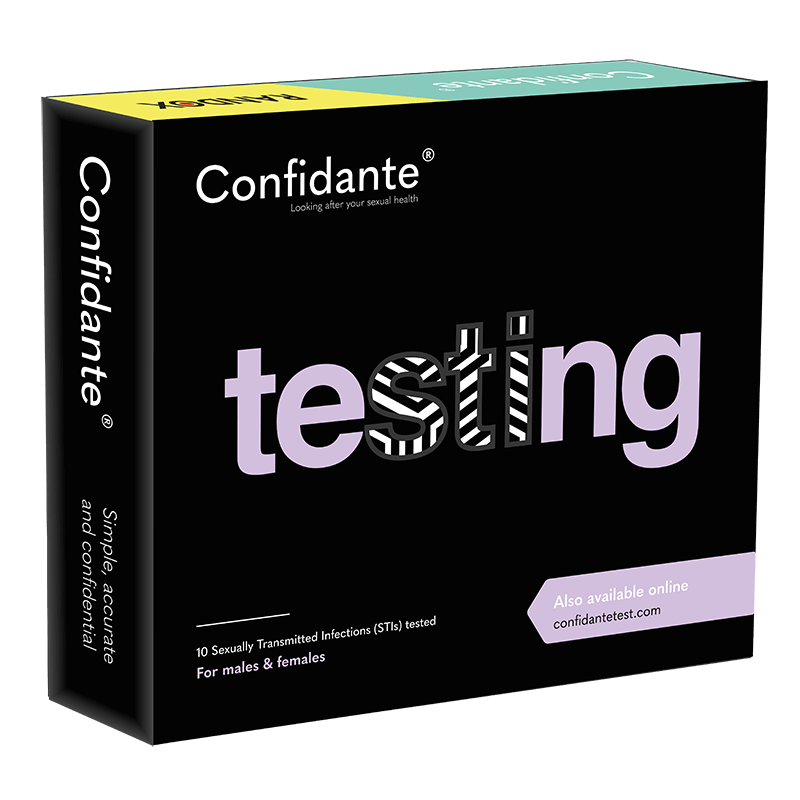
Prueba de ETS en Casa Confidante
Confidante es rápido, fácil y discreto de usar desde la compra hasta los resultados. Prueba 10 ITS comunes, incluyendo infecciones que no muestran síntomas, para ofrecer un perfil completo de tu salud sexual.
You may be able to obtain a free NHS home STI test kit - criteria and availability will depend on your local NHS district. Likewise, sexual health charities such as Brook provide some free kits. Again, you'll need to check which ones are available in your local area.
How to do an STI test at home
Although the exact steps can vary slightly between the type of STI you're testing for and the testing service you use, a home STI test is typically convenient, easy, and quick.
Usual steps
Order your home STI test kit online.
Receive your kit in the post or choose to pick up from a local collection point.
Take your samples - finger prick, swab, urine sample, or combination (see Types of STI samples following).
Post your samples to the laboratory for analysis - a freepost envelope for Royal Mail or private courier should be provided.
Get your test results - depending on the company, this could be by text, email, or another preferred method.
If your test results indicate you have an STI, book in for treatment - some sexual health services automatically send your results to your GP.
Types of STI samples
The kind of sample you need to collect will depend on what you're being tested for:
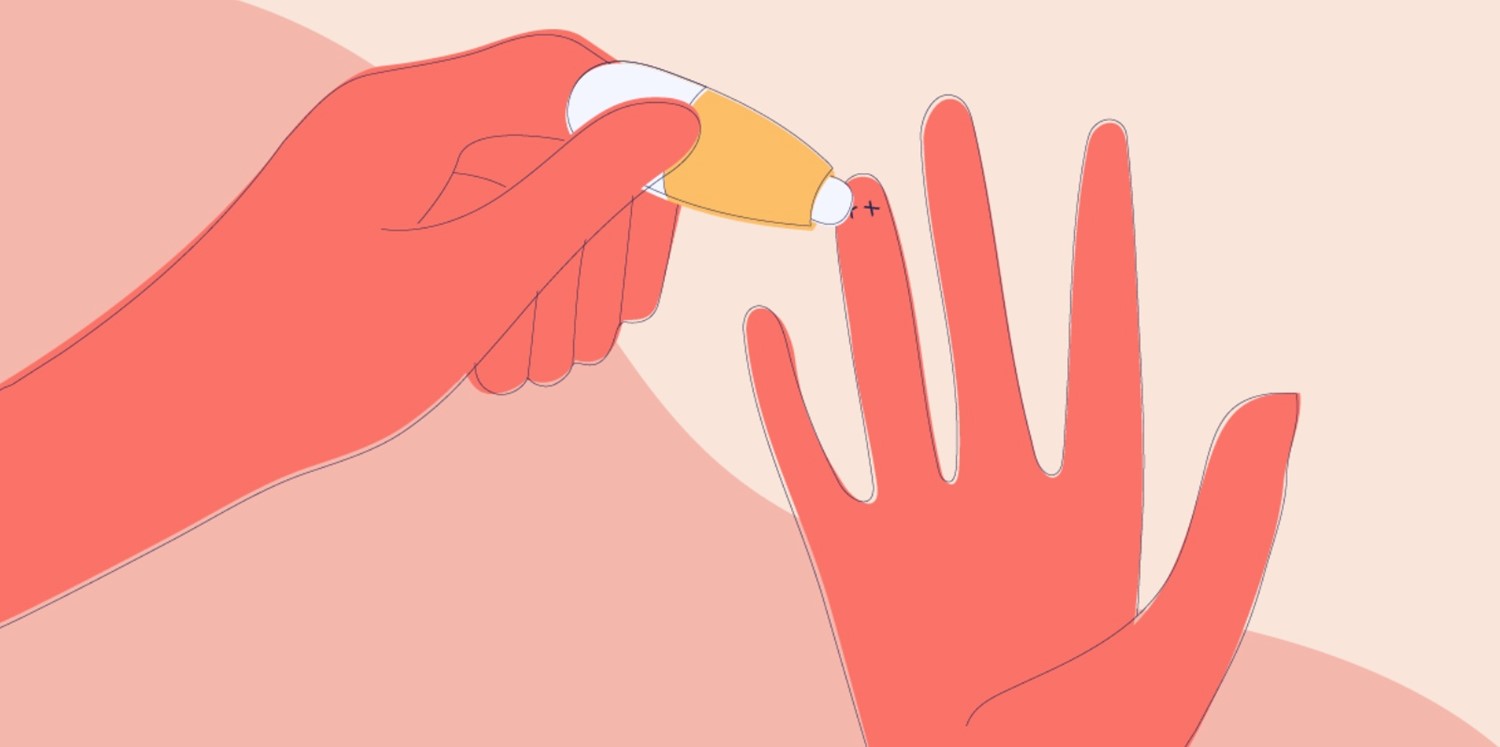
Finger prick blood sample home STI test - checks for HIV and syphilis.
Urine sample home STI test - checks for chlamydia and gonorrea.
Swab home STI test - either involves rubbing a cotton bud in the vaginal region (females only), rectal region (males only), or throat. This also tests for chlamydia and gonorrhoea.
If you're testing for multiple STIs in one test kit, you'll be instructed to carry out a combination of the above. All sample types are relatively straight-forward and quick to complete - your test provider will send clear step-by-step instructions.
How long before an STI shows up on a test?
Some STIs can take anywhere between a few weeks or months to show a positive test result. Speak to a healthcare professional if you're unsure when to test to avoid the incubation period.
Once you've decided when to take your home STI test, it usually only takes 2-5 working days to arrive, and a matter of minutes or even seconds to complete. The time it takes for you to receive your test results depends on the company you choose. Some are relayed as early as one working day after the lab receives, but anywhere between 5-10 working days3is normal.
Lectura adicional
Selecciones del paciente para Infecciones de transmisión sexual

Salud sexual
Cómo afrontar un diagnóstico de herpes genital
Los conceptos erróneos sobre el herpes genital aumentan el estigma en torno a este problema de salud sexual común y pueden dificultar su manejo, especialmente después de un primer brote y diagnóstico inicial. Desmentimos los mitos y analizamos cómo manejar la condición de manera efectiva.
por Sally Turner

Salud sexual
Video: ¿Cuáles son los diferentes tipos de ITS?
Ya sea que te hayan diagnosticado recientemente una infección de transmisión sexual o sospeches que la tienes, es útil saber exactamente qué es cada una, así como las posibles causas y tratamientos. Nuestros expertos abordan algunas de las principales preguntas sobre las diferentes ITS.
por la Dra. Rosemary Leonard MBE, MRCGP
Sobre el autorVer biografía completa

Amberley Davis
Escritora senior
BA (Hons), CPD
Amberley es una escritora senior en Patient y ha escrito extensamente sobre una variedad de temas de salud y bienestar.
Acerca del revisorVer biografía completa

Dr Krishna Vakharia, MRCGP
Director Médico de Salud, Optum UK
MBChB, MRCGP(2013), BMedSci (hons), DFSRH, DRCOG, PGDipDerm (Distn)
La Dra. Krishna Vakharia es una médica general del NHS. También es examinadora habitual del Diploma de Posgrado en Dermatología Práctica en la Universidad de Cardiff, además de ser la Directora Médica de salud en Optum UK.
Historial del artículo
La información en esta página es revisada por pares por clínicos calificados.
Artículo también disponible en Inglés, Alemán, Español, Francés, Italiano, Portugués, Hindi, Hebreo, Árabe, y Sueco.
15 Jun 2023 | Última versión
25 Oct 2022 | Publicado originalmente
Escrito por:
Amberley Davis

Pregunta, comparte, conecta.
Navega por discusiones, haz preguntas y comparte experiencias en cientos de temas de salud.

¿Te sientes mal?
Evalúa tus síntomas en línea de forma gratuita
Suscríbete al boletín de Patient
Tu dosis semanal de consejos de salud claros y confiables, escritos para ayudarte a sentirte informado, seguro y en control.
Al suscribirte aceptas nuestros Política de Privacidad. Puedes darte de baja en cualquier momento. Nunca vendemos tus datos.
Más sobre salud sexual
- ¿Son más comunes los problemas de erección en los hombres jóvenes?
- ¿Se puede contraer clamidia al besar?
- ¿Las pastillas anticonceptivas cambian tu comportamiento?
- Formas fáciles de obtener la píldora: opciones más allá de la consulta del médico
- ¿Qué tan común es la infertilidad masculina y qué la causa?
- ¿Cómo sabes si tienes VIH?
- Cómo los problemas de erección pueden afectar tu relación
- ¿Con qué frecuencia debes visitar una clínica de salud sexual para un chequeo?
- Cómo afrontar un diagnóstico de VIH
- Cómo prevenir que la irritación genital afecte tu vida sexual
- Científicos desarrollan un método de separación de esperma para la selección de sexo
- ¿Deberías evitar la píldora si tienes migrañas?
- ¿Deberías cambiar tu método anticonceptivo al DIU o al implante?
- Educación sexual para adolescentes: los mejores recursos digitales para tu hijo
- ¿Qué es el síndrome post-anticonceptivo?
- Lo que necesitas saber antes de tomar medicamentos para la disfunción eréctil
- Dónde obtener ayuda por agresión sexual
- ¿Quién debería tomar el medicamento de prevención del VIH PrEP?
- ¿Por qué está aumentando la violencia sexual contra los hombres?
- Día Mundial del SIDA: ¿Dónde estamos ahora con el VIH?