Should you avoid the pill if you get migraines?
Peer reviewed by Dr Sarah JarvisLast updated by Georgia GallantLast updated 7 Mar 2019
Meets Patient’s editorial guidelines
- DownloadDownload
- Share
- Language
- Discussion
- Audio Version
- Add to preferred sources on Google
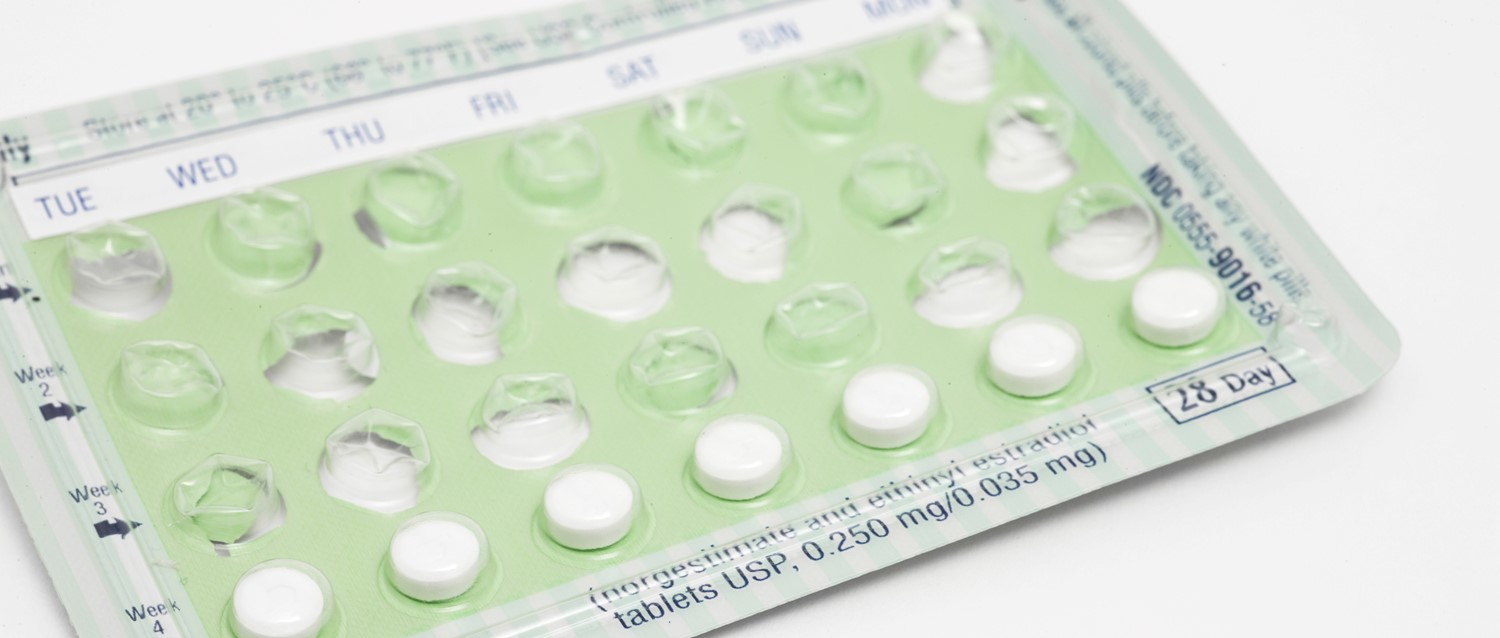
For decades, migraine sufferers with aura have been told to avoid the combined oral contraceptive pill because of a slightly increased risk of stroke. But is this still the case? We ask experts about the latest guidance and what the best form of contraception is for those prone to migraines.

I've been fortunate that the combined pill hasn't caused me any issues in the eight years I’ve been on it. It can be a struggle to find a long-term contraceptive that works for you, so when you do, you tend to cling on to it for dear life. Which, admittedly, means I tell a white lie when I go for my biannual pill review and refill.
Unfortunately, many of the women in my family suffer from migraine (they're not classed as hereditary, but often occur in several family members). When being supplied with the pill, your healthcare professional will always ask you two questions, even if you've been taking it for years: “Do you smoke?” and “Do you experience migraines with aura?”.
I'm not a smoker but occasionally experience an aura migraine every four to six months for a day or two. As I don't consider this to be regular enough to risk changing my trusted contraception, it goes unmentioned against my better judgement. But that could be about to change.
Risky business
Auras act as a warning sign before the migraine headache begins. Most common is a visual aura, causing symptoms such as a temporary loss to one side of your vision, extremely bright zig-zag or kaleidoscope patterns or both. Numbness and pins and needles are also common, and it's even possible for auras to affect speech, smell and food cravings. So what does this have to do with the pill?
"There are different types of pill: the progestogen-only pill (or mini-pill), which as the name suggests contains only progesterone, and the combined pill, which contains both oestrogen and progesterone," explains Dr Caroline Cooper, associate specialist in sexual and reproductive health and spokesperson for the Faculty of Sexual and Reproductive Healthcare (FSRH) of The Royal College of Obstetricians and Gynaecologists (RCOG).
The combined oral contraceptive pill is associated with a small increased risk of ischaemic stroke. Una Farrell of The Migraine Trust says the risk increases "when the pill is taken by women who have additional risks for stroke, such as smoking and migraine with aura".
"Statistics show that the risk is extremely small but nevertheless it is still a risk which can be avoided," she continues.
Cooper goes further, highlighting new guidance from the FSRH that states there is 'an unacceptable health risk' from taking the combined pill if you suffer with migraines with aura. So even if you only experience aura occasionally, you should never take the combined pill, according to these guidelines.
How the pill has changed
Although the dosage of hormones in the combined pill has significantly reduced since it was first introduced in the 1960s (in turn decreasing many of the associated risks), the increased risk of ischaemic stroke is still significant enough to advise against it for those who have migraines with aura.
"This advice also applies to other methods of combined hormonal contraception such as the ring and the patch," Cooper adds.
If you don't have aura with your migraines, your doctor may give you the go-ahead to take the combined pill. Farrell notes that as the dosage of hormones in the pill is now much lower, "unwanted effects like headaches and migraines are much less likely to occur".
"However," Cooper warns, "if your migraines do become more frequent whilst taking the combined pill, you should consider stopping it, as the risk of continuing generally outweighs any benefits."
Can the pill cause headaches?
Experiencing headaches around your period is common whether you use hormonal contraception or not.
"For those who have taken the pill for many months or years, it can be difficult to tell whether headaches are associated with contraception or other lifestyle factors," states Cooper.
"Around 50% of women with migraine say their menstrual cycle directly affects it," Farrell reveals, with attacks becoming more severe or frequent during the break week, potentially due to the drop in oestrogen or the release of prostaglandins (chemicals associated with pain).
There are solutions, however. Cooper suggests forgoing your period by taking the pill continuously if you find you suffer with headaches during the pill-free week.
"Alternatively, some women find changing to a different pill with a lower dose of oestrogen can help with headaches," she says.
As for the combined pill causing headaches, Cooper notes that there is a lack of evidence, with studies finding no consistent link.
A recent breakthrough
Traditionally you were advised to take a seven-day break in each pill packet to have a 'withdrawal bleed'. However, recently updated FSRH guidelines state there are actually no health benefits to this hormone-free interval for most people.
"Taking a continuous dose of hormones rather than stopping and starting is as safe and effective as the traditional way and can help to avoid headaches and mood changes during the break," assures Cooper. "And many women find their bleeds become lighter and may stop completely."
Do be aware that taking the pill continuously may cause breakthrough bleeding, so have spare menstrual products to hand just in case.
The right contraceptive for you
The pill has decreased in popularity over the last decade due to growing concerns about a link between the contraceptive and depression. If you feel the pill is no longer working for you, or you suffer from migraines, consider switching to long-acting reversible contraceptives (LARCs) such as the coil or implant. The main benefit is that you don't have to remember to take them every day so there's less risk of unwanted pregnancy.
If you have problems when coming off the pill after a long period of time, consult your GP. Many people find that it can affect your mood, skin and weight, which is unsurprising as your body will be used to a regular dose of synthetic hormones.
But it's not all bad news. If you do have migraines with or without aura and want to continue using hormonal contraception, Cooper assures that "the advantages of using the progestogen-only pill generally outweigh the risks" and it has not been associated with an increased risk of stroke or migraine.
"This makes the progestogen-only pill a good alternative for women with migraines who are unable to take the combined pill," she says.
Remember, other progestogen-only methods, such as the implant or contraceptive injection, are also available. Speak with your GP or local sexual health clinic for more advice and a one-to-one assessment.
Now I've spoken to the experts, I will definitely be choosing caution over convenience.
Patient picks for Migraine

Brain and nerves
Can Botox cure your migraines?
Most of us suffer from a headache from time to time. But imagine having several debilitating migraines per week, often accompanied by nausea or vomiting. Janet Falcondale, 46, from North Yorkshire, has suffered from headaches and migraines since childhood. "My migraines often start with an aura - a visual problem that causes blind spots. I've had to take time off work, and have been laid up in bed for days at a time," she explains. Migraines are often debilitating, meaning sufferers of frequent attacks can experience a great deal of disruption to their daily lives. From lost opportunities at work, poor performance due to presenteeism and even hospital admission, having regular migraines can be a real pain.
by Gillian Harvey

Brain and nerves
Could histamine be the cause of your migraines?
Here in the UK, migraine affects 1 in 7 people and is more prevalent than diabetes, epilepsy and asthma combined. It is the most common and disabling neurological disorder in the UK with 190,000 attacks daily. We investigate the evidence linking histamine and migraine and the treatment options available.
by Ginny Weeks
About the authorView full bio

Georgia Gallant
BA (Hons), MA
Georgia graduated from Bournemouth University with a BA (Hons) in Scriptwriting for Film and Television and an MA in Literary Media.
About the reviewerView full bio

Dr Sarah Jarvis
Clinical Consultant
MA (Cantab), BM, BCh (Oxon), DRCOG, FRCGP, MBE
After training in medicine at Cambridge and Oxford, Dr Sarah Jarvis MBE became a GP.
Article history
The information on this page is peer reviewed by qualified clinicians.
Article also available in English, German, Spanish, French, Italian, Portuguese, Hindi, Hebrew, Arabic, and Swedish.
7 Mar 2019 | Latest version
Join the conversation
Share your thoughts or experiences with others in our patient communities.

Ask, share, connect.
Browse discussions, ask questions, and share experiences across hundreds of health topics.

Feeling unwell?
Assess your symptoms online for free
Sign up to the Patient newsletter
Your weekly dose of clear, trustworthy health advice - written to help you feel informed, confident and in control.
By subscribing you accept our Privacy Policy. You can unsubscribe at any time. We never sell your data.
More in brain and nerves
- Brain fog: what it is and how to get rid of it
- Brain food: what to eat, when to eat, recipes
- Brain training apps: do they really work?
- Can taking painkillers actually give you headaches?
- Can thunderstorms give you a headache?
- Early brain scans can predict MS prognosis
- Experts dispute new study linking C-section births to autism
- How ADHD affects work and productivity
- How gut bacteria affect mood, focus and brain health
- How to reduce your risk of dementia
- How to reduce your risk of stroke?
- How to tackle eating problems in children with autism
- Is ADHD in adult women underdiagnosed?
- Living with Motor Neurone Disease - Louise's story
- What is a thunderclap headache and what does it feel like?
- What not to say to someone with dementia
- What to do when someone has an epileptic seizure
- What you need to know about Bell's palsy
- Your guide to stroke prevention