Use of oxygen therapy in COPD
Peer reviewed by Prof Cathy Jackson, MRCGPLast updated by Dr Oliver Starr, MRCGPLast updated 4 Aug 2017
Meets Patient’s editorial guidelines
- DownloadDownload
- Share
- Language
- Discussion
- Audio Version
- Add to preferred sources on Google
This page has been archived.
It has not been reviewed recently and is not up to date. External links and references may no longer work.
Oxygen is used for some chronic lung conditions. Chronic obstructive pulmonary disease (COPD) is one of these conditions. Long-term oxygen use can help to relieve the strain on the heart. However, it does not relieve breathlessness.
At a glance
Chronic obstructive pulmonary disease (COPD) is a lung condition, almost always caused by smoking.
Oxygen is used in some cases of COPD to take the strain off your heart, not to help breathlessness.
Oxygen levels can be measured with a finger device at home or more accurately by a hospital test.
Not everyone with COPD needs oxygen; it can sometimes be harmful.
A lung specialist will decide if you need oxygen, based on specific criteria.
If prescribed, oxygen should be used for at least 15 hours a day for it to be effective.
What is chronic obstructive pulmonary disease?
Chronic obstructive pulmonary disease (COPD) is a lung condition. It is almost always caused by smoking. Over time, your lungs get damaged and stiff: you feel breathless if you try to walk around and eventually breathless even when sitting down.
You may develop symptoms in your 50s and 60s although the changes in your lungs may have been taking place for some time if you have smoked from a young age. See the separate leaflet called Chronic Obstructive Pulmonary Disease.
What are the treatments for chronic obstructive pulmonary disease?
The most important thing is to stop smoking.
Other things you can do if you have chronic obstructive pulmonary disease (COPD) are:
Eat healthily.
Try to keep moving: regular exercise can help.
There are some medications which can help to relieve symptoms and these may be in the form of tablets or given by an inhaler.
In some cases, oxygen is used in COPD: it is prescribed by a doctor.
How does oxygen help chronic obstructive pulmonary disease?
Oxygen is used to take the strain off your heart, not your lungs. It helps to prevent something called 'pulmonary artery hypertension'. This is quite an unusual condition where the right-hand side of your heart gets worn out by trying to pump blood harder and harder to your lungs. Some people think that oxygen helps them feel less breathless: this is a myth unfortunately.
How are oxygen levels measured?
Oxygen saturations can be measured easily in your home with a small electronic device that goes on your finger: they are called 'pulse oximeters', are readily available and can be bought in shops. Most people have a saturation level of 96% or more. In chronic obstructive pulmonary disease (COPD) it often goes down to 90%. There is another, more accurate way of measuring oxygen levels that is used by specialists in hospitals: it's called an 'arterial blood gas'.
It requires a small needle that takes blood from a blood vessel (an artery) which is usually in your wrist. This gives a more accurate reading than using the device on your finger. Rather than a percentage, it gives a number called 'PaO2' which is a specialised way of testing oxygen. It is this 'PaO2' that doctors use to work out if oxygen will help you.
Does everyone with chronic obstructive pulmonary disease need oxygen?
Fortunately not. Oxygen doesn't help at all in some people with COPD and, in fact, can be harmful. A lung specialist will assess you. The criteria for needing oxygen are:
A PaO2 of less than 7.3 kPa when your COPD is stable (this means you have a low oxygen level in your blood); or
A PaO2 of between 7.3 kPa and 8.0 kPa when stable and one of:
A high red blood cell level.
A low oxygen level at night (less than 90% oxygen saturations for more than 30% of the time you're asleep).
Swollen legs and ankles.
Pulmonary artery hypertension.
Surely oxygen is a good thing: won't it help my breathing?
This is a common misconception. When you've got chronic obstructive pulmonary disease (COPD) your body gets used to having a low oxygen level. Your brain gets good at detecting low levels of oxygen and keeps your lungs working at a stable rate. If you suddenly increase your oxygen levels, your brain 'gets confused' and stops your lungs working properly: your breathing rate can go really slow and you could fall unconscious. This is why it's important never to use someone else's oxygen or to try oxygen 'just in case'.
Who will decide if oxygen will help my chronic obstructive pulmonary disease?
This is usually a doctor who specialises in breathing problems (a respiratory physician). It probably won't be your family doctor (your GP). Oxygen can only help in certain situations with COPD and even then it is not recommended if you smoke: if the oxygen catches fire it can be extremely dangerous and burn your face. It could even cause an explosion and be dangerous to other people in your house.
If I do need oxygen for chronic obstructive pulmonary disease, how will I get it?
Your doctor doesn't provide it directly to you, nor does a chemist or pharmacist. Each country has a company that delivers oxygen canisters or a special machine called an oxygen concentrator to your house. Your doctor will fill out a form and send it to the company for you.
Will I need to carry around heavy canisters?
Oxygen canisters are only used if you're out and about: at the shops, for example. While you're at home you can use an oxygen concentrator. It's a box about the size of a big computer printer. It plugs into the wall and has a long tube for the oxygen that can reach most rooms in your home.
How long do I need to keep the oxygen on with chronic obstructive pulmonary disease?
A lot of people think they only need the oxygen when they're feeling breathless or having a flare-up of their COPD. This is a bit of a myth. If your doctor does think you'll benefit from oxygen then you'll be advised to keep it on for at least 15 hours a day. In fact, some people are advised to have it on for 20 hours. You can appreciate this might get a bit inconvenient. The problem is, if you have it on for less then it doesn't do much good.
Patient picks for COPD
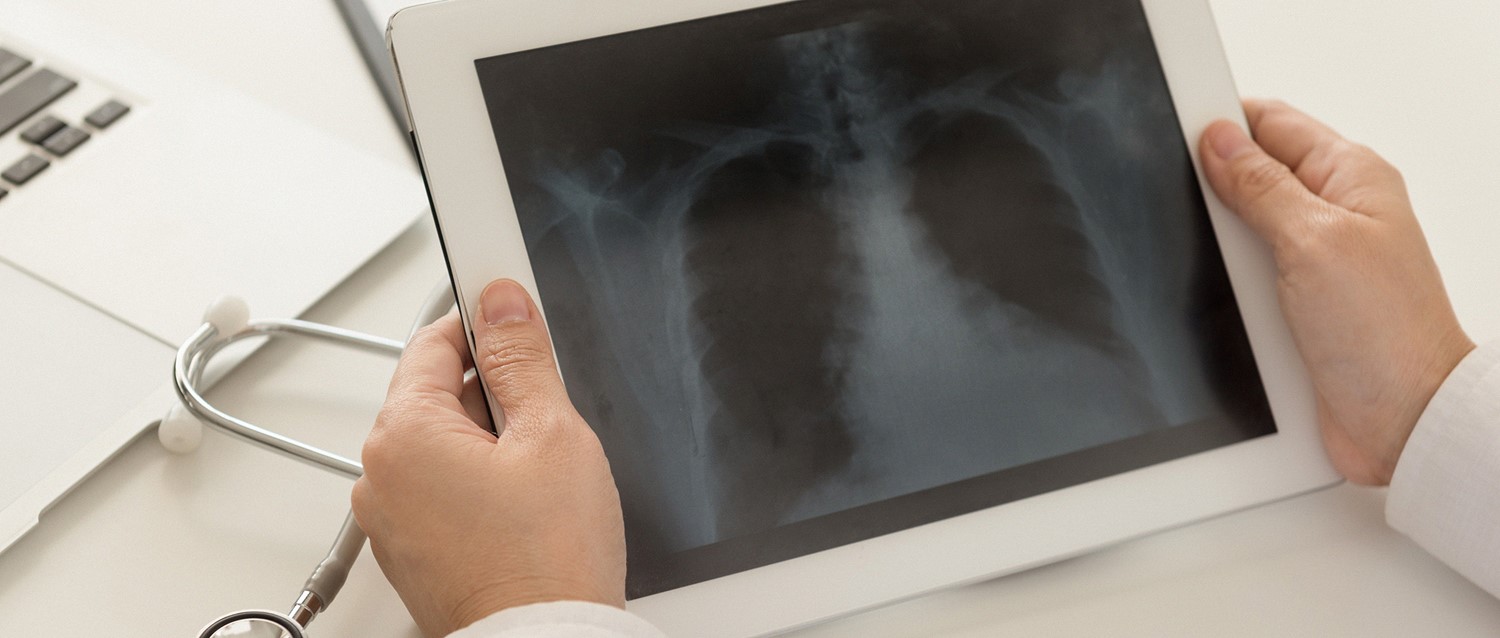
Chest and lungs
Chronic obstructive pulmonary disease
Chronic obstructive pulmonary disease (COPD) is a long-term condition of the lungs where the flow of air to the lungs is obstructed. Symptoms include cough and breathlessness. The condition is most often caused by smoking and the most important treatment is to stop smoking. Inhalers are commonly used to ease symptoms. Other treatments such as steroids, antibiotics, oxygen, and mucus-thinning (mucolytic) medicines are sometimes prescribed in more severe cases, or during a flare-up (exacerbation) of symptoms.
by Dr Toni Hazell, FRCGP
Chest and lungs
Inhalers for COPD
An inhaler is a device holding a medicine that you take by breathing in (inhaling). Inhalers are often used to treat chronic obstructive pulmonary disease (COPD). There are many different types of inhaler, which can be confusing. The purpose of this leaflet is to give information on the medicines that are inside inhalers, the various types of inhaler device, and some general information about inhalers.
by Dr Hayley Willacy, FRCGP
Frequently asked questions
What is pulmonary artery hypertension?
Pulmonary artery hypertension is an unusual condition where the right side of your heart has to work much harder to pump blood to your lungs, causing it to become worn out. This condition can be a reason why oxygen therapy might be prescribed for someone with chronic obstructive pulmonary disease (COPD).
If I only use oxygen for a few hours a day, will it still help?
If you are prescribed oxygen therapy, it's generally recommended to use it for at least 15 hours a day, and sometimes up to 20 hours. Using it for less time unfortunately won't provide much benefit for your condition.
Why is it dangerous to smoke while using oxygen?
Smoking while using oxygen is extremely dangerous. Oxygen is highly flammable, and if it catches fire, it can cause severe burns to your face. There's also a risk of explosion, which could endanger others in your home.
Can I simply buy an oxygen machine from a shop and use it if I have COPD?
No, you should not try to use oxygen 'just in case' or use someone else's oxygen. Oxygen therapy for chronic obstructive pulmonary disease (COPD) needs to be prescribed by a specialist doctor. Improper use, such as having too much oxygen, can be harmful because it confuses your brain and can slow down your breathing significantly, potentially leading to unconsciousness.
What determines if I qualify for oxygen therapy?
A lung specialist will assess whether you meet specific criteria for oxygen therapy. These criteria include having a very low oxygen level in your blood (PaO2 of less than 7.3 kPa) when your COPD is stable. Other factors include a PaO2 between 7.3 kPa and 8.0 kPa combined with conditions like a high red blood cell level, low oxygen levels overnight, swollen legs and ankles, or pulmonary artery hypertension.
How will I receive the oxygen equipment if it's prescribed?
If you are prescribed oxygen, your doctor will complete a form and send it to a specialised company in your country. This company will then deliver oxygen canisters or an oxygen concentrator machine directly to your home.
Further reading and references
- Chronic obstructive pulmonary disease; NICE Clinical Guideline (2010)
About the authorView full bio

Dr Oliver Starr, MRCGP
MBChB, BMedSc, MRCS, MRCGP, DRCOG
Dr Oliver Starr is a general practitioner in Hertfordshire and an undergraduate tutor at University College Medical School.
About the reviewerView full bio

Prof Cathy Jackson, MRCGP
Medical Author
BSc (Hons) Physiology, MB, ChB, MRCGP, MD
Professor Cathy Jackson graduated from Manchester Medical School having gained a first-class honours degree in physiology along the way.
Article history
The information on this page is written and peer reviewed by qualified clinicians.
Article also available in English, German, Spanish, French, Italian, Portuguese, Hindi, Hebrew, Arabic, and Swedish.
4 Aug 2017 | Latest version
Join the conversation
Share your thoughts or experiences with others in our patient communities.

Ask, share, connect.
Browse discussions, ask questions, and share experiences across hundreds of health topics.

Feeling unwell?
Assess your symptoms online for free
Sign up to the Patient newsletter
Your weekly dose of clear, trustworthy health advice - written to help you feel informed, confident and in control.
By subscribing you accept our Privacy Policy. You can unsubscribe at any time. We never sell your data.