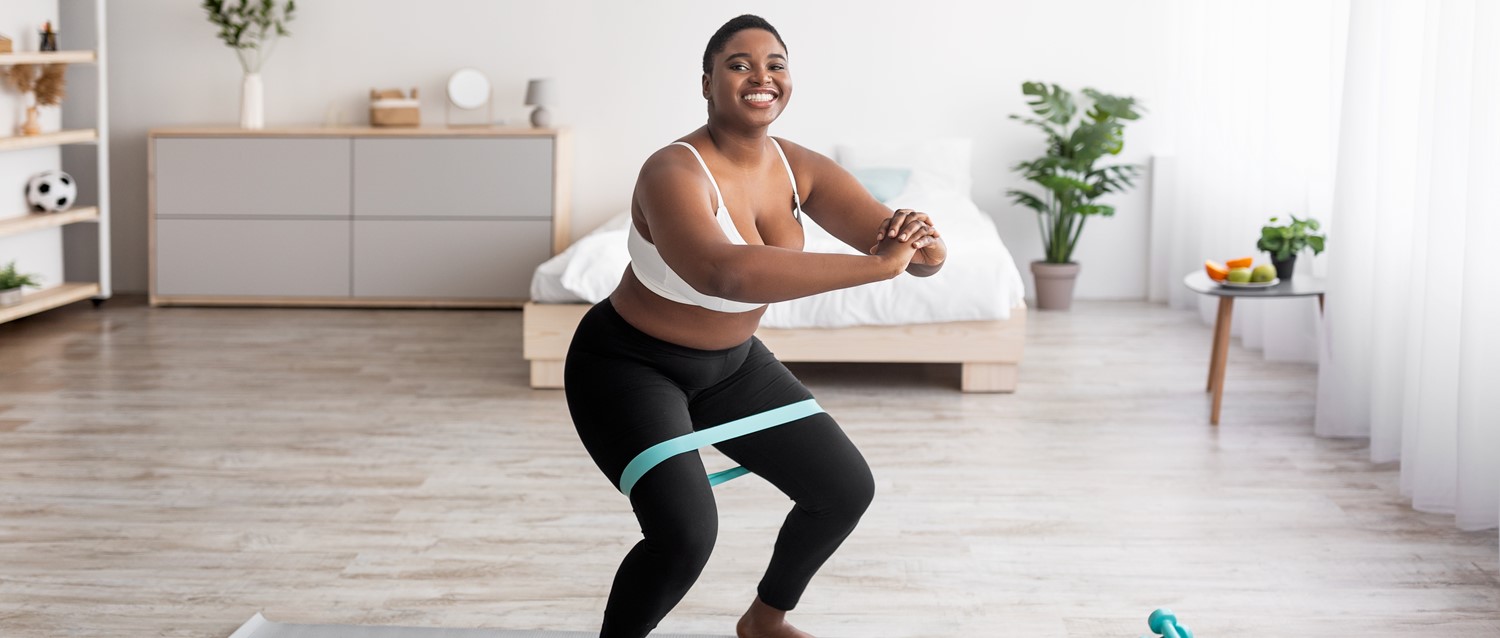
What are the benefits of squats?
Revisado por pares por Dr Krishna Vakharia, MRCGPÚltima actualización por Emily Jane BashforthÚltima actualización 11 Jun 2022
Cumple con las directrices editoriales
- DescargarDescargar
- Compartir
- Language
- Discusión
- Versión en audio
Squats are a great exercise to incorporate into your regular workouts. They offer a wide range of benefits, ranging from strengthening your muscles to improving your ability to perform mundane tasks with ease.
En este artículo:
Videos seleccionados para Ejercicio y actividad física
Continúa leyendo abajo
How to do squats
The most important thing to remember when doing squat exercises is your form. Maintaining good form with every movement not only ensures you are squatting correctly, but also helps to maximise the gains received from your workout.
How to do squats correctly
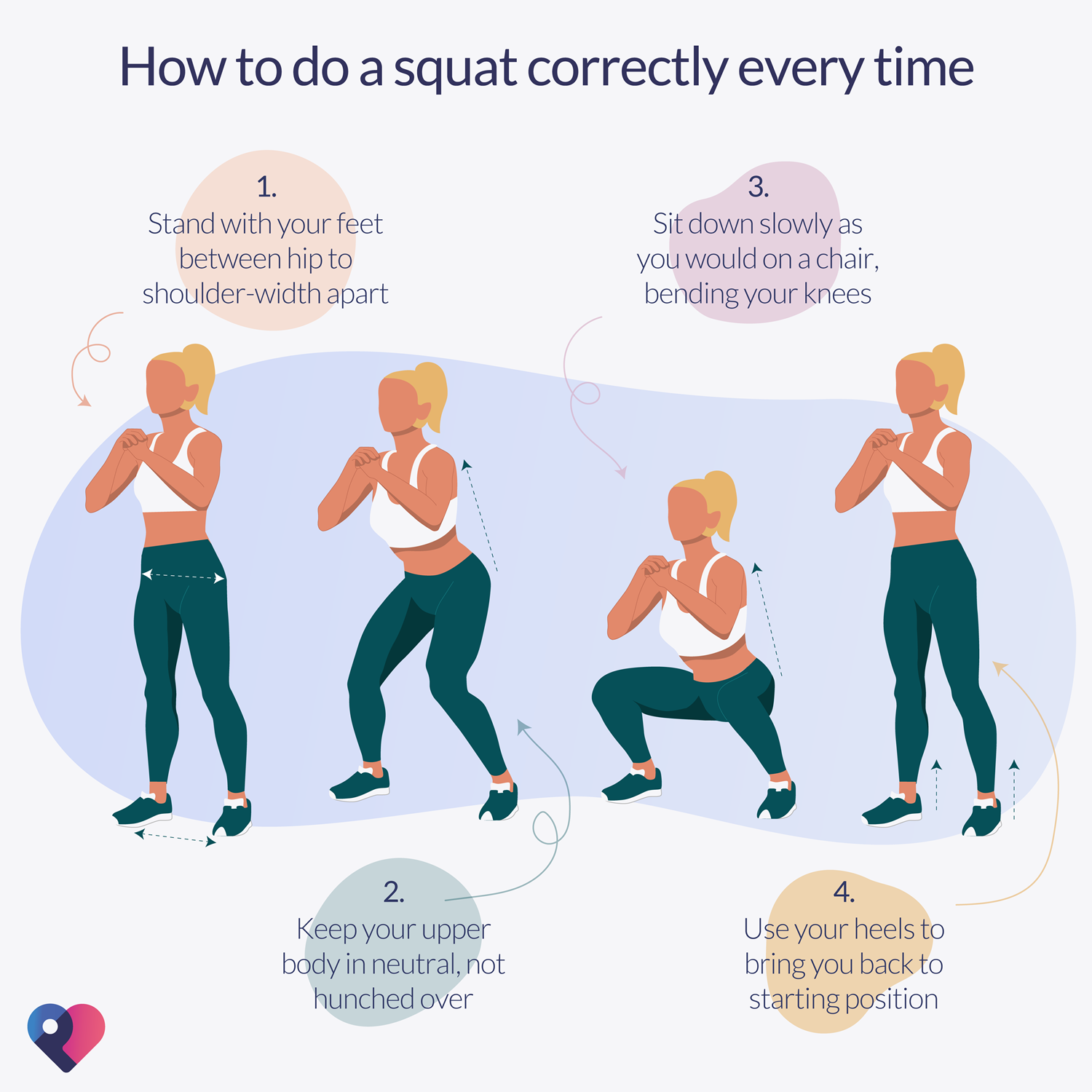
As Figure 1 shows, the steps for squatting are as follows:
Start by standing with your feet between hip to shoulder-width apart.
Ensure your toes are facing forwards or turned outwards by 5-15° to provide you with more support.
Make sure your upper body is straight to support your spine. Avoid hunching forward. Pull your shoulders back slightly to bring your chest forward.
When conducting the movement, sit down slowly as you would on a chair and keep your knees bent with your chest lifted.
Then, press your weight into your heels as you return to the starting position.
Repeat the process.
What muscles are worked in a squat?
Volver al contenido"Squats are excellent if you're looking to develop your glutes, quads, hamstrings, and calves, since this exercise requires a lot of effort from your lower body," says Farren Morgan, head coach at The Tactical Athlete.
There are also variations of squats that can target other muscle groups and work your body in different ways.
For example, jump squats and barbell (a piece of equipment used in weight training, bodybuilding, and weightlifting) squats can provide an added challenge.
Jump squats can improve your aerobic fitness and overall stamina, while also working your back muscles. Barbell squats help to increase upper body strength.
To see the best results, you should do squats alongside other cardiovascular workouts (como running, brisk walking, swimming, or burpees).
Continúa leyendo abajo
What are the benefits of squats?
Volver al contenidoSquats offer a wide range of benefits. If you're looking to maintain mobility throughout your hips, knees, and ankles, Morgan suggests that you perform squats in your workouts.
Squats are also effective in helping you:
Develop better posture.
Improve core strength.
Build muscle mass and strength in glutes, quads, and hamstrings.
Lower risk of injury in knees and ankles.
Strengthen movement in tendons, bones, and ligaments around leg muscles.
Additionally, squats can improve your ability to carry out daily tasks. They are a functional exercise and can assist you with basic activities such as sitting down or bending down to reach something in a low cupboard. This is because squats work the same muscles that you would use to perform these tasks.
Morgan adds that one of the great qualities of squats is that they only require your own body weight, so you can do them anywhere, at any time, including while travelling.
How many calories do squats burn?
Squats also burn calories. On average, squats can burn around eight calories per minute, but this will vary depending on how many squats are done and if they're performed correctly.
How can you do squats with weights?
Volver al contenidoWhile squats are a relatively simple exercise, you can increase their difficulty by adding weights.
"When squatting with weights, it's important to select the weights that work best for you. They should challenge you to the extent where you'd have energy for 1-2 more reps but shouldn't make you overexert yourself. If you attempt to use a weight that is too heavy you risk applying additional stress to your body which could lead to an injury," says Morgan.
He suggests a dumbbell squat as a good squat exercise that incorporates weights. This will add resistance to your workouts which can help to boost your strength and power.
To perform a dumbbell squat you should:
Start by standing with your feet hip-width apart.
Hold the dumbbells by your sides with your arms straight before raising them.
Raise the dumbbells up to your shoulders, tensing your abs.
Bring your hips backwards as you bend your knees until your thighs are parallel to the floor.
After holding the position for a few seconds, push your weight into heels to bring you back to the starting position.
Repeat the exercise.
Continúa leyendo abajo
Three top tips for doing squats as a beginner
Volver al contenidoAlways try to maintain proper form during your squats to reduce the strain put on the body when completing the exercise.
If you can, aim to synchronise your breathing with the squats. When squatting down exhale, and inhale while returning to the starting position. Incorporating breathing into your exercise will give your cardiovascular system a workout as well.
As a beginner you might find it helpful to hold on to a wall until you are sure your form is correct and you feel more comfortable performing the movement.
Selecciones del paciente para Ejercicio y actividad física
Vida saludable
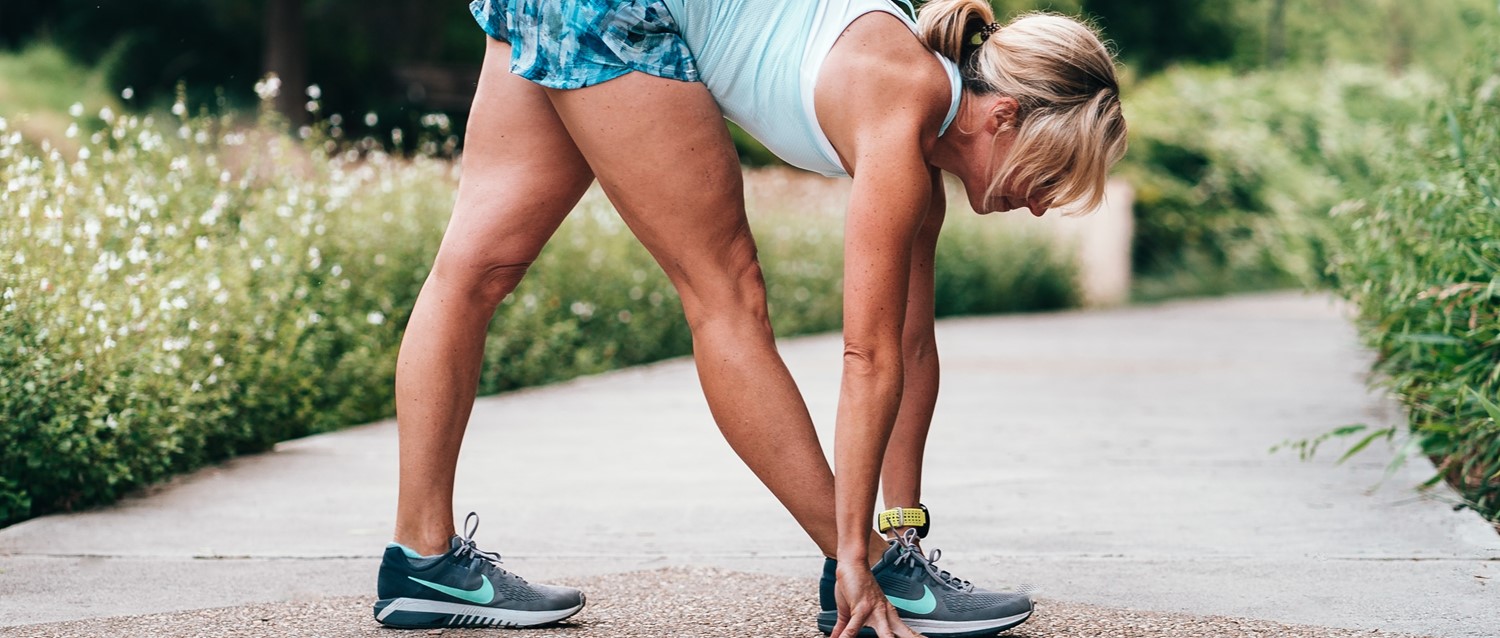
Cómo correr una carrera de 10 km sin experiencia
Al comienzo del año, me aferraba a mi resolución de Año Nuevo de ponerme en forma y de alguna manera me inscribí en una carrera de 10 kilómetros alrededor de Kew Gardens en Londres. ¿Qué podría salir mal? Por un lado, no tenía experiencia ni idea de por dónde empezar. Afortunadamente, busqué consejo de algunos expertos. Combinando esto con mi propia experiencia de entrenamiento, aquí tienes algunos consejos para que puedas completar tu primer 10k.
por Georgia Gallant
Vida saludable
¿Podría la exposición al frío mejorar tu salud y bienestar?
Tendemos a asociar las temperaturas invernales en descenso con la temporada de resfriados y gripe. Pero, ¿sabías que las duchas frías y nadar en agua fría tienen beneficios comprobados para la salud? Preguntamos a los expertos sobre lo que se debe y no se debe hacer en la exposición al frío.
por Lynn Stephen
Continúa leyendo abajo
Historial del artículo
La información en esta página es revisada por pares por clínicos calificados.
11 Jun 2022 | Última versión
11 Jun 2022 | Publicado originalmente

Pregunta, comparte, conecta.
Navega por discusiones, haz preguntas y comparte experiencias en cientos de temas de salud.

¿Te sientes mal?
Evalúa tus síntomas en línea de forma gratuita
Suscríbete al boletín de Patient
Tu dosis semanal de consejos de salud claros y confiables, escritos para ayudarte a sentirte informado, seguro y en control.
Al suscribirte aceptas nuestros Política de Privacidad. Puedes darte de baja en cualquier momento. Nunca vendemos tus datos.