
Qué hacer si tienes un vello encarnado infectado
Revisado por pares por Dr Krishna Vakharia, MRCGPEscrito por Matt BinnyPublicado originalmente 4 Apr 2023
Cumple con las directrices editoriales
- DescargarDescargar
- Compartir
- Language
- Discusión
- Versión en audio
Los vellos encarnados ocurren cuando el vello crece hacia adentro de la piel en lugar de hacia afuera como debería. A menudo aparecen como pequeños bultos rojos que a veces pican. Sin embargo, si un vello encarnado se infecta, puede ser muy doloroso y puede llevar a problemas más graves si no se trata. Entonces, ¿qué deberías hacer si tienes un vello encarnado infectado?
En este artículo:
Videos seleccionados para Cabello y cuero cabelludo
Why do we get ingrown hairs?
An ingrown hair happens when people shave or remove hair, and the new one grows and curls back into the skin. Instead of growing from the follicle through the skin, the hair grows inwards.
There are several reasons why this happens. Sometimes dead skin clogs a follicle and forces the hair inwards, or the end of a cut hair can pierce your skin and begin to grow the wrong way.
Ingrown hairs mainly happen on parts of the body where you shave - such as the face and neck, legs, pubic region and armpits. If you shave regularly, you're more likely to get ingrown and infected ingrown hairs1. This is because shaving and waxing sharpen hair that can then get trapped in the skin. People with coarse or curly hair are also more prone to ingrown hairs, as these hair types tend to curl back rather than outwards.
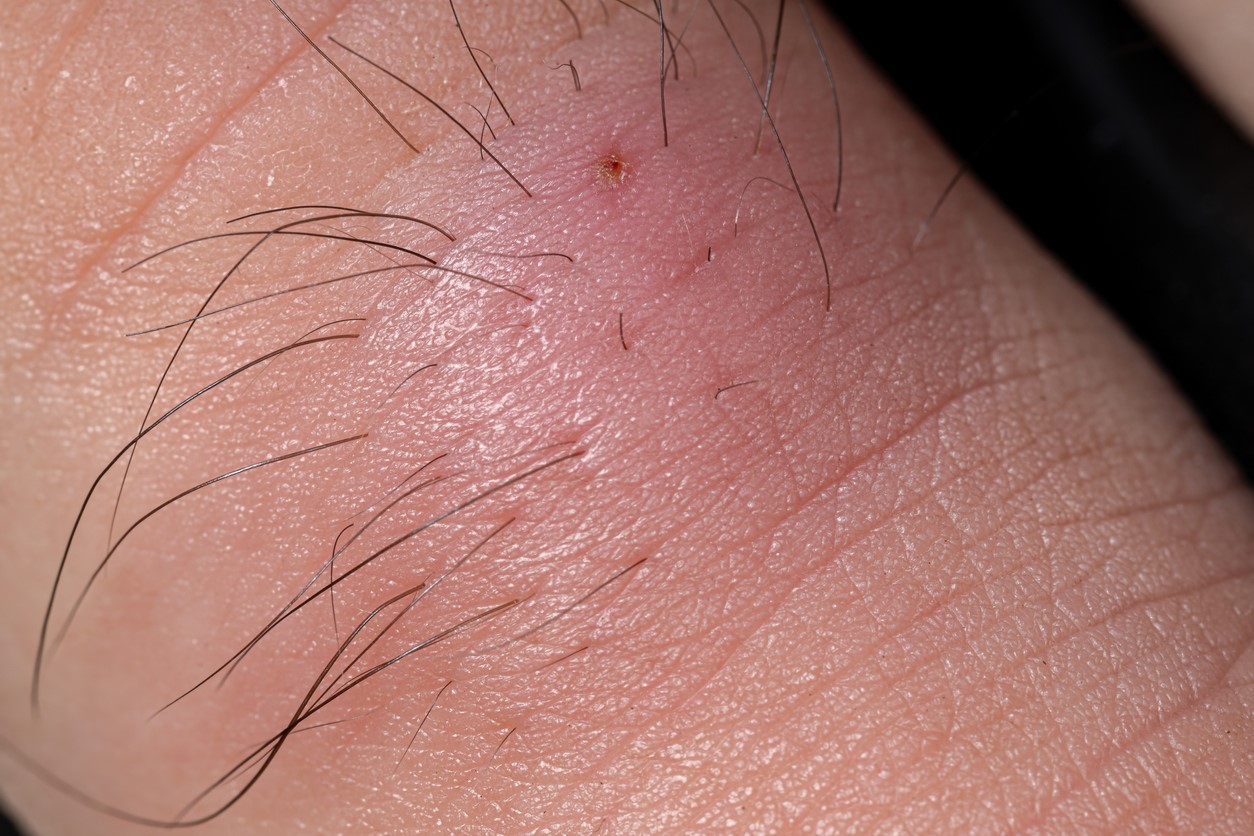
Ingrown hair swelling and redness
Continúa leyendo abajo
How to tell if your ingrown hair is infected?
An ingrown hair looks like an everyday spot or skin bump, varying in size and redness, and it may have swelling. Most ingrown hairs go away on their own if they're left alone and have time to heal. An infected ingrown hair looks similar, but there tends to be more swelling, redness and signs of pus.
Infected ingrown hairs can also be sore to touch. Mild infections are less noticeable and usually clear up without treatment. If you have a more serious infection that doesn't clear up in a few days or worsens, you should contact your doctor.
What's the difference between ingrown hairs and infected ingrown hairs?
Signs of ingrown hair
Small, round skin bumps.
Slightly itchy and sensitive.
Hair is sometimes visible underneath the skin.
Signs of an infected ingrown hair:
Redness and swelling.
Pain and irritation.
The skin around the bump may feel warm or hot.
Bumps may have a pus-filled head.
How long does an ingrown hair infection last?
Volver al contenidoIngrown hairs tend to cure themselves in a few days but this can take longer if you pick, scratch, or interfere with the healing process in any other way.
Infected ingrown hairs take a bit longer to heal as your body is busy helping the ingrown hair exit the skin while fighting the infection. But you should see signs of improvement after a few days.
It’s important that you don’t miss any signs of a severe infection. Speak to your doctor if you have redness that is spreading, the swelling is increasing, your pain is getting worse, or you develop a fever, as these are all signs of a worsening infection.
Continúa leyendo abajo
Should you pop an infected ingrown hair?
Volver al contenidoYou should treat ingrown hairs with caution. Do not pop them - especially those with a pus-filled head as it can lead to infection and scarring. If you have an infected ingrown hair, picking at it risks spreading and worsening the infection.
Infected ingrown hair treatment
Volver al contenidoRegular ingrown hairs or mildly infected ingrown hairs can be left alone until the condition resolves. It also helps if you don't shave the area or try any other type of hair removal method. However, speak to your doctor if you experience any pain, swelling, heat or feverish symptoms around an ingrown hair.
Tratamiento médico
If an ingrown hair becomes infected, your doctor may treat it by:
Prescribing antibiotic medication or creams if you develop more severe ingrown hair issues such as cysts or foliculitis.
Giving you a steroid cream if swelling or irritation occurs.
Removing the hair with a surgical blade or sterile needle.
Sending you to the emergency department in hospital if the infection is spreading or there is an abscess that needs lancing.
Remedios caseros
There are ways you can treat infected ingrown hairs at home to help heal and soothe the affected area.
Estas incluyen:
Keeping the area clean by using small circular motions around the area and surrounding skin to prevent worse or prolonged infection.
Applying anti-bacterial ointment such as tea tree oil to help the infection and ensure it doesn't get worse.
Using over-the-counter products to relieve skin irritation and itching.
Continúa leyendo abajo
How to prevent ingrown hairs
Volver al contenidoKnowing how to treat and prevent ingrown hairs helps you avoid the hassle it causes and more severe concerns like an infection.
You can prevent ingrown hairs when shaving by:
Using warm water or shaving cream/gel to wet your skin when shaving.
Removing dead skin cells or moisturising if your skin is dry before shaving.
Not shaving too close to your skin.
Shaving in the direction your hair is growing.
Using a sharp razor and rinse after every stroke.
Using aftershave or lotion to soothe and clean the area.
Using alternative hair removal methods such as laser hair removal, chemical hair removal, or electric clippers.
You can't guarantee that these methods will prevent ingrown hairs, but they may reduce the likelihood of them developing and improve your skin's health overall.
Lectura adicional
Volver al contenidoSelecciones del paciente para Cabello y cuero cabelludo
Salud de la piel, uñas y cabello
Qué hacer con el exceso de vello corporal
Depilación con pinzas. Depilación con cera. Afeitado. Para muchas mujeres, deshacerse del vello no deseado puede ser una carga. Pero esto es aún más difícil para las mujeres que sufren de exceso de vello corporal o facial, conocido como hirsutismo.
por la Dra. Anna Cantlay, MRCGP

Salud de la piel, uñas y cabello
Por qué quedarse calvo puede afectar seriamente tu salud mental
La mayoría de los hombres comienzan a notar el adelgazamiento del cabello o una línea de cabello que retrocede en sus 20 años. Pero aunque la pérdida de cabello masculina es increíblemente común, aún puede ser muy angustiante y afectar negativamente la autoestima. El Dr. Max Pemberton explora el impacto psicológico de la calvicie y qué hacer si estás perdiendo la confianza junto con tus mechones.
por el Dr. Max Pemberton, MRCPsych
Continúa leyendo abajo
Historial del artículo
La información en esta página es revisada por pares por clínicos calificados.
Next review due: 2 May 2027
4 Apr 2023 | Publicado originalmente
Escrito por:
Matt BinnyRevisado por pares por
Dr Krishna Vakharia, MRCGP

Pregunta, comparte, conecta.
Navega por discusiones, haz preguntas y comparte experiencias en cientos de temas de salud.

¿Te sientes mal?
Evalúa tus síntomas en línea de forma gratuita
Suscríbete al boletín de Patient
Tu dosis semanal de consejos de salud claros y confiables, escritos para ayudarte a sentirte informado, seguro y en control.
Al suscribirte aceptas nuestros Política de Privacidad. Puedes darte de baja en cualquier momento. Nunca vendemos tus datos.