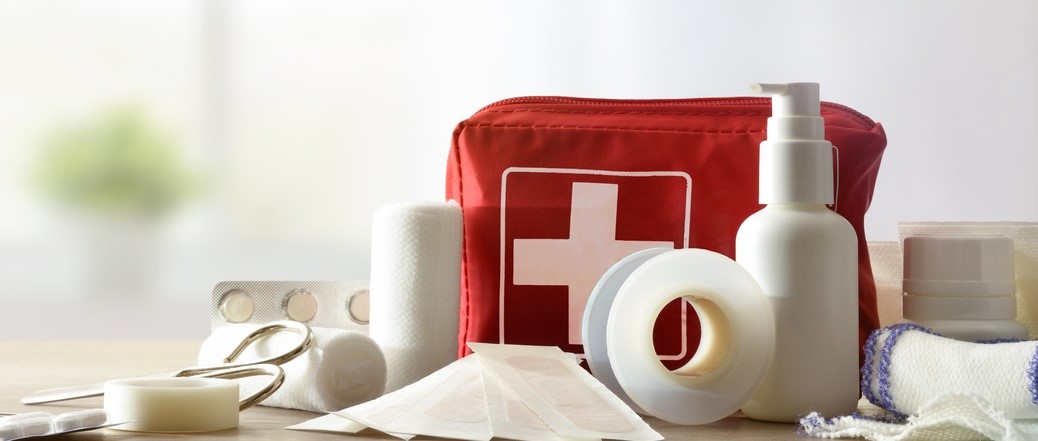
Elementos esenciales de primeros auxilios para tu hogar
Revisado por pares por Dra. Sarah JarvisÚltima actualización por Danny ChadburnÚltima actualización 19 Oct 2017
Cumple con las directrices editoriales
- DescargarDescargar
- Compartir
- Language
- Discusión
- Versión en audio
- Agregar a fuentes preferidas en Google
A todos nos gusta estar preparados para situaciones médicas de emergencia en casa, especialmente aquellos que vivimos con niños, personas mayores o cualquier persona particularmente propensa a accidentes. Desde cubrir un corte hasta tratar una quemadura grave, un botiquín de primeros auxilios bien equipado puede ser fundamental para la recuperación del paciente.
'You never know when you will need a first aid kit. It's not only useful for putting a plaster on a small cut, but also for more serious ailments from severe bleeding to broken bones,' says Isobel Kearl, product implementation officer at St John Ambulance.
'Immediate first aid attention can lessen the likelihood of injuries getting worse. Even small cuts and grazes can become infected if left untreated and, if sepsis takes hold, they can become life-threatening. By treating injuries with a sterile wipe and dressing the wound appropriately, this risk can be dramatically reduced.'
Kearl recommends these essential first aid kit items for every home:
Sterile medical wipes - useful to clean cuts and grazes, and other small wounds.
Waterproof plasters to keep small injuries clean.
Fabric plaster strip - if the wound is bigger or awkwardly shaped, you can cut your own plasters to size.
Adhesive wound dressing to protect wounds from dirt and germs.
Low-adherent wound dressing to protect wounds from dirt and germs, while allowing the skin to breathe and providing cushioning.
Crepe bandage to provide support for sprains and strains, and hold dressings in place.
Stretch bandage to keep dressings in place, especially in awkward areas like joints.
Microporous tape to hold dressings in place, or used alone for minor cuts and grazes.
Safety pins to secure bandages or slings.
Triangular bandage to make a sling or used to hold dressings in place in awkward areas.
Eye pad dressing for minor eye injuries.
Eye wash phial to wash a foreign body out of the eye.
Burn gel sachets to absorb and disperse heat from burn injuries if no water is available.
Heat-retaining foil blanket for treating shock or hypothermia.
Instant ice pack for reducing swelling in sprains and strains.
Disposable gloves to prevent infections to yourself and the patient - go for nitrile if you're worried about latex allergies.
Tweezers or a splinter remover.
Blunt-ended scissors to cut bandages or a patient's clothing to access a wound.
When to replace your items
When stored correctly, nitrile gloves have a shelf life around four years. Any topical creams or ointments have an expiration date around three years. You should also check for any dates printed on to tubes or packaging.
For sterile medical wipes and eye wash, always check the expiration date as the seal may have become compromised over time and caused contamination.
Many ice packs don't have expiration dates; however, some companies advise replacing them every few years as the plastic may have degraded causing them to leak.
Alternative first aid equipment
If you can't get to a first aid kit, there are some household items that will double up as first aid equipment too. These include:
Tweezers to remove ticks or splinters (not bee stings as they can push more venom into the skin) - sterilise beforehand with boiling water or rubbing alcohol.
A credit card for removing a bee stings - try scraping it across the surface of your skin so the stinger catches the edge and is pushed up.
Distilled white vinegar - this can be used to treat mild cuts and abrasions when diluted in a 50/50 mixture of water and vinegar, but beware that it may sting.
A bag of frozen vegetables can be used in place of an ice pack.
Duct tape can be used to seal an open wound - use a clean piece of cloth, such as an old T-shirt, between the skin and the tape to help protect the wound but make sure it's not so tight that it cuts off circulation.
Selecciones del paciente para Primeros auxilios
Tratamiento y medicación
4 consejos de primeros auxilios para una Navidad segura y alegre
Es esa época del año que todos hemos estado esperando: una oportunidad para relajarnos y disfrutar de nuestras tradiciones navideñas favoritas. Pero incluso con el ambiente acogedor y despreocupado, vale la pena recordar que la Navidad puede traer algunos peligros adicionales a tu hogar. Así que, a medida que aumentan las festividades, St John Ambulance comparte algunos consejos prácticos de primeros auxilios para mantener la temporada feliz y segura.
por Victoria Raw
Tratamiento y medicación
Cómo enseñarte primeros auxilios
¿Sabrías qué hacer si alguien se está ahogando? ¿O si pierde el conocimiento? Conocer los primeros auxilios puede marcar la diferencia entre la vida y la muerte, por eso es importante conocer lo básico.
por Andrea Downey
Sobre el autor

Danny Chadburn
Jefe de Contenido
Danny fue el anterior Jefe de Contenido en Patient.
Acerca del revisorVer biografía completa

Dra. Sarah Jarvis
Consultora Clínica
MA (Cantab), BM, BCh (Oxon), DRCOG, FRCGP, MBE
Después de formarse en medicina en Cambridge y Oxford, la Dra. Sarah Jarvis MBE se convirtió en médica general.
Historial del artículo
La información en esta página es revisada por pares por clínicos calificados.
Artículo también disponible en Inglés, Alemán, Español, Francés, Italiano, Portugués, Hindi, Hebreo, Árabe, y Sueco.
19 Oct 2017 | Última versión

Pregunta, comparte, conecta.
Navega por discusiones, haz preguntas y comparte experiencias en cientos de temas de salud.

¿Te sientes mal?
Evalúa tus síntomas en línea de forma gratuita
Suscríbete al boletín de Patient
Tu dosis semanal de consejos de salud claros y confiables, escritos para ayudarte a sentirte informado, seguro y en control.
Al suscribirte aceptas nuestros Política de Privacidad. Puedes darte de baja en cualquier momento. Nunca vendemos tus datos.
Más sobre tratamiento y medicación
- ¿Puede la hipnoterapia ayudarte a perder peso?
- ¿Puede tu piel volverse realmente adicta a las cremas con esteroides?
- ¿Los betabloqueantes ayudan con los síntomas de ansiedad?
- ¿Realmente funcionan las aplicaciones de salud mental?
- ¿Necesitas fisioterapia después de una sustitución articular?
- Obtener pastillas contra la malaria en tu farmacia
- Fiebre del heno: cómo puede ayudar tu farmacéutico
- Cómo elegir un terapeuta
- Cómo manejar los efectos secundarios de Mounjaro y Wegovy
- Cómo la cirugía para perder peso cambió mi vida: la historia de Gemma
- ¿Es realmente reflujo? Por qué podrías estar mal prescrito con IBP
- Formas prácticas de gestionar tus medicamentos en casa
- ¿Deberías dar analgésicos a los niños?
- ¿Deberías preocuparte por los esteroides y sus efectos secundarios?
- Preguntas frecuentes sobre Wegovy: Respuestas a preguntas comunes sobre pérdida de peso
- Qué sucede cuando los medicamentos interactúan
- Cómo es estar en la lista de espera para un trasplante de órganos
- ¿Qué suministros necesitas para un botiquín de primeros auxilios deportivo?