Dieta para el hígado graso: alimentos para comer y evitar
Revisado por Dr Colin Tidy, MRCGPEscrito por Josh AldermanPublicado originalmente 5 de diciembre de 2025
Cumple con las directrices editoriales
- DescargarDescargar
- Compartir
- Language
- Discusión
- Ask Patient
- Versión en audio
- Agregar a fuentes preferidas en Google
In this article, we will take a closer look at the foods you should include in your diet, as well as the foods to avoid with fatty liver.
Explore medical weight management options
Reciba asesoramiento sanitario experto desde la comodidad de su hogar. Complete una consulta rápida en línea, disponible las 24 horas del día, los 7 días de la semana, y un profesional sanitario colegiado en el Reino Unido revisará su solicitud. Hay entrega al día siguiente disponible para los tratamientos que cumplan los requisitos.

What is fatty liver disease?
Enfermedad del hígado graso, also called hepatic steatosis, happens when fat builds up in the liver. It is increasingly common and can be linked to obesity, colesterol alto, diabetes, and certain lifestyle factors1.
The good news is that what you eat can have a big impact on liver health. A well-planned fatty liver diet can help reduce fat in the liver, improve liver function, and support overall health.
Fatty Liver Disease Diet
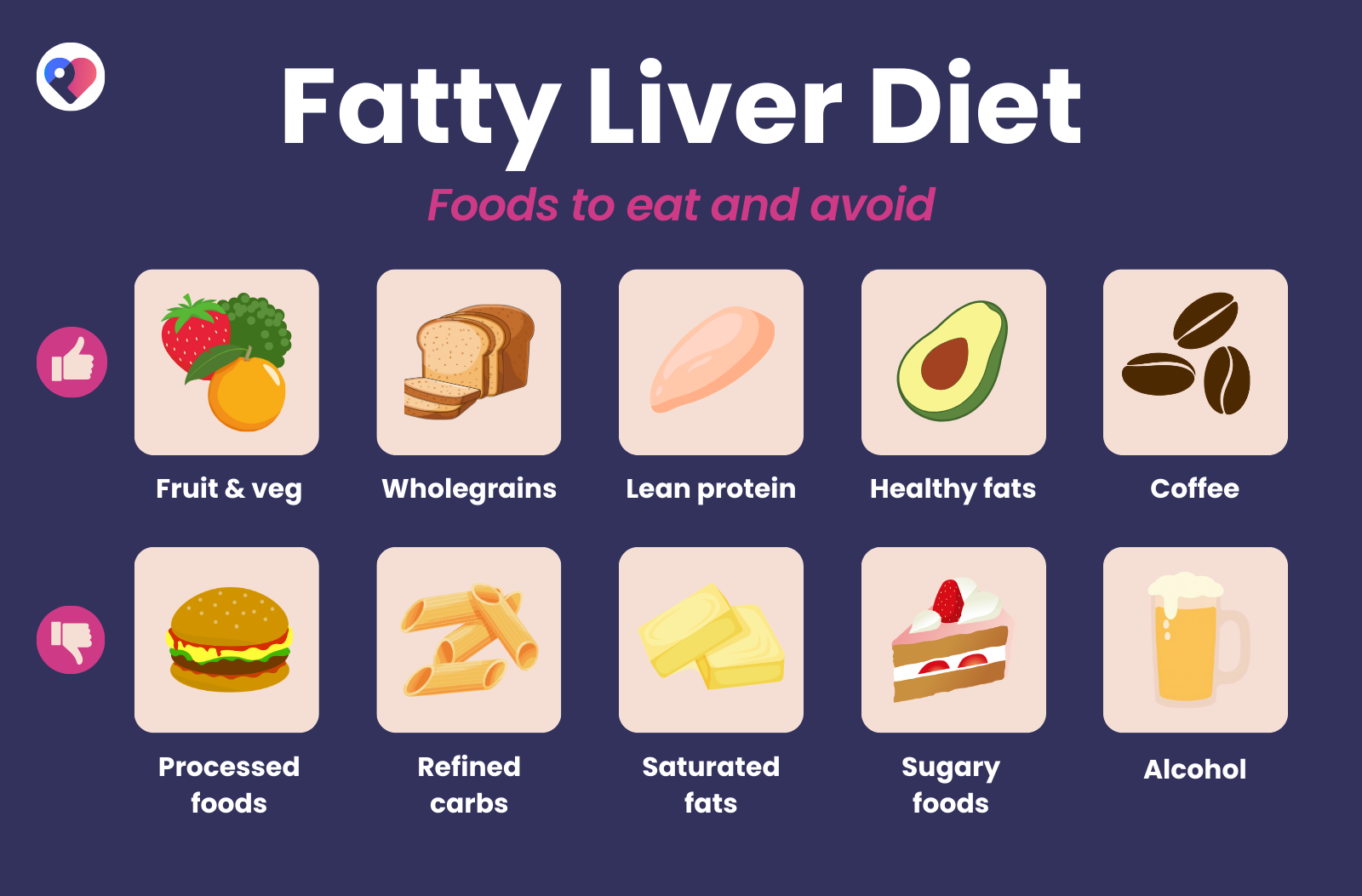
Foods to eat on a fatty liver diet
Focusing on a healthy diet can make a real difference. These are the types of foods to prioritise:
1. Fruits and vegetables
Fresh fruits and vegetables are rich in fibre, vitamins, and antioxidants. They can help reduce inflammation and support liver health.
Aim for a variety of colours on your plate, such as berries, oranges, leafy greens, and broccoli.
2. Wholegrains
Wholegrains such as oats, brown rice, whole-wheat bread, and quinoa provide complex carbohydrates and fibre.
They help stabilise blood sugar levels and reduce fat accumulation in the liver.
3. Lean proteins
Protein is important for liver repair. Choose lean sources like skinless chicken, turkey, fish, eggs, and plant-based proteins such as beans, lentils, and tofu.
Fatty fish like salmon, sardines, and mackerel are particularly beneficial due to their omega-3 fatty acids, which may reduce liver fat and inflammation.
4. Healthy fats
Not all fats are harmful. Unsaturated fats found in olive oil, avocado, nuts, and seeds can improve cholesterol levels and support liver health.
Moderation is key, as fats are still high in calories.
5. Coffee
Moderate coffee consumption may protect the liver by reducing fat build-up and lowering the risk of liver disease progression2.
Aim for two to three cups a day, avoiding excessive sugar or cream.
6. Green tea
Green tea is rich in antioxidants called catechins, which may help improve liver function.
Drinking one to two cups a day can be a helpful addition to a fatty liver diet.
Foods to avoid with fatty liver
Certain foods can worsen fat accumulation in the liver. Here are the main culprits:
1. Sugary foods and drinks
High-sugar foods, such as cakes, biscuits, sweets, and sugary drinks, are a major contributor to fatty liver.
Fructose, a type of sugar found in sodas and many processed foods, can increase liver fat.
2. Refined carbohydrates
White bread, pastries, pasta made from white flour, and many breakfast cereals can spike blood sugar and increase fat storage in the liver.
Opt for wholegrain alternatives whenever possible.
3. Saturated and trans fats
Foods high in saturated fats, such as fatty cuts of meat, butter, full-fat cheese, and processed snacks, can worsen liver fat.
Trans fats, found in some margarines and packaged baked goods, are also harmful and should be avoided.
4. Alcohol
Alcohol is processed by the liver, and drinking excessively can accelerate liver damage. For people with fatty liver, it is best to limit alcohol or avoid it altogether.
5. Highly processed foods
Highly processed foods such as fast food, ready meals, and packaged snacks often contain high levels of sugar, salt, and unhealthy fats, all of which can negatively affect liver health.
Tips for following a fatty liver diet
Control portion sizes: Overeating, even healthy foods, can contribute to weight gain and liver fat.
Stay hydrated: Water supports liver function and overall metabolism.
Cook at home: Preparing meals yourself helps you control the ingredients and avoid hidden sugars and unhealthy fats.
Exercise regularly: Diet alone is helpful, but combining it with regular physical activity can accelerate liver fat reduction.
Monitor progress: Regular check-ups with your doctor can help track liver health and ensure your diet is effective.
Resumen
A fatty liver diet focuses on whole, nutrient-rich foods while avoiding those that promote fat accumulation and inflammation.
Fruits, vegetables, whole grains, lean proteins, and healthy fats form the foundation of a liver-friendly diet, while sugary foods, refined carbs, alcohol, and processed snacks are best avoided.
By making these changes, it is possible to support liver health, reduce fat build up, and improve overall wellbeing.
Adopting a consistent, balanced approach is key. Small, manageable changes to your eating habits can make a significant difference in managing fatty liver over time.
Pairing dietary improvements with regular exercise and regular medical check-ups will give the best chance of maintaining a healthy liver for the long term.
Explore medical weight management options
Reciba asesoramiento sanitario experto desde la comodidad de su hogar. Complete una consulta rápida en línea, disponible las 24 horas del día, los 7 días de la semana, y un profesional sanitario colegiado en el Reino Unido revisará su solicitud. Hay entrega al día siguiente disponible para los tratamientos que cumplan los requisitos.
Selecciones del paciente para Dietas específicas para condiciones
Diabetes
Dieta para la diabetes: manejo de la diabetes tipo 2
Si tienes diabetes tipo 2, a menudo es difícil saber qué alimentos debes o no debes comer. Aquí explicamos los elementos clave de una dieta para la diabetes para ayudarte a prevenir o retrasar problemas de salud asociados, y abordamos algunos mitos comunes sobre la alimentación con diabetes tipo 2.
por Lawrence Higgins
Dieta y nutrición
¿Puede la dieta MIND ayudar a mantener nuestros cerebros saludables?
Lo que comes puede ayudar a mantener tu cuerpo y cerebro saludables. Y aunque envejecer es el mayor factor de riesgo para la demencia, las investigaciones sugieren que hasta 1 de cada 3 casos puede ser prevenible con cambios en el estilo de vida. La dieta MIND se promociona por sus beneficios para potenciar el cerebro, pero ¿qué incluye y realmente puede ayudar a proteger nuestros cerebros?
por Lynn Stephen
Sobre el autorVer biografía completa
Escrito por

Josh Alderman
Ejecutiva de SEO
Licenciatura (Hons) en Medios y Periodismo Impreso
Josh es un ejecutivo de SEO en Patient con más de 4 años de experiencia trabajando en el ámbito de la salud.
Acerca del revisorVer biografía completa

Dr Colin Tidy, MRCGP
Médico General, Autor Médico
MBBS, MRCGP, MRCP (Paediatrics), DCH
El Dr. Colin Tidy es un médico del NHS, con sede en Oxfordshire.
Historial del artículo
Artículo también disponible en Inglés, Alemán, Español, Francés, Italiano, Portugués, Hindi, Hebreo, Árabe, y Sueco.
Próxima revisión: 5 de diciembre de 2028
5 de diciembre de 2025 | Publicado originalmente
Escrito por:
Josh AldermanRevisado por
Dr Colin Tidy, MRCGP
Comparte tus pensamientos o experiencias con otros en nuestro comunidades de pacientes.
Acceso sencillo a tratamientos y servicios de salud confiables en línea.
Common conditions
Get help with common conditions through the NHS, without a GP appointment.
 Sinusitis aguda
 Amigdalitis bacteriana
 Impetigo
 Picaduras de insectos
 Herpes zósterInfección del tracto urinario (ITU)
Suscríbete al boletín de Patient
Tu dosis semanal de consejos de salud claros y confiables, escritos para ayudarte a sentirte informado, seguro y en control.
Al suscribirte aceptas nuestros Política de Privacidad. Puedes darte de baja en cualquier momento. Nunca vendemos tus datos.