
¿Qué sucede durante un ataque de asma?
Revisado por Dr Hayley Willacy, FRCGP Escrito por Dr Laurence KnottPublicado originalmente 24 Apr 2019
Cumple con las directrices editoriales
- DescargarDescargar
- Compartir
- Language
- Discusión
- Versión en audio
- Agregar a fuentes preferidas en Google
El asma es una condición común que afecta las vías respiratorias más pequeñas (bronquiolos). De vez en cuando, las vías respiratorias se estrechan en las personas que tienen asma. Los síntomas típicos son sibilancias, tos, sensación de opresión en el pecho y dificultad para respirar. La gravedad del estrechamiento y la duración de cada episodio pueden variar mucho.
Get help managing your asthma
Reciba asesoramiento sanitario experto desde la comodidad de su hogar. Complete una consulta rápida en línea, disponible las 24 horas del día, los 7 días de la semana, y un profesional sanitario colegiado en el Reino Unido revisará su solicitud. Hay entrega al día siguiente disponible para los tratamientos que cumplan los requisitos.

The normal respiratory system
To understand what happens in asma you need to be familiar with the normal breathing (respiratory) system and how the lungs and airways are arranged.
Normally, air entering through the mouth and nose travels through the main airway (the trachea) through a series of smaller branching airways called bronchi. The bronchi divide up into even smaller airways called bronchioles, which end in millions of tiny air sacs called alveoli.
When air enters the alveoli, the oxygen it contains passes through the thin membrane covering each sac into surrounding blood vessels. The oxygen attaches itself to red blood cells which then circulate around the body, releasing the oxygen into the body tissues.
¿Qué sucede durante un ataque de asma?
An asthma attack starts with exposure to an asthma trigger. Triggers that cause an asthma attack vary from person to person but may be something you are allergic to such as animals or pollen. They can also be viral infections, gastrointestinal reflux, contaminación del aire, cigarette smoke, and estrés.
When exposed to a trigger factor, the lining of the airways responds by producing chemicals such as histamine and leukotriene. These chemicals are in part responsible for the changes that happen in the lungs during an asthma attack.
The airway lining becomes inflamed and swells. The production of mucus, normally present in a small amount in the airways, is increased. Typically this results in throat clearing, spitting up phlegm (sputum) and coughing. The muscles wrapped round the bronchioles eventually become constricted or tightened (bronchospasm) and the air passing through the narrowed channels produces a wheeze.
Lungs and alveoli
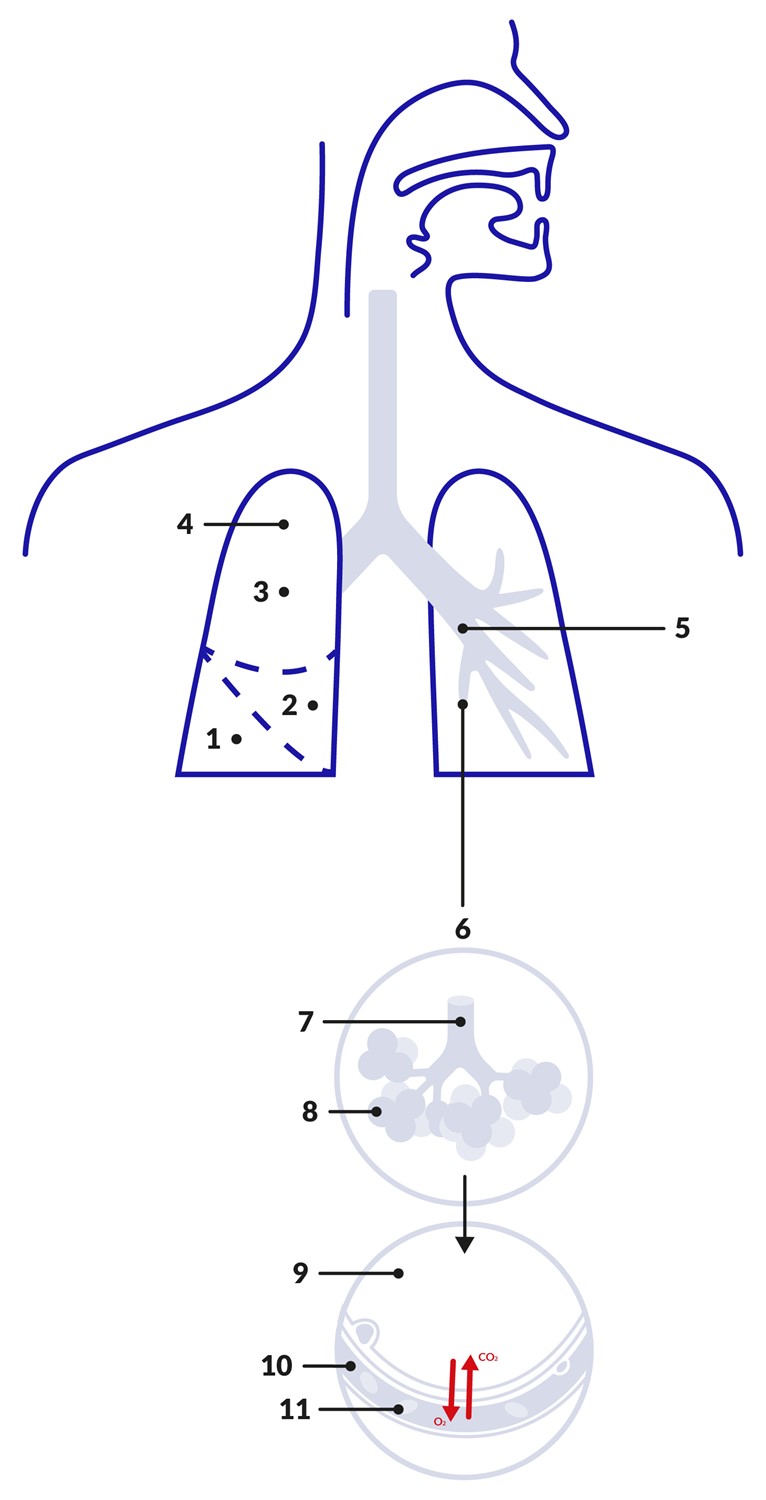
Clave | |
|---|---|
1. Lower lobe | 7. Terminal bronchiole |
Cross-section of normal airway
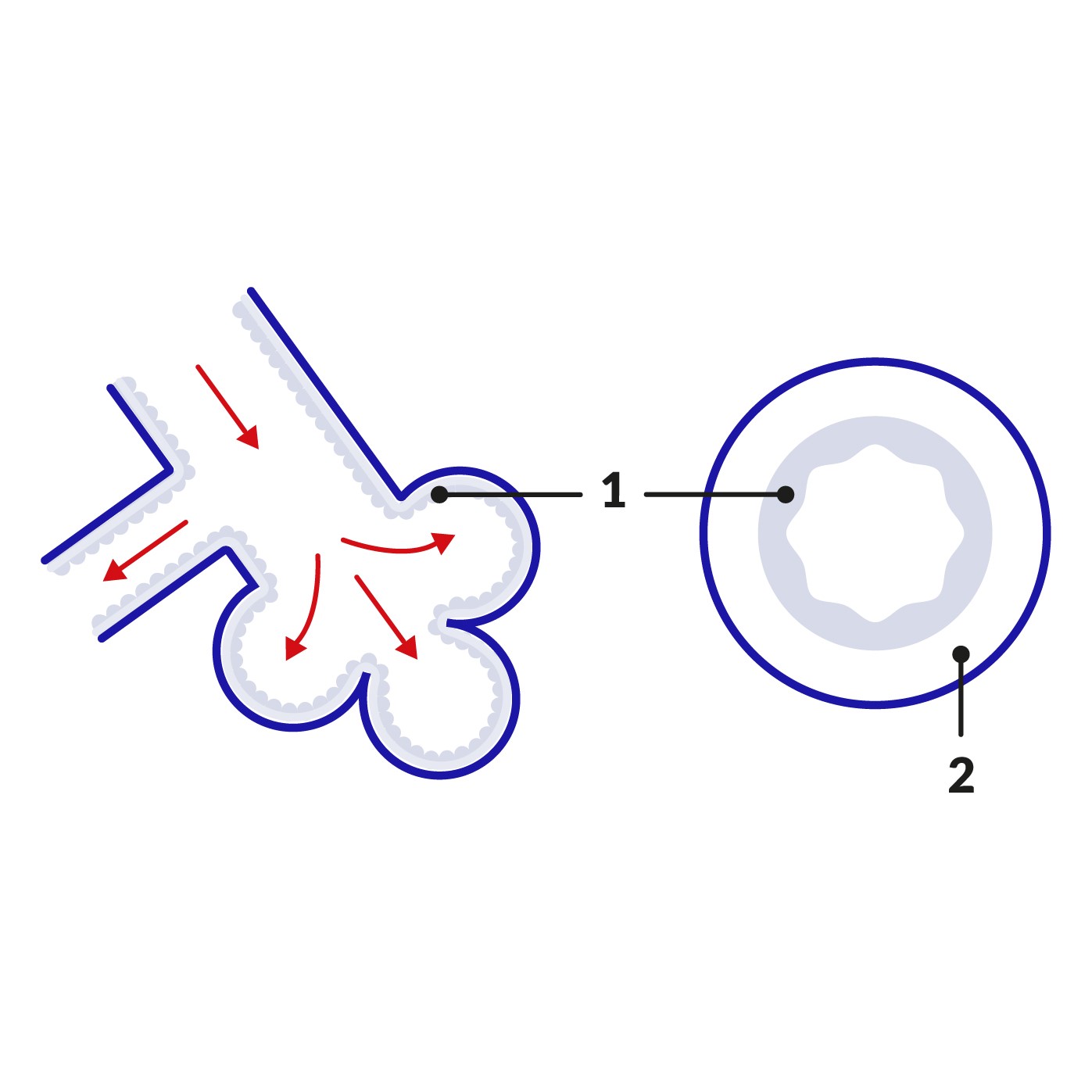
Clave |
|---|
1. Small amount of mucus lines the airways |
Cross-section of airway during asthma attack
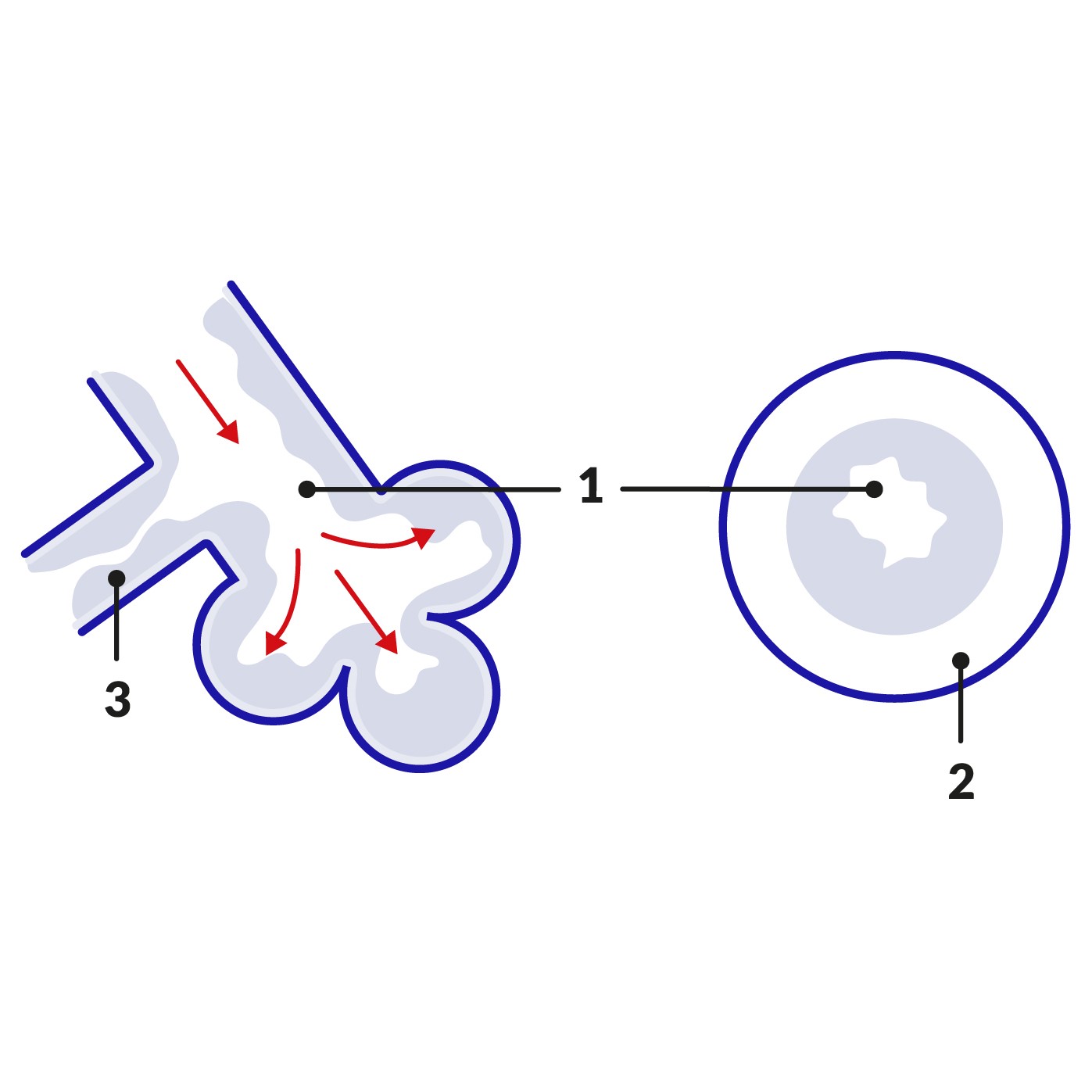
Clave |
|---|
1. Reduced flow of air to the alveoli |
So you can see there are three reasons why people who are having an asthma attack become breathless. The swelling of the lining of the airways, the increased mucus production and the bronchospasm all result in less air than normal entering the alveoli. There is therefore a limited amount of oxygen available to pass on to the red blood cells.
Why asthma treatments work
Bronchodilators
Bronchodilators such as salbutamol work by relaxing the muscle of the bronchioles and widening the channels through which the air passes. They are usually administered in the form of inhalers. Salbutamol starts to work within a few minutes and the effect will last between 3-5 hours. Bronchodilator inhalers are referred to as 'reliever' inhalers or 'blue' inhalers. This is because they relieve symptoms of breathlessness, and the inhalers are usually blue in colour. Although they relieve breathlessness, they do not prevent the breathlessness from happening.
Salmeterol works in a similar way to salbutamol but its effects last for about 12 hours.
Esteroides
Steroids such as beclometasona work by reducing the inflammation in your airways. When the inflammation has gone, your airways are much less likely to become narrow and cause symptoms such as wheezing. For asthma, steroids are usually prescribed in inhaler form. Although they have no effect during acute asthma attacks, when taken regularly (usually twice daily) they are the inhalers that will stop the attacks from happening. They are usually brown in colour and are known as 'preventer' or 'brown' inhalers. Occasionally, for severe asthma, steroids are prescribed in tablet form.
If your asthma stabilises on steroid and bronchodilator inhalers your doctor may prescribe a combination inhaler to take regularly which contains both medicines.
Otros tratamientos
Antileukotrienes
Antileukotrienes such as montelukast act by blocking the action of leukotriene. Leukotriene is produced when people with asthma come into contact with trigger factors such as substances they are allergic to (such as pollen), or exercise. Leukotriene causes the lining of the bronchioles to become inflamed and swollen and antileukotrienes help to prevent this. Not every person with asthma gets a significant rise in leukotriene production during an attack, which is why antileukotrienes are usually kept in reserve for asthma which does not respond to standard bronchodilator and steroid therapy.
Omalizumab
Omalizumab is a medicine that is only given by injection. It works by interfering with the immune system to reduce inflammation in the airways which is present in asthma. It is reserved for people with severe asthma who do not respond to standard treatment. It can only be started by a specialist.
Get help managing your asthma
Reciba asesoramiento sanitario experto desde la comodidad de su hogar. Complete una consulta rápida en línea, disponible las 24 horas del día, los 7 días de la semana, y un profesional sanitario colegiado en el Reino Unido revisará su solicitud. Hay entrega al día siguiente disponible para los tratamientos que cumplan los requisitos.
Selecciones del paciente para Asma

Pecho y pulmones
¿Son perjudiciales los productos de limpieza para tu salud?
We all know about the dangers of outdoor pollution, but did you know you could be exposed to harmful chemicals inside your own home? We speak to the experts about the cleaning products that could trigger harmful symptoms and how to keep your house spick and span without damaging your health.
por Natalie Healey

Pecho y pulmones
Cómo lidiar con el asma en el verano
El asma en verano puede ser miserable, pero armado con la medicina correcta y un plan de acción sensato, puedes aliviar los síntomas provocados por el polen y la contaminación del aire. Nuestros expertos ofrecen consejos sobre cómo puedes manejar tu asma en verano.
por Lynn Stephen
Sobre el autorVer biografía completa
Escrito por

Dr Laurence Knott
Médico General, Autor Médico
Licenciatura (Hons) en Bioquímica, MBBS
El Dr. Laurence Knott se graduó en 1973 y tiene una amplia experiencia como Médico General.
Acerca del revisorVer biografía completa

Dr Hayley Willacy, FRCGP
Médico General, Autor Médico
MBChB (1992), DRCOG, DFFP, MRCOG (Part 1) MRCGP (2007), DFSRH (2013), MSc - medical education (2020)
La Dra. Hayley Willacy fue una médica general del NHS que trabajaba en el noroeste de Inglaterra, quien se retiró de la práctica clínica en 2022 después de 30 años.
Historial del artículo
Artículo también disponible en Inglés, Alemán, Español, Francés, Italiano, Portugués, Hindi, Hebreo, Árabe, y Sueco.
24 Apr 2019 | Publicado originalmente
Escrito por:
Dr Laurence KnottRevisado por
Dr Hayley Willacy, FRCGP
Únete a la conversación
Comparte tus pensamientos o experiencias con otros en nuestro comunidades de pacientes.

Pregunta, comparte, conecta.
Navega por discusiones, haz preguntas y comparte experiencias en cientos de temas de salud.

¿Te sientes mal?
Evalúa tus síntomas en línea de forma gratuita
Suscríbete al boletín de Patient
Tu dosis semanal de consejos de salud claros y confiables, escritos para ayudarte a sentirte informado, seguro y en control.
Al suscribirte aceptas nuestros Política de Privacidad. Puedes darte de baja en cualquier momento. Nunca vendemos tus datos.