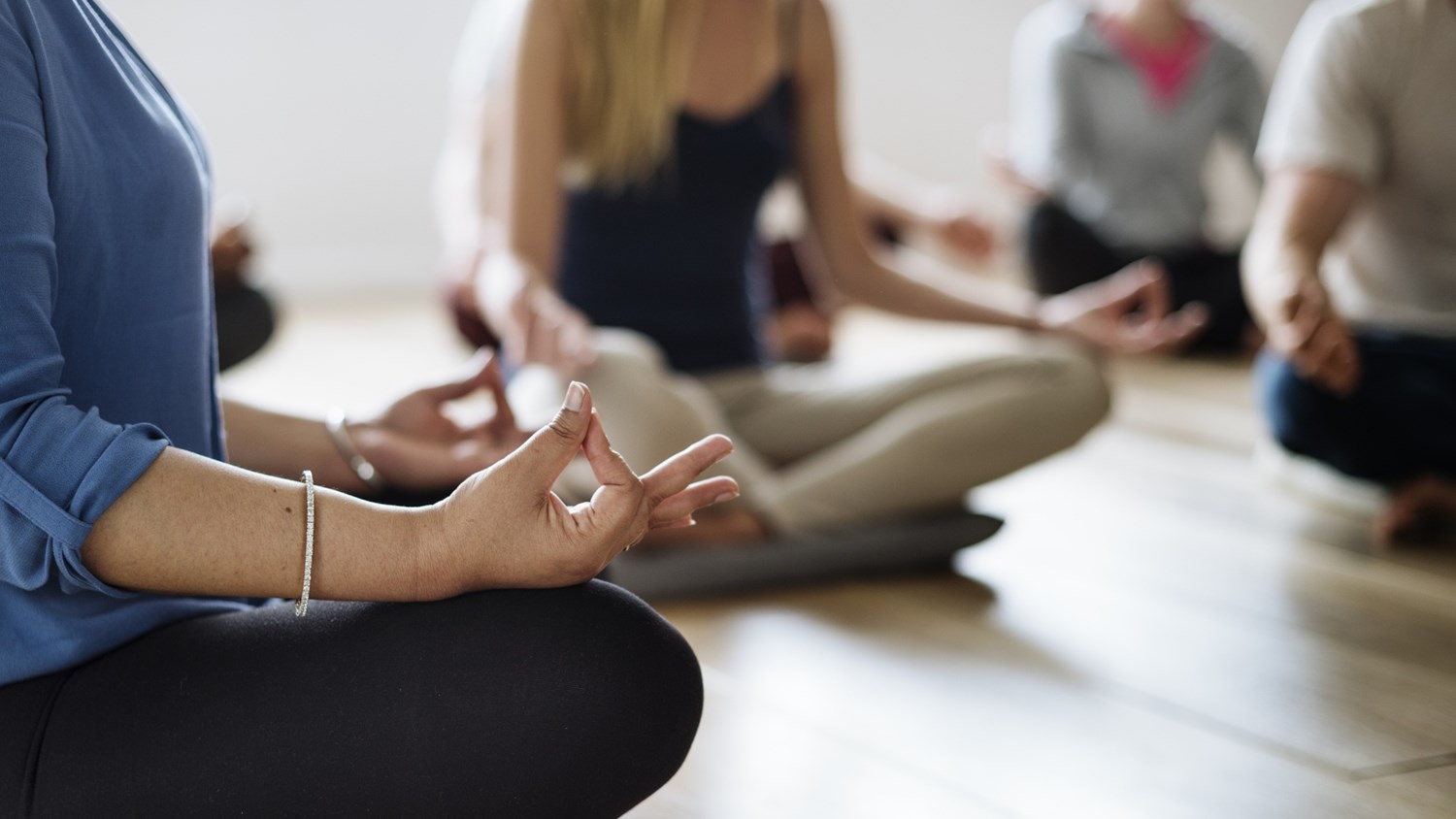
Ejercicios de relajación
Revisado por Dr Hannah Gronow, MBACPEscrito por Dr Jan Sambrook, MRCGPPublicado originalmente 20 de sept. de 2017
Cumple con las directrices editoriales
- DescargarDescargar
- Compartir
- Language
- Discusión
- Versión en audio
- Agregar a fuentes preferidas en Google
Muscular relaxation exercises and deep breathing are two ways to help people to relax and combat symptoms of anxiety. They may also help to ease symptoms of depression. They can be used together with mindfulness techniques which have been shown to help with anxiety and depression.
Apoyo para la salud mental de adultos y niños
Terapia cognitivo-conductual (TCC) y terapia psicológica en línea para adultos y niños de 8 a 17 años. Los profesionales acreditados de Onebright ayudan a personas que experimentan ansiedad, depresión y otros desafíos emocionales.
Why do relaxation exercises?
Some people relax with sport, exercise, listening to music, watching TV or reading a book, etc. However, some people find it helpful to follow specific relaxation exercises. This leaflet gives a summary of two commonly used routines - deep breathing exercises and muscular relaxation exercises. These techniques are particularly useful to combat the two common physical symptoms of anxiety - over-breathing and muscular tension. There is some evidence that they may also help to ease symptoms of depression. If you get into the habit of practicing mindfulness as well, the combination may be even more effective.
These exercises will be more effective the more you practise them. Take a few minutes each day and work through the exercises. As you practise them you are likely to find that your muscles are more relaxed more of the time and that you are breathing more deeply. Once you have learned them, you can then use them in everyday life whenever you feel tense or anxious.
Deep-breathing exercises
Many people have a tendency to breathe faster than normal when they are anxious. Sometimes this can make you feel a little dizzy, which makes you more anxious and you breathe even faster, which can make you more anxious, etc. If you practise deep breathing when you are relaxed, you should be able to do this when you feel tense or anxious to help you to relax.
Try the following for 2-3 minutes. Practise this every day until it comes naturally to you and you may find that it reduces your background anxiety. You will then be able to do it routinely in any stressful situation:
Breathe slowly and deeply in through your nose, and out through your mouth in a steady rhythm. Try to make your breath out twice as long as your breath in. To do this, you may find it helpful to count slowly 'one, two' as you breathe in, and 'one, two, three, four' as you breathe out.
Mainly use your lower chest muscle (your diaphragm) to breathe. Your diaphragm is the big muscle under the lungs. It pulls the lungs downwards which expands the airways to allow air to flow in. When we become anxious we tend to forget to use this muscle and often use the muscles at the top of the chest and our shoulders instead. Each breath is more shallow if you use these upper chest muscles. So, you tend to breathe faster and feel more breathless and anxious if you use your upper chest muscles rather than your diaphragm.
You can check if you are using your diaphragm by feeling just below your breastbone (sternum) at the top of your tummy (abdomen). If you give a little cough, you can feel the diaphragm push out here. If you hold your hand here you should feel it move in and out as you breathe.
Try to relax your shoulders and upper chest muscles when you breathe. With each breath out, consciously try to relax those muscles until you are mainly using your diaphragm to breathe.
Muscular relaxation
Planned times for regular positive relaxation
Find a quiet warm place where you won't be disturbed. Choose a time of day when you do not feel pressured to do anything else. Lie down on your back, or sit in a well-supported chair if you find that more comfortable. Once you have learned the exercises, close your eyes while you do them. You are going to work on each of your muscle groups. With each group of muscles, first tense the muscles as much as you can, then relax them fully. Breathe in when you tense the muscles and breathe out when you relax.
To start with, concentrate on your breathing for a few minutes. Breathe slowly and calmly, using the breathing techniques shown above. Each time you breathe out say words to yourself such as 'peace' or 'relax'. Then start the muscle exercises, working around the different muscle groups in your body.
Hands - clench one hand tightly for a few seconds as you breathe in. You should feel your forearm muscles tense; then relax as you breathe out. Repeat with the other hand.
Arms - bend an elbow and tense all the muscles in the arm for a few seconds as you breathe in; then relax as you breathe out. Repeat the same with the other arm.
Shoulders - raise your shoulders as high as you can as you breathe in; then relax as you breathe out.
Neck - press your head back as hard as is comfortable and roll it slowly from side to side; then relax.
Face - try to frown and lower your eyebrows as hard as you can for a few seconds; then relax. Then raise your eyebrows (as if you were startled) as hard as you can; then relax. Then clench your jaw for a few seconds; then relax.
Chest - take a deep breath and hold it for a few seconds; then relax and go back to normal breathing.
Stomach - tense the stomach muscles as tightly as possible; then relax.
Buttocks - squeeze the buttocks together as much as possible; then relax.
Legs - with your legs flat on the floor, bend your feet and toes towards your face as hard as you can; then relax. Then bend them away from your face for a few seconds; then relax.
Then repeat the whole routine 3-4 times. Each time you relax a group of muscles, notice how they feel when relaxed compared to when they are tense. There may be groups of muscles that feel particularly tense, often the shoulders or jaw muscles. Make sure they feel properly relaxed by the time you have finished. If you practise these exercises every day you will find that they reduce your overall level of tension.
Everyday life
Obviously, you cannot do all of the above when out and about. However, the principle of full tension followed by relaxation of a group of muscles can help to ease anxiety in everyday situations. Therefore, in situations when you feel tension or anxiety rising, try either of the following:
Twist your neck around each way as far as it is comfortable, then relax.
Fully tense your shoulder and back muscles for several seconds, then relax.
Selecciones del paciente para Ansiedad

Salud mental
Cómo dejar de preocuparse por las cosas que no puedes cambiar
Mientras la COVID-19 domina nuestra vida diaria, nunca ha sido tan evidente que hay cosas que no se pueden controlar ni predecir. Preocuparse por cosas que no puedes cambiar puede ser inútil, pero ¿cómo puedes evitar caer en patrones de pensamiento negativos?
por Natalie Healey

Salud mental
¿La hipnoterapia funciona para la ansiedad?
Los tratamientos para la ansiedad están disponibles en el NHS, pero las listas de espera para las terapias conversacionales pueden ser largas, por lo que muchas personas buscan otras opciones. ¿Podría la hipnoterapia clínica para la ansiedad ser útil para quienes padecen la condición?
por Natalie Healey
Sobre el autorVer biografía completa
Escrito por

Dr Jan Sambrook, MRCGP
Médico General, Autor Médico
MBChB, MRCGP
El Dr. Jan Sambrook se graduó de la Universidad de Sheffield en 1992.
Acerca del revisorVer biografía completa

Dr Hannah Gronow, MBACP
Médico General
MB, ChB, MBACP
Hannah se calificó como médica general en 1997. Se unió a EMIS (Paciente) como revisora por pares en agosto de 2006.
Historial del artículo
Artículo también disponible en Inglés, Alemán, Español, Francés, Italiano, Portugués, Hindi, Hebreo, Árabe, y Sueco.
20 de sept. de 2017 | Publicado originalmente
Escrito por:
Dr Jan Sambrook, MRCGPRevisado por
Dr Hannah Gronow, MBACP
Únete a la conversación
Comparte tus pensamientos o experiencias con otros en nuestro comunidades de pacientes.

Pregunta, comparte, conecta.
Navega por discusiones, haz preguntas y comparte experiencias en cientos de temas de salud.

¿Te sientes mal?
Evalúa tus síntomas en línea de forma gratuita
Suscríbete al boletín de Patient
Tu dosis semanal de consejos de salud claros y confiables, escritos para ayudarte a sentirte informado, seguro y en control.
Al suscribirte aceptas nuestros Política de Privacidad. Puedes darte de baja en cualquier momento. Nunca vendemos tus datos.