Porfiria
Última actualización 18 Aug 2020
Cumple con las directrices editoriales
- DescargarDescargar
- Compartir
- Language
- Discusión
- Ask Patient
- Versión en audio
- Agregar a fuentes preferidas en Google
Porphyria is a group of disorders caused by abnormalities in the chemical steps that lead to heme production. Heme is a vital molecule for all of the body's organs, although it is most abundant in the blood, bone marrow, and liver. Heme is a component of several iron-containing proteins called hemoproteins, including hemoglobin (the protein that carries oxygen in the blood).
Selecciones de videos para Condiciones genéticasBiblioteca de videos
Descripción
Porphyria is a group of disorders caused by abnormalities in the chemical steps that lead to heme production. Heme is a vital molecule for all of the body's organs, although it is most abundant in the blood, bone marrow, and liver. Heme is a component of several iron-containing proteins called hemoproteins, including hemoglobin (the protein that carries oxygen in the blood).
Researchers have identified several types of porphyria, which are distinguished by their genetic cause and their signs and symptoms. Some types of porphyria, called cutaneous porphyrias, primarily affect the skin. Areas of skin exposed to the sun become fragile and blistered, which can lead to infection, scarring, changes in skin coloring (pigmentation), and increased hair growth. Cutaneous porphyrias include congenital erythropoietic porphyria, erythropoietic protoporphyria, hepatoerythropoietic porphyria, and porphyria cutanea tarda.
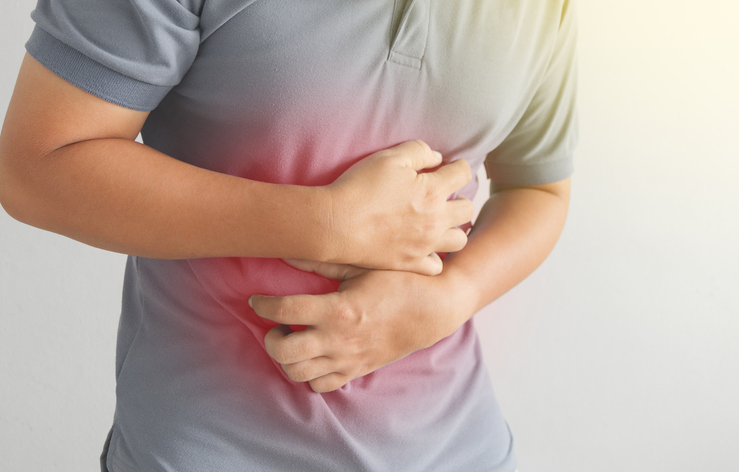
Other types of porphyria, called acute porphyrias, primarily affect the nervous system. These disorders are described as "acute" because their signs and symptoms appear quickly and usually last a short time. Episodes of acute porphyria can cause abdominal pain, vomiting, constipation, and diarrhea. During an episode, a person may also experience muscle weakness, seizures, fever, and mental changes such as anxiety and hallucinations. These signs and symptoms can be life-threatening, especially if the muscles that control breathing become paralyzed. Acute porphyrias include acute intermittent porphyria and ALAD deficiency porphyria. Two other forms of porphyria, hereditary coproporphyria and variegate porphyria, can have both acute and cutaneous symptoms.
The porphyrias can also be split into erythropoietic and hepatic types, depending on where damaging compounds called porphyrins and porphyrin precursors first build up in the body. In erythropoietic porphyrias, these compounds originate in the bone marrow. Erythropoietic porphyrias include erythropoietic protoporphyria and congenital erythropoietic porphyria. Health problems associated with erythropoietic porphyrias include a low number of red blood cells (anaemia) and enlargement of the spleen (splenomegaly). The other types of porphyrias are considered hepatic porphyrias. In these disorders, porphyrins and porphyrin precursors originate primarily in the liver, leading to abnormal liver function and an increased risk of developing liver cancer.
Environmental factors can strongly influence the occurrence and severity of signs and symptoms of porphyria. Alcohol, smoking, certain drugs, hormones, other illnesses, stress, and dieting or periods without food (fasting) can all trigger the signs and symptoms of some forms of the disorder. Additionally, exposure to sunlight worsens the skin damage in people with cutaneous porphyrias.
Patrones de herencia
The source lists the following possible inheritance patterns: Autosomal recessive; X-linked dominant; Autosomal dominant. More than one pattern can apply in different cases.
Related genes
Otros nombres
Hematoporphyria
Porphyrin disorder
Related patient information and medicines
Patient information leaflet
Porfiria
El porphyrias son a group of disorders in which there is a problem with the production of haem (also spelled heme) within the body. Haem is used to make haemoglobin in red blood cells. There are seven different types of porphyria and in most cases they run in families (are inherited). What are the porphyrias. The porphyrias are a group of.

Patient information leaflet
Anticoncepción de emergencia
However, it is not suitable for all women. For example, women with a rare condition called porphyria Porphyria should not take it. Several other medicines can interfere with the progestogen pill, meaning it may not work as effectively. If the pill did not work and you became pregnant, there is no evidence that taki... Ulipristal acetate pill.
Patient information leaflet
Dolor en el cuadrante superior izquierdo
A complication o... Again you would be unwell in other ways other than the pain. Acute porphyria Porphyria. These are a group of rare, inherited disorders de liver chemistry which are characterised by attacks of pain and other signs of distress como weakness, seizure and confusion. Pain which is referred from the pelvis, which is below the.

Patient information leaflet
Implante anticonceptivo
Relative contraindications include: Some types of severe heart Heart disease or liver diseas... Past breast cancer. Current unexplained vaginal bleeding. A hereditary blood disorder called porphyria Porphyria. You have an increased risk of blood clots in the veins due to antiphospholipid syndrome Antiphospholipid syndrome , antithrombin deficiency.

Patient information leaflet
Antihistamínicos
Antihistamines are a group of medicines which act to block the effects of the chemical called histamine in the body. Either H1 or H2 histamine receptors can be blocked by medicines, but the group commonly known as antihistamines blocks the H1 receptor. Most people can take antihistamines safely. Antihistamines should not be used by people with a.

Medicine leaflet
Tabletas de Melphalan
Melphalan will be prescribed for you by a specialist doctor. Keep your regular appointments with your doctor or hospital. You will need to have frequent blood tests. If you have any problems with the way your kidneys work. If you have an infection or feel unwell. If you have a rare inherited blood condition llamado porphyria. If you have ever had.
Lecturas adicionales y referencias
- Porfiria; MedlinePlus, National Library of Medicine.
- Anderson KE, Bloomer JR, Bonkovsky HL, Kushner JP, Pierach CA, Pimstone NR, Desnick RJ. Recommendations for the diagnosis and treatment of the acute porphyrias. Ann Intern Med. 2005 Mar 15;142(6):439-50. doi: 10.7326/0003-4819-142-6-200503150-00010.
- Badminton MN, Elder GH. Molecular mechanisms of dominant expression in porphyria. J Inherit Metab Dis. 2005;28(3):277-86. doi: 10.1007/s10545-005-8050-3.
- Chemmanur AT, Bonkovsky HL. Hepatic porphyrias: diagnosis and management. Clin Liver Dis. 2004 Nov;8(4):807-38, viii. doi: 10.1016/j.cld.2004.07.001.
- Dombeck TA, Satonik RC. The porphyrias. Emerg Med Clin North Am. 2005 Aug;23(3):885-99, x. doi: 10.1016/j.emc.2005.03.014.
- Kauppinen R. Porphyrias. Lancet. 2005 Jan 15-21;365(9455):241-52. doi: 10.1016/S0140-6736(05)17744-7.
- Lecha M, Herrero C, Ozalla D. Diagnosis and treatment of the hepatic porphyrias. Dermatol Ther. 2003;16(1):65-72. doi: 10.1046/j.1529-8019.2003.01610.x.
- Murphy GM. Diagnosis and management of the erythropoietic porphyrias. Dermatol Ther. 2003;16(1):57-64. doi: 10.1046/j.1529-8019.2003.01609.x.
- Nordmann Y, Puy H. Human hereditary hepatic porphyrias. Clin Chim Acta. 2002 Nov;325(1-2):17-37. doi: 10.1016/s0009-8981(02)00276-0.
- Peters TJ, Sarkany R. Porphyria for the general physician. Clin Med (Lond). 2005 May-Jun;5(3):275-81. doi: 10.7861/clinmedicine.5-3-275. No abstract available.
- Sarkany RP. Making sense of the porphyrias. Photodermatol Photoimmunol Photomed. 2008 Apr;24(2):102-8. doi: 10.1111/j.1600-0781.2008.00336.x.
- Sassa S. The porphyrias. Photodermatol Photoimmunol Photomed. 2002 Apr;18(2):56-67. doi: 10.1034/j.1600-0781.2002.180202.x. No abstract available.
- Whatley SD, Ducamp S, Gouya L, Grandchamp B, Beaumont C, Badminton MN, Elder GH, Holme SA, Anstey AV, Parker M, Corrigall AV, Meissner PN, Hift RJ, Marsden JT, Ma Y, Mieli-Vergani G, Deybach JC, Puy H. C-terminal deletions in the ALAS2 gene lead to gain of function and cause X-linked dominant protoporphyria without anemia or iron overload. Am J Hum Genet. 2008 Sep;83(3):408-14. doi: 10.1016/j.ajhg.2008.08.003. Epub 2008 Sep 4.
Comparte tus pensamientos o experiencias con otros en nuestro comunidades de pacientes.
Acceso sencillo a tratamientos y servicios de salud confiables en línea.
Common conditions
Get help with common conditions through the NHS, without a GP appointment.
 Sinusitis aguda
 Amigdalitis bacteriana
 Impetigo
 Picaduras de insectos
 Herpes zósterInfección del tracto urinario (ITU)
Suscríbete al boletín de Patient
Tu dosis semanal de consejos de salud claros y confiables, escritos para ayudarte a sentirte informado, seguro y en control.
Al suscribirte aceptas nuestros Política de Privacidad. Puedes darte de baja en cualquier momento. Nunca vendemos tus datos.