Myoclonus-dystonia
Última actualización 18 Aug 2020
Cumple con las directrices editoriales
- DescargarDescargar
- Compartir
- Language
- Discusión
- Versión en audio
- Agregar a fuentes preferidas en Google
Myoclonus-dystonia is a movement disorder that typically affects the neck, torso, and arms. Individuals with this condition experience quick, involuntary muscle jerks or twitches (myoclonus). About half of individuals with myoclonus-dystonia develop dystonia, which is involuntary tensing of various muscles that causes unusual positioning. In myoclonus-dystonia, dystonia often affects one or both hands, causing writer's cramp, or the neck, causing the head to turn (torticollis).
Descripción
Myoclonus-dystonia is a movement disorder that typically affects the neck, torso, and arms. Individuals with this condition experience quick, involuntary muscle jerks or twitches (myoclonus). About half of individuals with myoclonus-dystonia develop dystonia, which is involuntary tensing of various muscles that causes unusual positioning. In myoclonus-dystonia, dystonia often affects one or both hands, causing writer's cramp, or the neck, causing the head to turn (torticollis).
The movement problems usually first appear in childhood or early adolescence with the development of myoclonus. In most cases, the movement problems remain stable throughout life. In some adults, myoclonus improves with alcohol consumption, which can lead to affected individuals self-medicating and developing alcohol use disorder.
People with myoclonus-dystonia often develop psychological disorders such as depression, anxiety, panic attacks, and obsessive-compulsive disorder (OCD).
Patrones de herencia
The source lists the following possible inheritance patterns: Autosomal dominant. More than one pattern can apply in different cases.
Related genes
Otros nombres
Dystonia 11
DYT11
Myoclonus-dystonia syndrome
Related patient information and medicines

Patient information leaflet
Enfermedad de Huntington
What are the symptoms of Huntington's disease. The symptoms of Huntington's disease can vary from person to person, and gradually worsen over time. Movement problems Huntington's disease can cause both involuntary and impaired movement problems, which include: Jerky, involuntary movements in the head, face, arms or legs (chorea). Muscle spasms.
Patient information leaflet
Blefaroespasmo
Secondary blepharospasm es un common response to many common eye conditions, and can be caused by some conditions affecting the nervous system. This leaflet is mainly about primary blepharospasm, also called benign essential blepharospasm (BEB). An increase in blink frequency and strength is called blepharospasm. Blefaroespasmo is a type of focal.

Patient information leaflet
Distonía
A distonía es a lasting or frequently recurring and unwanted (involuntary) muscle contraction. It can affect one or more muscles in the body. There is no cure; however, there are different types of treatment which can help. These vary with the type of dystonia that you have. What is dystonia. A dystonia is lasting unwanted (involuntary) muscle.
Patient information leaflet
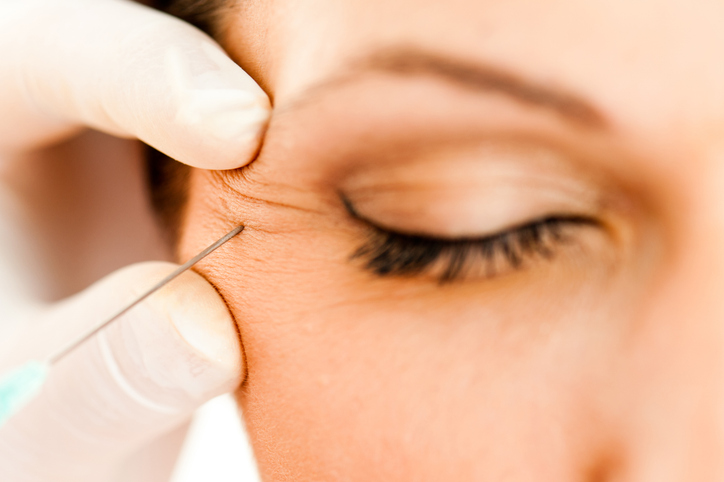
Botox
This leaflet is provided by the British Association of Aesthetic Plastic Surgeons , the professional body responsible for the advancement of education and safety in aesthetic plastic surgery. Botox® and Dysport® are the trade names for Botulinum toxin, produced by a bacterium called Clostridium botulinum. Botox was first used in 1978 to weaken.
Patient information leaflet
Trastorno de la Articulación Temporomandibular (TMD)
. What are temporomandibular disorders. Trastornos temporomandibulares (TTM) son problems which affect the jaw joint. The jaw joint is located just in front of the ear, and it joins the jaw bone (mandible) to the skull near to the temple. The jaw joint is also called the 'temporomandibular joint'. Problems affecting this joint itself are usually.
Patient information leaflet
- el daño cerebral causa problemas con las funciones musculares.
- el daño cerebral causa problemas con las funciones musculares. es un problem con muscle function. It is caused by brain injury or abnormal development of the brain that occurs while a child's brain is still developing. Other abnormal movements, including not m... Abnormal muscle tone - for example, reduced tone or appearing floppy (hypotonia), increased tone or stiffness (spasticity) or.
Lecturas adicionales y referencias
- Myoclonus-dystonia; MedlinePlus, National Library of Medicine.
- Esapa CT, Waite A, Locke M, Benson MA, Kraus M, McIlhinney RA, Sillitoe RV, Beesley PW, Blake DJ. SGCE missense mutations that cause myoclonus-dystonia syndrome impair epsilon-sarcoglycan trafficking to the plasma membrane: modulation by ubiquitination and torsinA. Hum Mol Genet. 2007 Feb 1;16(3):327-42. doi: 10.1093/hmg/ddl472. Epub 2007 Jan 2.
- Gerrits MC, Foncke EM, Koelman JH, Tijssen MA. Pediatric writer's cramp in myoclonus-dystonia: maternal imprinting hides positive family history. Eur J Paediatr Neurol. 2009 Mar;13(2):178-80. doi: 10.1016/j.ejpn.2008.03.007. Epub 2008 Jun 20.
- Groen JL, Ritz K, Jalalzadeh H, van der Salm SM, Jongejan A, Mook OR, Haagmans MA, Zwinderman AH, Motazacker MM, Hennekam RC, Baas F, Tijssen MA. RELN rare variants in myoclonus-dystonia. Mov Disord. 2015 Mar;30(3):415-9. doi: 10.1002/mds.26070. Epub 2015 Feb 4.
- Mencacci NE, Rubio-Agusti I, Zdebik A, Asmus F, Ludtmann MH, Ryten M, Plagnol V, Hauser AK, Bandres-Ciga S, Bettencourt C, Forabosco P, Hughes D, Soutar MM, Peall K, Morris HR, Trabzuni D, Tekman M, Stanescu HC, Kleta R, Carecchio M, Zorzi G, Nardocci N, Garavaglia B, Lohmann E, Weissbach A, Klein C, Hardy J, Pittman AM, Foltynie T, Abramov AY, Gasser T, Bhatia KP, Wood NW. A missense mutation in KCTD17 causes autosomal dominant myoclonus-dystonia. Am J Hum Genet. 2015 Jun 4;96(6):938-47. doi: 10.1016/j.ajhg.2015.04.008. Epub 2015 May 14.
- Nardocci N, Zorzi G, Barzaghi C, Zibordi F, Ciano C, Ghezzi D, Garavaglia B. Myoclonus-dystonia syndrome: clinical presentation, disease course, and genetic features in 11 families. Mov Disord. 2008 Jan;23(1):28-34. doi: 10.1002/mds.21715.
- Peall KJ, Kurian MA, Wardle M, Waite AJ, Hedderly T, Lin JP, Smith M, Whone A, Pall H, White C, Lux A, Jardine PE, Lynch B, Kirov G, O'Riordan S, Samuel M, Lynch T, King MD, Chinnery PF, Warner TT, Blake DJ, Owen MJ, Morris HR. SGCE and myoclonus dystonia: motor characteristics, diagnostic criteria and clinical predictors of genotype. J Neurol. 2014 Dec;261(12):2296-304. doi: 10.1007/s00415-014-7488-3. Epub 2014 Sep 11.
- Ritz K, Gerrits MC, Foncke EM, van Ruissen F, van der Linden C, Vergouwen MD, Bloem BR, Vandenberghe W, Crols R, Speelman JD, Baas F, Tijssen MA. Myoclonus-dystonia: clinical and genetic evaluation of a large cohort. J Neurol Neurosurg Psychiatry. 2009 Jun;80(6):653-8. doi: 10.1136/jnnp.2008.162099. Epub 2008 Dec 9.
Únete a la conversación
Comparte tus pensamientos o experiencias con otros en nuestro comunidades de pacientes.

Pregunta, comparte, conecta.
Navega por discusiones, haz preguntas y comparte experiencias en cientos de temas de salud.
Suscríbete al boletín de Patient
Tu dosis semanal de consejos de salud claros y confiables, escritos para ayudarte a sentirte informado, seguro y en control.
Al suscribirte aceptas nuestros Política de Privacidad. Puedes darte de baja en cualquier momento. Nunca vendemos tus datos.