Infantile-onset spinocerebellar ataxia
Última actualización 13 Nov 2023
Cumple con las directrices editoriales
- DescargarDescargar
- Compartir
- Language
- Discusión
- Ask Patient
- Versión en audio
- Agregar a fuentes preferidas en Google
Infantile-onset spinocerebellar ataxia (IOSCA) is a progressive disorder that affects the nervous system. Babies with IOSCA develop normally during the first year of life. During early childhood, however, they begin experiencing difficulty coordinating movements (ataxia); very weak muscle tone (hypotonia); involuntary writhing movements of the limbs (athetosis); and decreased reflexes. By their teenage years affected individuals require wheelchair assistance.
Selecciones de videos para Condiciones genéticasBiblioteca de videos
Descripción
Infantile-onset spinocerebellar ataxia (IOSCA) is a progressive disorder that affects the nervous system. Babies with IOSCA develop normally during the first year of life. During early childhood, however, they begin experiencing difficulty coordinating movements (ataxia); very weak muscle tone (hypotonia); involuntary writhing movements of the limbs (athetosis); and decreased reflexes. By their teenage years affected individuals require wheelchair assistance.
People with IOSCA often develop problems with the autonomic nervous system, which controls involuntary body functions. As a result, they may experience excessive sweating, difficulty controlling urination, and severe constipation.
IOSCA also leads to vision and hearing problems that begin by about age 7. Children with this disorder develop weakness in the muscles that control eye movement (ophthalmoplegia). In their teenage years they experience degeneration of the nerves that carry information from the eyes to the brain (optic atrophy), which can result in vision loss. Hearing loss caused by nerve damage (sensorineural hearing loss) typically occurs during childhood and progresses to profound deafness.
Individuals with IOSCA may have recurrent seizures (epilepsy). These seizures can lead to severe brain dysfunction (encephalopathy).
Most people with IOSCA survive into adulthood. However, a few individuals with IOSCA have an especially severe form of the disorder involving liver damage and encephalopathy that develops during early childhood. These children do not generally live past age 5.
Patrones de herencia
The source lists the following possible inheritance patterns: Autosomal recessive. More than one pattern can apply in different cases.
Related genes
Otros nombres
IOSCA
Ohaha syndrome
Ophthalmoplegia, hypotonia, ataxia, hypacusis, and athetosis
Related patient information and medicines

Patient information leaflet
Enfermedad celíaca
Enfermedad celíaca is caused by a reaction of the gut a gluten. Down's syndrome Turner syndrome Turner syndrome. Síntomas de coeliac disease in babies incluir: El bebé no crece ni aumenta de peso. Pale and bulky poo (faeces). They may also be the cause of som... Coeliac disease can develop in babies. Older children or adults who tener not.

Patient information leaflet
Neuropatía periférica
The damage means that the messages that travel between your central and peripheral nervous system are disrupted. Types of peripheral neuropathy Peripheral neuropathy can be divided into: Acute peripheral neuropathy - this a neuropathy de sudden, o rapid, onset. Two of the most common of these are Charcot-Marie-Tooth syndrome and Friedreich's.

Patient information leaflet
Hiponatremia
Hiponatremia can be classified in various ways, such as: Timing of the fall in blood sodium into acute (usually hours) or chronic (days to weeks). Level of bo... Symptoms include: Mild hyponatraemia - lack or loss of appetite (anorexia), headache, feeling sick (nausea), being sick (vomiting), and lack of energy and enthusiasm (lethargy). Moderate.
Patient information leaflet
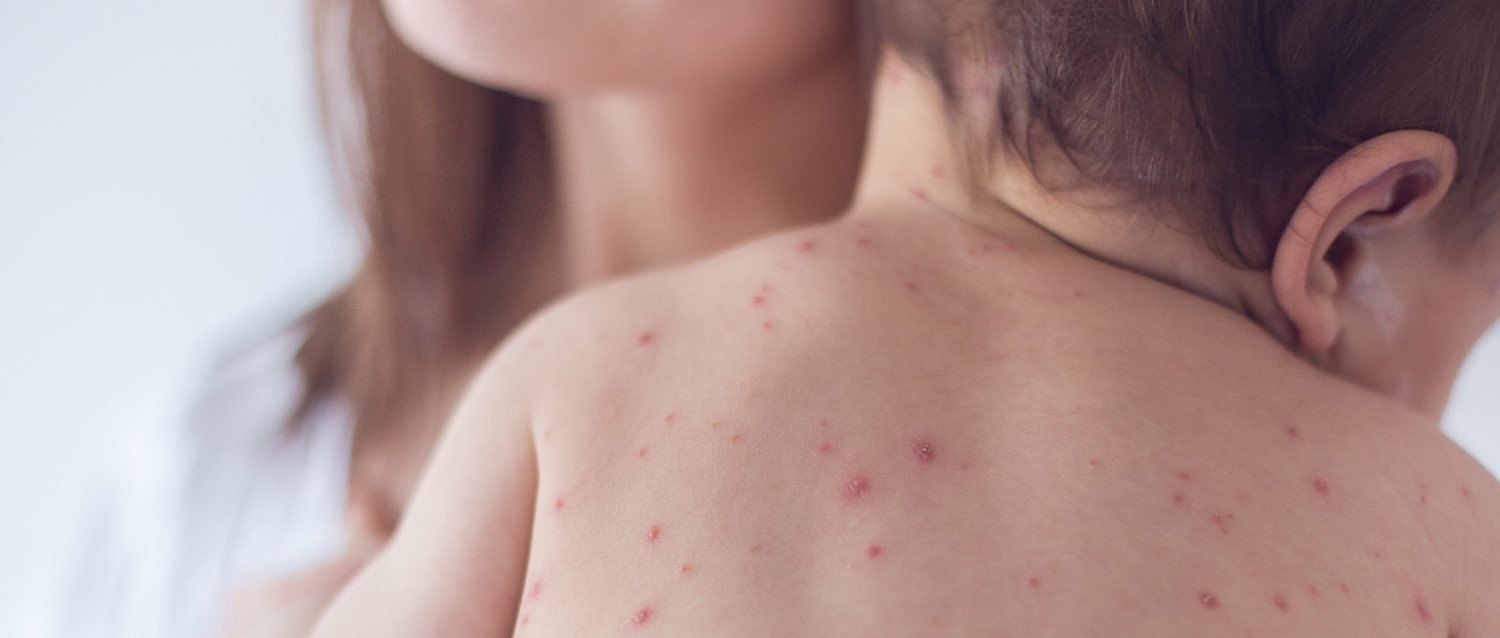
Varicela en niños
Full recovery is usual in children aged under 12 years. Serious complications are rare but are more likely to occur in children with a poor immune system, such as those on chemotherapy. [/health/viral-rashes/chickenpox-in-children](https://patient.info/health/viral-rashes/chickenpox-in-children) Chickenpox is an infection.

Patient information leaflet
Varicela en adultos y adolescentes
Serious complications are rare, but are more common in adults than in children. Serious complications are rare but are more likely to occur in children with a poor immune system, such as those on chemotherapy. [/health/viral-rashes/chickenpox-in-children](https://patient.info/health/viral-rashes/chickenpox-in-children).

Patient information leaflet
Contacto con varicela durante el embarazo
About 1 in 100 pregnant women who develop chickenpox-related pneumonia die of this serious infection. Cerebro inflamación (encephalitis) Encephalitis y ataxia (problems con co-ordination de movements) son uncommon but very serious complications. Vary rarely, other serious complications develop. For example: inflammation of the heart muscle.
Lecturas adicionales y referencias
- Infantile-onset spinocerebellar ataxia; MedlinePlus, National Library of Medicine.
- El-Hattab AW, Craigen WJ, Wong LJC, Scaglia F. Mitochondrial DNA Maintenance Defects Overview. 2018 Mar 8. In: Adam MP, Bick S, Mirzaa GM, Wallace SE, Amemiya A, editors. GeneReviews(R) [Internet]. Seattle (WA): University of Washington, Seattle; 1993-2026. Available from http://www.ncbi.nlm.nih.gov/books/NBK487393/
- Hakonen AH, Goffart S, Marjavaara S, Paetau A, Cooper H, Mattila K, Lampinen M, Sajantila A, Lonnqvist T, Spelbrink JN, Suomalainen A. Infantile-onset spinocerebellar ataxia and mitochondrial recessive ataxia syndrome are associated with neuronal complex I defect and mtDNA depletion. Hum Mol Genet. 2008 Dec 1;17(23):3822-35. doi: 10.1093/hmg/ddn280. Epub 2008 Sep 5.
- Lonnqvist T, Paetau A, Valanne L, Pihko H. Recessive twinkle mutations cause severe epileptic encephalopathy. Brain. 2009 Jun;132(Pt 6):1553-62. doi: 10.1093/brain/awp045. Epub 2009 Mar 20.
- Lopriore P, Unluturk Z, Klopstock T, Karaa A, Rouzier C, Dominguez-Gonzalez C, Lamperti C, Mancuso M; Twinkle-Related Disorders International Consortium for Trial Readiness (TReDIC); Cecchi G, Montano V, Siciliano G, Nicoletta V, Maioli M, Primiano G, Servidei S, La Morgia C, Carelli V, Valentino ML, Caporali L, Arena IG, Musumeci O, Lopergolo D, Malandrini A, Gallus GN, Filosto M, Bello L, Pegoraro E, Comi GP, Magri F, Ronchi D, Di Fonzo A, Percetti M, Azzimonti M, Buchner B, Prokisch H, Bermejo-Guerrero L, Procaccio V, Gaignard P, Echaniz-Laguna A, Schiff M, Rotig A, Toutain A, Paquis-Flucklinger V, Morel G, Robin S, Nadaj-Pakleza A, Chanson JB, Chaussenot A, Ait-El-Mkadem Saadi S, Trimouille A, Tranchant C, Salort-Campana E, Bieth E, Sacconi S, Duval F, Restrepo Vera JL, Molnar MJ, Vissing J, Haas R, Larson A, Enns GM, Parikh S, Goldstein A, Hirano M. Clinical and Genotypic Spectrum of Twinkle-Related Disorders: Insights From a Multinational Cohort Study. Neurology. 2026 Feb 10;106(3):e214401. doi: 10.1212/WNL.0000000000214401. Epub 2026 Jan 15.
- Nikali K, Suomalainen A, Saharinen J, Kuokkanen M, Spelbrink JN, Lonnqvist T, Peltonen L. Infantile onset spinocerebellar ataxia is caused by recessive mutations in mitochondrial proteins Twinkle and Twinky. Hum Mol Genet. 2005 Oct 15;14(20):2981-90. doi: 10.1093/hmg/ddi328. Epub 2005 Aug 31.
- Pierce SB, Gulsuner S, Stapleton GA, Walsh T, Lee MK, Mandell JB, Morales A, Klevit RE, King MC, Rogers RC. Infantile onset spinocerebellar ataxia caused by compound heterozygosity for Twinkle mutations and modeling of Twinkle mutations causing recessive disease. Cold Spring Harb Mol Case Stud. 2016 Jul;2(4):a001107. doi: 10.1101/mcs.a001107.
- Remtulla S, Emilie Nguyen CT, Prasad C, Campbell C. Twinkle-Associated Mitochondrial DNA Depletion. Pediatr Neurol. 2019 Jan;90:61-65. doi: 10.1016/j.pediatrneurol.2018.08.007. Epub 2018 Aug 9.
- Sukhudyan B, Gevorgyan A, Sarkissian A, Boltshauser E. Expanding phenotype of mitochondrial depletion syndrome in association with TWNK mutations. Eur J Paediatr Neurol. 2019 May;23(3):537-540. doi: 10.1016/j.ejpn.2019.02.002. Epub 2019 Feb 14.
Comparte tus pensamientos o experiencias con otros en nuestro comunidades de pacientes.
Acceso sencillo a tratamientos y servicios de salud confiables en línea.
Common conditions
Get help with common conditions through the NHS, without a GP appointment.
 Sinusitis aguda
 Amigdalitis bacteriana
 Impetigo
 Picaduras de insectos
 Herpes zósterInfección del tracto urinario (ITU)
Suscríbete al boletín de Patient
Tu dosis semanal de consejos de salud claros y confiables, escritos para ayudarte a sentirte informado, seguro y en control.
Al suscribirte aceptas nuestros Política de Privacidad. Puedes darte de baja en cualquier momento. Nunca vendemos tus datos.