Combined pituitary hormone deficiency
Última actualización 7 de mayo de 2025
Cumple con las directrices editoriales
- DescargarDescargar
- Compartir
- Language
- Discusión
- Versión en audio
- Agregar a fuentes preferidas en Google
Combined pituitary hormone deficiency is a condition that causes a partial or complete loss (deficiency) of two or more hormones that are normally produced by the pituitary gland. The pituitary gland, which is located at the base of the brain, produces hormones that are needed for growth, development, and other critical body functions. A lack of pituitary hormones can affect growth and development.
Descripción
Combined pituitary hormone deficiency is a condition that causes a partial or complete loss (deficiency) of two or more hormones that are normally produced by the pituitary gland. The pituitary gland, which is located at the base of the brain, produces hormones that are needed for growth, development, and other critical body functions. A lack of pituitary hormones can affect growth and development.
The signs and symptoms of combined pituitary hormone deficiency depend on the specific hormones involved. The hormones that are produced by the pituitary gland include growth hormone (GH), which is needed for normal growth; follicle-stimulating hormone (FSH) and luteinizing hormone (LH), which play a role in sexual development and the ability to have biological children (fertility); thyroid-stimulating hormone (TSH), which triggers the release of hormones that control how the body uses energy; prolactin, which stimulates the production of breast milk; and adrenocorticotropic hormone (ACTH), which influences how the body responds to stress and helps maintain normal levels of glucose in the blood and blood pressure levels.
Though the features of combined pituitary hormone deficiency can vary, affected individuals often do not grow at the expected rate, and short stature usually becomes apparent in early childhood. Infants with combined pituitary hormone deficiency may have persistent yellowing of the skin and the whites of the eyes (jaundice), low levels of glucose in the blood (hypoglycemia), and genital abnormalities. Features of combined pituitary hormone deficiency include fatigue, changes in weight, delayed or absent puberty, and problems with fertility. Additional signs and symptoms may include abnormal development of the head and face (craniofacial abnormalities), brain abnormalities, recurrent seizures (epilepsy), and developmental delays. Some affected individuals have eye disorders. These include optic nerve hypoplasia, which is a disorder that affects the nerves that carry visual information from the eyes to the brain.
The signs and symptoms of combined pituitary hormone deficiency can resemble those seen in other disorders, which may delay a diagnosis. Because the signs and symptoms of combined pituitary hormone deficiency can vary widely and often overlap with other conditions, some researchers have suggested that combined pituitary hormone deficiency is part of a spectrum of related disorders rather than a single disorder.
Combined pituitary hormone deficiency can be congenital or acquired. Acquired combined pituitary hormone deficiency is caused by factors that occur later in life, such as infections or tumours. When combined pituitary hormone deficiency is not acquired, the condition is called congenital.
Patrones de herencia
The source lists the following possible inheritance patterns: Autosomal recessive; X-linked; Autosomal dominant+New variant. More than one pattern can apply in different cases.
Related genes
Otros nombres
CPHD
Panhypopituitarism
Related patient information and medicines

Patient information leaflet
Trastornos de la glándula pituitaria
This leaflet gives a brief overview of the pituitary gland and the hormones it makes. The pituitary gland is found at the base of the brain and is 'pea-sized'. Some of the pituitary gland disorders Pituitary disorders generally occur when the pituitary gland is either too active or not active enough. Often there is a di... Cushing's syndrome..

Patient information leaflet
Enfermedad de Addison
Enfermedad de Addison es un condition in which your adrenal glands are not working as well as they should. In Addison's disease the adrenal glands do not produce as much of the steroid hormones (such as cortisol) as t... Addison's disease, also known as primary adrenal insufficiency, es un condition in which your adrenal glands do not make enough of.

Patient information leaflet
Bajo nivel de testosterona
Low testosterone in men (testosterone deficiency) is often part of the ageing process and therefore common in older men. It can also occur at any age as a result of conditions affecting the testicles or the pituitary gland in the brain. Secondary testosterone deficiency Low testosterone can also be caused by a problem with parts of the brain.

Patient information leaflet
Hipoglucemia
Low blood sugar (hypoglycaemia) is often known as a 'hypo'. It can make you feel unwell and affect your ability to drive. Simple steps wil... Long-term starvation. Insulin overproduction, eg, a rare tumour of the pancreas called an insulinoma. Some hormone deficiencies, eg, certain rare adrenal gland and pituitary gland tumours. Symptoms of.
Patient information leaflet
glándula tiroides hipoactiva
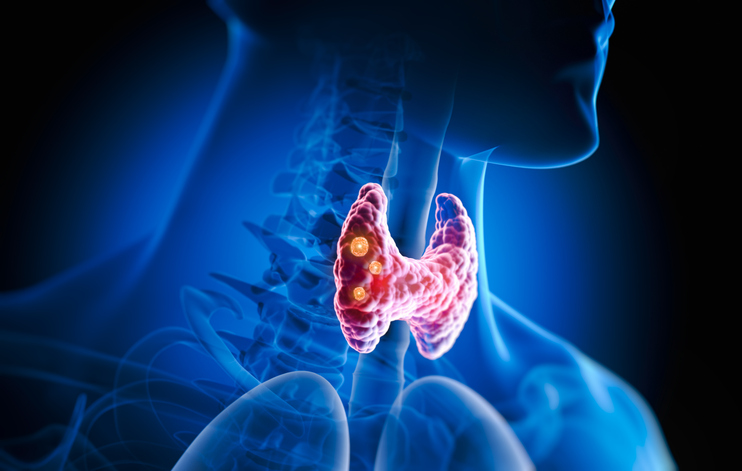
If you have an underactive thyroid gland, the condition is called hypothyroidism. En hipotiroidismo, there is a reduced level of thyroid hormone in the body. This can cause various symptoms, the most common being tiredness, weight gain, constipation, aches, dry skin, lifeless hair and feeling cold. Treatment usually involves taking a daily tablet.

Patient information leaflet
Acromegalia
Acromegalia is a rare, progressive condition in which you make too much growth hormone. The most noticeable symptoms are that your hands and feet become larger and features of your face may become more prominent. The cause is usually a small non-cancerous growth (tumour) in the pituitary gland. Treatment options include surgery to remove the growth.
Lecturas adicionales y referencias
- Combined pituitary hormone deficiency; MedlinePlus, National Library of Medicine.
- Bulut FD, Ozdemir Dilek S, Kotan D, Mengen E, Gurbuz F, Yuksel B. Mutations Within the Transcription Factor PROP1 in a Cohort of Turkish Patients with Combined Pituitary Hormone Deficiency. J Clin Res Pediatr Endocrinol. 2020 Sep 2;12(3):261-268. doi: 10.4274/jcrpe.galenos.2020.2019.0191. Epub 2020 Jan 17.
- Carvalho LR, Nishi MY, Correa FA, Moreira Marques J, Arnhold IJP, Mendonca BB. PROP1-Related Combined Pituitary Hormone Deficiency. 2000 Dec 7 [updated 2022 Feb 24]. In: Adam MP, Bick S, Mirzaa GM, Wallace SE, Amemiya A, editors. GeneReviews(R) [Internet]. Seattle (WA): University of Washington, Seattle; 1993-2026. Available from http://www.ncbi.nlm.nih.gov/books/NBK1347/
- De Rienzo F, Mellone S, Bellone S, Babu D, Fusco I, Prodam F, Petri A, Muniswamy R, De Luca F, Salerno M, Momigliano-Richardi P, Bona G, Giordano M; Italian Study Group on Genetics of CPHD. Frequency of genetic defects in combined pituitary hormone deficiency: a systematic review and analysis of a multicentre Italian cohort. Clin Endocrinol (Oxf). 2015 Dec;83(6):849-60. doi: 10.1111/cen.12849. Epub 2015 Aug 6.
- Fang Q, George AS, Brinkmeier ML, Mortensen AH, Gergics P, Cheung LY, Daly AZ, Ajmal A, Perez Millan MI, Ozel AB, Kitzman JO, Mills RE, Li JZ, Camper SA. Genetics of Combined Pituitary Hormone Deficiency: Roadmap into the Genome Era. Endocr Rev. 2016 Dec;37(6):636-675. doi: 10.1210/er.2016-1101. Epub 2016 Nov 9.
- Gregory LC, Dattani MT. The Molecular Basis of Congenital Hypopituitarism and Related Disorders. J Clin Endocrinol Metab. 2020 Jun 1;105(6):dgz184. doi: 10.1210/clinem/dgz184.
- Hietamaki J, Karkinen J, Iivonen AP, Vaaralahti K, Tarkkanen A, Almusa H, Huopio H, Hero M, Miettinen PJ, Raivio T. Presentation and diagnosis of childhood-onset combined pituitary hormone deficiency: A single center experience from over 30 years. EClinicalMedicine. 2022 Jul 18;51:101556. doi: 10.1016/j.eclinm.2022.101556. eCollection 2022 Sep.
- Jakobsen LK, Jensen RB, Birkebaek NH, Hansen D, Christensen AR, Bjerrum MC, Christesen HT. Diagnosis and Incidence of Congenital Combined Pituitary Hormone Deficiency in Denmark-A National Observational Study. J Clin Endocrinol Metab. 2023 Sep 18;108(10):2475-2485. doi: 10.1210/clinem/dgad198.
- Kelberman D, Rizzoti K, Lovell-Badge R, Robinson IC, Dattani MT. Genetic regulation of pituitary gland development in human and mouse. Endocr Rev. 2009 Dec;30(7):790-829. doi: 10.1210/er.2009-0008. Epub 2009 Oct 16.
- Kelberman D, Turton JP, Woods KS, Mehta A, Al-Khawari M, Greening J, Swift PG, Otonkoski T, Rhodes SJ, Dattani MT. Molecular analysis of novel PROP1 mutations associated with combined pituitary hormone deficiency (CPHD). Clin Endocrinol (Oxf). 2009 Jan;70(1):96-103. doi: 10.1111/j.1365-2265.2008.03326.x. Epub 2008 Jun 25.
- Lee Y, Lee YA, Ko JM, Shin CH, Lee YJ. Clinical and genetic features of childhood-onset congenital combined pituitary hormone deficiency: a retrospective, single-center cohort study. Ann Pediatr Endocrinol Metab. 2024 Dec;29(6):379-386. doi: 10.6065/apem.2448008.004. Epub 2024 Dec 31.
- Martinez-Mayer J, Vishnopolska S, Perticarari C, Iglesias Garcia L, Hackbartt M, Martinez M, Zaiat J, Jacome-Alvarado A, Braslavsky D, Keselman A, Bergada I, Marino R, Ramirez P, Perez Garrido N, Ciaccio M, Di Palma MI, Belgorosky A, Forclaz MV, Benzrihen G, D'Amato S, Cirigliano ML, Miras M, Paez Nunez A, Castro L, Mallea-Gil MS, Ballarino C, Latorre-Villacorta L, Casiello AC, Hernandez C, Figueroa V, Alonso G, Morin A, Guntsche Z, Lee H, Lee E, Song Y, Marti MA, Perez-Millan MI. Exome Sequencing Has a High Diagnostic Rate in Sporadic Congenital Hypopituitarism and Reveals Novel Candidate Genes. J Clin Endocrinol Metab. 2024 Nov 18;109(12):3196-3210. doi: 10.1210/clinem/dgae320.
- Mody S, Brown MR, Parks JS. The spectrum of hypopituitarism caused by PROP1 mutations. Best Pract Res Clin Endocrinol Metab. 2002 Sep;16(3):421-31. doi: 10.1053/beem.2002.0218.
- Reynaud R, Gueydan M, Saveanu A, Vallette-Kasic S, Enjalbert A, Brue T, Barlier A. Genetic screening of combined pituitary hormone deficiency: experience in 195 patients. J Clin Endocrinol Metab. 2006 Sep;91(9):3329-36. doi: 10.1210/jc.2005-2173. Epub 2006 May 30.
- Vieira TC, Boldarine VT, Abucham J. Molecular analysis of PROP1, PIT1, HESX1, LHX3, and LHX4 shows high frequency of PROP1 mutations in patients with familial forms of combined pituitary hormone deficiency. Arq Bras Endocrinol Metabol. 2007 Oct;51(7):1097-103. doi: 10.1590/s0004-27302007000700012.
Únete a la conversación
Comparte tus pensamientos o experiencias con otros en nuestro comunidades de pacientes.

Pregunta, comparte, conecta.
Navega por discusiones, haz preguntas y comparte experiencias en cientos de temas de salud.
Suscríbete al boletín de Patient
Tu dosis semanal de consejos de salud claros y confiables, escritos para ayudarte a sentirte informado, seguro y en control.
Al suscribirte aceptas nuestros Política de Privacidad. Puedes darte de baja en cualquier momento. Nunca vendemos tus datos.