lysosomal trafficking regulator
Última actualización 12 de abril de 2023
Cumple con las directrices editoriales
- DescargarDescargar
- Compartir
- Language
- Discusión
- Ask Patient
- Versión en audio
- Agregar a fuentes preferidas en Google
El LYST gene (also known as CHS1) provides instructions for making a protein known as the lysosomal trafficking regulator. Researchers believe that this protein plays a role in the transport (trafficking) of materials into structures called lysosomes. Lysosomes act as recycling centers within cells. They use digestive enzymes to break down toxic substances, digest bacteria that invade the cell, and recycle worn-out cell components. Although the lysosomal trafficking regulator protein is involved in the normal function of lysosomes, its exact role is unknown. Studies suggest that this protein may help determine the size of lysosomes and regulate their movement within cells.
Selecciones de videos para GenesBiblioteca de videos
Normal function
El LYST gene (also known as CHS1) provides instructions for making a protein known as the lysosomal trafficking regulator. Researchers believe that this protein plays a role in the transport (trafficking) of materials into structures called lysosomes. Lysosomes act as recycling centers within cells. They use digestive enzymes to break down toxic substances, digest bacteria that invade the cell, and recycle worn-out cell components. Although the lysosomal trafficking regulator protein is involved in the normal function of lysosomes, its exact role is unknown. Studies suggest that this protein may help determine the size of lysosomes and regulate their movement within cells.
Conditions referring to this gene or chromosome
Otros nombres
Beige homolog
Chediak-Higashi syndrome 1
CHS
CHS1
LYST_HUMAN
Related patient information and medicines
Patient information leaflet
Protección de adultos
Adults can be abused in many different ways. Some groups, such as those who are elderly, frail or disabled, are at particular risk of abuse and harm. Domestic ab... Modern slavery - includes slavery, human trafficking and forced labour. Organisational abuse - includes neglect and poor care within an institution or specific care setting such as a.
Patient information leaflet
Negligencia médica
There is a separate Health Service Ombudsman for England, Scotland, Wales and Northern Ireland. Governing bodies for health professionals Healthcare professionals are regulated by governing bodies, which have the power to prevent them from practising if they are unfit to do so. Medical negligence (also called clinical negligence) is when a.
Patient information leaflet
Hematoma extradural
Un extradural haematoma is a collection of sangre in the 'potential' space between the skull and the outer protective lining that covers the brain (the dura mater). It usually occurs because of a head injury. It is a serious condition and emergency treatment is needed, often in the form of an operation to remove the haematoma. What is an extradural.
Patient information leaflet
Protección de los niños
Abuse of a child can cause harm emotionally, physically, sexually or through neglect of their basic needs. The effects on a child of any of these types of harm can be severe and last into adulthood. It is essential that any abuse of a child is noticed, and action taken to prevent further harm. What is a child safeguarding policy. This is a.
Patient information leaflet
Dolor de bazo
This leaflet gives a brief overview of the spleen and its functions. What is the spleen. The spleen is an organ about the size of a clenched fist found on the left-hand side of your upper tummy (abdomen). Its main functions are to filter your blood, create new blood cells and store platelets. It is also a key part of the lymph system and part of.
Patient information leaflet
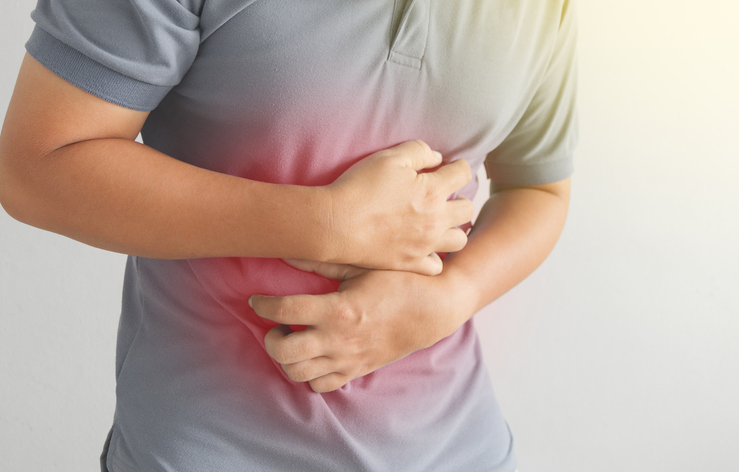
Dolor en el cuadrante superior izquierdo
Look down at your abdomen, and imagine that the area from the bottom of your ribs down to your pubic hair is divided into four quarters. The quarter on your left side closest to your ribs is your LUQ. Abdominal Quadrant Regions Abdominal Quadrant Regions What organs are in my left upper quadrant. The organs within your LUQ include: Spleen..
Lecturas adicionales y referencias
- lysosomal trafficking regulator; MedlinePlus, National Library of Medicine.
- Huizing M, Anikster Y, Gahl WA. Hermansky-Pudlak syndrome and Chediak-Higashi syndrome: disorders of vesicle formation and trafficking. Thromb Haemost. 2001 Jul;86(1):233-45.
- Introne W, Boissy RE, Gahl WA. Clinical, molecular, and cell biological aspects of Chediak-Higashi syndrome. Mol Genet Metab. 1999 Oct;68(2):283-303. doi: 10.1006/mgme.1999.2927.
- Kaplan J, De Domenico I, Ward DM. Chediak-Higashi syndrome. Curr Opin Hematol. 2008 Jan;15(1):22-9. doi: 10.1097/MOH.0b013e3282f2bcce.
- Karim MA, Suzuki K, Fukai K, Oh J, Nagle DL, Moore KJ, Barbosa E, Falik-Borenstein T, Filipovich A, Ishida Y, Kivrikko S, Klein C, Kreuz F, Levin A, Miyajima H, Regueiro JR, Russo C, Uyama E, Vierimaa O, Spritz RA. Apparent genotype-phenotype correlation in childhood, adolescent, and adult Chediak-Higashi syndrome. Am J Med Genet. 2002 Feb 15;108(1):16-22.
- Tchernev VT, Mansfield TA, Giot L, Kumar AM, Nandabalan K, Li Y, Mishra VS, Detter JC, Rothberg JM, Wallace MR, Southwick FS, Kingsmore SF. The Chediak-Higashi protein interacts with SNARE complex and signal transduction proteins. Mol Med. 2002 Jan;8(1):56-64.
- Ward DM, Shiflett SL, Kaplan J. Chediak-Higashi syndrome: a clinical and molecular view of a rare lysosomal storage disorder. Curr Mol Med. 2002 Aug;2(5):469-77. doi: 10.2174/1566524023362339.
- Westbroek W, Adams D, Huizing M, Koshoffer A, Dorward H, Tinloy B, Parkes J, Helip-Wooley A, Kleta R, Tsilou E, Duvernay P, Digre KB, Creel DJ, White JG, Boissy RE, Gahl WA. Cellular defects in Chediak-Higashi syndrome correlate with the molecular genotype and clinical phenotype. J Invest Dermatol. 2007 Nov;127(11):2674-7. doi: 10.1038/sj.jid.5700899. Epub 2007 May 31. No abstract available.
Historial del artículo
Artículo también disponible en Inglés, Alemán, Español, Francés, Italiano, Portugués, Hindi, Hebreo, Árabe, y Sueco.
12 de abril de 2023 | Última versión
1 Feb 2008 | Publicado originalmente
Comparte tus pensamientos o experiencias con otros en nuestro comunidades de pacientes.
Acceso sencillo a tratamientos y servicios de salud confiables en línea.
Common conditions
Get help with common conditions through the NHS, without a GP appointment.
 Sinusitis aguda
 Amigdalitis bacteriana
 Impetigo
 Picaduras de insectos
 Herpes zósterInfección del tracto urinario (ITU)
Suscríbete al boletín de Patient
Tu dosis semanal de consejos de salud claros y confiables, escritos para ayudarte a sentirte informado, seguro y en control.
Al suscribirte aceptas nuestros Política de Privacidad. Puedes darte de baja en cualquier momento. Nunca vendemos tus datos.