Spinal muscular atrophy with progressive myoclonic epilepsy
Última actualización 23 May 2022
Cumple con las directrices editoriales
- DescargarDescargar
- Compartir
- Language
- Discusión
- Ask Patient
- Versión en audio
- Agregar a fuentes preferidas en Google
Spinal muscular atrophy with progressive myoclonic epilepsy (SMA-PME) is a neurological condition that begins in childhood. SMA-PME causes muscle weakness and wasting (atrophy) and a combination of seizures and uncontrollable muscle jerks (myoclonic epilepsy).
Selecciones de videos para Condiciones genéticasBiblioteca de videos
Descripción
Spinal muscular atrophy with progressive myoclonic epilepsy (SMA-PME) is a neurological condition that begins in childhood. SMA-PME causes muscle weakness and wasting (atrophy) and a combination of seizures and uncontrollable muscle jerks (myoclonic epilepsy).
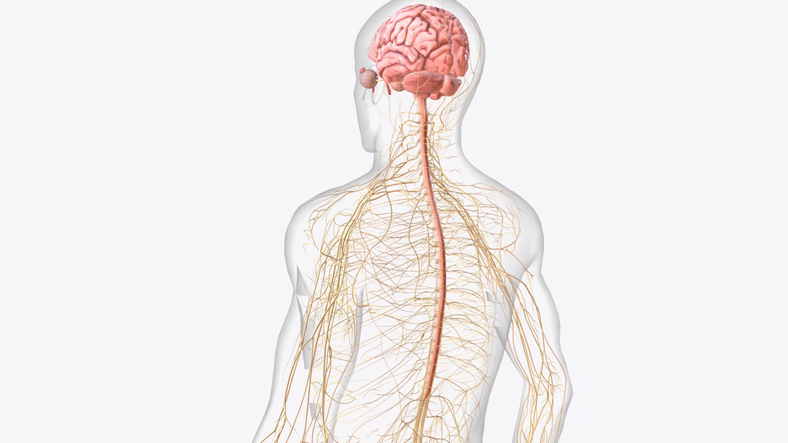
In individuals with SMA-PME, spinal muscular atrophy results from a loss of specialized nerve cells, called motor neurons, in the spinal cord and the part of the brain that is connected to the spinal cord (the brainstem). After a few years of normal development, affected children begin experiencing muscle weakness and atrophy in the lower limbs, causing difficulty walking and frequent falls. The muscles in the upper limbs are later affected, and soon the muscle weakness and atrophy spreads throughout the body. Once weakness reaches the muscles used for breathing and swallowing, affected individuals develop life-threatening breathing problems and increased susceptibility to pneumonia.
A few years after the muscle weakness begins, affected individuals start to experience recurrent seizures (epilepsy). Most people with SMA-PME have a variety of seizure types. In addition to myoclonic epilepsy, they may have generalized tonic-clonic seizures (also known as grand mal seizures), which cause muscle rigidity, convulsions, and loss of consciousness. Affected individuals can also have absence seizures, which cause loss of consciousness for a short period that may or may not be accompanied by muscle jerks. In SMA-PME, seizures often increase in frequency over time and are usually not well-controlled with medication. Individuals with SMA-PME may also have episodes of rhythmic shaking (tremors), usually in the hands; these tremors are not thought to be related to epilepsy. Some people with SMA-PME develop hearing loss caused by nerve damage in the inner ear (sensorineural hearing loss).
Individuals with SMA-PME have a shortened lifespan; they generally live into late childhood or early adulthood. Near the end of their lives, affected individuals often have limited mobility, difficulty swallowing, and decline in cognitive functioning. The cause of death is often respiratory failure or pneumonia.
Patrones de herencia
The source lists the following possible inheritance patterns: Autosomal recessive. More than one pattern can apply in different cases.
Related genes
Otros nombres
Hereditary myoclonus with progressive distal muscular atrophy
Jankovic-Rivera syndrome
SMA-PME
SMAPME
Related patient information and medicines

Patient information leaflet
Planificación para quedar embarazada
Women with a past history of severe mental health illness should be under the care of a specialist who can monitor you during pregnancy. Hereditary conditions People with a history of a condition that runs in families may wish to have genetic testing Genetic testing before planning a pregnancy. Congenital adrenal hyperplasia Spinal muscular.
Patient information leaflet
Enfermedad de la neurona motora
Motor neurone disease (MND) is a neurological condition causes a progressive weakness y wasting of many of the muscles in the body. There are various types of motor neurone disease. This leaflet is mainly about amyotrophic lateral sclerosis (ALS), which is the most common type of motor neurone disease. Although there is no cure for motor neurone.

Patient information leaflet
Destete dirigido por el bebé
You know your baby better than anyone but ther... Babies who can coordinate eyes, hands and mouth in order to look at food, pick it up and put it in their mouths are more likely to be ready for weaning. Read our feature on Spinal Muscular Atrophy Spinal muscular atrophy to see the muscular milestones your baby should go through. A baby who is.

Patient information leaflet
Debilidad muscular
Spine-related conditions : When nerves are damaged as they emerge from the spine (such as when people 'slip' a disc Slipped disc in the lower back or neck), weakness can result. Guillain-Barré syndrome Guillain-Barré syndrome : This is a post-viral paralysing disease which causes weaknes... Parkinson's disease Parkinson's disease : This is a.

Patient information leaflet
Vivir con una condición a largo plazo
A long-term condition cannot be cured but its symptoms and complications may be controlled with treatment. A long-term condition is an illness that cannot be cured but can usually be controlled with medicines or other treatments. The school should be aware of the ... Asthma, diabetes y epilepsia are typical long-term conditions of which the.

Patient information leaflet
Distrofia muscular
Distrofia muscular is an inherited (genetic) disorder causing muscle weakness. There are different types of muscular dystrophy, which vary as to how severe they are, ranging from very mild to severe. If muscular dystrophy is suspected, tests can help to make an accurate diagnosis. What is muscular dystrophy. Muscular dystrophy (MD) is the name.
Lecturas adicionales y referencias
- Spinal muscular atrophy with progressive myoclonic epilepsy; MedlinePlus, National Library of Medicine.
- Dyment DA, Sell E, Vanstone MR, Smith AC, Garandeau D, Garcia V, Carpentier S, Le Trionnaire E, Sabourdy F, Beaulieu CL, Schwartzentruber JA, McMillan HJ; FORGE Canada Consortium; Majewski J, Bulman DE, Levade T, Boycott KM. Evidence for clinical, genetic and biochemical variability in spinal muscular atrophy with progressive myoclonic epilepsy. Clin Genet. 2014 Dec;86(6):558-63. doi: 10.1111/cge.12307. Epub 2013 Nov 21.
- Striano P, Boccella P, Sarappa C, Striano S. Spinal muscular atrophy and progressive myoclonic epilepsy: one case report and characteristics of the epileptic syndrome. Seizure. 2004 Dec;13(8):582-6. doi: 10.1016/j.seizure.2004.01.008.
- Yu FPS, Amintas S, Levade T, Medin JA. Acid ceramidase deficiency: Farber disease and SMA-PME. Orphanet J Rare Dis. 2018 Jul 20;13(1):121. doi: 10.1186/s13023-018-0845-z.
- Zhou J, Tawk M, Tiziano FD, Veillet J, Bayes M, Nolent F, Garcia V, Servidei S, Bertini E, Castro-Giner F, Renda Y, Carpentier S, Andrieu-Abadie N, Gut I, Levade T, Topaloglu H, Melki J. Spinal muscular atrophy associated with progressive myoclonic epilepsy is caused by mutations in ASAH1. Am J Hum Genet. 2012 Jul 13;91(1):5-14. doi: 10.1016/j.ajhg.2012.05.001. Epub 2012 Jun 14.
Comparte tus pensamientos o experiencias con otros en nuestro comunidades de pacientes.
Acceso sencillo a tratamientos y servicios de salud confiables en línea.
Common conditions
Get help with common conditions through the NHS, without a GP appointment.
 Sinusitis aguda
 Amigdalitis bacteriana
 Impetigo
 Picaduras de insectos
 Herpes zósterInfección del tracto urinario (ITU)
Suscríbete al boletín de Patient
Tu dosis semanal de consejos de salud claros y confiables, escritos para ayudarte a sentirte informado, seguro y en control.
Al suscribirte aceptas nuestros Política de Privacidad. Puedes darte de baja en cualquier momento. Nunca vendemos tus datos.