Spastic paraplegia type 15
Última actualización 15 Jun 2021
Cumple con las directrices editoriales
- DescargarDescargar
- Compartir
- Language
- Discusión
- Ask Patient
- Versión en audio
- Agregar a fuentes preferidas en Google
Spastic paraplegia type 15 is part of a group of genetic disorders known as hereditary spastic paraplegias. These disorders are characterised by progressive muscle stiffness (spasticity) and the development of paralysis of the lower limbs (paraplegia). Spastic paraplegia type 15 is classified as a complex hereditary spastic paraplegia because it involves all four limbs as well as additional features, including abnormalities of the brain. In addition to the muscles and brain, spastic paraplegia type 15 affects the peripheral nervous system, which consists of nerves connecting the brain and spinal cord to muscles and sensory cells that detect sensations such as touch, pain, heat, and sound.
Selecciones de videos para Condiciones genéticasBiblioteca de videos
Descripción
Spastic paraplegia type 15 is part of a group of genetic disorders known as hereditary spastic paraplegias. These disorders are characterised by progressive muscle stiffness (spasticity) and the development of paralysis of the lower limbs (paraplegia). Spastic paraplegia type 15 is classified as a complex hereditary spastic paraplegia because it involves all four limbs as well as additional features, including abnormalities of the brain. In addition to the muscles and brain, spastic paraplegia type 15 affects the peripheral nervous system, which consists of nerves connecting the brain and spinal cord to muscles and sensory cells that detect sensations such as touch, pain, heat, and sound.
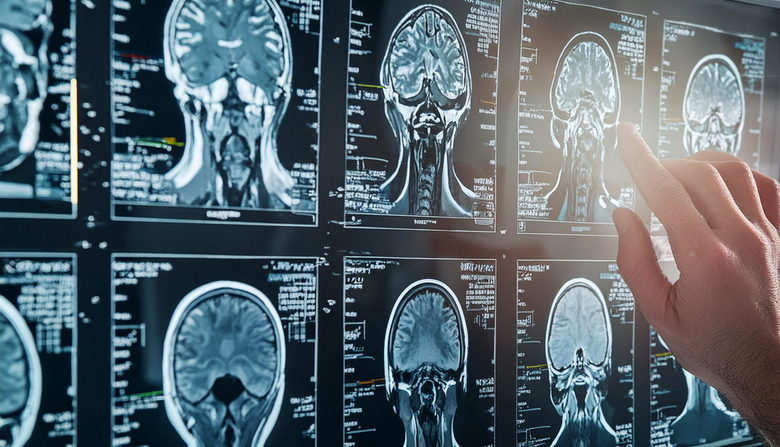
Spastic paraplegia type 15 usually becomes apparent in childhood or adolescence with the development of weak muscle tone (hypotonia), difficulty walking, or intellectual disability. In almost all affected individuals, the tissue connecting the left and right halves of the brain (corpus callosum) is abnormally thin and becomes thinner over time. Additionally, there is often a loss (atrophy) of nerve cells in several parts of the brain, including the cerebral cortex, which controls thinking and emotions, and the cerebellum, which coordinates movement.
People with this form of spastic paraplegia can have numbness, tingling, or pain in the arms and legs (sensory neuropathy); impairment of the nerves used for muscle movement (motor neuropathy); exaggerated reflexes (hyperreflexia) of the lower limbs; muscle wasting (amyotrophy); or reduced bladder control. Rarely, spastic paraplegia type 15 is associated with a group of movement abnormalities called parkinsonism, which includes tremors, rigidity, and unusually slow movement (bradykinesia). People with spastic paraplegia type 15 may have an eye condition called pigmentary maculopathy that often impairs vision. This condition results from the breakdown (degeneration) of tissue at the back of the eye called the macula, which is responsible for sharp central vision.
Most people with spastic paraplegia type 15 experience a decline in intellectual ability and an increase in muscle weakness and nerve abnormalities over time. As the condition progresses, many people require walking aids or wheelchair assistance in adulthood.
Patrones de herencia
The source lists the following possible inheritance patterns: Autosomal recessive. More than one pattern can apply in different cases.
Related genes
Otros nombres
Autosomal recessive spastic paraplegia 15
Kjellin syndrome
Spastic paraplegia and retinal degeneration
SPG15
Related patient information and medicines

Patient information leaflet
- el daño cerebral causa problemas con las funciones musculares.
Cerebral palsy is a problem with muscle function. It is caused by brain injury or abnormal development of the brain that occurs while a child's brain is still developing. Cerebral palsy is a name for a group of life-long conditions that have problems with muscle function and control. Some people with cerebral palsy ... Types of cerebral palsy.

Patient information leaflet
Daño nervioso después de una inyección epidural
Nerve damage is a rare complication of spinal or epidural injection. In the majority of cases, a single nerve is affected, giving a numb area on the skin or limited muscle weakness. What is an epidural injection. An epidural injection Epidural pain relief after surgery is given into the space that surrounds your spinal cord (called the epidural.

Patient information leaflet
Alivio del dolor epidural después de la cirugía
The content of this leaflet is used with the permission of the Royal College of Anaesthetists , the professional body responsible for the speciality throughout the UK, ensuring the quality of patient care through the maintenance of standards in anaesthesia, critical care and pain medicine. What is an epidural. An epidural is used for giving pain.
Patient information leaflet
Esclerosis múltiple
These scars may also be called plaques. ServiceUpsellPlaceholder What is esclerosis múltiple like. MS tends to follow one of the following four patterns. Relapsing-remitting MS Nearly 9 in 10 people with multiple sclerosis (MS) have the relapsing-remitting form of the disease. How common is multiple sclerosis. Multiple sclerosis (MS) is the most.

Patient information leaflet
Enfermedad de Bowen
Enfermedad de Bowen es a very early form of skin cancer. It causes one or more small patches of scaly red skin. It occurs when skin cancer cells grow in the outer layer of the skin, but don't spread any deeper into the skin, or elsewhere in the body. Because these cancer cells stay in the outer layer of the skin, they don't cause serious problems in.

Patient information leaflet
Enfermedad ósea de Paget
Paget's disease of bone affects el structure of parts of one or more bones. In most cases it causes no symptoms and does not need treatment. Symptoms develop in some cases and pain in the affected part of bone... What is Paget's disease of bone. Paget's disease of bone was first described by Sir James Paget in 1877. (It is a different condition.
Lecturas adicionales y referencias
- Spastic paraplegia type 15; MedlinePlus, National Library of Medicine.
- Boukhris A, Stevanin G, Feki I, Denis E, Elleuch N, Miladi MI, Truchetto J, Denora P, Belal S, Mhiri C, Brice A. Hereditary spastic paraplegia with mental impairment and thin corpus callosum in Tunisia: SPG11, SPG15, and further genetic heterogeneity. Arch Neurol. 2008 Mar;65(3):393-402. doi: 10.1001/archneur.65.3.393.
- Denora PS, Muglia M, Casali C, Truchetto J, Silvestri G, Messina D, Boukrhis A, Magariello A, Modoni A, Masciullo M, Malandrini A, Morelli M, de Leva MF, Villanova M, Giugni E, Citrigno L, Rizza T, Federico A, Pierallini A, Quattrone A, Filla A, Brice A, Stevanin G, Santorelli FM. Spastic paraplegia with thinning of the corpus callosum and white matter abnormalities: further mutations and relative frequency in ZFYVE26/SPG15 in the Italian population. J Neurol Sci. 2009 Feb 15;277(1-2):22-5. doi: 10.1016/j.jns.2008.09.039. Epub 2008 Dec 13.
- Ebrahimi-Fakhari D, Alecu JE, Blackstone C. Spastic Paraplegia 15. 2021 May 27. In: Adam MP, Bick S, Mirzaa GM, Wallace SE, Amemiya A, editors. GeneReviews(R) [Internet]. Seattle (WA): University of Washington, Seattle; 1993-2026. Available from http://www.ncbi.nlm.nih.gov/books/NBK570772/
- Goizet C, Boukhris A, Maltete D, Guyant-Marechal L, Truchetto J, Mundwiller E, Hanein S, Jonveaux P, Roelens F, Loureiro J, Godet E, Forlani S, Melki J, Auer-Grumbach M, Fernandez JC, Martin-Hardy P, Sibon I, Sole G, Orignac I, Mhiri C, Coutinho P, Durr A, Brice A, Stevanin G. SPG15 is the second most common cause of hereditary spastic paraplegia with thin corpus callosum. Neurology. 2009 Oct 6;73(14):1111-9. doi: 10.1212/WNL.0b013e3181bacf59.
- Hanein S, Martin E, Boukhris A, Byrne P, Goizet C, Hamri A, Benomar A, Lossos A, Denora P, Fernandez J, Elleuch N, Forlani S, Durr A, Feki I, Hutchinson M, Santorelli FM, Mhiri C, Brice A, Stevanin G. Identification of the SPG15 gene, encoding spastizin, as a frequent cause of complicated autosomal-recessive spastic paraplegia, including Kjellin syndrome. Am J Hum Genet. 2008 Apr;82(4):992-1002. doi: 10.1016/j.ajhg.2008.03.004.
- Mallaret M, Lagha-Boukbiza O, Biskup S, Namer IJ, Rudolf G, Anheim M, Tranchant C. SPG15: a cause of juvenile atypical levodopa responsive parkinsonism. J Neurol. 2014 Feb;261(2):435-7. doi: 10.1007/s00415-013-7216-4. Epub 2013 Dec 24. No abstract available.
- Vantaggiato C, Clementi E, Bassi MT. ZFYVE26/SPASTIZIN: a close link between complicated hereditary spastic paraparesis and autophagy. Autophagy. 2014 Feb;10(2):374-5. doi: 10.4161/auto.27173. Epub 2013 Nov 26.
- Vantaggiato C, Crimella C, Airoldi G, Polishchuk R, Bonato S, Brighina E, Scarlato M, Musumeci O, Toscano A, Martinuzzi A, Santorelli FM, Ballabio A, Bresolin N, Clementi E, Bassi MT. Defective autophagy in spastizin mutated patients with hereditary spastic paraparesis type 15. Brain. 2013 Oct;136(Pt 10):3119-39. doi: 10.1093/brain/awt227. Epub 2013 Sep 11.
Comparte tus pensamientos o experiencias con otros en nuestro comunidades de pacientes.
Acceso sencillo a tratamientos y servicios de salud confiables en línea.
Common conditions
Get help with common conditions through the NHS, without a GP appointment.
 Sinusitis aguda
 Amigdalitis bacteriana
 Impetigo
 Picaduras de insectos
 Herpes zósterInfección del tracto urinario (ITU)
Suscríbete al boletín de Patient
Tu dosis semanal de consejos de salud claros y confiables, escritos para ayudarte a sentirte informado, seguro y en control.
Al suscribirte aceptas nuestros Política de Privacidad. Puedes darte de baja en cualquier momento. Nunca vendemos tus datos.