Norrie disease
Última actualización 18 Aug 2020
Cumple con las directrices editoriales
- DescargarDescargar
- Compartir
- Language
- Discusión
- Versión en audio
- Agregar a fuentes preferidas en Google
Norrie disease is an inherited eye disorder that leads to blindness in male infants at birth or soon after birth. It causes abnormal development of the retina, the layer of sensory cells that detect light and colour, with masses of immature retinal cells accumulating at the back of the eye. As a result, the pupils appear white when light is shone on them, a sign called leukocoria. The irises (colored portions of the eyes) or the entire eyeballs may shrink and deteriorate during the first months of life, and cataracts (cloudiness in the lens of the eye) may eventually develop.
Descripción
Norrie disease is an inherited eye disorder that leads to blindness in male infants at birth or soon after birth. It causes abnormal development of the retina, the layer of sensory cells that detect light and colour, with masses of immature retinal cells accumulating at the back of the eye. As a result, the pupils appear white when light is shone on them, a sign called leukocoria. The irises (colored portions of the eyes) or the entire eyeballs may shrink and deteriorate during the first months of life, and cataracts (cloudiness in the lens of the eye) may eventually develop.
About 30 percent of individuals with Norrie disease develop progressive hearing loss, and 30 to 50 percent of people affected experience developmental delays in motor skills such as sitting up and walking. Other problems may include mild to moderate intellectual disability, often with psychosis, and abnormalities that can affect circulation, breathing, digestion, excretion, or reproduction.
Patrones de herencia
The source lists the following possible inheritance patterns: X-linked recessive. More than one pattern can apply in different cases.
Related genes
Otros nombres
Anderson-Warburg syndrome
Atrophia bulborum hereditaria
Congenital progressive oculo-acoustico-cerebral degeneration
Episkopi blindness
Fetal iritis syndrome
Norrie syndrome
Norrie's disease
Norrie-Warburg syndrome
Oligophrenia microphthalmus
Pseudoglioma congenita
Whitnall-Norman syndrome
Related patient information and medicines
Patient information leaflet
Enfermedad de Ménière
Ménière's enfermedad typically causes attacks of dizziness with a spinning sensation (vertigo), hearing loss and noises in the ear (tinnitus). The attacks can vary in severity and in how often they occur. You may d... What is Ménière's disease. Enfermedad de Ménière es a condition of the inner ear. It causes problems with balance and hearing. Ménière's.

Patient information leaflet
Enfermedad de Peyronie
Enfermedad de Peyronie causes a curved or bent penis. It is caused by scar tissue forming along the shaft of the penis. This causes painful erections and a bend or curve, usually about halfway along the penis. The change in shape is usually only obvious when the penis is erect. Peyronie's disease symptoms Initial symptoms of Peyronie's disease.
Patient information leaflet
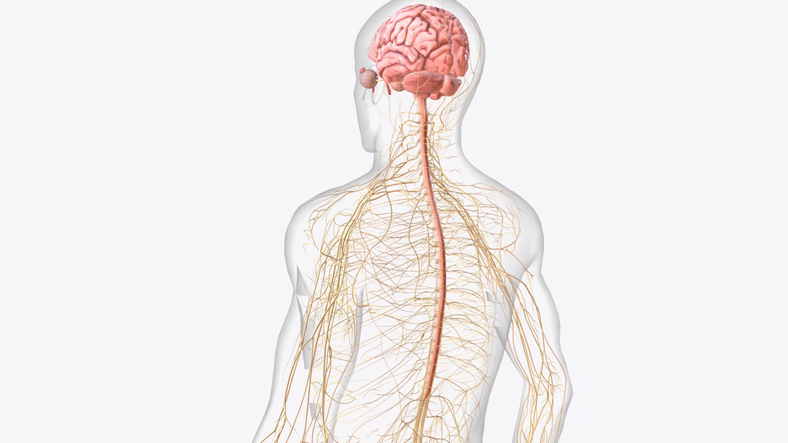
Enfermedad de la neurona motora
Enfermedad de la neurona motora (MND) is a neurological condition causes a progressive weakness and wasting of many of the muscles in the body. There are various types of motor neurone disease. This leaflet is mainly about amyotrophic lateral sclerosis (ALS), which is the most common type of motor neurone disease. Although there is no cure for motor neurone.

Patient information leaflet
Enfermedad de Huntington
Huntington's disease is a genetically inherited condition that causes parts of the brain and nervous system to stop working properly over time. It is a slowly progressive condition that interferes with the movements of your body, thinking and judgement, and can lead to a change in your behaviour. The symptoms occur because of damage and death of.

Patient information leaflet
Enfermedad inflamatoria pélvica
Enfermedad inflamatoria pélvica (EIP) is an internal infection which has usually passed into the womb (uterus) and its surrounding organs from the vagina or neck of the womb (cervix). It may also affect the lower abdominal area (pelvis) around these organs. It is important to treat it with antibiotics to prevent complications. In most cases the.

Patient information leaflet
Evaluación del riesgo para la salud cardiovascular
A cardiovascular health risk assessment provides an accurate estimate of your risk of developing cardiovascular disease (eg, angina, heart attack, stroke or peripheral arterial disease) over the following 10 years, and provides an opportunity for you to make any changes that will reduce this risk. If you already have a cardiovascular disease or.
Lecturas adicionales y referencias
- Norrie disease; MedlinePlus, National Library of Medicine.
- Braunger BM, Tamm ER. The different functions of Norrin. Adv Exp Med Biol. 2012;723:679-83. doi: 10.1007/978-1-4614-0631-0_86. No abstract available.
- Michaelides M, Luthert PJ, Cooling R, Firth H, Moore AT. Norrie disease and peripheral venous insufficiency. Br J Ophthalmol. 2004 Nov;88(11):1475. doi: 10.1136/bjo.2004.042556. No abstract available.
- National Organization for Rare Disorders (NORD)
- Rehm HL, Zhang DS, Brown MC, Burgess B, Halpin C, Berger W, Morton CC, Corey DP, Chen ZY. Vascular defects and sensorineural deafness in a mouse model of Norrie disease. J Neurosci. 2002 Jun 1;22(11):4286-92. doi: 10.1523/JNEUROSCI.22-11-04286.2002.
- Rodriguez-Munoz A, Garcia-Garcia G, Menor F, Millan JM, Tomas-Vila M, Jaijo T. The importance of biochemical and genetic findings in the diagnosis of atypical Norrie disease. Clin Chem Lab Med. 2018 Jan 26;56(2):229-235. doi: 10.1515/cclm-2017-0226.
- Scruggs BA, Reding MQ, Schimmenti LA. NDP-Related Retinopathies. 1999 Jul 30 [updated 2023 Mar 23]. In: Adam MP, Bick S, Mirzaa GM, Wallace SE, Amemiya A, editors. GeneReviews(R) [Internet]. Seattle (WA): University of Washington, Seattle; 1993-2026. Available from http://www.ncbi.nlm.nih.gov/books/NBK1331/
- Smith SE, Mullen TE, Graham D, Sims KB, Rehm HL. Norrie disease: extraocular clinical manifestations in 56 patients. Am J Med Genet A. 2012 Aug;158A(8):1909-17. doi: 10.1002/ajmg.a.35469. Epub 2012 Jul 11.
- Wang Z, Liu CH, Huang S, Chen J. Wnt Signaling in vascular eye diseases. Prog Retin Eye Res. 2019 May;70:110-133. doi: 10.1016/j.preteyeres.2018.11.008. Epub 2018 Dec 1.
- Xu Q, Wang Y, Dabdoub A, Smallwood PM, Williams J, Woods C, Kelley MW, Jiang L, Tasman W, Zhang K, Nathans J. Vascular development in the retina and inner ear: control by Norrin and Frizzled-4, a high-affinity ligand-receptor pair. Cell. 2004 Mar 19;116(6):883-95. doi: 10.1016/s0092-8674(04)00216-8.
- Yang H, Li S, Xiao X, Guo X, Zhang Q. Screening for NDP mutations in 44 unrelated patients with familial exudative vitreoretinopathy or Norrie disease. Curr Eye Res. 2012 Aug;37(8):726-9. doi: 10.3109/02713683.2012.675615. Epub 2012 May 7.
Únete a la conversación
Comparte tus pensamientos o experiencias con otros en nuestro comunidades de pacientes.

Pregunta, comparte, conecta.
Navega por discusiones, haz preguntas y comparte experiencias en cientos de temas de salud.
Suscríbete al boletín de Patient
Tu dosis semanal de consejos de salud claros y confiables, escritos para ayudarte a sentirte informado, seguro y en control.
Al suscribirte aceptas nuestros Política de Privacidad. Puedes darte de baja en cualquier momento. Nunca vendemos tus datos.