Cálculos renales
Última actualización 16 Mar 2026
Cumple con las directrices editoriales
- DescargarDescargar
- Compartir
- Language
- Discusión
- Versión en audio
- Agregar a fuentes preferidas en Google
Kidney stones (also called renal stones or urinary stones) are small, hard deposits that form in one or both kidneys; the stones are made up of minerals or other compounds found in urine. Kidney stones vary in size, shape, and colour. To be cleared from the body (or "passed"), the stones need to travel through ducts that carry urine from the kidneys to the bladder (ureters) and be excreted. Depending on their size, kidney stones generally take days to weeks to pass out of the body.
Descripción
Kidney stones (also called renal stones or urinary stones) are small, hard deposits that form in one or both kidneys; the stones are made up of minerals or other compounds found in urine. Kidney stones vary in size, shape, and colour. To be cleared from the body (or "passed"), the stones need to travel through ducts that carry urine from the kidneys to the bladder (ureters) and be excreted. Depending on their size, kidney stones generally take days to weeks to pass out of the body.
Kidney stones can cause abdominal or back pain (known as renal colic). Renal colic usually begins sporadically but then becomes constant and can lead to nausea and vomiting. The site of pain can change as the stone moves through the urinary tract. Some small stones pass through the kidney and urinary tract with little discomfort, while larger ones can block the flow of urine and impair kidney function. Kidney stones can also result in blood in the urine (hematuria) or kidney or urinary tract infections. Unusually large stones or stones that are difficult to pass can be medically removed.
Although there are many types of kidney stones, four main types are classified by the material they are made of. Up to 75 percent of all kidney stones are composed primarily of calcium. Stones can also be made up of uric acid (a normal waste product), cystine (a protein building block), or struvite (a phosphate mineral). Stones form when there is more of the compound in the urine than can be dissolved. This imbalance can occur when there is an increased amount of the material in the urine, a reduced amount of liquid urine, or a combination of both.
People are most likely to develop kidney stones between ages 40 and 60, though the stones can appear at any age. Research shows that 35 to 50 percent of people who have one kidney stone will develop additional stones, usually within 10 years of the first stone.
Patrones de herencia
The source lists the following possible inheritance patterns: Pattern unknown; Not inherited. More than one pattern can apply in different cases.
Related genes
Otros nombres
Calculus of kidney
Calculus, kidney
Calculus, renal
Kidney calculi
Cálculo renal
Nephrolith
Nefrolitiasis
Renal calculi
Renal calculus
Renal lithiasis
Cálculos renales
Urinary stones
Urolitiasis
Related patient information and medicines

Patient information leaflet
Cálculos renales
Kidney stones are hard stones that can cause severe pain in your side along with blood in your urine, and nausea and vomiting. You are more likely to develop kidney stones if you eat a Western diet, don't drink enough fluids or are overweight. Once you have had one episode they are like... What are kidney stones. Kidney stones are hard stones that.

Patient information leaflet
Urografía intravenosa
Intravenous urography is a test that uses X-rays and a special dye to help assess your kidneys, ureters, bladder and urethra. Note : the information below is a general guide only. Intravenous urography (also known as intravenous pyelography) is an X-ray procedure which is used to assess problems in your kidneys, ureters, bladder and urethra. For.

Patient information leaflet
Enfermedad renal poliquística
Polycystic kidney disease (PKD) causes many fluid-filled sacs (cysts) to develop in the kidneys. The most common type of PKD is an inherited condition called aut... Note : the rest of this leaflet is about ADPKD. This is due to the enlarged kidneys. Kidney stones. These occur in about 1 in 5 people with ADPKD. Symptoms of a kidney stone can range.

Patient information leaflet
Sangre en la orina
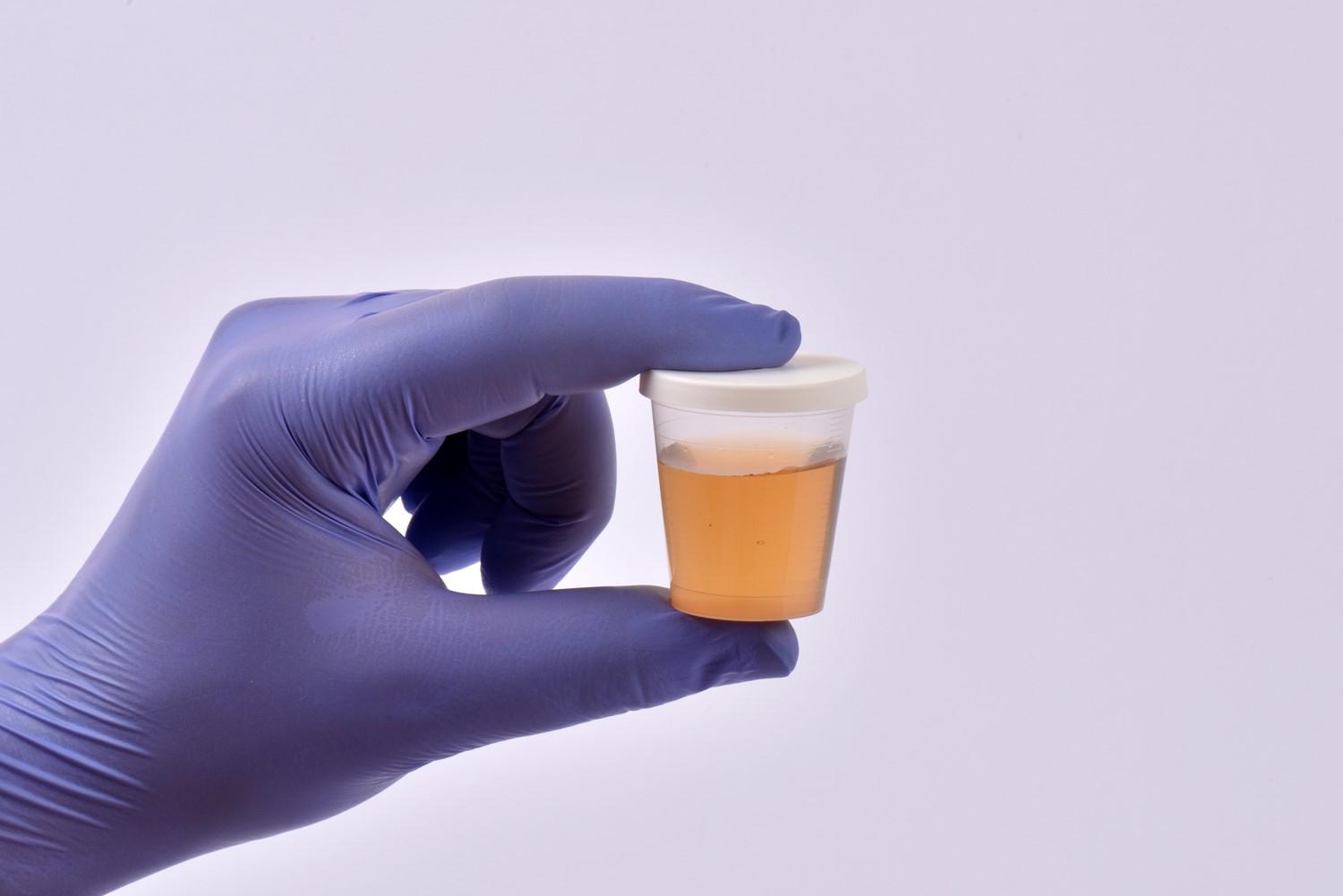
Urethriti... Kidney stones Bleeding into your urinary tract can occur when a stone is being passed, as the stone rubs against the inside of your urethra. It is common to have pain from your back and across your tummy towards your groin when this occurs. Some people with kidney stones only have blood in their urine, which is picked up by a dipstick.
Patient information leaflet
Infección urinaria en hombres
Bladder problems. For example conditions that make it difficult to completely empty the bladder. Problemas renales. Por ejemplo, kidney stones. Having a urinary catheter. A poor immune system. An underlying problem is more likely ... Recurring urine infections, for example, two in a six-month period. Problems with the riñón in the past, such as.
Patient information leaflet
¿Puedo tomar Adcal-D3 y Carbocisteína juntos?
Important Precautions Stomach ulcers ... Kidney stones Do not take Adcal-D3 if you have a history of recurring kidney stones or high calcium levels in your blood or urine. Food and drink warnings Foods high in oxalic acid (spinach, rhubarb) and phytic acid (whole cereals) These foods can reduce the amount of calcium your body absorbs. Disclaimer.
Lecturas adicionales y referencias
- Cálculos renales; MedlinePlus, National Library of Medicine.
- Assimos D, Krambeck A, Miller NL, Monga M, Murad MH, Nelson CP, Pace KT, Pais VM Jr, Pearle MS, Preminger GM, Razvi H, Shah O, Matlaga BR. Surgical Management of Stones: American Urological Association/Endourological Society Guideline, PART I. J Urol. 2016 Oct;196(4):1153-60. doi: 10.1016/j.juro.2016.05.090. Epub 2016 May 27.
- Assimos D, Krambeck A, Miller NL, Monga M, Murad MH, Nelson CP, Pace KT, Pais VM Jr, Pearle MS, Preminger GM, Razvi H, Shah O, Matlaga BR. Surgical Management of Stones: American Urological Association/Endourological Society Guideline, PART II. J Urol. 2016 Oct;196(4):1161-9. doi: 10.1016/j.juro.2016.05.091. Epub 2016 May 27.
- Coe FL, Worcester EM, Evan AP. Idiopathic hypercalciuria and formation of calcium renal stones. Nat Rev Nephrol. 2016 Sep;12(9):519-33. doi: 10.1038/nrneph.2016.101. Epub 2016 Jul 25.
- Daga A, Majmundar AJ, Braun DA, Gee HY, Lawson JA, Shril S, Jobst-Schwan T, Vivante A, Schapiro D, Tan W, Warejko JK, Widmeier E, Nelson CP, Fathy HM, Gucev Z, Soliman NA, Hashmi S, Halbritter J, Halty M, Kari JA, El-Desoky S, Ferguson MA, Somers MJG, Traum AZ, Stein DR, Daouk GH, Rodig NM, Katz A, Hanna C, Schwaderer AL, Sayer JA, Wassner AJ, Mane S, Lifton RP, Milosevic D, Tasic V, Baum MA, Hildebrandt F. Whole exome sequencing frequently detects a monogenic cause in early onset nephrolithiasis and nephrocalcinosis. Kidney Int. 2018 Jan;93(1):204-213. doi: 10.1016/j.kint.2017.06.025. Epub 2017 Oct 12.
- Dawson PA, Sim P, Mudge DW, Cowley D. Human SLC26A1 gene variants: a pilot study. ScientificWorldJournal. 2013 Oct 22;2013:541710. doi: 10.1155/2013/541710. eCollection 2013.
- Gee HY, Jun I, Braun DA, Lawson JA, Halbritter J, Shril S, Nelson CP, Tan W, Stein D, Wassner AJ, Ferguson MA, Gucev Z, Sayer JA, Milosevic D, Baum M, Tasic V, Lee MG, Hildebrandt F. Mutations in SLC26A1 Cause Nephrolithiasis. Am J Hum Genet. 2016 Jun 2;98(6):1228-1234. doi: 10.1016/j.ajhg.2016.03.026. Epub 2016 May 19.
- Howles SA, Thakker RV. Genetics of kidney stone disease. Nat Rev Urol. 2020 Jul;17(7):407-421. doi: 10.1038/s41585-020-0332-x. Epub 2020 Jun 12.
- Leslie SW, Sajjad H. Hypercalciuria. 2024 Feb 12. In: StatPearls [Internet]. Treasure Island (FL): StatPearls Publishing; 2024 Jan-. Available from http://www.ncbi.nlm.nih.gov/books/NBK448183/
- Maalouf NM. Nephrolithiasis. 2026 Feb 6. In: Feingold KR, Adler RA, Ahmed SF, Anawalt B, Blackman MR, Chrousos G, Corpas E, de Herder WW, Dhatariya K, Dungan K, Hamilton E, Hofland J, Jan de Beur S, Kalra S, Kaltsas G, Kapoor N, Kim M, Koch C, Kopp P, Korbonits M, Kovacs CS, Kuohung W, Laferrere B, Levy M, McGee EA, McLachlan R, Muzumdar R, Purnell J, Rey R, Sahay R, Shah AS, Sperling MA, Stratakis CA, Trence DL, Wilson DP, editors. Endotext [Internet]. South Dartmouth (MA): MDText.com, Inc.; 2000-. Available from http://www.ncbi.nlm.nih.gov/books/NBK279069/
- Pearle MS, Goldfarb DS, Assimos DG, Curhan G, Denu-Ciocca CJ, Matlaga BR, Monga M, Penniston KL, Preminger GM, Turk TM, White JR; American Urological Assocation. Medical management of kidney stones: AUA guideline. J Urol. 2014 Aug;192(2):316-24. doi: 10.1016/j.juro.2014.05.006. Epub 2014 May 20.
- Qaseem A, Dallas P, Forciea MA, Starkey M, Denberg TD; Clinical Guidelines Committee of the American College of Physicians. Dietary and pharmacologic management to prevent recurrent nephrolithiasis in adults: a clinical practice guideline from the American College of Physicians. Ann Intern Med. 2014 Nov 4;161(9):659-67. doi: 10.7326/M13-2908.
- Singh P, Harris PC, Sas DJ, Lieske JC. The genetics of kidney stone disease and nephrocalcinosis. Nat Rev Nephrol. 2022 Apr;18(4):224-240. doi: 10.1038/s41581-021-00513-4. Epub 2021 Dec 14.
- Stamatelou K, Goldfarb DS. Epidemiology of Kidney Stones. Healthcare (Basel). 2023 Feb 2;11(3):424. doi: 10.3390/healthcare11030424.
- Taguchi K, Yasui T, Milliner DS, Hoppe B, Chi T. Genetic Risk Factors for Idiopathic Urolithiasis: A Systematic Review of the Literature and Causal Network Analysis. Eur Urol Focus. 2017 Feb;3(1):72-81. doi: 10.1016/j.euf.2017.04.010. Epub 2017 May 19.
Únete a la conversación
Comparte tus pensamientos o experiencias con otros en nuestro comunidades de pacientes.

Pregunta, comparte, conecta.
Navega por discusiones, haz preguntas y comparte experiencias en cientos de temas de salud.
Suscríbete al boletín de Patient
Tu dosis semanal de consejos de salud claros y confiables, escritos para ayudarte a sentirte informado, seguro y en control.
Al suscribirte aceptas nuestros Política de Privacidad. Puedes darte de baja en cualquier momento. Nunca vendemos tus datos.