Benign familial neonatal seizures
Última actualización 17 Ago 2023
Cumple con las directrices editoriales
- DescargarDescargar
- Compartir
- Language
- Discusión
- Versión en audio
- Agregar a fuentes preferidas en Google
Benign familial neonatal seizures (BFNS) is a condition characterised by recurrent seizures in newborn babies. The seizures begin around day 3 of life and usually go away within 1 to 4 months. The seizures can involve only one side of the brain (focal seizures) or both sides (generalized seizures). This condition is often associated with generalized tonic-clonic seizures (also known as grand mal seizures). This type of seizure involves both sides of the brain and affects the entire body, causing a combination of seizure types: tonic seizures, which are characterised by uncontrolled muscle stiffness and rigidity, and clonic seizures, which are characterised by uncontrolled jerking of the muscles. Seizure episodes in infants with BFNS typically begin with tonic stiffness and pauses in breathing (apnea) followed by clonic jerking.
Descripción
Benign familial neonatal seizures (BFNS) is a condition characterised by recurrent seizures in newborn babies. The seizures begin around day 3 of life and usually go away within 1 to 4 months. The seizures can involve only one side of the brain (focal seizures) or both sides (generalized seizures). This condition is often associated with generalized tonic-clonic seizures (also known as grand mal seizures). This type of seizure involves both sides of the brain and affects the entire body, causing a combination of seizure types: tonic seizures, which are characterised by uncontrolled muscle stiffness and rigidity, and clonic seizures, which are characterised by uncontrolled jerking of the muscles. Seizure episodes in infants with BFNS typically begin with tonic stiffness and pauses in breathing (apnea) followed by clonic jerking.
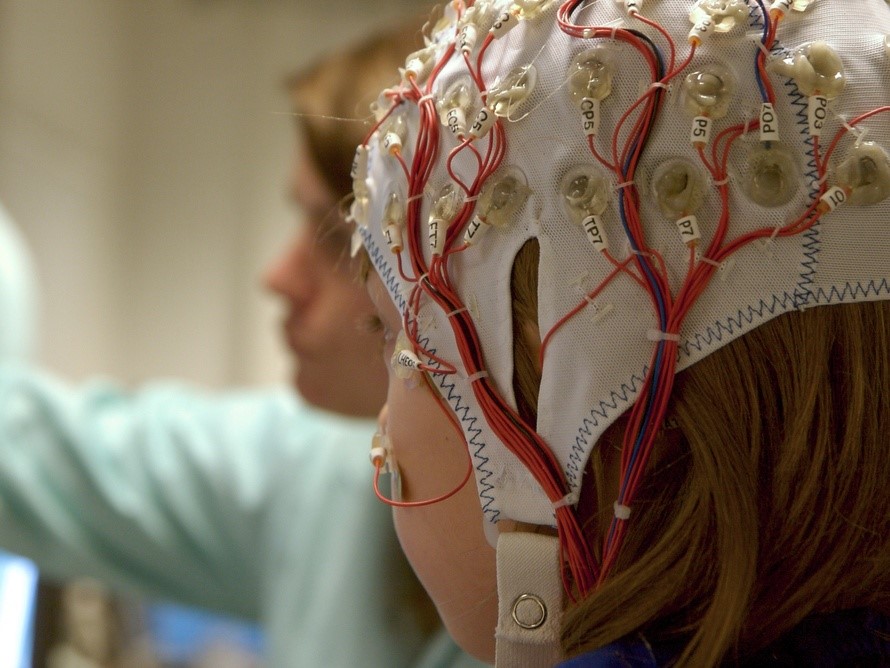
A test called an electroencephalogram (EEG) is used to measure the electrical activity of the brain. Abnormalities on an EEG test, measured during no seizure activity, can indicate a risk for seizures. However, infants with BFNS usually have normal EEG readings. In some affected individuals, the EEG shows a specific abnormality called the theta pointu alternant pattern. By age 2, most affected individuals who had EEG abnormalities have a normal EEG reading.
Typically, seizures are the only symptom of BFNS, and most people with this condition develop normally. However, some affected individuals develop intellectual disability that becomes noticeable in early childhood. A small percentage of people with BFNS also have a condition called myokymia, which is an involuntary rippling movement of the muscles. In addition, in about 15 percent of people with BFNS, recurrent seizures (epilepsy) will come back later in life after the seizures associated with BFNS have gone away. The age that epilepsy begins is variable.
Patrones de herencia
The source lists the following possible inheritance patterns: Autosomal dominant. More than one pattern can apply in different cases.
Related genes
Otros nombres
Benign familial neonatal convulsions
Benign familial neonatal epilepsy
Benign neonatal convulsions
Benign neonatal epilepsy
BFNE
BFNS
Related patient information and medicines
Patient information leaflet
Convulsión febril
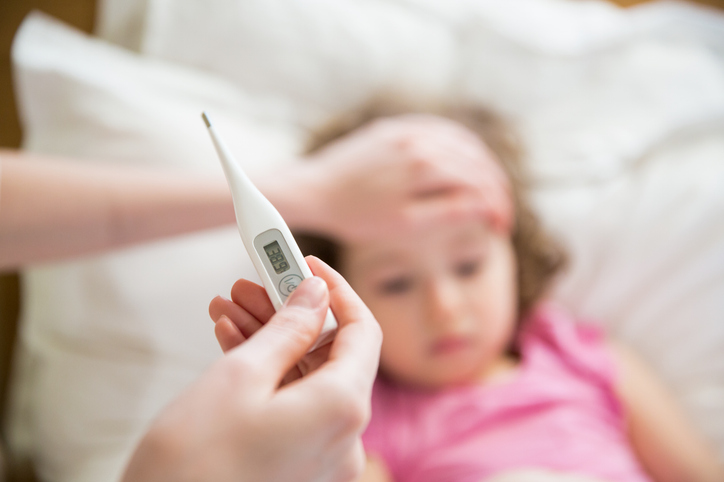
A febrile seizure is a convulsion that occurs in some children with a high temperature (fever). Febrile seizures are more common in children who have had a previous febrile seizure (3-5 out of 10 children who have had one febrile seizure will go on to have another one)They are also more common in children with a family history of febrile seizures.
Patient information leaflet
Tipos de convulsiones
A seizure is a condition caused by a sudden burst of electrical activity in the brain. There are different types of seizures. This leaflet gives some information about what your doctor may wish to know and what tests may be advised after such an event. This is probably the reason for seizures in in most people who have epilepsy... Many personas with.
Patient information leaflet
Escalofríos
Some people re... Whilst it is possible (although quite unusual) to have a rigor and a seizure at the same time (as the same underlying illness could cause both to occur simultaneously), they are two very different things. Will I experience rigors again. You may experience a rigor again the next time you have an infection that causes a high.

Patient information leaflet
Milia
Milia are very small, raised, pearly-white or yellowish bumps on the skin. They are most often seen on the skin around the cheeks, nose, eyes and eyelids, forehead and chest. However, they can occur anywhere on the body. Milia are very common in newborn babies but can affect people of any age. In babies, milia clear by themselves and no treatment.
Patient information leaflet
Hemorragia intraventricular en bebés
An intraventricular haemorrhage is a bleed in the brain. Premature babies are particularly at risk of this condition. ... It is a type of stroke , and may be due to various causes including high blood pressure , a head injury, abnormally formed blood vessels, or brain tumours. This leaflet is specifically about intraventricular haemorrhage in.
Patient information leaflet
Epilepsia y planificación del embarazo
It is essential that you seek expert advice from a doctor or epilepsia nurse specialist when you are considering starting a family. How will my epilepsy be treated if I become pregnant. By enrolling with the UK Epilepsy and Pregnancy Register if you are pregnant and have epilepsy, you will help to give doctors a clearer picture of which medicines.
Lecturas adicionales y referencias
- Benign familial neonatal seizures; MedlinePlus, National Library of Medicine.
- Biervert C, Schroeder BC, Kubisch C, Berkovic SF, Propping P, Jentsch TJ, Steinlein OK. A potassium channel mutation in neonatal human epilepsy. Science. 1998 Jan 16;279(5349):403-6. doi: 10.1126/science.279.5349.403.
- Castaldo P, del Giudice EM, Coppola G, Pascotto A, Annunziato L, Taglialatela M. Benign familial neonatal convulsions caused by altered gating of KCNQ2/KCNQ3 potassium channels. J Neurosci. 2002 Jan 15;22(2):RC199. doi: 10.1523/JNEUROSCI.22-02-j0003.2002.
- Chung HJ, Jan YN, Jan LY. Polarized axonal surface expression of neuronal KCNQ channels is mediated by multiple signals in the KCNQ2 and KCNQ3 C-terminal domains. Proc Natl Acad Sci U S A. 2006 Jun 6;103(23):8870-5. doi: 10.1073/pnas.0603376103. Epub 2006 May 30.
- Lerche H, Biervert C, Alekov AK, Schleithoff L, Lindner M, Klinger W, Bretschneider F, Mitrovic N, Jurkat-Rott K, Bode H, Lehmann-Horn F, Steinlein OK. A reduced K+ current due to a novel mutation in KCNQ2 causes neonatal convulsions. Ann Neurol. 1999 Sep;46(3):305-12. doi: 10.1002/1531-8249(199909)46:33.0.co;2-5.
- Miceli F, Soldovieri MV, Weckhuysen S, Cooper E, Taglialatela M. KCNQ2-Related Disorders. 2010 Apr 27 [updated 2022 May 19]. In: Adam MP, Bick S, Mirzaa GM, Wallace SE, Amemiya A, editors. GeneReviews(R) [Internet]. Seattle (WA): University of Washington, Seattle; 1993-2026. Available from http://www.ncbi.nlm.nih.gov/books/NBK32534/
- Rogawski MA. KCNQ2/KCNQ3 K+ channels and the molecular pathogenesis of epilepsy: implications for therapy. Trends Neurosci. 2000 Sep;23(9):393-8. doi: 10.1016/s0166-2236(00)01629-5.
- Schroeder BC, Kubisch C, Stein V, Jentsch TJ. Moderate loss of function of cyclic-AMP-modulated KCNQ2/KCNQ3 K+ channels causes epilepsy. Nature. 1998 Dec 17;396(6712):687-90. doi: 10.1038/25367.
- Singh NA, Westenskow P, Charlier C, Pappas C, Leslie J, Dillon J, Anderson VE, Sanguinetti MC, Leppert MF; BFNC Physician Consortium. KCNQ2 and KCNQ3 potassium channel genes in benign familial neonatal convulsions: expansion of the functional and mutation spectrum. Brain. 2003 Dec;126(Pt 12):2726-37. doi: 10.1093/brain/awg286. Epub 2003 Oct 8.
- Soldovieri MV, Miceli F, Bellini G, Coppola G, Pascotto A, Taglialatela M. Correlating the clinical and genetic features of benign familial neonatal seizures (BFNS) with the functional consequences of underlying mutations. Channels (Austin). 2007 Jul-Aug;1(4):228-33. doi: 10.4161/chan.4823. Epub 2007 Aug 2.
- Volkers L, Rook MB, Das JH, Verbeek NE, Groenewegen WA, van Kempen MJ, Lindhout D, Koeleman BP. Functional analysis of novel KCNQ2 mutations found in patients with Benign Familial Neonatal Convulsions. Neurosci Lett. 2009 Oct 2;462(1):24-9. doi: 10.1016/j.neulet.2009.06.064. Epub 2009 Jun 25.
- Wang HS, Pan Z, Shi W, Brown BS, Wymore RS, Cohen IS, Dixon JE, McKinnon D. KCNQ2 and KCNQ3 potassium channel subunits: molecular correlates of the M-channel. Science. 1998 Dec 4;282(5395):1890-3. doi: 10.1126/science.282.5395.1890.
Únete a la conversación
Comparte tus pensamientos o experiencias con otros en nuestro comunidades de pacientes.

Pregunta, comparte, conecta.
Navega por discusiones, haz preguntas y comparte experiencias en cientos de temas de salud.
Suscríbete al boletín de Patient
Tu dosis semanal de consejos de salud claros y confiables, escritos para ayudarte a sentirte informado, seguro y en control.
Al suscribirte aceptas nuestros Política de Privacidad. Puedes darte de baja en cualquier momento. Nunca vendemos tus datos.