
Lista de verificación de síntomas de meningitis
Revisado por Dra. Helen Huins, MRCGPEscrito por Dra. Mary Harding, MRCGPPublicado originalmente 24 de septiembre de 2017
Cumple con las directrices editoriales
- DescargarDescargar
- Compartir
- Language
- Discusión
- Versión en audio
- Agregar a fuentes preferidas en Google
Los siguientes son posibles síntomas de meningitis o septicemia. Pero tenga en cuenta: no todos los síntomas pueden estar presentes. Por ejemplo, los síntomas clásicos de rigidez en el cuello y erupción pueden no ocurrir. Vea a continuación otros posibles síntomas. Si sospecha de meningitis o septicemia, busque ayuda médica de inmediato.
¿Qué son la meningitis y la septicemia?
Meningitis es una inflamación del revestimiento que cubre el cerebro y la médula espinal (las meninges). Generalmente es causado por una infección con gérmenes (bacterias o virus)
Septicemia (sepsis) es una infección de la sangre con bacterias (envenenamiento de la sangre). Si las bacterias se multiplican y liberan venenos (toxinas) en la sangre, puede causar una enfermedad grave.
La meningitis y la septicemia son enfermedades distintas. Sin embargo, la causa más común de la meningitis bacteriana (el meningococo) a menudo provoca septicemia al mismo tiempo. Por lo tanto, una persona con meningitis podría tener:
Síntomas y signos de meningitis (15 de cada 100 casos).
Síntomas y signos de septicemia (25 de cada 100 casos, o un cuarto).
Síntomas y signos de meningitis y septicemia (60 de cada 100 casos).
La meningitis puede ocurrir a cualquier edad, pero es más común en niños y jóvenes.
¿Cuáles son los síntomas y signos de la meningitis y la septicemia?
En las primeras etapas de la meningitis y la septicemia, a menudo es difícil distinguir estas condiciones de enfermedades menores. Esto se debe a que pueden comenzar con síntomas leves similares a otras infecciones comunes. Por eso es importante conocer los síntomas de advertencia temprana que podrían sugerir una condición más grave. También es importante conocer los signos de una enfermedad grave y saber cuándo se debe llamar a una ambulancia.
Síntomas comunes de advertencia temprana
Muchos niños que están desarrollando meningitis o septicemia presentan síntomas inespecíficos, como simplemente sentirse o verse generalmente mal. Estos síntomas pueden incluir tener una temperatura alta, estar más cansado de lo habitual y sentirse enfermo.
Sin embargo, tres síntomas que comúnmente se desarrollan temprano - a menudo antes de los síntomas más clásicos que se enumeran más adelante - son:
Dolores en las piernas - que pueden volverse severos e impedir que un niño se ponga de pie o camine.
Manos o pies fríos, incluso si el niño tiene fiebre alta.
Piel pálida o moteada
Color pálido, oscuro o azul de la piel alrededor de los labios.
Erupción - ocurre comúnmente pero no siempre
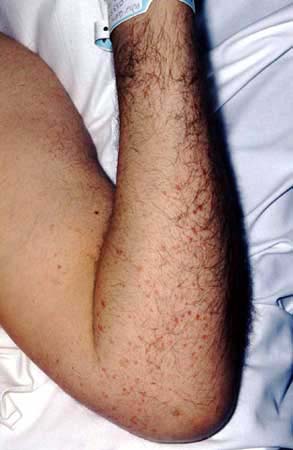
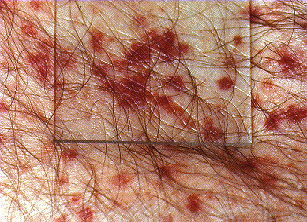
Un sarpullido típico es común con la infección meningocócica. El sarpullido es rojo o púrpura. Al principio se desarrollan pequeñas manchas que pueden aparecer en grupos en cualquier parte del cuerpo. A menudo crecen y se vuelven irregulares, pareciendo pequeños moretones. Una o dos pueden desarrollarse al principio, pero luego pueden aparecer muchas en diferentes partes del cuerpo. Revise todo el cuerpo en busca de un sarpullido. Si la piel es oscura, puede ser más difícil detectar el sarpullido; revise en áreas de piel más clara, como las palmas o las plantas de los pies.
ERUPCIÓN PETEQUIAL
Erupción Púrpura
Las manchas/no se desvanecen al presionarlas (a diferencia de muchas otras erupciones). Para comprobar esto, coloque un vaso transparente firmemente sobre una de las manchas. Si la mancha no se desvanece y aún puede verla a través del vaso, busque ayuda médica de inmediato.
Prueba del vaso para erupción de meningitis
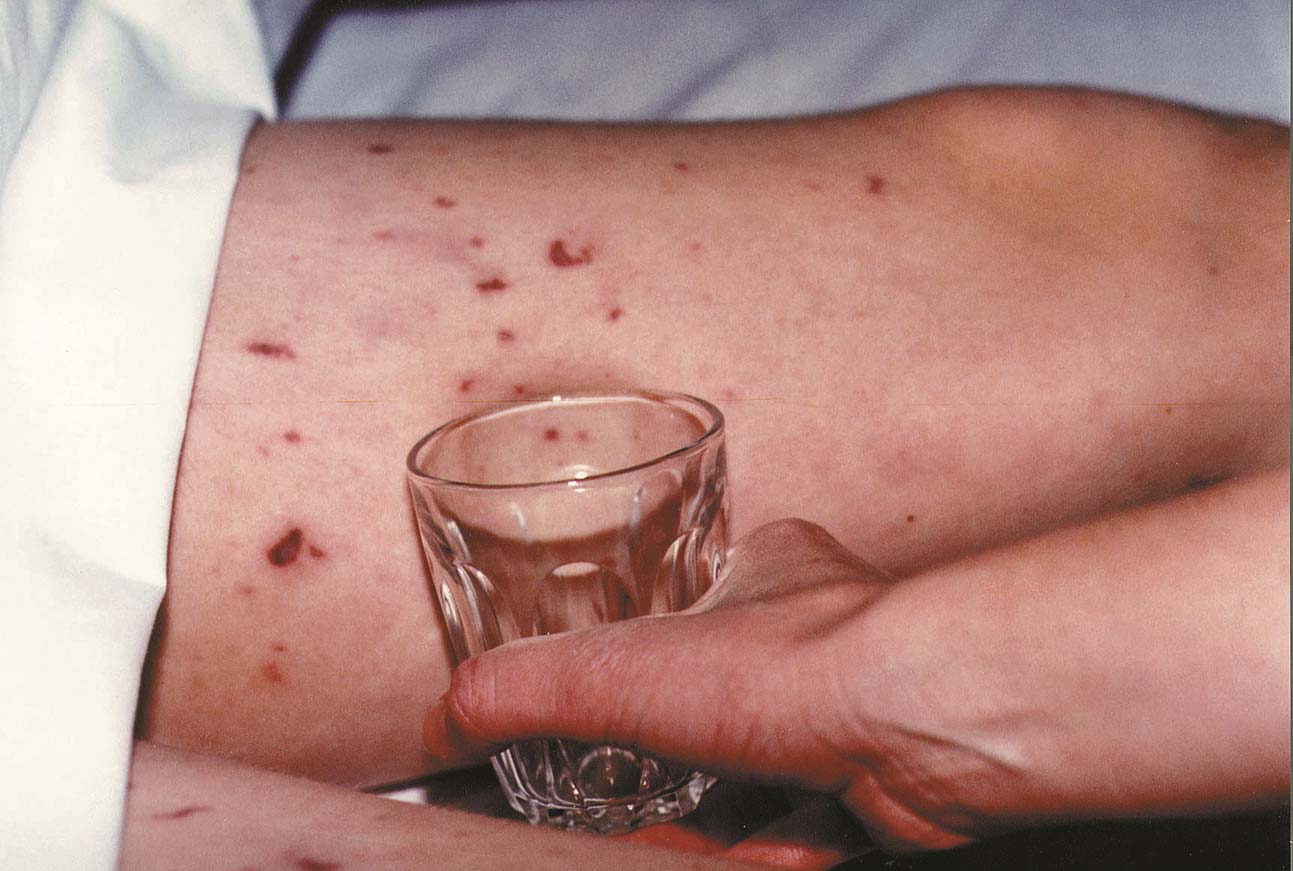
Reproducido con permiso de Meningitis Now.
Nota: una erupción no ocurre en todos los casos de meningitis y septicemia, pero puede ser bastante característica cuando ocurre.
Otros síntomas
Otros síntomas que pueden presentarse en bebés
Estas incluyen:
Llanto excesivo - a menudo agudo o quejumbroso y diferente a su llanto habitual.
Respiración rápida o patrones inusuales de respiración.
Una temperatura alta (fiebre) - pero el bebé puede no parecer caliente y la piel puede verse pálida o con manchas, o volverse azul. Las manos y los pies pueden sentirse fríos. El bebé puede temblar.
No acepta alimentos - a veces vomita repetidamente.
Estar irritable - especialmente cuando se le recoge y manipula.
Somnolencia o sueño - no se despierta fácilmente.
A veces se desarrolla una fontanela abultada. La fontanela es la parte blanda en la cabeza de un bebé.
Pueden ocurrir movimientos bruscos y el cuerpo puede parecer rígido. A veces ocurre lo contrario y el cuerpo parece bastante flácido. A veces se desarrollan convulsiones.
Otros síntomas que pueden presentarse en niños mayores y adultos
Estas incluyen:
Fiebre y escalofríos - sin embargo, las manos y los pies a menudo se sienten fríos.
Cuello rígido - no se puede doblar el cuello hacia adelante.
Dolor de cabeza - que puede volverse severo.
Respiración rápida.
Dolores y molestias en músculos o articulaciones - los dolores pueden volverse bastante severos.
No querer comer ni beber.
La piel puede verse pálida o manchada, o volverse azul.
Aversion a las luces brillantes - cerrará los ojos y se alejará de la luz.
Somnolencia o confusión - puede parecer ausente.
Sensación de malestar o vómitos repetidos. A veces dolor de estómago (abdominal) y diarrea.
Convulsiones.
El curso de los síntomas
Los síntomas a menudo se desarrollan rápidamente, en unas pocas horas más o menos. Los síntomas pueden ocurrir en cualquier orden y no todos pueden presentarse. A veces, los síntomas se desarrollan más lentamente, a lo largo de unos días. Los síntomas pueden sugerir una enfermedad menos grave al principio. Por ejemplo, fiebre, dolores de cabeza y vómitos son comunes en muchas enfermedades virales como la gripe. Por lo tanto, incluso si piensas que era gripe al principio, si los síntomas empeoran, entonces puede ser meningitis o septicemia.
¿Qué debo hacer si me preocupa que pueda ser meningitis?
Si su hijo (o usted) tiene alguno de estos síntomas, hable con un médico o enfermera hoy mismo. (Llame a su consultorio médico, o - en el Reino Unido - marque 111, o hable con el médico de guardia):
Empeorando.
No beber.
Orinar menos de lo habitual.
Apariencia seca (deshidratada). Los signos de esto incluyen:
La parte blanda en la cabeza del bebé (fontanela) parece estar hundida.
Boca seca.
Ojos hundidos.
Somnolencia excesiva.
La temperatura (fiebre) no mejora con paracetamol o ibuprofeno, ni siquiera por un corto tiempo.
Temperatura de 39°C o más en un bebé de 3 a 6 meses.
Si su hijo tiene (o usted tiene) alguno de estos síntomas, marque 999/112/911 y solicite una ambulancia de inmediato:
Ser difícil de despertar (inconmovible).
Estar flojo.
Piel pálida, azulada o moteada
Un llanto débil, agudo o continuo en un bebé.
Dificultad para respirar o respiración tipo gruñido.
Convulsiones.
Temperatura de 38°C o más en un bebé menor de 3 meses.
La parte blanda en la cabeza del bebé (fontanela) sobresaliendo.
Una nueva erupción roja/púrpura que ha aparecido repentinamente y no desaparece cuando se presiona un vaso de vidrio contra ella.
Selecciones del paciente para Meningitis y sepsis
Infecciones
Qué hacer si crees que has estado expuesto a la meningitis
Escuchar sobre un caso de meningitis en tu comunidad, lugar de trabajo o universidad puede ser preocupante. Sin embargo, es importante recordar que la mayoría de las personas que escuchan sobre un caso no han estado expuestas de una manera que las ponga en riesgo. La enfermedad meningocócica, la infección bacteriana que puede causar meningitis y septicemia, se propaga a través del contacto cercano y prolongado con secreciones respiratorias. Esto significa que el riesgo generalmente se limita a las personas que han tenido un contacto muy cercano con la persona afectada. Entender qué cuenta como exposición y qué pasos tomar puede ayudarte a responder de manera calmada y adecuada.
por Thomas Andrew Porteus, MBCS

Infecciones
Video: ¿Cómo se contrae la meningitis bacteriana?
La meningitis es una condición que es fácil de prevenir si aprovechas las vacunas disponibles gratuitamente. Sin embargo, si la contraes, puede ser increíblemente grave e incluso poner en peligro tu vida. Nuestros expertos ofrecen información útil y práctica para ayudarte a mantenerte seguro.
por la Dra. Sarah Jarvis
Sobre el autorVer biografía completa
Escrito por

Dr Mary Harding, MRCGP
Médico General, Autor Médico
BA, MA, MB, BChir, MRCGP, DFFP
La Dra. Mary Harding se graduó de la facultad de medicina de la Universidad de Cambridge en 1989.
Acerca del revisorVer biografía completa

Dra. Helen Huins, MRCGP
Médico General, Autor Médico
MB, BS, Lond, DCH, DRCOG, MRCGP, JCPTGP, DFFP
Helen se graduó en el Hospital Guy's en 1989 y dejó Londres en 1990 para establecerse en el campo.
Historial del artículo
Artículo también disponible en Inglés, Alemán, Español, Francés, Italiano, Portugués, Hindi, Hebreo, Árabe, y Sueco.
24 de septiembre de 2017 | Publicado originalmente
Escrito por:
Dr Mary Harding, MRCGPRevisado por
Dra. Helen Huins, MRCGP
Únete a la conversación
Comparte tus pensamientos o experiencias con otros en nuestro comunidades de pacientes.

Pregunta, comparte, conecta.
Navega por discusiones, haz preguntas y comparte experiencias en cientos de temas de salud.

¿Te sientes mal?
Evalúa tus síntomas en línea de forma gratuita
Suscríbete al boletín de Patient
Tu dosis semanal de consejos de salud claros y confiables, escritos para ayudarte a sentirte informado, seguro y en control.
Al suscribirte aceptas nuestros Política de Privacidad. Puedes darte de baja en cualquier momento. Nunca vendemos tus datos.