luteinizing hormone/choriogonadotropin receptor
Última actualización 27 Oct 2023
Cumple con las directrices editoriales
- DescargarDescargar
- Compartir
- Language
- Discusión
- Versión en audio
- Agregar a fuentes preferidas en Google
El LHCGR gene provides instructions for making a receptor protein called the luteinizing hormone/chorionic gonadotropin receptor. Receptor proteins have specific sites into which certain other proteins, called ligands, fit like keys into locks. Together, ligands and their receptors trigger signals that affect cell development and function.
Normal function
El LHCGR gene provides instructions for making a receptor protein called the luteinizing hormone/chorionic gonadotropin receptor. Receptor proteins have specific sites into which certain other proteins, called ligands, fit like keys into locks. Together, ligands and their receptors trigger signals that affect cell development and function.
The protein produced from the LHCGR gene acts as a receptor for two ligands: luteinizing hormone and a similar hormone called chorionic gonadotropin. The receptor allows the body to respond appropriately to these hormones. In males, chorionic gonadotropin stimulates the development of cells in the testes called Leydig cells, and luteinizing hormone triggers these cells to produce androgens. Androgens, including testosterone, are the hormones that control male sexual development and reproduction. In females, luteinizing hormone triggers the release of egg cells from the ovaries (ovulation); chorionic gonadotropin is produced during pregnancy and helps maintain conditions necessary for the pregnancy to continue.
Conditions referring to this gene or chromosome
Otros nombres
FLJ41504
HHG
LCGR
LGR2
LH/CG-R
LH/CGR
LHR
LHRHR
LSH-R
LSHR_HUMAN
luteinizing hormone/choriogonadotropin receptor precursor
lutropin/choriogonadotropin receptor
ULG5
Related patient information and medicines

Patient information leaflet
Tratamientos para la infertilidad
The process of ovulation is partly contr... These are made in a gland just under the brain (the pituitary gland). A gonadotrophin is a hormone that stimulates the activity of the gonads (the ovaries in women and the testicles in men). The main gonadotrophins made by the pituitary gland are called follicle-stimulating hormone (FSH) and luteinising.
Patient information leaflet
Trastornos de la glándula pituitaria
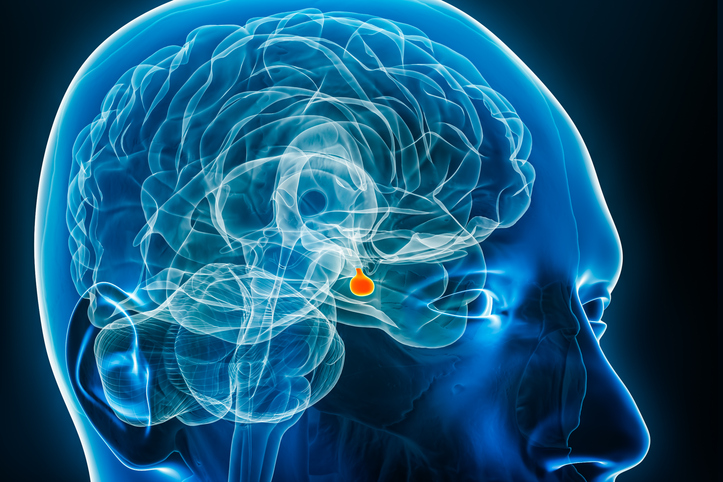
This leaflet gives a brief overview of the problema de la glándula pituitaria y el hormonas it makes. The pituitary gland is found at the base of the brain and is 'pea-sized'. The pituitary gland is an overall controller of a number of other glands in the body, over... It also helps to heal injuries and it promotes your immune system. Luteinising hormone (LH).

Patient information leaflet
Síndrome de ovario poliquístico
Polycystic ovary syndrome (PCOS) is a metabolic condition that affects how the ovaries work. Polycystic ovary syndrome (PCOS) is a medical condition that affects how the body regulates hormones. Other tests looking at luteinising hormone (LH) y prolactin will often be tested but these are not used to diagnose PCOS; they may help to rule out.

Patient information leaflet
Cáncer de próstata
In addition, different men may choose to have different treatments compared to others with a similar type of prostate cancer. The National Institute for Health and Care Excellence (NICE) recommend that everyone newly diagnosed with prostate cancer should be given a risk stratification. This means a measure of how high your risk is, which depends.

Patient information leaflet
Fibromas
Medication to shrink the fibroids Some women are given a gonadotrophin-releasing hormone (GnRH) analogue. The National Institute for Health and Care Excellence (NICE) has recommended a combination drug called relugolix-estradiol-norethisterone acetate as an option for treating moderate to severe symptoms of uterine fibroids in adults of.

Patient information leaflet
Métodos de planificación familiar natural
Planificación familiar natural es un method of preventing pregnancy that does not involve medicines or devices. The fertility awareness method is a type of natural family planning that involves being able to predict your fertile time. One measures them in your urine and the other measures them in your saliva: The urine-based kit detects the increase, or.
Lecturas adicionales y referencias
- luteinizing hormone/choriogonadotropin receptor; MedlinePlus, National Library of Medicine.
- Kossack N, Simoni M, Richter-Unruh A, Themmen AP, Gromoll J. Mutations in a novel, cryptic exon of the luteinizing hormone/chorionic gonadotropin receptor gene cause male pseudohermaphroditism. PLoS Med. 2008 Apr 22;5(4):e88. doi: 10.1371/journal.pmed.0050088.
- Qiao J, Han B, Liu BL, Chen X, Ru Y, Cheng KX, Chen FG, Zhao SX, Liang J, Lu YL, Tang JF, Wu YX, Wu WL, Chen JL, Chen MD, Song HD. A splice site mutation combined with a novel missense mutation of LHCGR cause male pseudohermaphroditism. Hum Mutat. 2009 Sep;30(9):E855-65. doi: 10.1002/humu.21072.
- Themmen AP, Verhoef-Post M. LH receptor defects. Semin Reprod Med. 2002 Aug;20(3):199-204. doi: 10.1055/s-2002-35384.
- Wu SM, Chan WY. Male pseudohermaphroditism due to inactivating luteinizing hormone receptor mutations. Arch Med Res. 1999 Nov-Dec;30(6):495-500. doi: 10.1016/s0188-4409(99)00074-0.
- Wu SM, Leschek EW, Rennert OM, Chan WY. Luteinizing hormone receptor mutations in disorders of sexual development and cancer. Front Biosci. 2000 Mar 1;5:D343-52. doi: 10.2741/wu.
Únete a la conversación
Comparte tus pensamientos o experiencias con otros en nuestro comunidades de pacientes.

Pregunta, comparte, conecta.
Navega por discusiones, haz preguntas y comparte experiencias en cientos de temas de salud.
Suscríbete al boletín de Patient
Tu dosis semanal de consejos de salud claros y confiables, escritos para ayudarte a sentirte informado, seguro y en control.
Al suscribirte aceptas nuestros Política de Privacidad. Puedes darte de baja en cualquier momento. Nunca vendemos tus datos.