Attention-deficit/hyperactivity disorder
Última actualización 18 Aug 2020
Cumple con las directrices editoriales
- DescargarDescargar
- Compartir
- Language
- Discusión
- Ask Patient
- Versión en audio
- Agregar a fuentes preferidas en Google
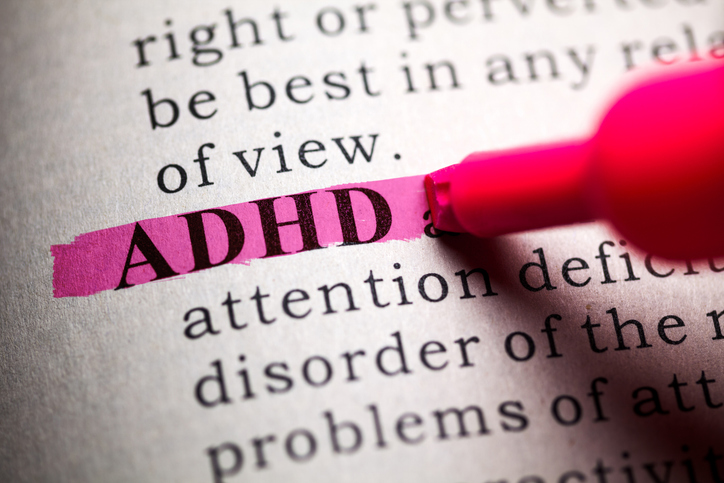
Attention-deficit/hyperactivity disorder (ADHD) is a behavioural disorder that typically begins in childhood and is characterised by a short attention span (inattention), an inability to be calm and stay still (hyperactivity), and poor impulse control (impulsivity). Some people with ADHD have problems with only inattention or with hyperactivity and impulsivity, but most have problems related to all three features.
Selecciones de videos para Condiciones genéticasBiblioteca de videos
Descripción
Attention-deficit/hyperactivity disorder (ADHD) is a behavioural disorder that typically begins in childhood and is characterised by a short attention span (inattention), an inability to be calm and stay still (hyperactivity), and poor impulse control (impulsivity). Some people with ADHD have problems with only inattention or with hyperactivity and impulsivity, but most have problems related to all three features.
In people with ADHD, the characteristic behaviors are frequent and severe enough to interfere with the activities of daily living such as school, work, and relationships with others. Because of an inability to stay focused on tasks, people with inattention may be easily distracted, forgetful, avoid tasks that require sustained attention, have difficulty organizing tasks, or frequently lose items.
Hyperactivity is usually shown by frequent movement. Individuals with this feature often fidget or tap their foot when seated, leave their seat when it is inappropriate to do so (such as in the classroom), or talk a lot and interrupt others.
Impulsivity can result in hasty actions without thought for the consequences. Individuals with poor impulse control may have difficulty waiting for their turn, deferring to others, or considering their actions before acting.
More than two-thirds of all individuals with ADHD have additional conditions, including insomnia, mood or anxiety disorders, learning disorders, or substance use disorders. Affected individuals may also have autism spectrum disorder, which is characterised by impaired communication and social interaction, or Tourette syndrome, which is a disorder characterised by repetitive and involuntary movements or noises called tics.
In most affected individuals, ADHD continues throughout life, but in about one-third of individuals, signs and symptoms of ADHD go away by adulthood.
Patrones de herencia
The source lists the following possible inheritance patterns: Pattern unknown. More than one pattern can apply in different cases.
Otros nombres
ADD
ADDH
TDAH
Attention deficit
Attention deficit disorder
Attention deficit disorder of childhood with hyperactivity
Attention deficit disorder with hyperactivity
Attention deficit disorder with hyperactivity syndrome
Trastorno por déficit de atención e hiperactividad
Hyperkinetic disorder
Hyperkinetic syndrome
Related patient information and medicines
Patient information leaflet
TDAH en adultos
Attention deficit hyperactivity bipolar (ADHD) causes problems with concentrating (inattention), and being too active and having difficulty staying focused (hyperactivity). Attention deficit disorder (ADD) is a term used for people who have excessive difficulties with concentration without other ADHD symptoms such as excessive impulsiveness or.
Patient information leaflet
TDAH en niños
Attention deficit hyperactivity disorder (ADHD) is a behavioural condition that can range from mild to severe. There are different types of ADHD, depending on whether inattention (problems with concentrating) or hyperactivity-impulsivity (being too active - difficulty staying focused) is the main issue. See also the separate ... Attention deficit.
Patient information leaflet
Síndrome de Tourette
Tourette syndrome is a condition that causes you to make involuntary movements or noises called tics. It tends to be associated with various other problems such as behavioural problems and attention deficit hyperactivity disorder (ADHD). It can often be well managed with psychological treatments and sometimes with medication. Simple motor tics are.
Patient information leaflet
Herramienta de autoevaluación de TDAH
For some people, these experiences may be linked to Trastorno por déficit de atención e hiperactividad (TDAH) - a neurodevelopmental condition that can affect attention, organisation, impulse control, energy levels, and day-to-day routines. ADHD is often associated with childhood, but many people are not recognised until adulthood. In some cases, symptoms.
Patient information leaflet
Dispraxia
Developmental co-ordination disorder (DCD), also known as dyspraxia, is a common condition which mainly affects motor co-ordination - the way the body organises and carries out movement-related tasks. They include common conditions such as visual or hearing disturbance, as well as some rarer conditions: Attention deficit hyperactivity disorder.

Patient information leaflet
Trastornos del espectro autista
Autism spectrum disorder (ASD), commonly known as autism, affects the way that a person communicates with, and relates to, other people. The National Autistic Society defines autism as 'a lifelong developmental disability which affects how people communicate and interact with the world'. The term Asperger's syndrome is no longer used... ASD is a.
Lecturas adicionales y referencias
- Attention-deficit/hyperactivity disorder; MedlinePlus, National Library of Medicine.
- Belanger SA, Andrews D, Gray C, Korczak D. ADHD in children and youth: Part 1-Etiology, diagnosis, and comorbidity. Paediatr Child Health. 2018 Nov;23(7):447-453. doi: 10.1093/pch/pxy109. Epub 2018 Oct 24.
- Demontis D, Walters RK, Martin J, Mattheisen M, Als TD, Agerbo E, Baldursson G, Belliveau R, Bybjerg-Grauholm J, Baekvad-Hansen M, Cerrato F, Chambert K, Churchhouse C, Dumont A, Eriksson N, Gandal M, Goldstein JI, Grasby KL, Grove J, Gudmundsson OO, Hansen CS, Hauberg ME, Hollegaard MV, Howrigan DP, Huang H, Maller JB, Martin AR, Martin NG, Moran J, Pallesen J, Palmer DS, Pedersen CB, Pedersen MG, Poterba T, Poulsen JB, Ripke S, Robinson EB, Satterstrom FK, Stefansson H, Stevens C, Turley P, Walters GB, Won H, Wright MJ; ADHD Working Group of the Psychiatric Genomics Consortium (PGC); Early Lifecourse & Genetic Epidemiology (EAGLE) Consortium; 23andMe Research Team; Andreassen OA, Asherson P, Burton CL, Boomsma DI, Cormand B, Dalsgaard S, Franke B, Gelernter J, Geschwind D, Hakonarson H, Haavik J, Kranzler HR, Kuntsi J, Langley K, Lesch KP, Middeldorp C, Reif A, Rohde LA, Roussos P, Schachar R, Sklar P, Sonuga-Barke EJS, Sullivan PF, Thapar A, Tung JY, Waldman ID, Medland SE, Stefansson K, Nordentoft M, Hougaard DM, Werge T, Mors O, Mortensen PB, Daly MJ, Faraone SV, Borglum AD, Neale BM. Discovery of the first genome-wide significant risk loci for attention deficit/hyperactivity disorder. Nat Genet. 2019 Jan;51(1):63-75. doi: 10.1038/s41588-018-0269-7. Epub 2018 Nov 26.
- Faraone SV, Larsson H. Genetics of attention deficit hyperactivity disorder. Mol Psychiatry. 2019 Apr;24(4):562-575. doi: 10.1038/s41380-018-0070-0. Epub 2018 Jun 11.
- Feldman ME, Charach A, Belanger SA. ADHD in children and youth: Part 2-Treatment. Paediatr Child Health. 2018 Nov;23(7):462-472. doi: 10.1093/pch/pxy113. Epub 2018 Oct 24.
- Gorman DA, Gardner DM, Murphy AL, Feldman M, Belanger SA, Steele MM, Boylan K, Cochrane-Brink K, Goldade R, Soper PR, Ustina J, Pringsheim T. Canadian guidelines on pharmacotherapy for disruptive and aggressive behaviour in children and adolescents with attention-deficit hyperactivity disorder, oppositional defiant disorder, or conduct disorder. Can J Psychiatry. 2015 Feb;60(2):62-76. doi: 10.1177/070674371506000204.
- Larsson H, Anckarsater H, Rastam M, Chang Z, Lichtenstein P. Childhood attention-deficit hyperactivity disorder as an extreme of a continuous trait: a quantitative genetic study of 8,500 twin pairs. J Child Psychol Psychiatry. 2012 Jan;53(1):73-80. doi: 10.1111/j.1469-7610.2011.02467.x. Epub 2011 Sep 16.
- Subcommittee on Attention-Deficit/Hyperactivity Disorder; Steering Committee on Quality Improvement and Management; Wolraich M, Brown L, Brown RT, DuPaul G, Earls M, Feldman HM, Ganiats TG, Kaplanek B, Meyer B, Perrin J, Pierce K, Reiff M, Stein MT, Visser S. ADHD: clinical practice guideline for the diagnosis, evaluation, and treatment of attention-deficit/hyperactivity disorder in children and adolescents. Pediatrics. 2011 Nov;128(5):1007-22. doi: 10.1542/peds.2011-2654. Epub 2011 Oct 16.
- Sudre G, Frederick J, Sharp W, Ishii-Takahashi A, Mangalmurti A, Choudhury S, Shaw P. Mapping associations between polygenic risks for childhood neuropsychiatric disorders, symptoms of attention deficit hyperactivity disorder, cognition, and the brain. Mol Psychiatry. 2020 Oct;25(10):2482-2492. doi: 10.1038/s41380-019-0350-3. Epub 2019 Jan 30.
Comparte tus pensamientos o experiencias con otros en nuestro comunidades de pacientes.
Acceso sencillo a tratamientos y servicios de salud confiables en línea.
Common conditions
Get help with common conditions through the NHS, without a GP appointment.
 Sinusitis aguda
 Amigdalitis bacteriana
 Impetigo
 Picaduras de insectos
 Herpes zósterInfección del tracto urinario (ITU)
Suscríbete al boletín de Patient
Tu dosis semanal de consejos de salud claros y confiables, escritos para ayudarte a sentirte informado, seguro y en control.
Al suscribirte aceptas nuestros Política de Privacidad. Puedes darte de baja en cualquier momento. Nunca vendemos tus datos.