
Mordeduras de garrapatas: cómo reconocerlas y tratarlas
Revisado por Dr Colin Tidy, MRCGPÚltima actualización por Lawrence HigginsÚltima actualización 31 Jul 2025
Cumple con las directrices editoriales
- DescargarDescargar
- Compartir
- Language
- Discusión
- Ask Patient
- Versión en audio
- Agregar a fuentes preferidas en Google
La Agencia de Seguridad Sanitaria del Reino Unido (UKHSA) está advirtiendo a las personas que se protejan contra las picaduras de garrapatas este verano, ya que las últimas cifras muestran que hubo 1,581 casos confirmados de la enfermedad de Lyme reportados en 2024. La advertencia coincide con la revelación del superestrella de la música Justin Timberlake de que ha sido diagnosticado con esta enfermedad a veces debilitante.
Here we look at what happens if you get bitten by a tick and what to do about it.
Need treatment for insect bites?
Start a quick NHS Pharmacy First consultation online through Patient.info.
- Online and available 24/7, treatment can often be delivered next day.
- Free service, just pay the NHS prescription charge online if required.
- Just answer a few questions then choose a time for a clinician call.
Powered by Evaro, a UK regulated healthcare service supporting over 2 million patients. Reviewed by UK registered clinicians.

Selecciones de videos para Picaduras y mordedurasBiblioteca de videos
Pasar tiempo en la naturaleza es excelente para tu salud. Sin embargo, al disfrutar del aire libre, caminar por bosques o pasear por áreas con hierba puede tener ciertos inconvenientes, como las garrapatas.
The common tick, often found in fields or woods, are tiny eight-legged creatures which survive by attaching themselves to your skin and feeding off your blood.
Tick numbers are on the rise, and while only a few are harmful to human health, it's important to be aware of these disease-carrying pests, how to remove them from your body, and how to treat their bites.
What does a tick look like?
To the naked eye, a tick may be almost undetectable when first attached to your skin. Over a period of time - up to around 36 hours - the tick will gradually become bloated from consuming blood and will be easier to notice.
Ticks burrow into the skin of their host, meaning that if one has attached, you may only see part of their body - which swells as blood is consumed. A bulging tick may look like a black or brown bean against the skin.
How to remove a tick
It's important to remove ticks carefully to prevent the spread of infection. As the visible end of a tick may be bloated with blood and bacteria, you should avoid squashing the body when removing the tick as this may cause the release of harmful bacteria into your bloodstream.
Herramientas especiales para la extracción de garrapatas están disponibles en las farmacias. Estas agarran la parte inferior de la garrapata y ayudan a su extracción sin ejercer presión sobre el cuerpo de la garrapata. Se pueden usar pinzas, pero solo si tienes cuidado.
Dr Thuva Amuthan is a skin specialist based in Birmingham, UK. He says that if a tick becomes attached to you, you should use a tweezer or removal tool to grasp the tick as close to the skin as possible.
Él advierte: "Be careful not to crush the tick. Slowly pull upwards to remove and dispose of it as soon as possible. Clean the bite and apply antiseptic."
How can I tell if I've been bitten?
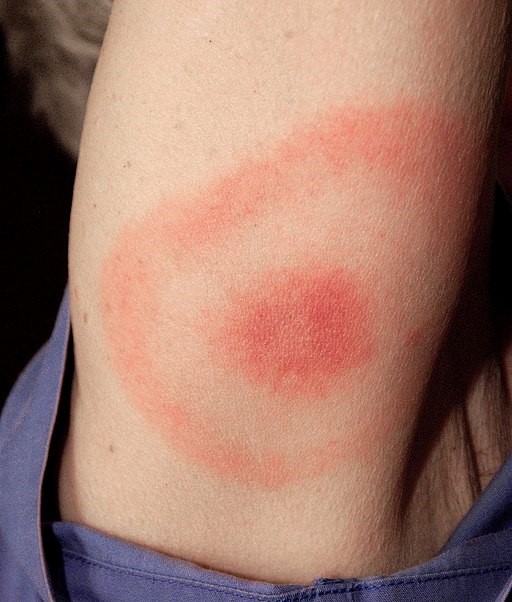
Ticks will usually drop from the skin when they're full, often without you noticing. So, it's important to be aware of the tell-tale signs of a tick-bite. If ticks attach, then drop from your skin unnoticed, they will often leave a mark behind. This may look like a red patch, bruise, or rash.
"Las picaduras de garrapatas generalmente no son dolorosas, aunque puedes sentir algo de picazón," dice Amuthan. "El signo revelador de una picadura de garrapata es el bulls-eye rash - una erupción que es roja en el centro, con un anillo adicional de piel roja alrededor, que puede crecer con el tiempo. Una picadura de garrapata también puede parecer un moretón en piel más oscura. Algunas personas presentan síntomas similares a la gripe como resultado de una picadura de garrapata."
Bulls eye rash
Do you always get Lyme disease from a tick bite?
Aunque tener una picadura de garrapata puede ser alarmante, solo unas pocas garrapatas en el Reino Unido portan la bacteria que causa enfermedad de Lyme. Otras enfermedades infecciosas transmitidas a los humanos por garrapatas incluyen tick-borne encephalitis (TBE), which is quite common in some parts of Europe, and Crimean Congo haemorrhagic fever (CCHF).
Even if you are bitten by a tick carrying infectious bacteria, the chances of falling ill from a tick bite are low if the tick was not attached for a long period of time - around 36 hours. A tick that has not attached or can be easily removed from the skin is extremely unlikely to have passed on any harmful infection. However, do speak to your doctor if you are worried.
Where are ticks most common?
Ticks carrying Lyme disease bacteria might be found anywhere in the UK. However, according to Amuthan, the most common areas for Lyme disease infection are currently grass and woodlands in the south and north of England as well as the Scottish Highlands. While this shouldn't put you off taking a stroll in these areas, you should always check for ticks afterwards as a precaution.
Ticks can be picked up at any time of year. However, their population swells during the months between March and June, and again in August to November in the UK, so take extra precautions during these times.
¿Cómo puedo protegerme?
Simple measures can reduce your chances of being bitten by a tick. Use an insect repellent and cover up your skin, especially on the lower half of your body. Wear trousers rather than shorts and tuck the end of your trouser legs into your socks to lower the odds of a tick attaching to your skin. After walking through a wooded or grassy area check yourself, your pet, and your children for ticks.
How to treat a tick bite
While your chance of developing Lyme disease is small, if you have been bitten by a tick or develop a rash, it's important to seek medical treatment.
If a doctor thinks you might have a tick bite and sees the bull's eye rash, they will often offer antibiotics. These can treat Lyme disease and prevent further complications. Sometimes, a blood test will be offered - especially if the bull's eye rash is not present - although due to the delay before results, antibiotics are often prescribed as a precaution until results are known.
Amuthan dice:
"Lyme disease is best treated early. See your doctor if you have been bitten by a tick and develop a round rash or flu-like symptoms - such as fever, aches, tiredness, or headache."
Keep calm and carry on
The health benefits of walking, exploring nature, spending time outdoors or breathing fresh air outweigh the small chance of being bitten by an infectious tick. However, knowing how to recognise, treat and protect yourself is important. Understanding how to tackle the issue if it happens means you can go back to enjoying the great outdoors without worrying too much.
Selecciones del paciente para Picaduras y mordeduras

Infecciones
enfermedad de Lyme
La enfermedad de Lyme es una infección causada por la picadura de una garrapata infectada. El primer y más común síntoma es una erupción que se extiende desde el sitio de la picadura de la garrapata. Si no se trata, los gérmenes (bacterias) pueden propagarse a otras áreas del cuerpo. En algunos casos, esto puede causar síntomas graves, a menudo meses después de la picadura inicial. Un tratamiento con antibióticos generalmente eliminará la infección.
por la Dra. Philippa Vincent, MRCGP

Salud de la piel, uñas y cabello
¿Cuándo debería preocuparme por una picadura de insecto?
Las picaduras de insectos son comunes en esta época del año, pero ¿cuáles son las señales de que una picadura puede requerir atención médica, y cómo puedes saber qué insecto es responsable de cada picazón?
por Heather Ainsworth
Sobre el autorVer biografía completa
Actualizado por

Lawrence Higgins
Editor gerente
Licenciatura, Diploma de Posgrado
Lawrence ha trabajado como editor jefe de Patient.info y como autor colaborador. También es miembro del Guild of Health Writers.
Escrito por

Gillian Harvey
Escritora Freelance
Licenciatura en Inglés (Hons)
Gillian es una escritora independiente y columnista para una variedad de periódicos y revistas nacionales.
Acerca del revisorVer biografía completa

Dr Colin Tidy, MRCGP
Médico General, Autor Médico
MBBS, MRCGP, MRCP (Paediatrics), DCH
El Dr. Colin Tidy es un médico del NHS, con sede en Oxfordshire.
Historial del artículo
Artículo también disponible en Inglés, Alemán, Español, Francés, Italiano, Portugués, Hindi, Hebreo, Árabe, y Sueco.
Próxima revisión: 31 de julio de 2028
31 Jul 2025 | Última versión
24 Oct 2022 | Publicado originalmente
Escrito por:
Gillian Harvey
Comparte tus pensamientos o experiencias con otros en nuestro comunidades de pacientes.
Suscríbete al boletín de Patient
Tu dosis semanal de consejos de salud claros y confiables, escritos para ayudarte a sentirte informado, seguro y en control.
Al suscribirte aceptas nuestros Política de Privacidad. Puedes darte de baja en cualquier momento. Nunca vendemos tus datos.