How are genetic screening tests different from genetic diagnostic tests?
Cumple con las directrices editoriales
- DescargarDescargar
- Compartir
- Language
- Discusión
- Ask Patient
- Versión en audio
- Agregar a fuentes preferidas en Google
Screening tests evaluate an individual’s risk of developing a genetic condition, while diagnostic tests identify genetic conditions. All genetic tests have both beneficios y limitations.
Selecciones de videos para Understanding geneticsBiblioteca de videos
Resumen
Screening tests evaluate an individual’s risk of developing a genetic condition, while diagnostic tests identify genetic conditions. All genetic tests have both beneficios y limitations.
Genetic screening tests are generally used in people who do not have signs or symptoms of a disorder. These tests estimate whether an individual’s risk of having a certain condition is increased or decreased compared with the risk in other people in a similar population. A positive result means that a person’s risk of developing the condition is higher than average. A negative screening test means that a person’s risk is lower than average. However, having a positive screening result does not mean the individual has the condition. Because screening tests are only estimates, in some cases the results indicate an increased risk for a genetic abnormality when the person is actually unaffected (false positive), or the results indicate a decreased risk for a genetic abnormality when the person is really affected (false negative). While genetic screening tests do not provide a conclusive answer, they can help guide next steps, such as whether additional, diagnostic testing is needed.
Genetic diagnostic tests are often used in people who have signs and symptoms. These tests are used to confirm or rule out suspected genetic conditions. Diagnostic tests can also help inform a person’s chance of developing a genetic condition or of passing on a genetic condition to their children. Diagnostic testing can be performed before birth or at any time during a person's life, but it is not available for all genes or all genetic conditions. The results of a diagnostic test can be used to guide a person's choices about health care and the management of the disorder.
Examples of genetic screening tests include:
Noninvasive prenatal testing/screening (NIPT/NIPS): This screening test is performed before birth to help determine the risk that a fetus will be born with certain genetic abnormalities, such as Down syndrome and other chromosomal disorders.
Detección en recién nacidos: In the United States, a screening test is performed on all newborns shortly after birth. This test can assess the risk for developing more than 35 genetic conditions. For many of these conditions, the test analyzes various protein and enzyme levels, which would be abnormal in affected individuals.
Examples of genetic diagnostic tests include:
Molecular gene tests: These tests determine the order of DNA building blocks (nucleotides) in an individual's genetic code, a process called DNA sequencing. The purpose of these tests is to identify genetic changes that can cause disease.
Chromosomal tests: These tests analyze whole chromosomes or long lengths of DNA to identify large-scale changes, such as an extra or missing copy of a chromosome (trisomy or monosomy, respectively) or abnormalities of large segments of chromosomes, that underlie certain genetic conditions.
Related patient information and medicines

Patient information leaflet
Pruebas genéticas
Genetic testing is a type of medical test that identifies changes in chromosomes, genes or proteins. Genetic tests examine a person's DNA in a variety of ways to assess a person's genetic health. Genetic testing is performed in different ways including: Newborn screening Newborn screening is done just after birth Newborn screening test to identify.

Patient information leaflet
Cribado del síndrome de Down
There are two different types of tests that can be done to look for Down's syndrome during pregnancy - a screening test and a diagnostic test. Down's syndrome is a genetic chromosome problem that some people are born with. Diagnosis is confirmed by genetic tests Genetic testing to look at the appearance and number of chromosomes of the baby. This.

Patient information leaflet
Amniocentesis
The most common reason for a pregnant woman to be offered amniocentesis is to see if her developing baby has a chromosomal disorder such as Down's syndrome. A note about DNA, ge... Each of your 46 chromosomes carries hundreds of genes. A gene is the basic unit of your genetic material. It is made up of a piece (a sequence) of DNA and sits at a.
Patient information leaflet
pruebas de detección durante el embarazo
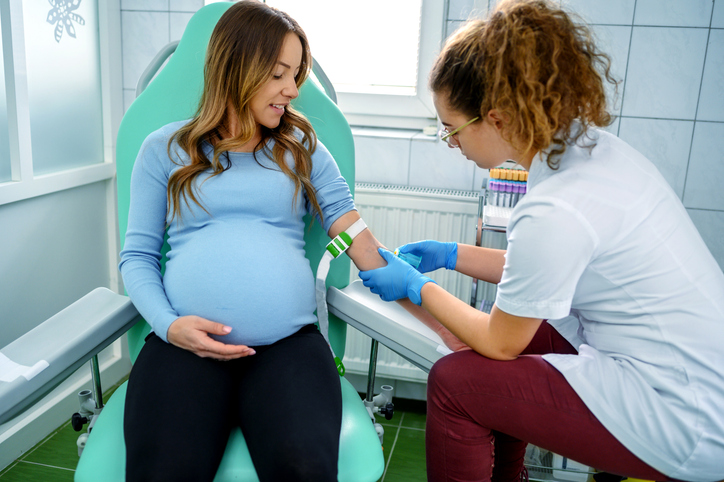
This leaflet discusses the routine pregnancy screening tests (antenatal checks) that should be offered to all pregnant women in the UK. These are screening and diagnostic checks that are done to find out if ... Combined Test In England, Scotland and Wales, you will be offered a test to screen your baby for genetic abnormalities. Genetic means that.

Patient information leaflet
Genes BRCA
There are a few known gene changes (mutations) that can aumentar el risk of certain cancers, and tests available for some of them, including BRCA1 y BRCA2 gene mutations. ... See also the separate leaflet on Genetic Testing Genetic testing for further information. If you are found to have a BRCA mutation, you will be offered screening tests to.
Patient information leaflet
Muestreo de vellosidades coriónicas
Chorionic villus sampling (CVS) is a procedure that is carried out during pregnancy to diagnose or exclude various chromosomal or genetic conditions. Chorionic villus sampling (CVS) is a procedure that is carried out during early pregnancy. ...s syndrome or a genetic disorderA gene is the basic unit of your genetic material. Chorionic villus.
Lecturas adicionales y referencias
- How are genetic screening tests different from genetic diagnostic tests?; MedlinePlus, National Library of Medicine.
Comparte tus pensamientos o experiencias con otros en nuestro comunidades de pacientes.
Acceso sencillo a tratamientos y servicios de salud confiables en línea.
Common conditions
Get help with common conditions through the NHS, without a GP appointment.
 Sinusitis aguda
 Amigdalitis bacteriana
 Impetigo
 Picaduras de insectos
 Herpes zósterInfección del tracto urinario (ITU)
Suscríbete al boletín de Patient
Tu dosis semanal de consejos de salud claros y confiables, escritos para ayudarte a sentirte informado, seguro y en control.
Al suscribirte aceptas nuestros Política de Privacidad. Puedes darte de baja en cualquier momento. Nunca vendemos tus datos.