potassium sodium-activated channel subfamily T member 1
Última actualización 4 Aug 2025
Cumple con las directrices editoriales
- DescargarDescargar
- Compartir
- Language
- Discusión
- Versión en audio
- Agregar a fuentes preferidas en Google
The KCNT1 gene belongs to a large family of genes that provide instructions for making potassium channels. These channels, which transport positively charged atoms (ions) of potassium into and out of cells, play a key role in a cell's ability to generate and transmit electrical signals.
Normal function
The KCNT1 gene belongs to a large family of genes that provide instructions for making potassium channels. These channels, which transport positively charged atoms (ions) of potassium into and out of cells, play a key role in a cell's ability to generate and transmit electrical signals.
Potassium channels are made up of several protein components (subunits). Each channel contains four alpha subunits that form the hole (pore) through which potassium ions move. Potassium channels can be made from four alpha subunits produced from the KCNT1 gene, or they can be made from subunits produced from both the KCNT1 gene and another gene called the KCNT2 gene.
The specific function of a potassium channel depends on its protein components and its location in the body. Channels that are made with the KCNT1 protein are active in nerve cells (neurons) in the brain, where they transport potassium ions out of cells. This flow of ions helps generate currents that activate (excite) neurons and send signals in the brain.
Researchers have determined that a molecule called PKC can increase the activity of channels that are made with the KCNT1 protein. While these channels can generate electrical currents without PKC, the currents are stronger when PKC attaches to the channel and increases the channel's activity.
Conditions referring to this gene or chromosome
Otros nombres
KCa4.1
KIAA1422
potassium channel, sodium activated subfamily T, member 1
potassium channel, subfamily T, member 1
SLACK
Slo2.2
Related patient information and medicines

Patient information leaflet
Vacuna 6 en 1
El Vacuna 6 en 1 is part of routine childhood immunisations and protects babies against six different serious illnesses. Three doses are given. It... This leaflet explains when this vaccine is given and why. It also explains which components of the 6-in-1 vaccine are given later in the UK immunisation schedule as the 4-in-1, 3-in-1 etc. There.

Patient information leaflet
Síndrome de realimentación
Refeeding syndrome was first described in Far East prisoners after the second world war when they developed heart failure after starting to eat again after a prolonged period of starvation. Refeeding syndrome is a dangerous and life threatening shift of fluids and body salts (electrolytes) that can occur when malnourished patients receive.
Patient information leaflet
¿Puedo tomar Bisoprolol y Ramipril juntos?
Food and drink warnings Alcohol Alcohol can increase the blood pressure-lowering effect of bisoprolol, which m... It is best to keep your alcohol intake within recommended limits and see how the medicine affects you before drinking. Salt substitutes (Potassium-based) Ramipril can increase the levels of potassium in your blood. Many salt.
Patient information leaflet
Edema idiopático
Idiopática oedema is the term for fluid retention which it not caused by a known medical condition. It is most common in women and can sometimes worsen as you get older. Although there is no cure for idiopathic oedema, having a healthy diet which is low in salt can make a real difference. Support stockings and regular exercise are also beneficial..
Patient information leaflet
¿Puedo tomar Magnesio y Flecainida juntos?
In some cases, magnesium can actually be helpful for heart rhythm issues, but it must be balanced correctly. Why this happens Both magnesium and flecainide affect the electrical signals and mineral channels (like sodium and potassium) in your heart cells. While they don't usually stop each other from being absorbed, having too much or too little.
Patient information leaflet
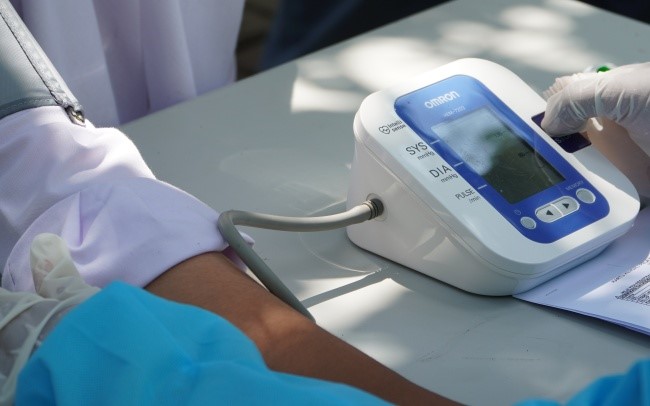
Medicina para la presión arterial alta
For detailed information about your own medication you should read the leaflet that comes inside the medicine packet. What are the types of blood pressure medicines. There are six main classes of medicines that are used to lower blood pressure: Angiotensin-converting enzyme (ACE) inhibitors. Angiotensin receptor blockers (ARBs). Calcium-channel.
Lecturas adicionales y referencias
- potassium sodium-activated channel subfamily T member 1; MedlinePlus, National Library of Medicine.
- Barcia G, Fleming MR, Deligniere A, Gazula VR, Brown MR, Langouet M, Chen H, Kronengold J, Abhyankar A, Cilio R, Nitschke P, Kaminska A, Boddaert N, Casanova JL, Desguerre I, Munnich A, Dulac O, Kaczmarek LK, Colleaux L, Nabbout R. De novo gain-of-function KCNT1 channel mutations cause malignant migrating partial seizures of infancy. Nat Genet. 2012 Nov;44(11):1255-9. doi: 10.1038/ng.2441. Epub 2012 Oct 21.
- Bhattacharjee A, Kaczmarek LK. For K+ channels, Na+ is the new Ca2+. Trends Neurosci. 2005 Aug;28(8):422-8. doi: 10.1016/j.tins.2005.06.003.
- Gertler T, Bearden D, Bhattacharjee A, Carvill G. KCNT1-Related Epilepsy. 2018 Sep 20. In: Adam MP, Bick S, Mirzaa GM, Wallace SE, Amemiya A, editors. GeneReviews(R) [Internet]. Seattle (WA): University of Washington, Seattle; 1993-2026. Available from http://www.ncbi.nlm.nih.gov/books/NBK525917/
- Heron SE, Smith KR, Bahlo M, Nobili L, Kahana E, Licchetta L, Oliver KL, Mazarib A, Afawi Z, Korczyn A, Plazzi G, Petrou S, Berkovic SF, Scheffer IE, Dibbens LM. Missense mutations in the sodium-gated potassium channel gene KCNT1 cause severe autosomal dominant nocturnal frontal lobe epilepsy. Nat Genet. 2012 Nov;44(11):1188-90. doi: 10.1038/ng.2440. Epub 2012 Oct 21.
- Ishii A, Shioda M, Okumura A, Kidokoro H, Sakauchi M, Shimada S, Shimizu T, Osawa M, Hirose S, Yamamoto T. A recurrent KCNT1 mutation in two sporadic cases with malignant migrating partial seizures in infancy. Gene. 2013 Dec 1;531(2):467-71. doi: 10.1016/j.gene.2013.08.096. Epub 2013 Sep 10.
- Kurahashi H, Hirose S. Autosomal Dominant Sleep-Related Hypermotor (Hyperkinetic) Epilepsy. 2002 May 16 [updated 2023 Mar 23]. In: Adam MP, Bick S, Mirzaa GM, Wallace SE, Amemiya A, editors. GeneReviews(R) [Internet]. Seattle (WA): University of Washington, Seattle; 1993-2026. Available from http://www.ncbi.nlm.nih.gov/books/NBK1169/
- Santi CM, Ferreira G, Yang B, Gazula VR, Butler A, Wei A, Kaczmarek LK, Salkoff L. Opposite regulation of Slick and Slack K+ channels by neuromodulators. J Neurosci. 2006 May 10;26(19):5059-68. doi: 10.1523/JNEUROSCI.3372-05.2006.
- Zuberi SM, Wirrell E, Yozawitz E, Wilmshurst JM, Specchio N, Riney K, Pressler R, Auvin S, Samia P, Hirsch E, Galicchio S, Triki C, Snead OC, Wiebe S, Cross JH, Tinuper P, Scheffer IE, Perucca E, Moshe SL, Nabbout R. ILAE classification and definition of epilepsy syndromes with onset in neonates and infants: Position statement by the ILAE Task Force on Nosology and Definitions. Epilepsia. 2022 Jun;63(6):1349-1397. doi: 10.1111/epi.17239. Epub 2022 May 3.
Únete a la conversación
Comparte tus pensamientos o experiencias con otros en nuestro comunidades de pacientes.

Pregunta, comparte, conecta.
Navega por discusiones, haz preguntas y comparte experiencias en cientos de temas de salud.
Suscríbete al boletín de Patient
Tu dosis semanal de consejos de salud claros y confiables, escritos para ayudarte a sentirte informado, seguro y en control.
Al suscribirte aceptas nuestros Política de Privacidad. Puedes darte de baja en cualquier momento. Nunca vendemos tus datos.