glucose-6-phosphate isomerase
Última actualización 18 Aug 2020
Cumple con las directrices editoriales
- DescargarDescargar
- Compartir
- Language
- Discusión
- Ask Patient
- Versión en audio
- Agregar a fuentes preferidas en Google
El GPI gene provides instructions for making an enzyme called glucose phosphate isomerase (GPI). This enzyme has two distinct functions based on its structure. When two GPI molecules form a complex (a homodimer), the enzyme plays a role in a critical energy-producing process known as glycolysis, also called the glycolytic pathway. During glycolysis, the simple sugar glucose is broken down to produce energy. Specifically, GPI is involved in the second step of the glycolytic pathway; in this step, a molecule called glucose-6-phosphate is converted to another molecule called fructose-6-phosphate.
Selecciones de videos para GenesBiblioteca de videos
Normal function
El GPI gene provides instructions for making an enzyme called glucose phosphate isomerase (GPI). This enzyme has two distinct functions based on its structure. When two GPI molecules form a complex (a homodimer), the enzyme plays a role in a critical energy-producing process known as glycolysis, also called the glycolytic pathway. During glycolysis, the simple sugar glucose is broken down to produce energy. Specifically, GPI is involved in the second step of the glycolytic pathway; in this step, a molecule called glucose-6-phosphate is converted to another molecule called fructose-6-phosphate.
When GPI remains a single molecule (a monomer) it is involved in the development and maintenance of nerve cells (neurons). In this context, it is often known as neuroleukin (NLK).
The monomer is also produced by cancer cells and functions to promote spreading (metastasis) of the cancer; in this context it is called autocrine motility factor (AMF).
Conditions referring to this gene or chromosome
Otros nombres
AMF
autocrine motility factor
G6PI_HUMAN
glucose phosphate isomerase
GNPI
hexose monophosphate isomerase
hexosephosphate isomerase
neuroleukin
NLK
oxoisomerase
PGI
PHI
phosphoglucose isomerase
phosphohexomutase
phosphohexose isomerase
phosphosaccharomutase
SA36
sperm antigen 36
Related patient information and medicines

Patient information leaflet
Trastornos del almacenamiento de glucógeno
Glycogen storage disorders are a group of inherited diseases. They result from a problem with one of the proteins (known as enzymes) involved in the conversion of glucose to glycogen, or the breakdown of glycogen back into glucose. Type I glycogen storage disorder is the ... About one quarter of people who have glycogen storage disorder have type.
Patient information leaflet
¿Puedo tomar jengibre y vitamina C juntos?
Kidney stones (Calcium oxalate) High doses of Vitamin C can significantly increase the amount of oxalate in your urine, which may lead to the formation of kidney stones, especially if you have a history of them. G6PD deficiency If you have glucose-6-phosphate dehydrogenase (G6PD) deficiency, high doses of vitamin C can cause your red blood cells.
Patient information leaflet
¿Puedo tomar garra del diablo y vitamina C juntos?
Diabetes Devil's claw may lower blood sugar levels; you must monitor your blood glucose closely as your diabetes medication dosage may need adjustment. Kidney stones (oxalate) High doses of vitamin C can increase the amount of oxalate in your urine, significantly r... Deficiencia de G6PD Si tienes glucose-6-phosphate dehydrogenase (G6PD) deficiency,.
Patient information leaflet
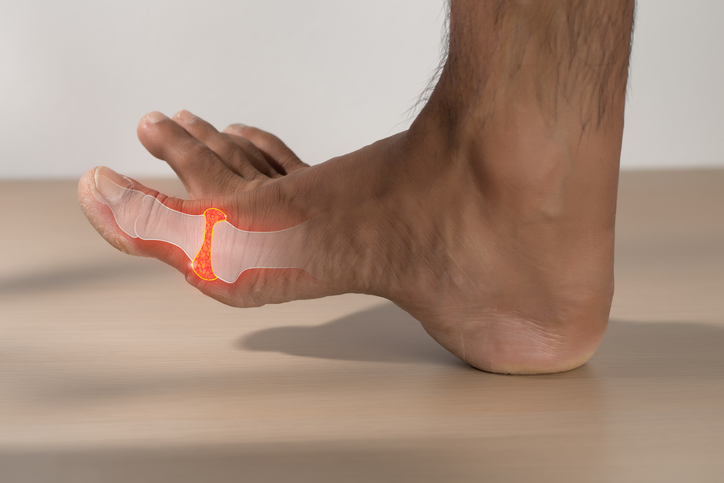
Gota
What is gout? | Patient Explainers Gout causes attacks of pain and swelling in one or more joints. Find out more: [/health/gout-leaflet](https://patient.info/health/gout-leaflet) Follow Patient: Website: [/](https://patient.info/) Facebook: [https://www.facebook.com/patient](https://www.facebook.com/patient).

Patient information leaflet
Síndrome de realimentación
Síndrome de realimentación was first described in Far East prisoners after the second world war when they developed heart failure after starting to eat again after a prolonged period of starvation. Síndrome de realimentación is a dangerous and life threatening shift of fluids and body salts (electrolytes) that can occur when malnourished patients receive.
Patient information leaflet
¿Puedo tomar ácido fólico y vitamina C juntos?
Kidney stones High doses of vitamin C can increase the amount of oxalate in your urine, which significantly raises the risk of developing kidney stones, especially if you have had them before. G6PD deficiency If you have glucose-6-phosphate dehydrogenase (G6PD) deficiency, high doses of vitamin C can cause your red blood cells to break down.
Lecturas adicionales y referencias
- glucose-6-phosphate isomerase; MedlinePlus, National Library of Medicine.
- Baronciani L, Zanella A, Bianchi P, Zappa M, Alfinito F, Iolascon A, Tannoia N, Beutler E, Sirchia G. Study of the molecular defects in glucose phosphate isomerase-deficient patients affected by chronic hemolytic anemia. Blood. 1996 Sep 15;88(6):2306-10.
- Beutler E, West C, Britton HA, Harris J, Forman L. Glucosephosphate isomerase (GPI) deficiency mutations associated with hereditary nonspherocytic hemolytic anemia (HNSHA). Blood Cells Mol Dis. 1997 Dec;23(3):402-9. doi: 10.1006/bcmd.1997.0157.
- Fujii H, Kanno H, Hirono A, Miwa S. Hematologically important mutations: molecular abnormalities of glucose phosphate isomerase deficiency. Blood Cells Mol Dis. 1996;22(2):96-7. doi: 10.1006/bcmd.1996.0014. No abstract available.
- Kanno H, Fujii H, Hirono A, Ishida Y, Ohga S, Fukumoto Y, Matsuzawa K, Ogawa S, Miwa S. Molecular analysis of glucose phosphate isomerase deficiency associated with hereditary hemolytic anemia. Blood. 1996 Sep 15;88(6):2321-5.
- Kugler W, Breme K, Laspe P, Muirhead H, Davies C, Winkler H, Schroter W, Lakomek M. Molecular basis of neurological dysfunction coupled with haemolytic anaemia in human glucose-6-phosphate isomerase (GPI) deficiency. Hum Genet. 1998 Oct;103(4):450-4. doi: 10.1007/s004390050849.
- Lakomek M, Winkler H. Erythrocyte pyruvate kinase- and glucose phosphate isomerase deficiency: perturbation of glycolysis by structural defects and functional alterations of defective enzymes and its relation to the clinical severity of chronic hemolytic anemia. Biophys Chem. 1997 Jun 30;66(2-3):269-84. doi: 10.1016/s0301-4622(97)00057-4.
- Repiso A, Oliva B, Vives-Corrons JL, Beutler E, Carreras J, Climent F. Red cell glucose phosphate isomerase (GPI): a molecular study of three novel mutations associated with hereditary nonspherocytic hemolytic anemia. Hum Mutat. 2006 Nov;27(11):1159. doi: 10.1002/humu.9466.
- Warang P, Kedar P, Ghosh K, Colah RB. Hereditary non-spherocytic hemolytic anemia and severe glucose phosphate isomerase deficiency in an Indian patient homozygous for the L487F mutation in the human GPI gene. Int J Hematol. 2012 Aug;96(2):263-7. doi: 10.1007/s12185-012-1122-x. Epub 2012 Jul 11.
- Xu W, Beutler E. The characterization of gene mutations for human glucose phosphate isomerase deficiency associated with chronic hemolytic anemia. J Clin Invest. 1994 Dec;94(6):2326-9. doi: 10.1172/JCI117597.
Comparte tus pensamientos o experiencias con otros en nuestro comunidades de pacientes.
Acceso sencillo a tratamientos y servicios de salud confiables en línea.
Common conditions
Get help with common conditions through the NHS, without a GP appointment.
 Sinusitis aguda
 Amigdalitis bacteriana
 Impetigo
 Picaduras de insectos
 Herpes zósterInfección del tracto urinario (ITU)
Suscríbete al boletín de Patient
Tu dosis semanal de consejos de salud claros y confiables, escritos para ayudarte a sentirte informado, seguro y en control.
Al suscribirte aceptas nuestros Política de Privacidad. Puedes darte de baja en cualquier momento. Nunca vendemos tus datos.