ATPase Na+/K+ transporting subunit alpha 2
Última actualización 7 Mar 2023
Cumple con las directrices editoriales
- DescargarDescargar
- Compartir
- Language
- Discusión
- Versión en audio
- Agregar a fuentes preferidas en Google
El ATP1A2 gene provides instructions for making one part (the alpha-2 subunit) of a protein known as a Na+/K+ ATPase. This protein uses energy from a molecule called adenosine triphosphate (ATP) to transport charged atoms (ions) into and out of cells. Specifically, it pumps sodium ions (Na+) out of cells and potassium ions (K+) into cells.
Normal function
El ATP1A2 gene provides instructions for making one part (the alpha-2 subunit) of a protein known as a Na+/K+ ATPase. This protein uses energy from a molecule called adenosine triphosphate (ATP) to transport charged atoms (ions) into and out of cells. Specifically, it pumps sodium ions (Na+) out of cells and potassium ions (K+) into cells.
Na+/K+ ATPases that include the alpha-2 subunit are primarily found in nervous system cells called glia, which protect and maintain nerve cells (neurons). Through its action in glia, the protein plays a critical role in the normal function of neurons. Communication between neurons depends on chemicals called neurotransmitters. To relay signals, a neuron releases neurotransmitters, which attach to receptor proteins on neighboring neurons. After the neurotransmitters have had their effect, they detach from their receptors and are removed from the spaces between neurons by glia. This process is carefully regulated to ensure that signals are transmitted accurately throughout the nervous system. The Na+/K+ ATPase helps regulate this process by stimulating glia to clear neurotransmitters from the spaces between neurons. This protein also removes excess potassium ions from these spaces.
Conditions referring to this gene or chromosome
Otros nombres
AT1A2_HUMAN
ATPase, Na+/K+ transporting, alpha 2 (+) polypeptide
ATPase, Na+/K+ transporting, alpha 2 polypeptide
FHM2
MHP2
Na+/K+ -ATPase alpha 2 subunit proprotein
Na+/K+ ATPase 2
Na+/K+ ATPase, alpha-A(+) catalytic polypeptide
Na+/K+ ATPase, alpha-B polypeptide
sodium pump 2
sodium pump subunit alpha-2
sodium-potassium ATPase
sodium/potassium-transporting ATPase alpha-2 chain
Related patient information and medicines

Patient information leaflet
¿Puedo tomar Guanfacina y Tizanidina juntos?
You may feel faint, lightheaded, or even pass out, especially when standing up quickly. It can also significantly slow your heart rate. Why this happens Both guanfacine y tizanidine son 'alpha-2 agonists'. This means they work in a similar way to relax blood vessels and slow down the nervous system. When used together, their effects add up,.

Patient information leaflet
¿Puedo tomar Rivaroxaban y Tamsulosina juntos?
However, both medicines can occasionally cause dizziness or lightheadedness,... Taking them together might slightly increase the chance of feeling faint. Why this happens Rivaroxaban es an anticoagulant (blood thinner) and tamsulosin is an alpha-blocker used for prostate symptoms. They are processed by different pathways in the liver and do not.
Patient information leaflet
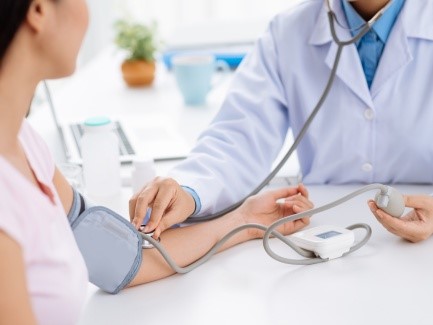
Presión arterial alta
Presión arterial alta (hipertensión) happens when the force on the walls of blood vessels (caused by the blood within them) is more than normal. This means the heart has to work harder and the blood vessels are under more strain, making it a major risk factor for heart disease , stroke and other serious conditions. What is high blood pressure. High.

Patient information leaflet
¿Puedo tomar Lansoprazol y Tamsulosina juntos?
There are no known significant interactions between... It is generally considered safe to take these two medicines together. Why this happens Lansoprazole is a proton pump inhibitor (PPI) used to reduce stomach acid, and tamsulosina es un alpha-blocker used to help with urinary symptoms. They are processed by different pathways in the liver and do.

Patient information leaflet
Sangre en el semen
Hemospermia means there es blood in the semen. Usually there are no other symptoms such as pain. In men under 40 years old it is usually harmless and resolves without any treatment. However, it can also be caused by a number of conditions that need investigations and treatment. How common is blood in semen. Blood in semen (haematospermia) is.

Patient information leaflet
Talasemia
Thalassaemia is an inherited condition affecting the blood. Thalassaemia is an inherited (genetic) condition affecting the blood. Depending on which type you have, thalassaemia may cause no illness at all, or may be a serious lifelong condition requiring treatment. Haemoglobin is made out of different parts. The main parts are called alpha chains.
Lecturas adicionales y referencias
- ATPase Na+/K+ transporting subunit alpha 2; MedlinePlus, National Library of Medicine.
- Bassi MT, Bresolin N, Tonelli A, Nazos K, Crippa F, Baschirotto C, Zucca C, Bersano A, Dolcetta D, Boneschi FM, Barone V, Casari G. A novel mutation in the ATP1A2 gene causes alternating hemiplegia of childhood. J Med Genet. 2004 Aug;41(8):621-8. doi: 10.1136/jmg.2003.017863. No abstract available.
- Castro MJ, Nunes B, de Vries B, Lemos C, Vanmolkot KR, van den Heuvel JJ, Temudo T, Barros J, Sequeiros J, Frants RR, Koenderink JB, Pereira-Monteiro JM, van den Maagdenberg AM. Two novel functional mutations in the Na+,K+-ATPase alpha2-subunit ATP1A2 gene in patients with familial hemiplegic migraine and associated neurological phenotypes. Clin Genet. 2008 Jan;73(1):37-43. doi: 10.1111/j.1399-0004.2007.00918.x. Epub 2007 Nov 19.
- de Vries B, Freilinger T, Vanmolkot KR, Koenderink JB, Stam AH, Terwindt GM, Babini E, van den Boogerd EH, van den Heuvel JJ, Frants RR, Haan J, Pusch M, van den Maagdenberg AM, Ferrari MD, Dichgans M. Systematic analysis of three FHM genes in 39 sporadic patients with hemiplegic migraine. Neurology. 2007 Dec 4;69(23):2170-6. doi: 10.1212/01.wnl.0000295670.01629.5a.
- Jurkat-Rott K, Freilinger T, Dreier JP, Herzog J, Gobel H, Petzold GC, Montagna P, Gasser T, Lehmann-Horn F, Dichgans M. Variability of familial hemiplegic migraine with novel A1A2 Na+/K+-ATPase variants. Neurology. 2004 May 25;62(10):1857-61. doi: 10.1212/01.wnl.0000127310.11526.fd.
- Pietrobon D. Familial hemiplegic migraine. Neurotherapeutics. 2007 Apr;4(2):274-84. doi: 10.1016/j.nurt.2007.01.008.
- Riant F, De Fusco M, Aridon P, Ducros A, Ploton C, Marchelli F, Maciazek J, Bousser MG, Casari G, Tournier-Lasserve E. ATP1A2 mutations in 11 families with familial hemiplegic migraine. Hum Mutat. 2005 Sep;26(3):281. doi: 10.1002/humu.9361.
- Riant F, Ducros A, Ploton C, Barbance C, Depienne C, Tournier-Lasserve E. De novo mutations in ATP1A2 and CACNA1A are frequent in early-onset sporadic hemiplegic migraine. Neurology. 2010 Sep 14;75(11):967-72. doi: 10.1212/WNL.0b013e3181f25e8f.
- Swoboda KJ, Kanavakis E, Xaidara A, Johnson JE, Leppert MF, Schlesinger-Massart MB, Ptacek LJ, Silver K, Youroukos S. Alternating hemiplegia of childhood or familial hemiplegic migraine? A novel ATP1A2 mutation. Ann Neurol. 2004 Jun;55(6):884-7. doi: 10.1002/ana.20134.
- Tavraz NN, Durr KL, Koenderink JB, Freilinger T, Bamberg E, Dichgans M, Friedrich T. Impaired plasma membrane targeting or protein stability by certain ATP1A2 mutations identified in sporadic or familial hemiplegic migraine. Channels (Austin). 2009 Mar-Apr;3(2):82-7. doi: 10.4161/chan.3.2.8085. Epub 2009 Mar 3.
Únete a la conversación
Comparte tus pensamientos o experiencias con otros en nuestro comunidades de pacientes.

Pregunta, comparte, conecta.
Navega por discusiones, haz preguntas y comparte experiencias en cientos de temas de salud.
Suscríbete al boletín de Patient
Tu dosis semanal de consejos de salud claros y confiables, escritos para ayudarte a sentirte informado, seguro y en control.
Al suscribirte aceptas nuestros Política de Privacidad. Puedes darte de baja en cualquier momento. Nunca vendemos tus datos.