African iron overload
Última actualización 10 Nov 2023
Cumple con las directrices editoriales
- DescargarDescargar
- Compartir
- Language
- Discusión
- Ask Patient
- Versión en audio
- Agregar a fuentes preferidas en Google
African iron overload is a condition that involves absorption of too much iron from the diet. The excess iron is stored in the body's tissues and organs, particularly the liver, bone marrow, and spleen. Humans cannot increase the excretion of iron, although some iron is lost through bleeding or when cells of the intestine (enterocytes) are shed at the end of the cells' lifespan. Iron levels in the body are primarily regulated through control of how much iron is absorbed from the diet.
Selecciones de videos para Condiciones genéticasBiblioteca de videos
Descripción
African iron overload is a condition that involves absorption of too much iron from the diet. The excess iron is stored in the body's tissues and organs, particularly the liver, bone marrow, and spleen. Humans cannot increase the excretion of iron, although some iron is lost through bleeding or when cells of the intestine (enterocytes) are shed at the end of the cells' lifespan. Iron levels in the body are primarily regulated through control of how much iron is absorbed from the diet.
African iron overload results from a diet high in iron. It is particularly associated with consumption of a traditional African beer that contains dissolved iron from the metal drums in which it is brewed. Some evidence suggests that a genetic predisposition to absorbing too much iron may also be involved.
In African iron overload, excess iron typically accumulates primarily in certain immune cells called reticuloendothelial cells. Reticuloendothelial cells include macrophages in the bone marrow and spleen and Kupffer cells, which are specialized macrophages found in the liver that help protect the body against foreign invaders such as viruses and bacteria. Later in the course of the condition, iron also accumulates in liver cells (hepatocytes). This pattern differs from that seen in a similar iron overload disorder called hereditary hemochromatosis, in which the excess iron accumulates primarily in the hepatocytes.
When too much iron is absorbed, the resulting iron overload can eventually damage tissues and organs. Iron overload in the liver can lead to chronic liver disease (cirrhosis). Cirrhosis increases the risk of developing a type of liver cancer called hepatocellular carcinoma. Iron overload in immune cells may affect their ability to fight infections. African iron overload is associated with an increased risk of developing infections such as tuberculosis. The excess iron also leads to a faster-than-normal breakdown of vitamin C in the body, so affected individuals are at increased risk of vitamin C deficiency problems such as scurvy.
People with African iron overload may have a slightly low number of red blood cells (mild anaemia), possibly because the iron that accumulates in the liver, bone marrow, and spleen is less available for production of red blood cells. Affected individuals also have high levels of a protein called ferritin in their blood, which can be detected with a blood test. Ferritin stores and releases iron in cells, and cells produce more ferritin in response to excess amounts of iron.
Patrones de herencia
The source lists the following possible inheritance patterns: Pattern unknown. More than one pattern can apply in different cases.
Related genes
Otros nombres
African hemochromatosis
African nutritional hemochromatosis
African siderosis
Related patient information and medicines
Patient information leaflet
Talasemia
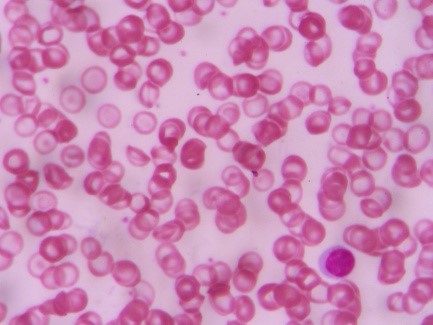
The highest recorded rates oc... Beta thalassaemia is common in areas around the Mediterranean, in the Middle East, in Central, South and Southeast Asia, and in Southern China. Alpha thalassaemia is common in Southeast Asia, Africa, and India. The World Health Organization (WHO) estimates that about 3 people in every 200 of the world's population.
Patient information leaflet
Enfermedad de células falciformes
The transfusion helps because it adds normal red blood cells to the blood. This corrects anaemia and reduces the sickle-shaped red blood cells. There are potential side-effects from blood transfusions como iron overload y problems with the immune system. Therefore, transfusions are given for a specific need, rather than routinely. Treatment.
Patient information leaflet
¿Puedo tomar ácido fólico y vitamina C juntos?
G6PD deficiency If you have glucose-6-phosphate dehydrogenase (G6PD) deficiency, high doses of vitamin C can cause your red blood cells to break down (haemolysis). Haemochromatosis Vitamin C increases the absorption of iron from your food. If you have an iron-overload disorder me gusta hemocromatosis, tú should avoid high-dose supplements. Food and.
Patient information leaflet
¿Puedo tomar Indapamida y Vitamina C juntos?
G6PD deficiency If you have glucose-6-phosphate dehydrogenase (G6PD) deficiency, high doses of vitamin C can cause your red blood cells to break down (haemolysis). Haemochromatosis Vitamin C increases the absorption of iron from your food. If you have an iron-overload disorder me gusta hemocromatosis, tú should avoid high-dose supplements. Food and.
Patient information leaflet
¿Puedo tomar aceite de onagra y vitamina C juntos?
G6PD deficiency If you have glucose-6-phosphate dehydrogenase (G6PD) deficiency, high doses of vitamin C can cause your red blood cells to break down (haemolysis). Haemochromatosis Vitamin C increases the absorption of iron from your food. If you have an iron-overload disorder me gusta haemochromatosis, you should avoid high-dose supplements. Food and.
Patient information leaflet
¿Puedo tomar glucosamina y vitamina C juntas?
G6PD deficiency If you have glucose-6-phosphate dehydrogenase (G6PD) deficiency, high doses of vitamin C can cause your red blood cells to break down (haemolysis). Haemochromatosis Vitamin C increases the absorption of iron from your food. If you have an iron-overload disorder like haemochromatosis, you should avoid high-dose supplements. Food and.
Lecturas adicionales y referencias
- African iron overload; MedlinePlus, National Library of Medicine.
- Barton JC, Acton RT, Lee PL, West C. SLC40A1 Q248H allele frequencies and Q248H-associated risk of non-HFE iron overload in persons of sub-Saharan African descent. Blood Cells Mol Dis. 2007 Sep-Oct;39(2):206-11. doi: 10.1016/j.bcmd.2007.03.008. Epub 2007 May 9.
- Beutler E, Barton JC, Felitti VJ, Gelbart T, West C, Lee PL, Waalen J, Vulpe C. Ferroportin 1 (SCL40A1) variant associated with iron overload in African-Americans. Blood Cells Mol Dis. 2003 Nov-Dec;31(3):305-9. doi: 10.1016/s1079-9796(03)00165-7.
- Gordeuk VR, Caleffi A, Corradini E, Ferrara F, Jones RA, Castro O, Onyekwere O, Kittles R, Pignatti E, Montosi G, Garuti C, Gangaidzo IT, Gomo ZA, Moyo VM, Rouault TA, MacPhail P, Pietrangelo A. Iron overload in Africans and African-Americans and a common mutation in the SCL40A1 (ferroportin 1) gene. Blood Cells Mol Dis. 2003 Nov-Dec;31(3):299-304. doi: 10.1016/s1079-9796(03)00164-5.
- Gordeuk VR. African iron overload. Semin Hematol. 2002 Oct;39(4):263-9. doi: 10.1053/shem.2002.35636.
- McNamara L, Gordeuk VR, MacPhail AP. Ferroportin (Q248H) mutations in African families with dietary iron overload. J Gastroenterol Hepatol. 2005 Dec;20(12):1855-8. doi: 10.1111/j.1440-1746.2005.03930.x.
- Rivers CA, Barton JC, Gordeuk VR, Acton RT, Speechley MR, Snively BM, Leiendecker-Foster C, Press RD, Adams PC, McLaren GD, Dawkins FW, McLaren CE, Reboussin DM. Association of ferroportin Q248H polymorphism with elevated levels of serum ferritin in African Americans in the Hemochromatosis and Iron Overload Screening (HEIRS) Study. Blood Cells Mol Dis. 2007 May-Jun;38(3):247-52. doi: 10.1016/j.bcmd.2006.12.002. Epub 2007 Feb 5.
Comparte tus pensamientos o experiencias con otros en nuestro comunidades de pacientes.
Acceso sencillo a tratamientos y servicios de salud confiables en línea.
Common conditions
Get help with common conditions through the NHS, without a GP appointment.
 Sinusitis aguda
 Amigdalitis bacteriana
 Impetigo
 Picaduras de insectos
 Herpes zósterInfección del tracto urinario (ITU)
Suscríbete al boletín de Patient
Tu dosis semanal de consejos de salud claros y confiables, escritos para ayudarte a sentirte informado, seguro y en control.
Al suscribirte aceptas nuestros Política de Privacidad. Puedes darte de baja en cualquier momento. Nunca vendemos tus datos.