Urinary tract infections
Peer reviewed by Dr Krishna Vakharia, MRCGPAuthored by Dr Colin Tidy, MRCGPOriginally published 12 Apr 2023
Meets Patient’s editorial guidelines
- DownloadDownload
- Share
- Language
- Discussion
- Audio Version
- Add to preferred sources on Google
Women are generally at much higher risk of developing a urinary tract infection (UTI) than men, and UTIs are also more common in older adults. If a UTI is limited to the bladder, it can be painful but is almost always not serious. However, if a UTI spreads up the urinary system to the kidneys and causes a kidney infection (called pyelonephritis) then this can make you very unwell and can be serious.
At a glance
A UTI is an infection in any part of the urinary system.
Most UTIs affect the bladder and urethra.
Symptoms of a lower UTI include painful or frequent urination, sometimes with blood.
Upper UTIs can cause fever, chills, side pain, vomiting, and nausea.
See a doctor if symptoms worsen, do not improve within two days, or return after treatment.
Men, pregnant women, and children should see a doctor if they have UTI symptoms.
In this article:
Video picks for Urinary tract and kidney infections
Continue reading below
What is a UTI?
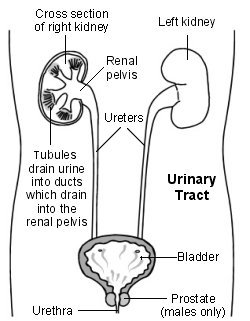
A UTI is an infection in any part of the urinary system. The urinary system includes the kidneys, ureters, bladder and urethra. Most infections involve the lower urinary tract (the bladder and the urethra). Risk factors for UTI include previous UTIs, previous surgery for the urinary tract, an enlarged prostate in men, and diabetes. Having a catheter will also increase the risk of UTI.
Cross-section diagram of the urinary tract
For more information, see also the separate leaflets on:
How do you get a UTI?
Back to contentsYou most often get a UTI when bacteria that originate from the bowel get into the bladder. A germ (bacterium) called Escherichia coli (E. coli) is responsible for up to 9 in 10 of all UTIs. UTIs can also come from other bacteria like streptococci, klebsiella, and Proteus mirabilis, and sometimes even fungi.
Less often, bacteria causing the UTI can enter the bladder when a catheter is inserted into the bladder, or directly from the bloodstream.
An untreated lower UTI will usually get better within a few days but, less often, the infection may spread to the upper urinary tract if bacteria travel up your ureters and reach the kidneys. This type of UTI can lead to permanent kidney damage or even a life-threatening condition called sepsis.
Continue reading below
What are the symptoms of a UTI?
Back to contentsA lower UTI most often causes pain when passing urine (dysuria), passing urine more often (frequency), and, less often, there may be blood in the urine.
See also the leaflets on Lower Urinary Tract Symptoms in Women (LUTS) and Lower Urinary Tract Symptoms in Men.
Upper UTI symptoms may include fever, chills, pain in your side (loin), back, or groin, vomiting, and nausea.
How long does a UTI last?
Back to contentsIf you've got a UTI just in your bladder, the infection can last from a few days to one week. But if you have a kidney infection, it will usually last longer and may take several weeks to get better.
Continue reading below
How to treat a UTI
Back to contentsTo help ease symptoms of a urinary tract infection (UTI)
Take paracetamol to reduce pain and also to bring down your temperature if you have a fever. Paracetamol is a better choice than a non-steroidal anti-inflammatory drug (NSAID) such as ibuprofen or aspirin.
Make sure you rest and drink plenty of fluids so that you pass urine regularly during the day.
Some people take cystitis sachets or cranberry drinks and products every day to prevent UTIs from happening, which may help. But there's no evidence they help ease symptoms or treat a UTI if the infection has already started.
Treatment from a GP or nurse
If a GP or other healthcare professional thinks you may have a urinary tract infection (UTI), they may do a urine test, although this is not always needed. A simple urine dipstick test may show white blood cells, nitrite and, sometimes, blood that indicate the urine is infected. The sample may be sent to the laboratory to be further tested to identify the bacteria causing the infection and the best antibiotics to treat the infection.
A GP or nurse may also:
Offer self-care advice and recommend taking a painkiller.
Treat you with antibiotics, with a choice between:
Giving you a prescription for a short course of antibiotics. Take all the medicine you're prescribed, even if you start to feel better.
Giving you a prescription for antibiotics, but suggest you wait for 48 hours before taking them in case your symptoms go away on their own.
If you are treated with antibiotics, sometimes the UTI may be antibiotic-resistant to the first antibiotic prescribed and the choice may then be to watch and wait to see if the infection clears, or to try a different antibiotic. This is where sending urine tests to the laboratory can be really helpful to identify the bacteria and to ensure that the best antibiotics can be prescribed to treat that infection.
Treatment from a GP for UTIs that keep coming back
If your UTI comes back after treatment, or you have two UTIs in the previous six months or three within the previous 12 months (called recurrent UTIs), a GP may:
Advise on ways to prevent UTIs (see below).
Prescribe a different antibiotic or prescribe a low-dose antibiotic to take for up to six months.
Prescribe a vaginal cream containing oestrogen, if you have gone through the menopause.
Refer you to a specialist for further tests and treatments.
See also the leaflet on Recurrent Cystitis in Women.
How to prevent UTIs
Back to contentsIf you have repeated UTIs, you can take steps to lower the chance of getting a further UTI:
Cystitis sachets or cranberry drinks and products may help. See also the separate medicine leaflets on Potassium citrate for cystitis and Sodium citrate for cystitis.
Wipe from front to back when you go to the toilet.
Keep the genital area clean and dry.
Drink plenty of fluids, particularly water.
Try to make sure you fully empty your bladder when passing urine.
Wash the skin around the vagina with water before and after sex.
Pass urine as soon as possible after sex.
For babies and young children or those that are bed-bound, change nappies or incontinence pads promptly if they're soiled.
Avoid:
Using scented soap.
Holding your urine in if you feel the urge to go.
Wearing tight synthetic underwear, such as nylon.
Having lots of sugary foods or drinks, which may encourage bacteria to grow.
Using condoms or a diaphragm or cap with spermicidal lube on them (try non-spermicidal lube instead). Condoms with non-spermicidal lube reduces the risk of UTI.
When to see a doctor for a UTI
Back to contentsContact or see a GP or other primary healthcare professional if:
Your child has symptoms of a UTI.
You're a man with symptoms of a UTI.
You're pregnant and have symptoms of a UTI.
Your symptoms get worse or do not improve within two days.
Your symptoms come back after treatment.
Some symptoms suggest you may have an upper UTI (pyelonephritis), which needs urgent assessment and treatment. You should be seen urgently if you:
Have a very high temperature, feel hot and shivery, or have a very low temperature (below 36°C).
Are confused or drowsy.
Have pain in your tummy, especially in your upper tummy and loin- just under your ribs, or new back pain.
Patient picks for Urinary tract and kidney infections
Senior health
Urinary tract infection in older people
If you have a urine infection, you have germs (bacteria) in your bladder, kidneys or the tubes of your urinary system. Urine infections, also called bladder infections, are more common in older people, and there is more likely to be an underlying cause.
by Dr Toni Hazell, MRCGP
Kidney and urinary tract
Kidney infection
A kidney infection (pyelonephritis) is an unpleasant illness which is sometimes serious. Treatment usually involves medicines called antibiotics and also painkillers. If the kidney was previously healthy then you are likely to make a full recovery. Complications occur in some cases. Complications include kidney damage or a spread of infection around the body (sepsis).
by Dr Rosalyn Adleman, MRCGP
Frequently asked questions
What is the difference between an upper and lower UTI?
A lower UTI affects the bladder and urethra, causing symptoms like pain when urinating and needing to urinate more often. An upper UTI, which is more serious, involves the kidneys and ureters, potentially leading to fever, chills, pain in your side or back, vomiting, and nausea.
Can I treat a UTI at home without seeing a doctor?
A lower UTI might get better on its own within a few days, but there's a risk it could spread to your kidneys, which is a more serious condition. You can help ease symptoms with paracetamol and by drinking plenty of fluids. However, if you are pregnant, a man, your child has symptoms, your symptoms worsen or don't improve within two days, or they return after treatment, you should see a doctor.
Which painkiller is best for UTI symptoms?
Paracetamol is recommended to reduce pain and bring down a fever associated with a UTI. It is a better choice compared to non-steroidal anti-inflammatory drugs (NSAIDs) like ibuprofen or aspirin.
Do cranberry products or cystitis sachets cure a UTI?
While some people use cystitis sachets or cranberry products daily to try and prevent UTIs from happening, there is no evidence that they help to ease symptoms or treat an infection once it has already started.
Why would a doctor suggest waiting before taking prescribed antibiotics for a UTI?
Sometimes a GP might give you a prescription for antibiotics but suggest waiting for up to 48 hours before taking them. This is because your symptoms might improve on their own during that time, meaning the antibiotics might not be needed.
Further reading and references
- Pyelonephritis (acute): antimicrobial prescribing; NICE Guidance (October 2018)
- Urinary tract infection (lower): antimicrobial prescribing; NICE Guidance (October 2018)
- Pyelonephritis - acute; NICE CKS, March 2021 (UK access only)
- Urinary tract infection (recurrent): antimicrobial prescribing; NICE guideline (October 2018 - Updated December 2024)
- Urinary tract infection in under 16s: diagnosis and management; NICE guideline (July 2022)
- Urinary tract infection - children; NICE CKS, April 2024 (UK access only)
- Urinary tract infection (lower) - women; NICE CKS, February 2025 (UK access only)
- Urinary tract infection (lower) - men; NICE CKS, July 2022 (UK access only)
Continue reading below
About the authorView full bio

Dr Colin Tidy, MRCGP
General Practitioner, Medical Author
MBBS, MRCGP, MRCP (Paediatrics), DCH
Dr Colin Tidy is an NHS Doctor, based in Oxfordshire.
About the reviewerView full bio

Dr Krishna Vakharia, MRCGP
Chief Medical Officer for Health, Optum UK
MBChB, MRCGP(2013), BMedSci (hons), DFSRH, DRCOG, PGDipDerm (Distn)
Dr Krishna Vakharia is an NHS GP. She is also a regular examiner for the postgraduate Diploma in Practical Dermatology at Cardiff University as well as being the Chief Medical Officer for health at Optum UK.
Article history
The information on this page is written and peer reviewed by qualified clinicians.
Next review due: 10 Apr 2028
12 Apr 2023 | Originally published
Authored by:
Dr Colin Tidy, MRCGPPeer reviewed by
Dr Krishna Vakharia, MRCGP

Ask, share, connect.
Browse discussions, ask questions, and share experiences across hundreds of health topics.

Feeling unwell?
Assess your symptoms online for free
Sign up to the Patient newsletter
Your weekly dose of clear, trustworthy health advice - written to help you feel informed, confident and in control.
By subscribing you accept our Privacy Policy. You can unsubscribe at any time. We never sell your data.