How to spot the signs of a dead tooth
Peer reviewed by Dr Krishna Vakharia, MRCGPAuthored by Amberley DavisOriginally published 24 Nov 2022
Meets Patient’s editorial guidelines
- DownloadDownload
- Share
- Language
- Discussion
- Audio Version
- Add to preferred sources on Google
A dead tooth can do more than ruin your smile - it can be a source of pain, discomfort, and embarrassment that disrupts your day-to-day life. How can you tell if you have a dying or dead tooth and what are the treatment options?
What is a dead tooth?
A dead tooth, also called a non-vital tooth or pulpless tooth, is a tooth that's no longer receiving a fresh supply of blood. Cosmetic dentist Dr Sam Jethwa explains how a tooth can die:
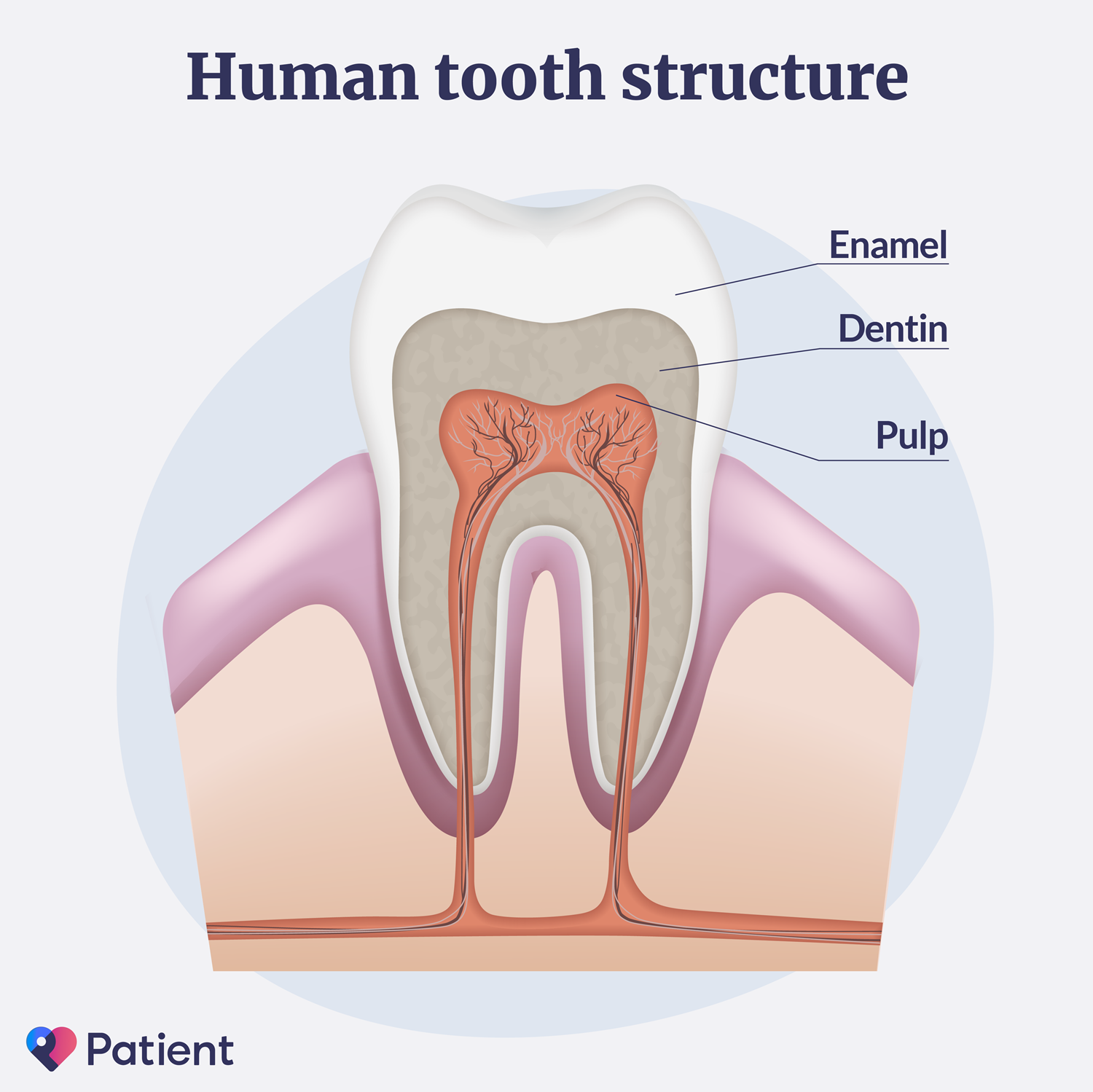
"Our teeth are made up of three layers; the enamel on the outside, the dentin on the inside, and in the middle the pulp. The pulp, a rich source of nerves and blood vessels, keeps a tooth alive and healthy. When these blood vessels and nerves die, then the tooth dies as well."
The three layers
What causes a dead tooth?
According to Dr Jethwa, there are three reasons that can cause these vessels and nerves to die; physical trauma and damage - usually from an injury or sometimes even the process of having a filling - or from tooth decay.
Tooth decay tends to be the result of poor dental hygiene or a diet that's high in sugar. This prevents bacteria from building up, infecting the pulp, and cutting off its blood flow.
What does a dead tooth look like?
You can often identify a dying or dead tooth by the way it looks. This is because the tooth becomes discoloured, turning grey or black in appearance. This discolouration will continue to grow more obvious as the tooth continues to decay and the nerve dies.
Other dead tooth symptoms
Other signs of a dead tooth include:
Toothache - this can be constant or happen at certain times, such as when the tooth comes into contact with hot or cold things.
Tooth sensitivity or a loss of sensation.
Swelling around the gum.
An abscess - a swollen, pus-filled bump.
Bad breath - sometimes a little bad breath is normal, especially morning breath, but it can be a sign of a dental problem.
How to treat a dead tooth
"It is possible to save a tooth that is dying, but time is of the essence," says Dr Jethwa. "For the tooth to be saved, you need an early diagnosis."
Can a dead tooth be saved?
This means you should visit a dental professional as soon as you notice the signs of a dead tooth. According to Dr Jethwa, your dentist may have materials that can be placed inside the tooth to regenerate the tooth tissue around the nerve and avoid root canal treatment.
He also explains the other treatment options:
A root canal is a procedure that drills into a tooth to remove the dead pulp and replace it with a man-made substance. It's then sealed to prevent further infection.
The third treatment option is extraction - the total removal of the dead tooth if it's too damaged to repair. It's your choice if you then want to fill in this gap with an implant, denture, or bridge.
The cost is one consideration - NHS dentists have fixed priced treatment plans but costs at private dentists can vary depending on the pratice, and the type and size of the replacement. The Oral Health Foundation recommends getting a written estimate and treatment plan before starting any dental treatment, to avoid any financial surprises1.
Possible reasons for replacing your extracted dead tooth:
Aesthetics - you may not like how having a gap looks.
More strain - a missing tooth could place more strain on the remaining teeth.
Your bite - over time, your teeth may lean into the gap, changing the way your upper and lower teeth bite together. This could then lead to a build-up of food particles in the gap, increasing the risk of gum disease and tooth decay1.
Can you whiten a dead tooth?
"If the damage has already affected the tooth enamel and caused discolouration and brittleness, then an ultra-thin veneer could be an ideal way to hide the discoloration and protect the tooth from further damage," says Dr Jethwa.
However, this depends on how early the problem is identified. Your dentist will advise on the dental care options available to you, both in terms of your dental health and wellbeing, and also your cosmetic options.
Further reading
Patient picks for Dental care
Oral and dental care
Scientists may have found a way to regrow tooth enamel
Scientists may have found a way to regrow protective tooth enamel using a gel applied to the teeth.
by Milly Evans
Oral and dental care
How to cope with sensitive teeth
If you have sensitive teeth you'll be all too familiar with the sharp pain set off by hot or cold foods and other common triggers. For most, the pain is temporary and is typically the result of worn tooth enamel. But for some there may be other causes and the pain may become chronic. We ask the experts how to manage sensitive teeth and the associated pain.
by Sally Turner
About the authorView full bio
Authored by

Amberley Davis
Senior writer
BA (Hons), CPD
Amberley is a senior writer with Patient and has written extensively on a range of health and wellbeing topics.
About the reviewerView full bio

Dr Krishna Vakharia, MRCGP
Chief Medical Officer for Health, Optum UK
MBChB, MRCGP(2013), BMedSci (hons), DFSRH, DRCOG, PGDipDerm (Distn)
Dr Krishna Vakharia is an NHS GP. She is also a regular examiner for the postgraduate Diploma in Practical Dermatology at Cardiff University as well as being the Chief Medical Officer for health at Optum UK.
Article history
Article also available in English, German, Spanish, French, Italian, Portuguese, Hindi, Hebrew, Arabic, and Swedish.
24 Nov 2022 | Originally published
Authored by:
Amberley DavisPeer reviewed by
Dr Krishna Vakharia, MRCGP
Join the conversation
Share your thoughts or experiences with others in our patient communities.

Ask, share, connect.
Browse discussions, ask questions, and share experiences across hundreds of health topics.

Feeling unwell?
Assess your symptoms online for free
Sign up to the Patient newsletter
Your weekly dose of clear, trustworthy health advice - written to help you feel informed, confident and in control.
By subscribing you accept our Privacy Policy. You can unsubscribe at any time. We never sell your data.