
Sleep diary
Peer reviewed by Dr Hayley Willacy, FRCGP Last updated by Danny ChadburnLast updated 11 Sept 2017
Meets Patient’s editorial guidelines
- DownloadDownload
- Share
- Language
- Discussion
- Audio Version
- Add to preferred sources on Google
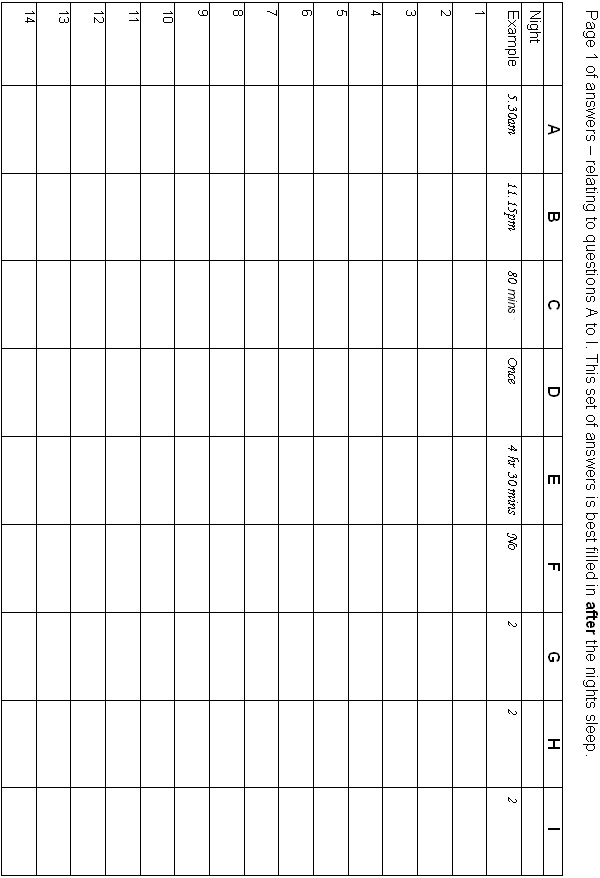
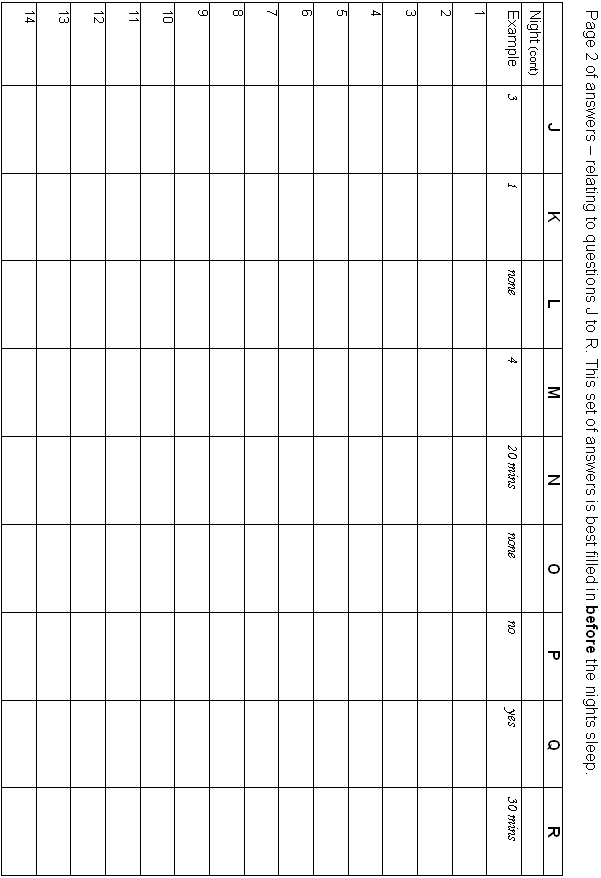
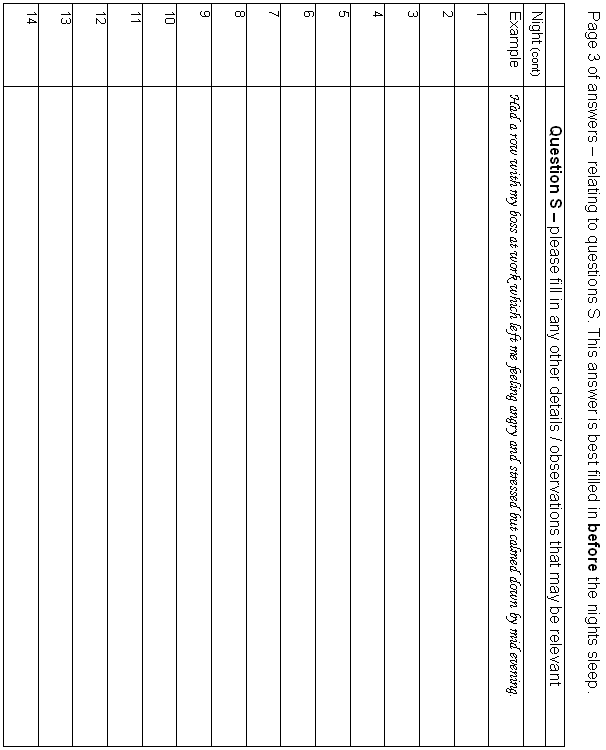
Please answer questions A to S each day over the next two weeks. There should be three sheets of paper for answers to be written in boxes. The aim is to measure the pattern and quality of your sleep, and factors that may affect your sleep over the course of two weeks.
Questions A to I relate to the night's sleep. Try to answer these soon after getting up each day when the details of the previous night are fresh in your mind.
Questions J to S relate to to the day leading up to the night's sleep. Try to answer these at least an hour before you go to bed when the details are fresh in your mind.
A. What time did you wake up this morning?
B. What time did you go to bed last night?
C. About how long did it take to first fall asleep? (Record in minutes - for example, 70 mins.)
D. How many times did you wake up during the night (enough to be fully aware)?
E. How long did you sleep last night in total? (In hours and minutes - for example, 4 hr 30 mins.)
F. Did you take any sleeping tablets last night to help you sleep?
G. How generally well do you feel today? Record on a scale 1-4. 1 - not well at all. 2 - just OK. 3 - fine. 4 - very well.
H. How energetic do you feel today? Record on a scale 1-4. 1 - lethargic. 2 - slow but OK. 3 - fine. 4 - very energetic.
I. How enjoyable was your sleep last night? Record on a scale 1-4. 1 - not at all. 2 - just OK. 3 - fine. 4 - very good.
J. How many cups of caffeine drinks (tea, coffee, cola, etc) did you have before 5 pm?
K. How many cups of caffeine drinks (tea, coffee, cola, etc) did you have after 5 pm?
L. How many units of alcohol did you have before 5 pm? One unit of alcohol is about equal to: half a pint of ordinary-strength beer/lager, or a small pub measure (25 ml) of spirits, or a standard pub measure (50 ml) of sherry or port, or a small glass of ordinary-strength wine.
M. How many units of alcohol did you have after 5 pm?
N. How much moderate or vigorous physical activity/exercise did you do before 9 pm? (Record in minutes - for example, 40 mins.) Moderate physical activity/exercise includes brisk walking, jogging, dancing, swimming, heavy DIY, gardening, etc.
O. How much moderate or vigorous physical activity/exercise did you do after 9 pm?
P. Did you take any street drugs (cocaine, amfetamines, heroin, etc)? Yes/No. If yes, write down which one(s).
Q. Did you have any naps during the day or evening? Yes/No.
R. If you did nap, how long in total were the naps? Record in minutes.
S. Fill in any other details that may be relevant. For example, if you were particularly stressed, anxious, depressed or ill.
sleep diary questions 1
Sleep diary question 2
Sleep diary questions 3
Patient picks for Sleep and insomnia
Healthy living
What are sleep trackers and do they work?
Sleep trackers have experienced a surge in popularity over recent years. As a nation, we seem to be extremely curious about what's happening with our bodies while we sleep. But, before you start spending money on sleep tracking devices or downloading apps, it may be helpful to understand a bit more about how and whether they work.
by Emily Jane Bashforth

Healthy living
How revenge bedtime procrastination affects your health - and how to avoid it
If you’ve ever stayed up late scrolling on your phone when you know you should be asleep, you’re not alone. You stay awake until the early hours to watch one more episode on Netflix, but when the morning rolls around, you’re exhausted. It’s something many of us do - and it’s called revenge bedtime procrastination.
by Lydia Smith
About the author

Danny Chadburn
Head of Content
Danny was the previous Head of Content at Patient.
About the reviewerView full bio

Dr Hayley Willacy, FRCGP
General Practitioner, Medical Author
MBChB (1992), DRCOG, DFFP, MRCOG (Part 1) MRCGP (2007), DFSRH (2013), MSc - medical education (2020)
Dr Hayley Willacy was an NHS GP working in northwest England, who retired from clinical practice in 2022 after 30 years.
Article history
The information on this page is peer reviewed by qualified clinicians.
Article also available in English, German, Spanish, French, Italian, Portuguese, Hindi, Hebrew, Arabic, and Swedish.
11 Sept 2017 | Latest version
Join the conversation
Share your thoughts or experiences with others in our patient communities.

Ask, share, connect.
Browse discussions, ask questions, and share experiences across hundreds of health topics.

Feeling unwell?
Assess your symptoms online for free
Sign up to the Patient newsletter
Your weekly dose of clear, trustworthy health advice - written to help you feel informed, confident and in control.
By subscribing you accept our Privacy Policy. You can unsubscribe at any time. We never sell your data.
More in healthy living
- Bipolar disorder, public figures, and the line between explanation and accountability
- Diabetes burnout - how mindfulness can support your mental wellbeing
- Do crash diets ever really work for healthy weight loss?
- Do you really need to walk 10,000 steps a day?
- UpdatedDoes getting good sleep really improve your skin?
- Doomscrolling: Is the news bad for your mental health?
- Helping your child cope with stress and worry over Christmas
- How to control your drinking at a work Christmas party
- How to improve your self-esteem and be kinder to yourself
- Is intermittent fasting a healthy way to lose weight?
- Level up your real life: 6 health tips every gamer needs to know
- Nurturing intimacy: 6 tips for long-term relationships
- Switch off TV in the bedroom to avoid weight gain
- The best mindfulness apps, according to experts
- What harm can conversion therapy cause and why isn't it banned?
- What is alcohol intolerance, and what are its symptoms?
- What to do when your child can't sleep
- What your dreams can reveal about your health
- Why fad diets can actually lead to weight gain