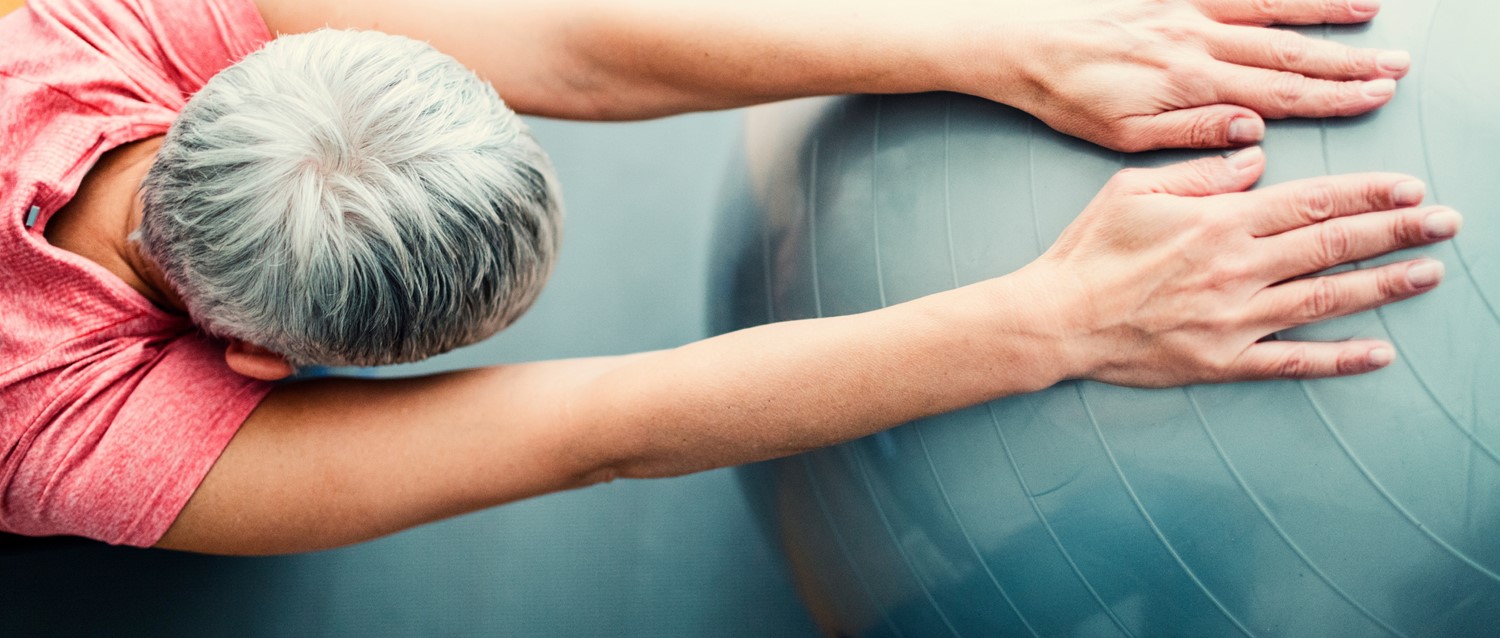
How to embrace fitness after 50
Peer reviewed by Dr Sarah JarvisAuthored by Sarah GrahamOriginally published 22 Jan 2018
Meets Patient’s editorial guidelines
- DownloadDownload
- Share
- Language
- Discussion
- Audio Version
- Add to preferred sources on Google
You already know it's worth making exercise a priority. But, if you're over 50 and haven't laced up your trainers since secondary school PE class, it can be a real struggle to get going. We spoke to the experts about the health benefits of taking up exercise after 50, and how to make sure your shiny new gym membership doesn't go to waste.
"For most people over 50, if you ask them: 'When was the last time you did any form of vigorous exercise?', they reply by saying: 'Oh, not since school or university.' Now they've reached the half-century milestone, they rightly feel it's more important than ever to start working on their health," says Chris Hall, founder of Hall Personal Training.
We all know our bodies change as we get older, with declining levels of sex hormones bringing about the increase in body fat, slowing metabolism, and wasting away of muscles that typically lead to 'middle-age spread'. And it's not just about what you see in the mirror, or how tight your trousers are beginning to feel. Keeping fit also has hugely important implications for your heart, bones, cognitive and emotional well-being, and overall health.
"Resistance-based training (any exercise that builds strength) is incredibly beneficial for someone over 50, as it's been shown to increase bone density, and even in some instances place the brakes on osteoporosis by encouraging the formation of new bone," Chris explains.
"Not only that, but if we start using our muscles and taxing them little and often, our bodies will slow down the rate of muscle tissue wastage and even start to build new tissue. This is all essential for tackling body fat, preventing any extra weight gain, and also for preparing for a healthy older age," he adds.
This is particularly important once you're beyond retirement age, as a good level of fitness can help to prevent falls later in life. If you're over 65, Public Health England (PHE) recommends doing strength training that works all your major muscle groups on at least two days a week. The camaraderie of group exercise is also great for keeping loneliness at bay, and can provide a network of social support into your post-work years.
Getting motivated
Of course, it's all very well knowing why you should be getting more exercise - but how do you actually get out there and motivate yourself to do it? Firstly, remember that it is never too late to get serious about your health. Exercise might seem daunting after decades of inactivity, but it needn't be. The key is starting off slowly, and finding activities that work for you.
"You don't have to go out and immediately run a marathon!" says Sheffield-based personal trainer Lucy Locket. "A great way to start is by incorporating more walking, hiking, cycling or swimming. Whatever you choose, it ideally needs to add strengthening, flexibility, aerobics and balance to your life."
Chris recommends starting off with two to three 30-minute sessions of exercise per week, building up to four or five sessions a week of the same duration. "The frequency of your training sessions is more important than the duration when you're starting out," he says. "Once you're more aware of your body's tolerance and ability to recover, you can progress more and start to add more exercise into your weekly routine."
Fran's fitness journey
53-year-old Fran Evans, who Instagrams her fitness journey @fitnesafter50, says she first started getting fit two years ago and has never looked back. "I've lost several stone, I now run 5Ks, leg press 422 kilograms, and go to many classes a week at my local gym," she says.
"Getting fit has altered my life completely," Fran adds. "I am healthy, inside and out; full of energy and enthusiasm; and have an amazing circle of friends who I met through the gym. I have great blood pressure, good resting pulse, and these days I can often do better in classes than the younger ones! I feel brilliant, and feel that I have accomplished so much with support."
For Fran, it was her local gym's induction programme that really kickstarted her fitness regime, and the Couch to 5K plan got her into running just over a year ago. She's currently taking part in Run Every Day (R.E.D.) January, in association with mental health charity Mind, and has signed up to do Tough Mudder later this year with a team of women from her gym.
"My advice is just to go for it," she says. "Try different things, have a go, do what you enjoy once you find it, and don't be afraid, as your age is literally only a number. Don't let it hold you back or think you can't do it."
What to be aware of
Whether you're keen to try out some local gym classes, or rediscover your childhood love of cycling, remember to be aware of your body and its limitations, and build slowly and steadily towards your goals.
"Don't start with something super challenging. If exercise is new to you, ease yourself into it slowly and don't overdo it. Try starting with something you feel comfortable with and then slowly push yourself out of your comfort zone - perhaps a fitness class, or training with a friend," Lucy recommends. Remember too, she adds, that: "nobody is looking at you because they're too worried they themselves are doing it wrong."
If you're concerned about your joints and mobility, Chris suggests starting out with some low-impact exercise, such as using resistance bands rather than doing body-weight exercises, or going swimming for your cardiovascular fitness.
Finally, don't forget about the importance of what you're putting into your body to fuel your new regime. "Older people typically require more protein than younger people, to help aid recovery between exercise sessions and limit the amount of muscle wastage," Chris says. Aim for a balanced diet, with an emphasis on lean protein like chicken, fish, beans and pulses, and make sure you're drinking plenty of water to keep you hydrated.
Age UK offers a range of gentle exercise classes across the country, aimed at those over a certain age. Find out more here.
Patient picks for Exercise and physical activity
Healthy living
HIIT or weights: which is best for weight loss?
With so many exercises to choose from, planning a new exercise regime for weight loss can be daunting. HIIT and weight training exercises are two of the most popular and effective exercises for weight loss. Used in combination, you can burn fat and increase your resting metabolic rate in a time-efficient manner.
by Amberley Davis

Healthy living
HIIT for weight loss: how does it compare to traditional cardio?
For a lot of people, the main priority of going to the gym is to lose weight. But the thought of spending hours upon hours plodding away on a treadmill can often be off-putting. If only there was a way to get the same kind of results in short, sharp bursts. If this is something you find yourself asking, then trying HIIT for weight loss may be the answer. But how does it compare to more traditional cardio exercise?
by Gemma Grange
About the authorView full bio
Authored by

Sarah Graham
Freelance health journalist
MA, Newspaper, Journalism
Sarah Graham is an award-winning freelance health journalist, and founder of the feminist women's health blog Hysterical Women.
About the reviewerView full bio

Dr Sarah Jarvis
Clinical Consultant
MA (Cantab), BM, BCh (Oxon), DRCOG, FRCGP, MBE
After training in medicine at Cambridge and Oxford, Dr Sarah Jarvis MBE became a GP.
Article history
Article also available in English, German, Spanish, French, Italian, Portuguese, Hindi, Hebrew, Arabic, and Swedish.
22 Jan 2018 | Originally published
Authored by:
Sarah GrahamPeer reviewed by
Dr Sarah Jarvis
Join the conversation
Share your thoughts or experiences with others in our patient communities.

Ask, share, connect.
Browse discussions, ask questions, and share experiences across hundreds of health topics.

Feeling unwell?
Assess your symptoms online for free
Sign up to the Patient newsletter
Your weekly dose of clear, trustworthy health advice - written to help you feel informed, confident and in control.
By subscribing you accept our Privacy Policy. You can unsubscribe at any time. We never sell your data.